Commercial Roofing in Farmersville Highway 198 Corridor, Farmersville, CA
Service Areas | Visalia and Tulare County
Farmersville Highway 198 Corridor
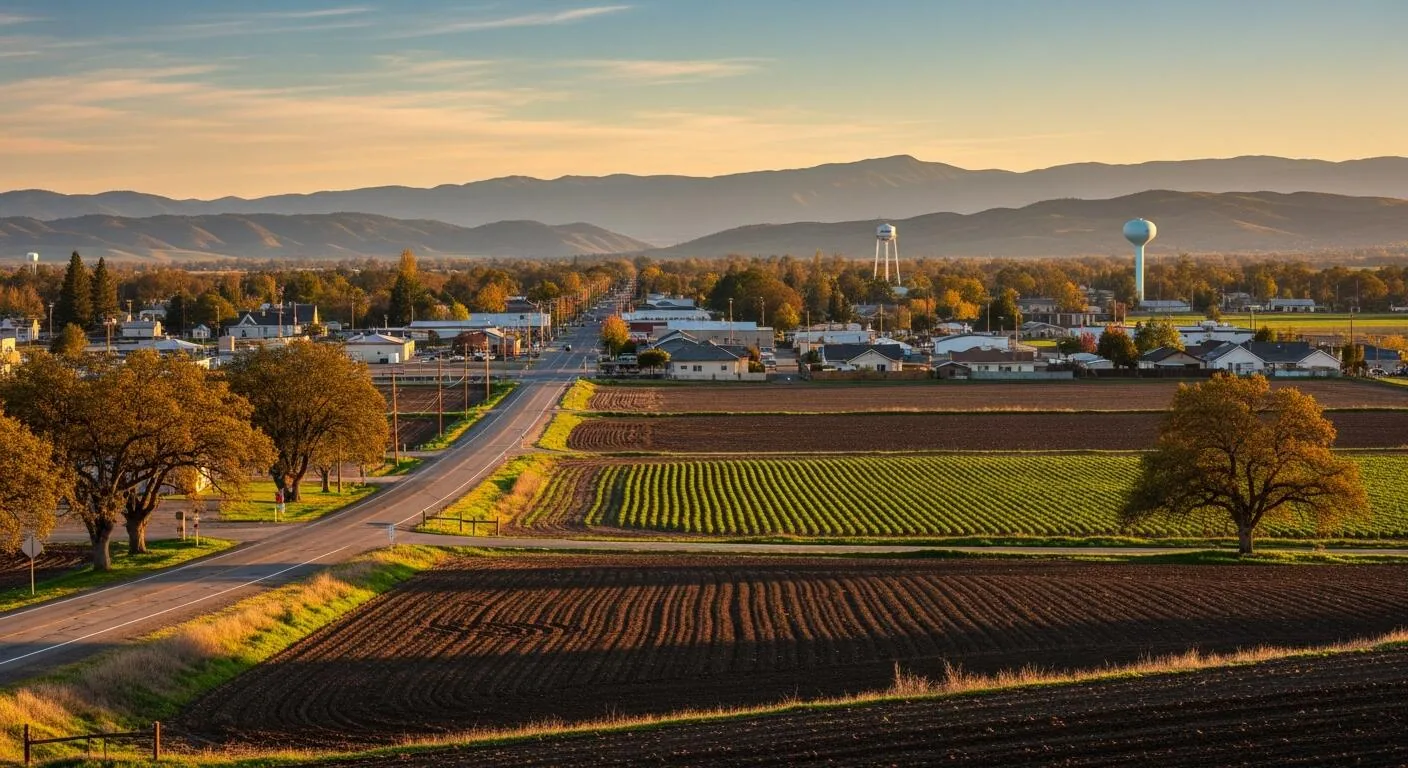
Low-slope commercial roofs along Farmersville’s Highway 198 corridor need their drains, edge details, and membrane transitions checked before a repair is priced. We begin at the affected roof zone, trace the water path, and mark what the first walk can confirm. Farmersville’s land-use planning covers the city and its surrounding sphere of influence. The stated direction allows room for commercial and industrial development while preserving agricultural land, so the owner’s current building use and roof assembly still need a property-level check.
Visalia’s climate normals describe a long warm stretch and a cooler season when most of the area’s rain arrives. That context matters for exposed sealants and drainage, but it does not diagnose a roof in Farmersville. We confirm what system is installed, look for wet insulation or open laps, and record any area we could not reach. A commercial roof inspection can separate a contained defect from a broader question about attachment or moisture before the owner chooses a scope.
Plan around the Corridor’s Growth Pattern
Compact development can shorten utility extensions, but it does not tell us whether an individual roof is new, old, metal, or membrane. We inspect the actual building rather than infer its condition from the plan. If a property is being expanded, the roof review should identify the tie-in between existing and new work, the drainage route, and any edge transition that could be concealed after construction. The manager can then coordinate roofing details with the design and site schedule.
Farmersville’s plan includes land-use and circulation planning beyond the current city boundary. That makes it useful to distinguish a project within the corridor from a property in the broader planning area. We ask for the parcel location, drawings, and access rules before scheduling a walk. For an existing system, our capital planning review records condition and timing assumptions. A Farmersville roof visit still begins with visible conditions at the building, not a forecast about future development.
Find the Drainage Path before Opening Material
Water that remains beside a drain can point to a blocked bowl, a low area, a settled cricket, or a membrane detail that has opened. We clear the view of the outlet, check the clamping ring and flashing, then follow the slope toward nearby scuppers. If the bowl is clear but water remains, we map the ponding boundary and compare it with the roof plan. A photograph with the drain and surrounding seams gives the owner a record of what was inspected.
Rain in this part of the valley is concentrated in the cooler months, after a long period of dry heat. That cycle can expose weak drainage details when the first substantial rain reaches them. We use regional weather patterns as context, then base the repair on the Farmersville roof itself. A drain and scupper repair addresses the outlet or tie-in that the inspection confirms. If water has spread into the field, ponding-water repair can define whether a localized patch is enough.
Check Seams and Edges as One Assembly
A seam that separates at a corner may reflect failed welding, movement at the substrate, or a prior patch that did not bond. We identify the membrane first, then check the lap, termination, and material around it. On metal roofing, the inspection follows fasteners, panel side laps, and transitions to walls or equipment. A coating will not secure a loose panel or correct a moving joint. The repair method needs to match the roof system and the condition below its surface.
High temperatures work on exposed sealants and coatings, so a brittle surface can be one clue to inspect further. We compare protected areas with exposed edges and note whether the membrane remains flexible and attached. If a compatible weld can close a local opening, we keep the repair boundary tight. If the substrate is wet or the failure repeats across multiple areas, the owner may need a broader recovery or replacement comparison. The standing-seam metal review checks panel movement and attachment; edge-metal work looks at perimeter transitions.
Choose Repair, Restoration, or Replacement from Evidence
A patch is reasonable when the opening is local and the surrounding roof can accept a compatible tie-in. We remove loose material, prepare the surface, restore the detail, and photograph the completed area. The written scope identifies the roof zone and any nearby defect left outside the repair. It also states whether moisture, attachment, or concealed deck conditions need another test before a larger recommendation is made.
A coating may fit an attached, dry, compatible roof with enough remaining life to support restoration. It needs proper cleaning, preparation, and reinforcement at seams and penetrations. Replacement may be a better comparison when wet insulation is extensive, attachment is uncertain, or repairs keep reopening. We price those options by the work required, access, protection, tear-off, insulation, and close-in plan, not by an assumed standard cost. A coating evaluation checks readiness, while a replacement review compares the full assembly and schedule.
Set Access and Leave a Usable Record
The work window should fit the building, not just the crew. We confirm ladder or hatch access, where materials can be staged, which interior spaces need protection, and whether another trade will be near the roof. If the owner is planning construction or site work, we mark the area that can be opened safely and the point where the roof must be closed each day. That sequence matters most where a temporary opening could expose equipment, stock, or occupied space below.
At closeout, the owner receives marked photos, a list of repairs, and notes on any area that could not be inspected. We separate tested findings from assumptions and identify the next check only when it changes a decision. For a property connected to Visalia’s broader commercial base, the Industrial Park service area is a separate geography; it does not substitute for a roof review in Farmersville. Share the property location, leak timing, roof records, and access rules. We will inspect the affected detail and explain what should be repaired now, monitored, or tested before broader work is priced.
Where a project connects old and new roof sections, the record should show which system continues beneath the tie-in and how water moves past the transition. We note flashing, edge terminations, slopes, and outlets on each side of the work. If drawings do not match the exposed assembly, we flag the difference and confirm it with the owner before material is ordered. That gives the manager a practical basis for coordinating the roofer, general contractor, and other trades.
Commercial Roofing Questions
Does a commercial roof need replacement if a seam opens?
A single open lap can often be repaired when the membrane around it remains sound. We inspect the tie-in, substrate, and nearby seams, then set a repair boundary. Repeated openings or wet layers change the comparison.
Can a drain repair wait until the dry season?
An active leak or blocked outlet should be addressed before it exposes the interior. We can make a temporary protection plan, then schedule permanent work when the surface and material conditions allow. The report states what remains open.
What do you need before inspecting a Farmersville property?
Send the property location, roof access instructions, leak area, recent photos, and any available roof records. If work is planned, include drawings so we can check the transition and drainage path before the first walk.
How does commercial growth planning affect roof work?
Planning goals do not establish the condition of a particular building. For an expansion, we review the actual roof tie-in, drainage, access, and construction sequence, then coordinate the detail with the project team.
Can crews work while the building remains in use?
Often, if access and interior protection can be arranged safely. We confirm which areas need a notice or short closure, then set a work window and daily close-in point with the property contact.
When is coating a reasonable alternative to replacement?
A coating can be considered when the existing roof is dry, attached, compatible, and suitable for preparation. We check those conditions first. Wet insulation or unstable attachment may require a different scope.