Standing Seam Metal Roofing in Visalia, CA
Roof Systems | Visalia and Tulare County
Standing Seam Metal Roofing
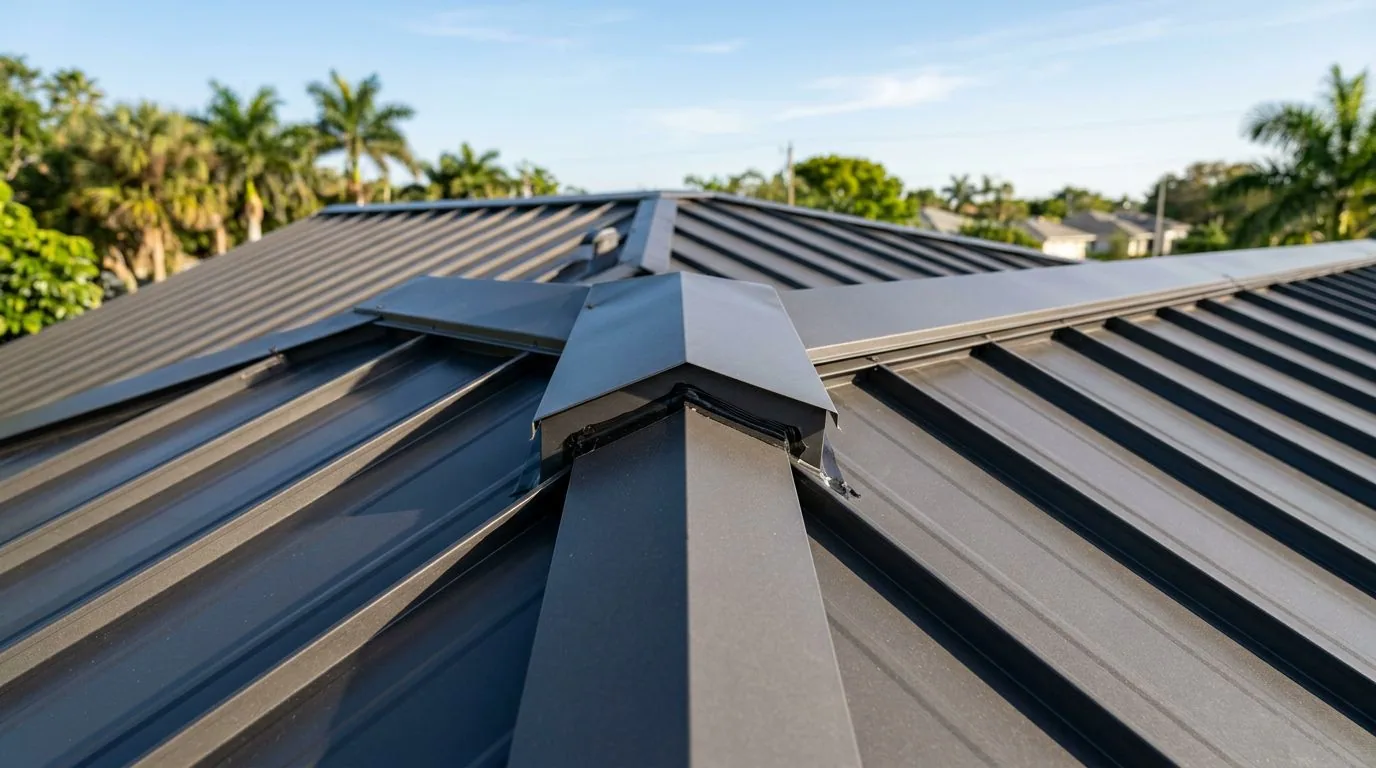
A standing seam panel can look straight from the parking lot while a loose clip or open flashing transition moves water beneath it. We inspect the seams, attachment, perimeter, and penetrations before recommending a repair. Panel profile and metal type matter because a detail designed for one system may not fit another. Visalia's long warm season and cooler rainy months make movement, sealant condition, and drainage worth checking at the roof itself. A distribution building near Visalia Industrial Park and a downtown office property can both use metal roofing, yet their panel lengths, support conditions, and access paths may be quite different.
Identify the Panel and Attachment System
We record panel width, seam shape, metal finish, approximate panel length, and the way the roof attaches to its deck or supports. A mechanically seamed profile, snap-lock profile, and through-fastened panel do not share the same movement behavior or repair details. We inspect exposed fasteners where present, clip locations where accessible, and the metal at eaves, ridges, valleys, and wall transitions. Existing drawings and product records can help, but field measurements establish what is installed today. If the panel manufacturer or profile cannot be identified, the proposal states that limitation instead of naming an unverified system.
Fasteners may back out, washers can deteriorate, and clips can restrict thermal movement if they are damaged or incorrectly installed. We mark a sample area, compare conditions across roof sections, and separate isolated defects from repeated patterns. A commercial roof inspection can document the panel and attachment findings. If the roof has an asphaltic addition or transition, a modified-bitumen assembly requires its own edge and movement detail.
Follow Thermal Movement at Long Panel Runs
Metal panels expand and contract as their temperature changes. The system must accommodate that movement at clips, seams, penetrations, and end laps. We look for oil-canning, distorted ribs, elongated holes, shifted clips, torn sealant, and stress at fixed points. Oil-canning alone does not establish leakage or structural failure; the panel profile, lighting, substrate, and viewing angle affect how visible it appears. We identify whether the condition is cosmetic, functional, or still uncertain after the inspection.
Long panels may need a sliding attachment arrangement and properly detailed end conditions. A repair that locks a moving panel with an incompatible screw or rigid sealant can transfer stress to another seam. We review the roof's measured panel runs, support spacing, and details before describing a correction. Where a TPO system meets metal, the transition must accommodate both assemblies rather than bridge them with a generic sealant bead. A metal roof repair scope lists each affected run and the access needed to reach it safely.
Trace Leaks through Seams and Flashings
Standing seam ribs shed water, but leaks can start at a ridge, valley, curb, pipe, wall, or termination. We inspect closure strips, sealant lines, panel ends, and the metal-to-membrane interface. A leak mark inside the building does not necessarily sit below the roof opening; water can travel along a purlin, deck flute, or insulation joint. We compare the reported location with roof geometry and mark the inspection path. A controlled water test may be useful only when the conditions allow one area to be evaluated without masking another entry point.
Penetrations deserve careful review because later equipment work can cut or fasten through a panel. We check whether a curb is properly supported, whether counterflashing sheds water, and whether the panel can move around the detail. A replacement scope should identify curb and edge-metal quantities separately from panel area. If insulation is wet or the deck is corroded, those findings change the work boundary. We describe confirmed conditions, proposed testing, and concealed risks as different items so the manager knows what is priced before work begins.
Review Valleys, Gutters, and Panel Terminations
Water must leave the roof through the designed valleys, gutters, scuppers, and downspouts. We look for debris, blocked outlets, open end dams, backed-up gutters, and panel edges that discharge behind the fascia. A standing seam roof can be steep enough to move water quickly, which makes valley and eave details important during heavy rain. The inspection records the outlet condition and whether water can reach it without crossing an unintended seam or wall transition.
Snow retention is not the primary Visalia concern, but fall protection, maintenance access, and rooftop equipment loads still matter. Any snow guards, service walk pads, or equipment supports need to suit the panel profile and attachment. We do not assume that a clamp fits every seam or that a screw through the panel is acceptable. Our drain and scupper work can be scoped alongside edge-metal and gutter repairs. The property team receives a marked roof plan, photos where access permits, and a list of conditions that should be monitored after the next storm.
Coordinate Work across Visalia Properties
City sources catalog Downtown Visalia businesses across healthcare, public service, retail, professional, and nonprofit categories. Economic-development material for the industrial park lists food production, storage, shipping, and manufacturing. The two districts inform access planning, but we confirm every facility's operating hours and delivery rules before choosing a staging area. Those are broad districts, not substitutes for checking an individual building's layout. A roof crew must confirm delivery access, tenant hours, loading activity, fall-protection tie points, and areas where lifts can be placed. We coordinate that plan with the manager and the site's safety requirements before staging panels or removing trim.
For buildings near Downtown Visalia, pedestrian routes and storefront access can affect lift placement and work hours. At properties around Visalia Industrial Park, truck circulation and loading docks can limit where panels or debris containers sit. We document the actual constraints and identify which decisions remain with the owner or general contractor. If an occupied area lies below the work, temporary protection and a communication plan belong in the scope. The site location informs coordination; the roof survey and project documents determine the assembly and repair plan.
Choose between Repair, Coating, and Replacement
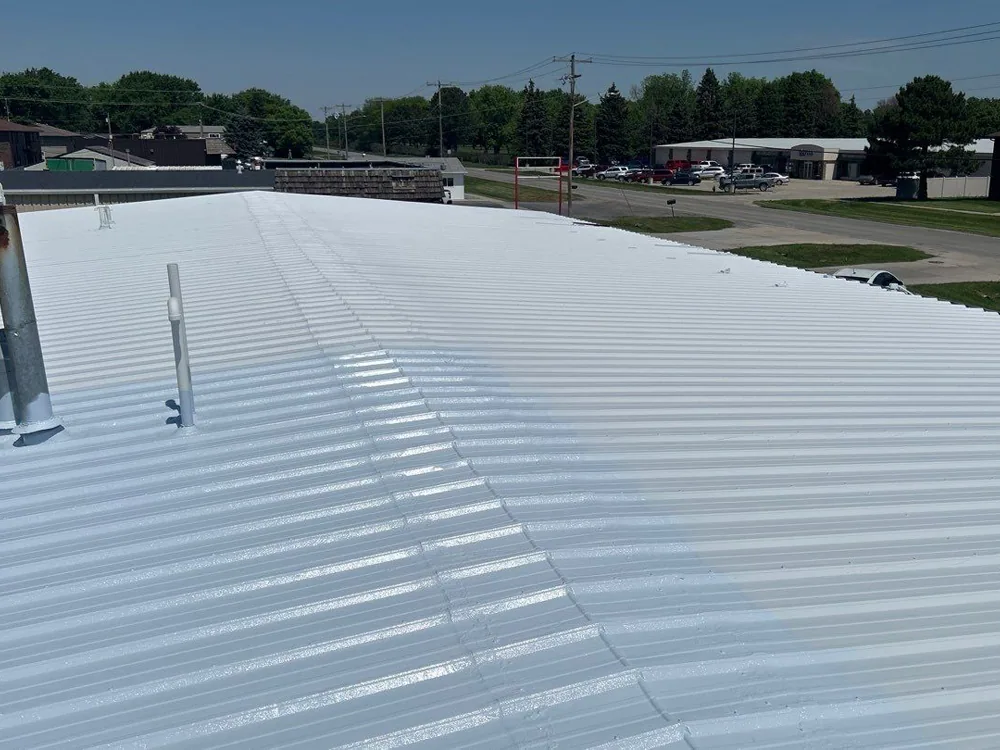
A localized leak at one curb may be repaired while sound panels remain in service. Repeated seam or clip failures, widespread corrosion, a failing finish, or a compromised substrate may support a broader rehabilitation. Coating can be considered only if the metal is sound, the seams and fasteners can be prepared, and the selected system is approved for the conditions. A coating does not correct a loose structural connection, an undersized gutter, or a panel that cannot move. We identify which conditions each option addresses and which remain unchanged.
The estimate separates panel replacement, clip or fastener work, trim, flashing, coating preparation, insulation, and deck repairs. It also lists testing or openings that would change concealed quantities. A PVC roof system may be evaluated for a different roof area, but its assembly is not a drop-in metal panel repair. For a Downtown Visalia roof assessment or a survey near the Visalia Industrial Park, we tie recommendations to the building's measured conditions. Share plans, leak history, access rules, and prior work records to start the review.
Commercial Roofing Questions
Can standing seam metal roofing leak at the seams?
Yes. A seam can be damaged, incompletely closed, stressed by movement, or interrupted by a poor transition. We inspect the profile and trace the water path before choosing a repair.
Does oil-canning mean a metal roof has failed?
No. Panel waviness can be visual and does not alone confirm leakage or structural trouble. We check the panel, attachment, substrate, and seam condition to separate appearance from performance.
Can a standing seam panel be patched?
A localized repair may work when the panel and adjacent attachment remain sound and a compatible detail can be installed. Corrosion, movement, and seam profile determine the repair boundary.
Will a coating stop every metal roof leak?
A coating may address an eligible surface after preparation, but it does not repair loose clips, failed structural supports, or unsuitable drainage. Those conditions need separate scope decisions.
How do you plan metal roof repairs in an industrial district?
We confirm truck paths, loading schedules, lift locations, fall protection, and tenant access with the site manager. The roof survey sets the technical scope; the site plan sets safe staging.