Cold Storage Roofing in Visalia, CA
Property Types We Roof | Visalia and Tulare County
Cold Storage Roofing
Condensation at a freezer ceiling may resemble a roof leak, but the water path can begin at a seam, a vapor-control transition, or a refrigeration line. We compare the interior observation with roof conditions above the affected area before opening the assembly. Cold-storage buildings combine low indoor temperatures, refrigeration equipment, and roof surfaces exposed to Visalia's hot season. A repair must protect product, maintain operating conditions, and keep the roof dry while work proceeds. The Visalia Industrial Park and the Goshen Betty Drive Industrial Area are broad industrial contexts in the region; the actual cold-storage site, roof build-up, and operating schedule must be confirmed.
Separate Condensation from Roof Water Entry
We ask when the water appears, whether it follows a refrigeration cycle, and where condensation collects on the interior. A roof opening is not the only possible source. We check the ceiling plane, pipe penetrations, vapor retarder continuity, curb transitions, and roof seams that align with the report. If the pattern changes with defrost or equipment operation, the refrigeration team may need to review its system separately. We document the observed evidence and avoid labeling an interior wet spot as roof failure until the path is traced.
At the roof, we mark test locations and identify whether a core or probe is needed to compare insulation and deck conditions. One test shows the layers only at that point. A warehouse roof survey may map inventory exposure, while a cold-storage inspection adds temperature and vapor-control questions. The manager decides how product or process access is protected before any test opening is made.
The facility's alarm and escalation steps should be clear before an inspection begins. We ask who receives a high-temperature or leak alert, who can authorize an interior test, and which doors must remain available for emergency response. If water is near a panel, control cabinet, or refrigeration circuit, the operator determines the safe isolation procedure. The roofing crew documents the roof condition without directing changes to live equipment. A short contact sheet attached to the work plan helps a night shift reach the right facilities lead before a small observation becomes a product or equipment incident.
Review Insulation and Vapor-Control Layers
Cold-storage roofs need an assembly that manages heat flow and moisture migration. We inspect accessible edges, curb details, penetrations, and roof transitions for gaps or changes in insulation. Repeated frost, wet insulation, or a vapor retarder that stops at an equipment base can affect roof performance. The site records and approved openings help identify what lies below the membrane. We do not infer thickness or continuity from a roof drawing if later repairs have changed the assembly.
Insulation density, attachment, and cover-board details must suit the system and project design. If material is wet or compressed, the scope should define the removal boundary and how replacement work ties back to sound layers. A manufacturing roof review can also examine process conditions, but the cold room's vapor control and temperature gradient require their own detail. We list testing and concealed conditions as separate items so a budget does not imply that every roof zone has been opened.
Check Refrigeration Curbs and Service Routes
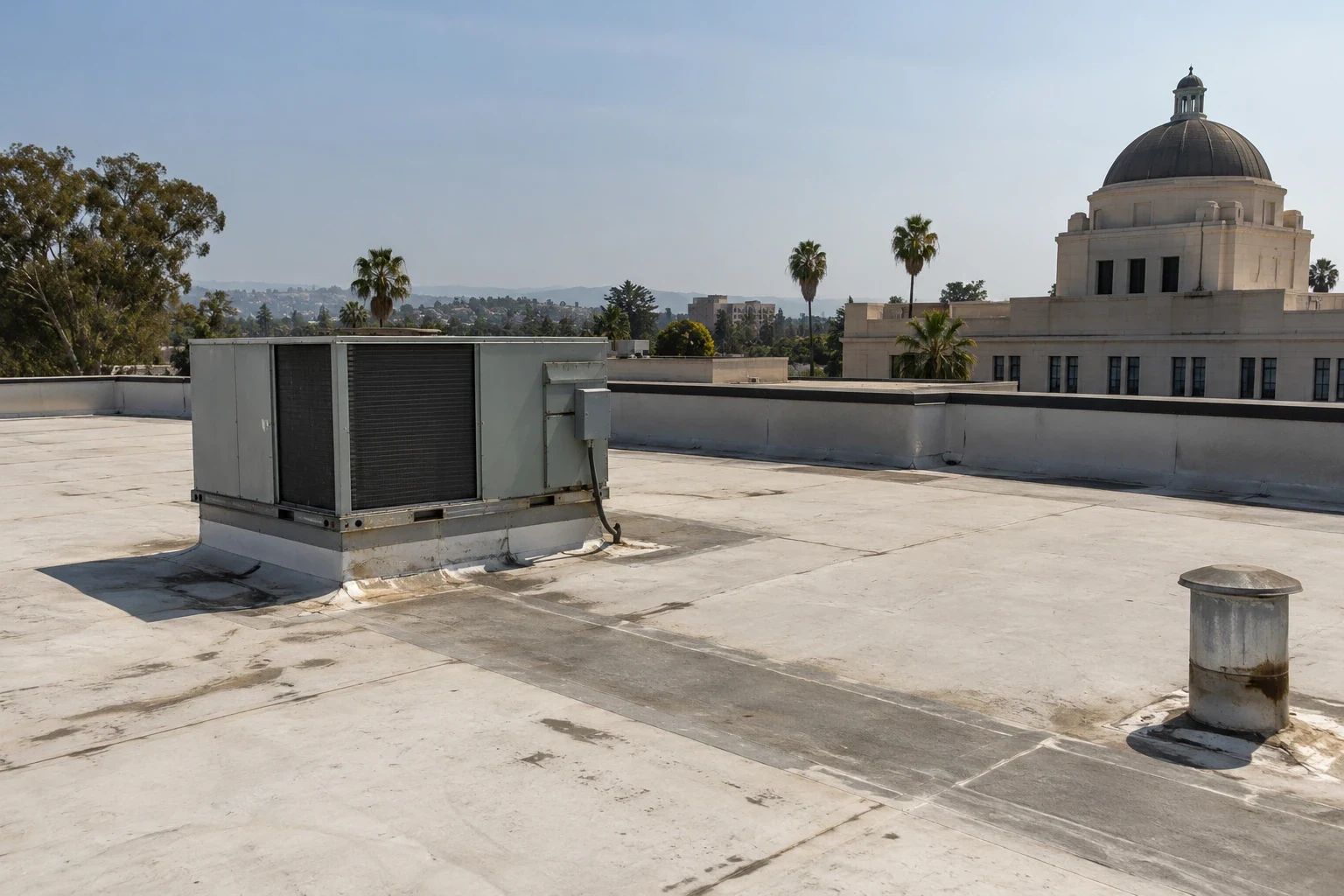
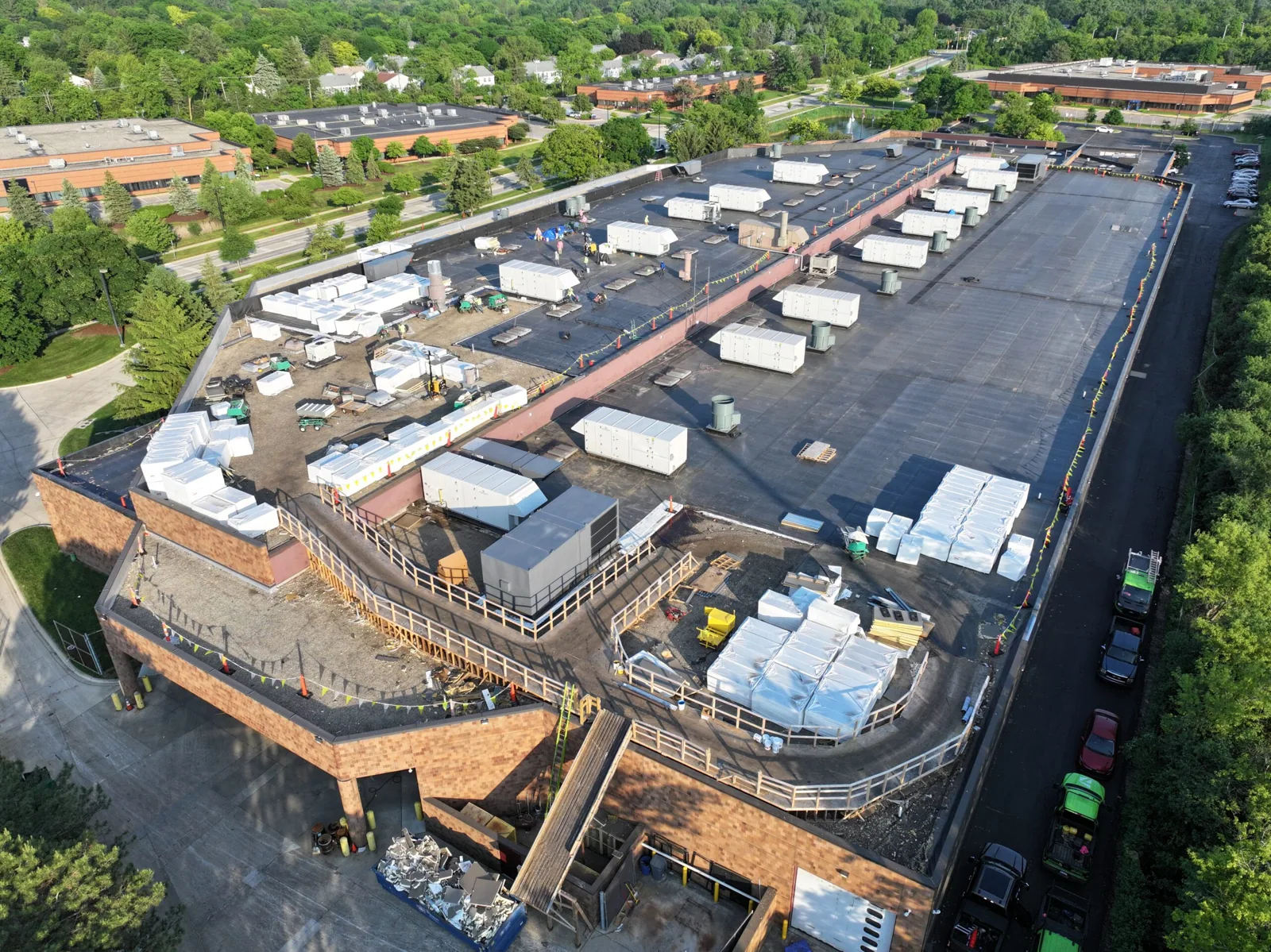
Compressors, condensers, piping, and controls can place repeated service traffic across the roof. We inspect support bases, pipe penetrations, curbs, and walkway areas for movement, loose flashing, and damage from maintenance. Refrigerant lines may have insulation or protective covers that a roofing crew should not disturb without approval. The site manager identifies equipment that must remain live and the contractor responsible for each connection. If roof work changes a curb height or support, the mechanical designer must review the proposed detail.
A refrigeration curb and support scope can be coordinated before membrane repair. A PVC assembly may be present in one zone while another uses a different membrane, so we identify system boundaries and compatible repair materials. The proposal states which equipment must be shut down, who provides temporary protection, and which conditions are outside the roofing contractor's work.
Keep Drains Open around Freezer Operations
Cold-storage roofs still depend on drains, scuppers, gutters, and overflow paths. We check for blocked strainers, standing water, failed drain ties, and insulation changes near sumps. A leak that develops after cleaning or maintenance could involve a displaced strainer or punctured membrane. We inspect the bowl and sheet connection and mark any area where water remains after rainfall. A slope or deck correction is different from a coating or seam repair and should be priced as such.
At the parapet and loading canopy, we review flashing, edge metal, and transitions that can be affected by thermal movement. A drain and scupper assessment can cover outlet work; repair work can address confirmed membrane or flashing damage. The crew protects open areas at the end of each work period and checks that drains stay clear before leaving. Temporary covers should not direct water into a freezer doorway or onto a loading route.
Coordinate Regional Access and Work Windows
Visalia Industrial Park is described with freight and utility infrastructure, while Tulare County identifies industrial development activity around the Goshen Betty Drive area. These are regional places, not evidence that a particular cold-storage building sits in either location. We confirm the exact address, entrance, refrigeration schedule, dock hours, and product-protection rules with the operator. Highway access can inform delivery planning, but a truck route and lift location must follow the site plan and applicable restrictions.
Hot weather may make interior temperature control more sensitive during roof work. The team agrees on work zones, temporary protection, and the point at which a refrigeration or food-safety representative must be present. A Visalia Industrial Park project and a Goshen Betty Drive area survey both require property-specific access checks. We do not assume a district name determines the facility's temperature, equipment, or product rules.
Plan a Test, Repair, or Roof Replacement
A localized curb or seam defect may be repairable when surrounding layers are dry and secure. If wet insulation, vapor-control failure, or repeated condensation paths extend beyond one detail, the scope can expand to selective removal or replacement. We map confirmed conditions and note areas that remain untested. The owner can compare a roof condition survey with a defined repair or a larger replacement plan. Temporary protection, interior monitoring, and refrigeration coordination should be shown as actual tasks.
Closeout records should identify test openings, insulation replacement, membrane materials, curb work, drain details, and monitoring locations. The maintenance team can then distinguish a future condensation observation from a prior roof repair. Share roof plans, refrigeration equipment schedules, interior temperature requirements, product-protection rules, and leak logs before the first walk. We will document the conditions that can be confirmed and identify which test or designer review must happen before the next phase.
Commercial Roofing Questions
How do you tell condensation from a roof leak in cold storage?
We compare timing, interior patterns, refrigeration cycles, and roof conditions above the area. The site may need a coordinated review of vapor control and equipment as well as the membrane.
Can cold-storage operations continue during roof repairs?
Often, if the work zone, product protection, interior monitoring, and equipment schedule are agreed with the operator. Some openings or mechanical work may require a shutdown.
Why does vapor control matter on a freezer roof?
Warm, moist air moving toward colder layers can condense within the assembly. We inspect transitions, penetrations, and records before describing the required correction.
Does wet insulation always require full replacement?
No. The test boundary, moisture extent, deck condition, and assembly design determine whether selective removal is practical or a broader scope is appropriate.
What records help plan cold-storage roof work?
Roof drawings, refrigeration schedules, interior temperature requirements, leak logs, prior repairs, and product-protection procedures help define access and sequencing.