
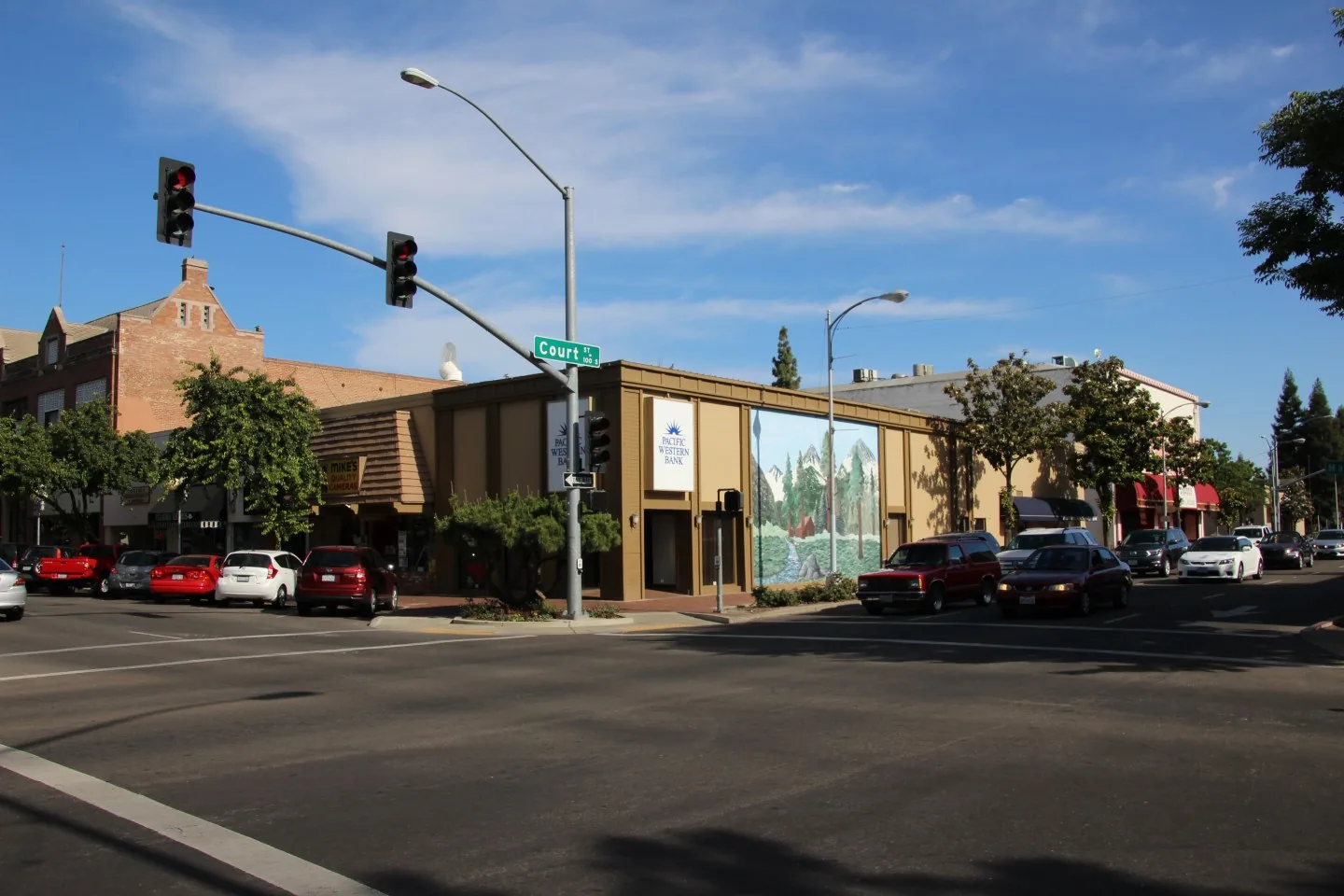
Commercial Roofing for the Court and Locust Corridor in Visalia, CA
Service Areas | Visalia and Tulare County
Court and Locust Corridor
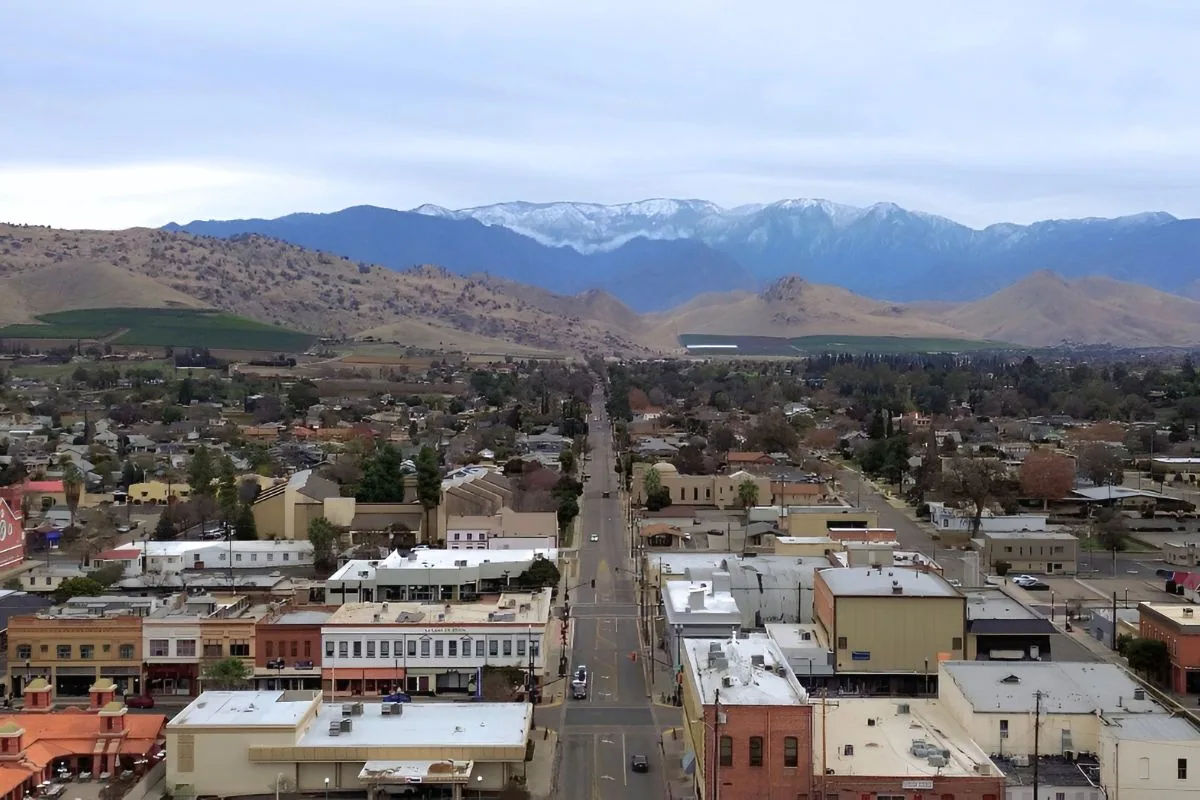
A leak along a roof edge can travel before it reaches a ceiling tile. Start with the water path and the repair boundary, not a coating recommendation. Visalia’s plan describes Court and Locust as a mixed-use connection between downtown and the Oval, so access, neighboring uses, and work hours can vary from one block to the next. We confirm the actual building conditions on site before setting a scope.

Trace the leak before opening the roof
A stain near an exterior wall may come from a perimeter detail, but the visible mark is only a clue. Water can move through insulation or along a deck flute before dropping into the occupied space. We compare the interior location with roof seams, drains, curbs, and wall transitions, then mark the area that needs testing. The inspection record separates what we observed from what still needs confirmation.
Court and Locust connect multiple downtown uses rather than one property. We do not assume that neighboring roofs share construction or maintenance history. A restaurant, office, or small commercial building can have different penetrations, additions, and access restrictions. A focused commercial roof inspection identifies the assembly and likely entry points before repair pricing is finalized.
Check the assembly in manageable zones
We divide a roof into sections that follow its actual construction: original areas, additions, equipment zones, and transitions. At each section we check membrane condition, seam adhesion, fasteners where visible, and the movement around curbs and pipes. A soft spot or blister can justify further testing, but it does not by itself establish how much insulation is wet. We document the limit of each observation.
The City's corridor designation is planning context, not proof of any individual building's use or roof condition. Before climbing, we confirm hatch or ladder access, fall protection, occupied areas below, and any need for tenant notice. If a roof holds several businesses, we schedule the walk to avoid interrupting deliveries or customer access. The manager receives a simple list of areas inspected and areas that could not be reached.
Follow drainage to the outlet
A drain can be clear at the bowl and still sit in a low area that keeps water against a seam. We check strainers, sumps, scuppers, overflow paths, and the surface leading to each outlet. Debris, displaced insulation, or deck movement may point to different corrections. We photograph the condition before clearing anything that could hide evidence, and we note whether water is active, ponded, or only visible as a stain.
Court and Locust are part of a broader district, so ground-level runoff and roof drainage both matter around mixed-use buildings. We trace how water leaves the roof and where downspouts discharge, while keeping roof and site observations distinct. A drain service is not a membrane repair; each recommendation should name its own work area. Where periodic visits make sense, a preventive maintenance plan can record the change between seasons.
Inspect edges and penetrations
Perimeter metal, parapet caps, wall flashings, pitch pockets, and pipe boots take movement and sun exposure. We look for open laps, cracked sealant, loose terminations, and repairs that have lifted from the surrounding material. If the opening is isolated and the adjacent assembly is dry, a bounded repair may be appropriate. If separation repeats across multiple details, we expand the review before treating each symptom as a separate leak.
Heat does not tell us which product failed, but the long warm season makes exposed details worth reviewing. The Visalia normal is a regional climate measure, not a roof-temperature reading. We check product instructions and actual surface conditions when work is scheduled. The chosen TPO roofing system or repair material must match the existing assembly and detail geometry; a product name alone cannot establish compatibility.
Set a defensible repair boundary
A patch should close the confirmed opening and tie into sound material. We identify where membrane is removed, how wet insulation will be handled, and what must be dry before the roof is closed. If the repair touches a wall or curb, the scope should describe the new flashing termination, not simply say “seal leak.” That wording helps the manager compare bids and inspect the finished work without guessing what was included.
When the evidence points to a contained failure, targeted commercial roof repair can avoid disturbing sound roof areas. When damage spans multiple sections or the assembly has reached a different decision point, we compare a larger repair with commercial roof replacement. We explain the assumptions, deck exposure, insulation allowance, and protection sequence so each option has a clear boundary.
Coordinate with the block and building
A corridor setting can mean shared walks, curb space, parking access, storefront hours, or deliveries that change over the day. We ask the manager who controls each route and whether adjacent occupants need notice. Roof work is sequenced into sections that can be made watertight before the crew leaves. If weather or access prevents a planned close-in, the scope should identify the temporary protection and who confirms it.
The schedule should also account for equipment shutdowns and interior protection below the repair. For a busy property, we agree on a contact for roof access and a separate contact for tenant coordination. A concise work plan records staging, lift placement, debris handling, and end-of-shift checks. After completion, the manager can keep the findings in a roof condition report alongside the leak history.
Compare repair, recovery, and replacement
Recovery can reduce tear-off only when the existing roof is dry enough, secure, and compatible with the new assembly. Wet insulation, multiple roof layers, loose attachment, or deck concerns can change that decision. A coating also has limits: it needs a suitable substrate, preparation, and repaired details. We identify those prerequisites before offering a restoration path and note any test area required by the system manufacturer.
The choice should reflect remaining serviceability, disruption, and the manager's capital schedule, not the name of the district. We separate immediate water control from longer-term investment. A roof asset record can hold photos, roof areas, warranty details, and completed repairs, making future comparisons more consistent. It does not replace a current inspection when a new leak appears.
The closeout should show the leak location, roof section, repair limits, materials installed, and any concealed condition found after opening. We include photos before and after work and state which nearby details were not part of the repair. If another stain appears later, the manager can compare its path with the prior boundary instead of assuming the same cause.
For related Visalia properties, a consistent roof map helps managers track separate assets without treating the Court and Locust corridor as one building. The Visalia Industrial Park and Business Research Park illustrate distinct local property contexts; each roof still needs its own access and condition record. Share the building location, leak area, roof history, and work window so the first visit can answer a specific question.
Commercial Roofing Questions
How do you find the source when a ceiling stain is away from an exterior wall?
We compare the stain with roof seams, drains, curbs, and wall transitions, then test the likely water path. Insulation and deck flutes can carry moisture, so the repair boundary follows what the inspection finds above the mark.
Can work be scheduled without blocking nearby storefronts?
The property contact identifies customer routes, loading periods, lift access, and hours when noise is acceptable. We stage the roof work by section and confirm ground-level protection before materials move through an occupied commercial block.
When is a localized patch a reasonable option?
A patch can fit when damage is confined and the surrounding membrane and insulation remain sound. We document the area opened, material tie-in, and any condition that would justify extending the repair.
Does a mixed-use district require one roofing system throughout?
No. Each roof is evaluated on its existing assembly, slope, attachment, drainage, and use. Nearby zoning or land-use context does not establish which system belongs on an individual property.
What should the repair record show?
It should tie photos to a roof section, state the suspected entry point and confirmed finding, list materials installed, and mark conditions outside the work boundary. That gives the next manager a useful comparison if another leak appears.