Commercial Roof Maintenance in Visalia, CA
Commercial Roofing Services | Visalia and Tulare County
Commercial Roof Maintenance
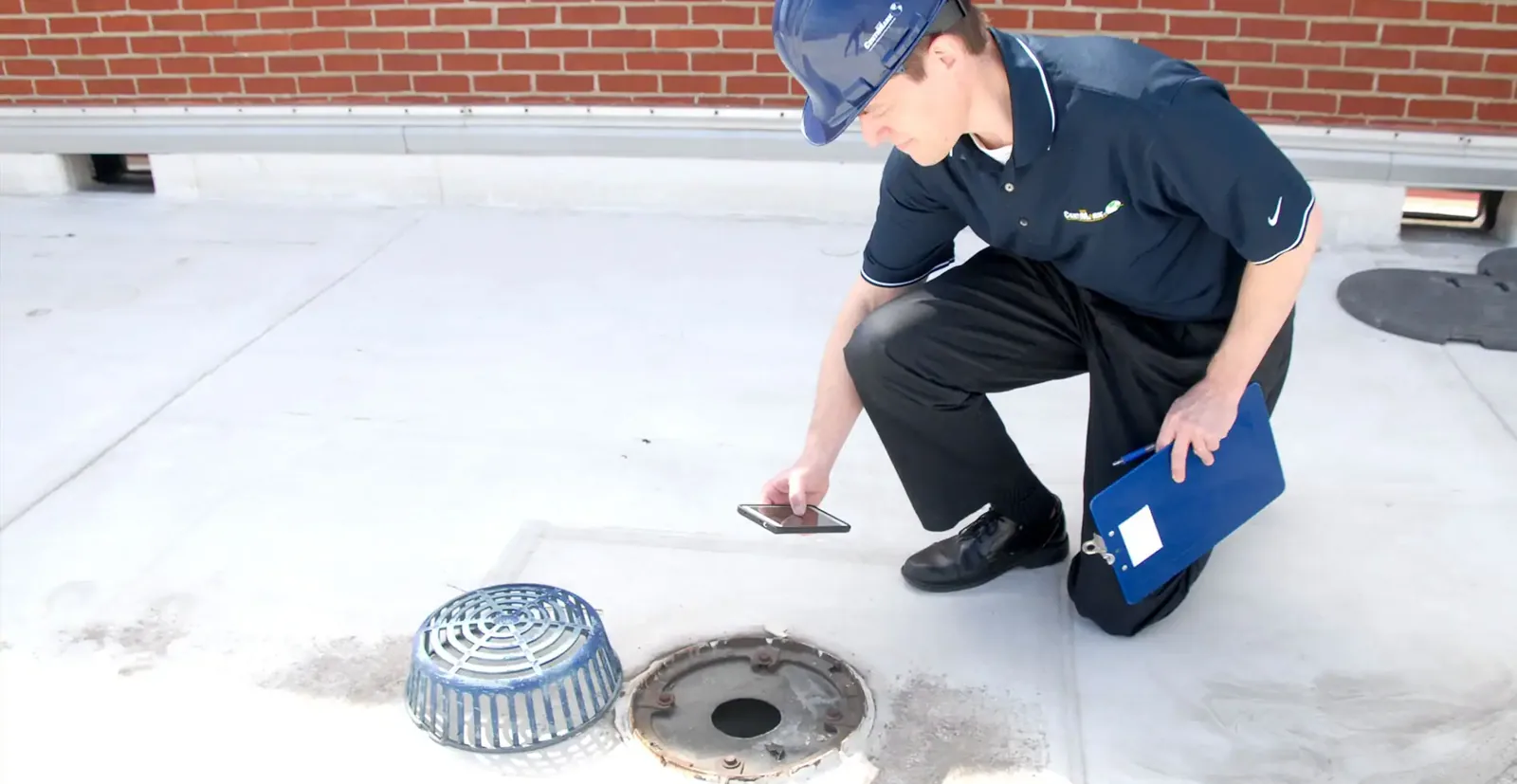
A drain strainer packed with leaves can turn a routine rain into water held against a roof detail. We start a maintenance visit by checking the outlet, the membrane around it, and the path water takes across the roof. In Visalia, a long hot stretch works on exposed sealants before the wetter months arrive. The Visalia Industrial Park includes manufacturing, food processing, warehousing, and distribution uses, while the mixed-use buildings of Downtown Visalia bring different access needs. Each roof gets a record of the condition found, the repair boundary, and the next decision, rather than a checklist that treats every building alike.
Start with Water, Seams, and the Last Repair
We review recent leak reports, prior repair notes, and any roof plan before the first walk. A ceiling stain is useful location information, not a map of the roof opening. Water can travel along a deck flute, cross insulation, or follow a seam before it reaches the occupied space. We compare the reported area with nearby drains, scuppers, wall transitions, equipment curbs, and penetrations. If the roof has several layers or an uncertain system, we identify what is visible and what still needs a test before recommending a repair.
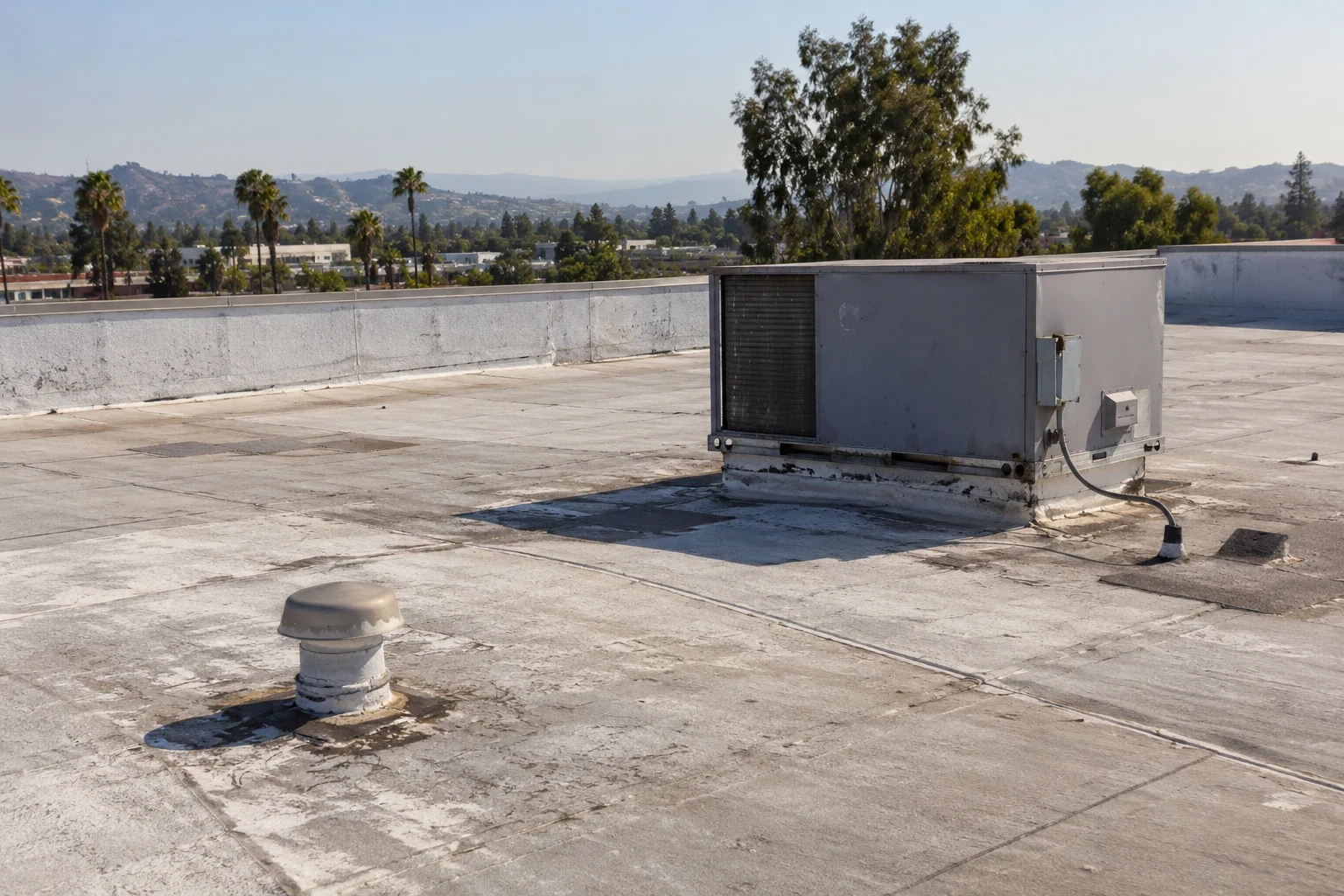
On the roof, we look for open laps, loose flashing, surface splits, punctures, displaced fasteners, worn sealant, debris, and places where water remains after drainage should have cleared. We also check whether an earlier patch has lifted or trapped water at its edge. A maintenance note should identify the roof zone and the observation, not just say that the roof was inspected. Photos taken from repeatable viewpoints let the property manager compare a detail on the next visit and decide whether its condition changed.
Use Visalia’s Weather to Set the Visit Window
Visalia’s normal weather pairs an extended hot stretch with rain concentrated in late fall and winter. Check exposed sealant for heat-related movement, then clear outlets and examine laps before the wet period returns. A dry-season visit gives the manager time to address drainage while the roof surface can be reached and prepared. These climate patterns guide timing; only the roof walk shows whether a particular detail has failed.
We note the material, observed condition, and any limit that affected the inspection. A brittle bead of sealant may call for closer review, but a visual check cannot establish its age or cause. If the roof is wet, too hot for a specified product, or unsafe to cross, the record states what was not tested and how a return visit would close the gap.
Keep Drainage Details in the Maintenance Scope
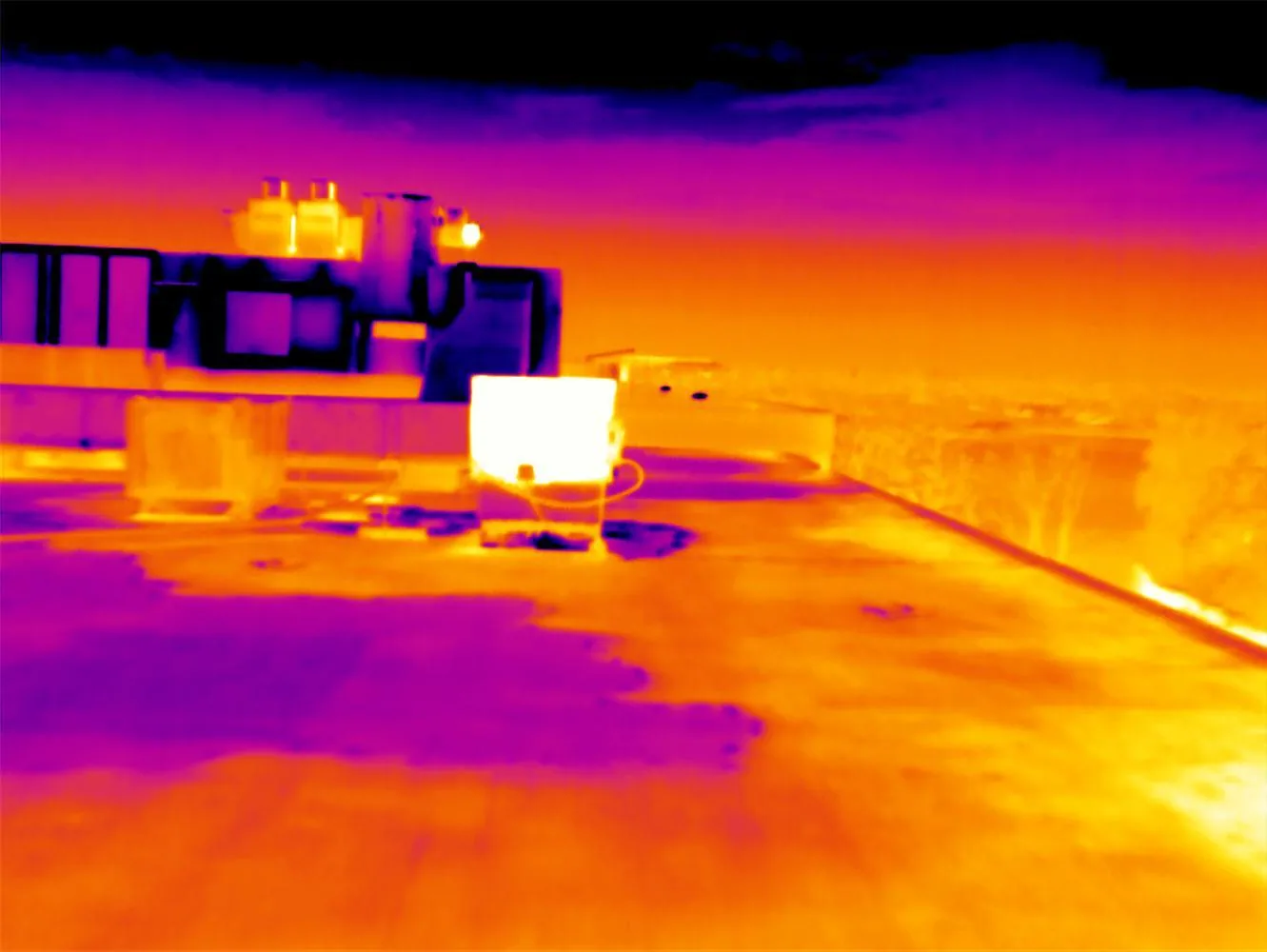
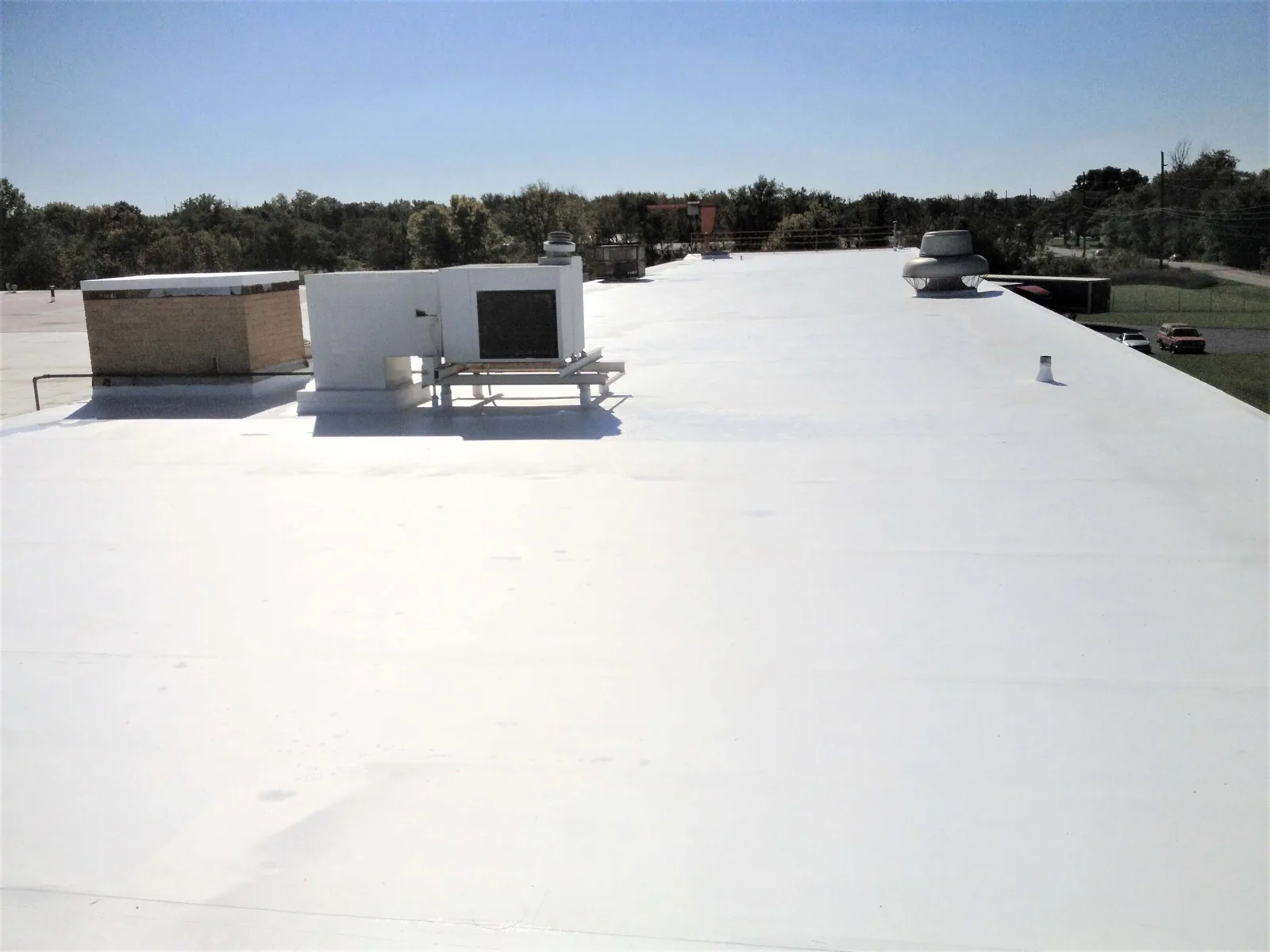
A clear drain bowl does not prove that water is leaving the building. We check the strainer, bowl, nearby membrane, overflow path, and visible leader connection, then note debris or damage that could limit flow. If water remains in a low area, we distinguish a blocked outlet from a depression or slope issue that needs a separate review. A maintenance visit can remove authorized debris and document the condition; it should not disguise a drainage correction as routine cleaning. When the boundary is unclear, we can inspect drains, scuppers, and nearby crickets as a repair question.
At the edge, we look for separated metal, open joints, loose fasteners, sealant pulling away, and transitions where water can get behind the flashing. A gutter problem can affect the wall or fascia as well as the roof edge. We record the condition and affected run so the owner can approve a defined repair. Mooney Boulevard is the core of Visalia’s regional retail hub. A retail roof there may need customer-safe access and a work window that keeps entrances open, while the roof details still determine what maintenance is needed.
Separate Routine Work from a Repair
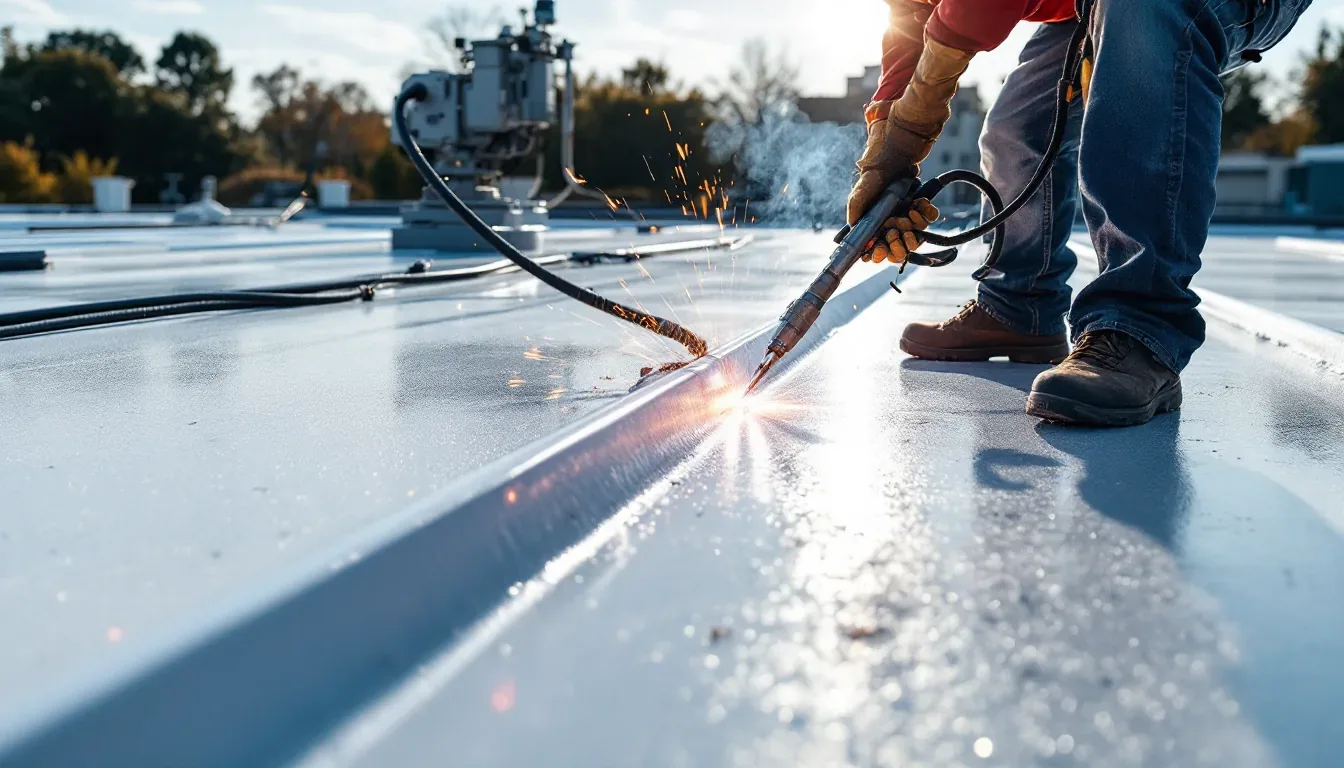
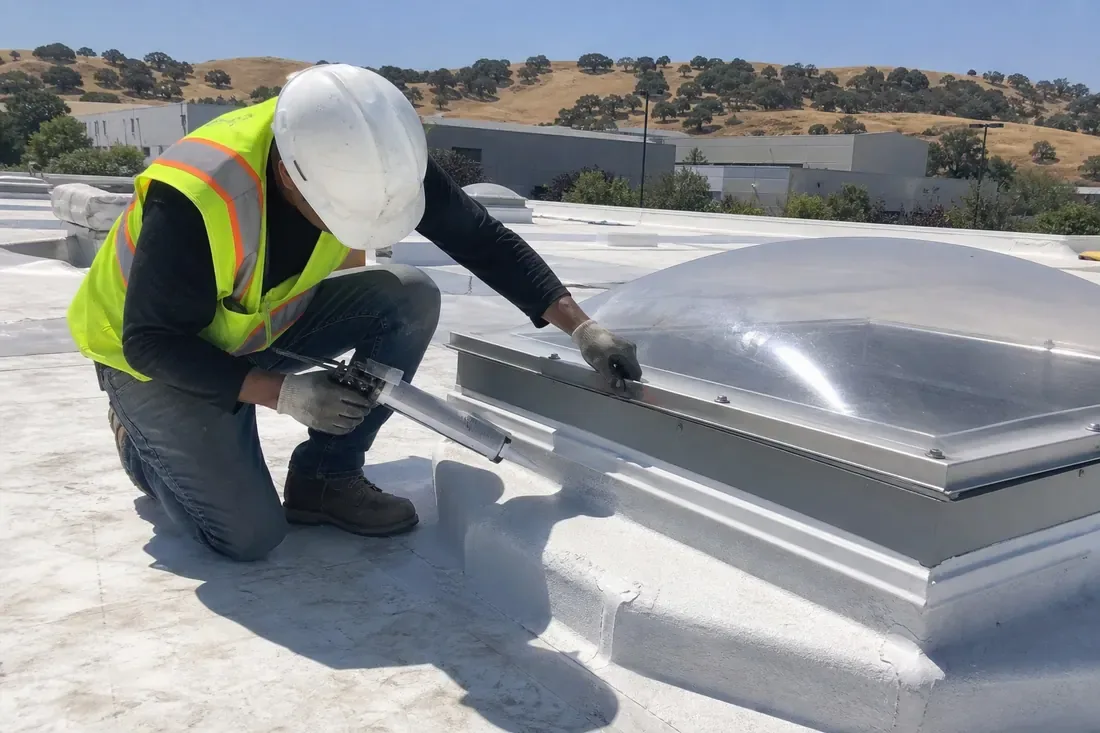
Maintenance should not bury a failed seam under coating or apply fresh sealant over a loose or dirty surface. We identify what needs cleaning, what needs a compatible membrane repair, and what may require a test opening before the scope is set. Thermoplastic seams, rubber membranes, asphaltic plies, metal details, and coating layers each call for a repair method suited to that assembly. If records do not identify the assembly, we use the visible evidence and request approval for a small test when that information changes the product or repair method. The note then states the condition, the proposed work, and any adjacent area left outside the boundary.
A localized patch may be reasonable where the surrounding material is sound and the wet area is limited. Repeated leaks, wet insulation beyond the original report, loose attachment, or several failing details can change the decision. We compare the cost and disruption drivers without guessing at hidden quantities: access, material compatibility, tear-out, deck repairs, occupied areas, and disposal. A focused commercial roof inspection can map conditions beyond the maintenance visit. If one detail is confirmed, our repair scope describes the tested area and where the work stops.
Fit the Work to the Building’s Use
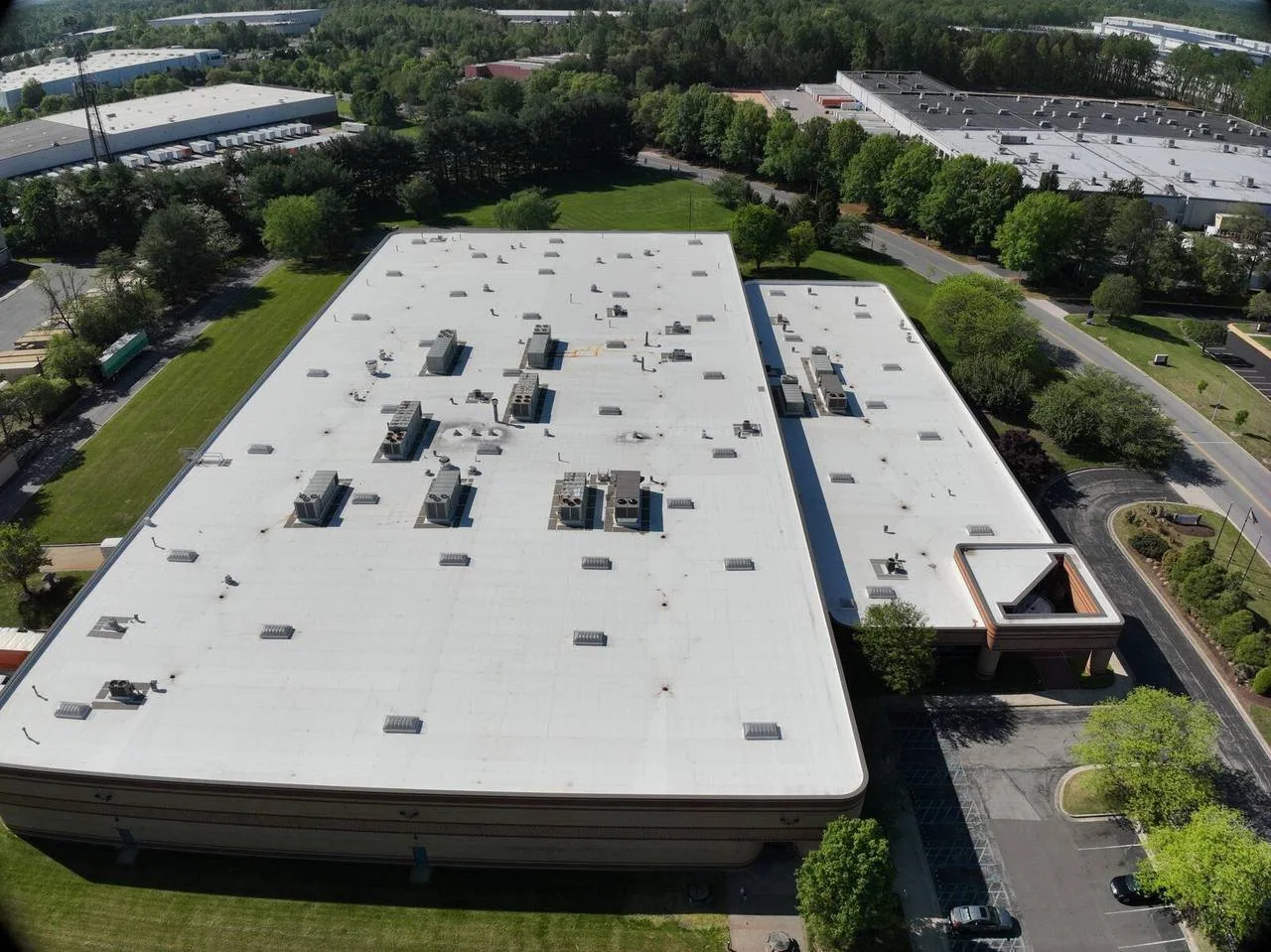
We confirm who can provide roof access, how the crew reaches the work zone, and whether the interior below needs protection. A distribution operation may have active loading areas or equipment that cannot be shut down without notice. An office or medical-use property may require a quieter work period and coordination with people inside. Downtown Visalia is a mixed-use employment area with retail, entertainment, government, professional, nonprofit, and healthcare activity. That mix is a reason to verify each property’s actual schedule, not assume a standard access plan for the district.
The maintenance plan identifies what can be completed in the approved window, what requires a dry surface, and whether a return visit is needed. We stage materials so they do not block drains or interfere with rooftop equipment. If an unexpected condition appears, we photograph it and contact the designated manager before expanding the work. Afterward, the roof record lists completed tasks, open repair items, and the locations to revisit. For a membrane-specific check, the owner can also review TPO inspection considerations or warehouse roof access planning with the observed assembly and operating schedule in hand.
Leave a Roof Record That Supports the Next Decision
A useful record shows the roof zones visited, the conditions observed, and which items were repaired or left for testing. We label photos by location and note where access limited the view. That gives the manager a fair comparison on the next walk without treating an early observation as a final diagnosis. For a broader program, roof condition reporting can keep maintenance observations and capital decisions in one working record.
Commercial Roofing Questions
What should a maintenance visit leave behind?
A roof-zone record, dated photos, drain and seam conditions, completed work, and open items give the manager something to compare on the next walk. We mark what was visible, what was tested, and whether wet insulation or a loose edge detail needs a separate repair scope.
Can your crew clean drains during the visit?
Yes, when access is safe and the owner approves. We check the bowl, strainer, overflow, and nearby membrane, then remove authorized debris without pushing it into the leader. Water remaining after the outlet clears may point to a low area or slope issue that needs separate review.
How do you handle a roof system that is not in the records?
We identify the visible membrane and compare it with repair notes. TPO, PVC, EPDM, modified bitumen, built-up, and metal systems need different materials. If uncertainty changes the repair, we request approval for a small test and record what remains unknown.
Can maintenance be completed while the building is operating?
We plan around the access route, rooftop equipment, loading activity, customer entrances, and any interior protection. If a surface must dry or a test opening needs approval, we state that before scheduling and update the manager when a new finding changes the work.
When does a maintenance finding call for a larger inspection?
Several leak locations, wet insulation beyond a repair boundary, or repeated detail failures can justify mapping more of the assembly. We compare tested areas with records and drainage, then show which sections need work and whether added testing would change the decision.