School District Roofing in Visalia, CA
Industries We Serve | Visalia and Tulare County
School District Roofing
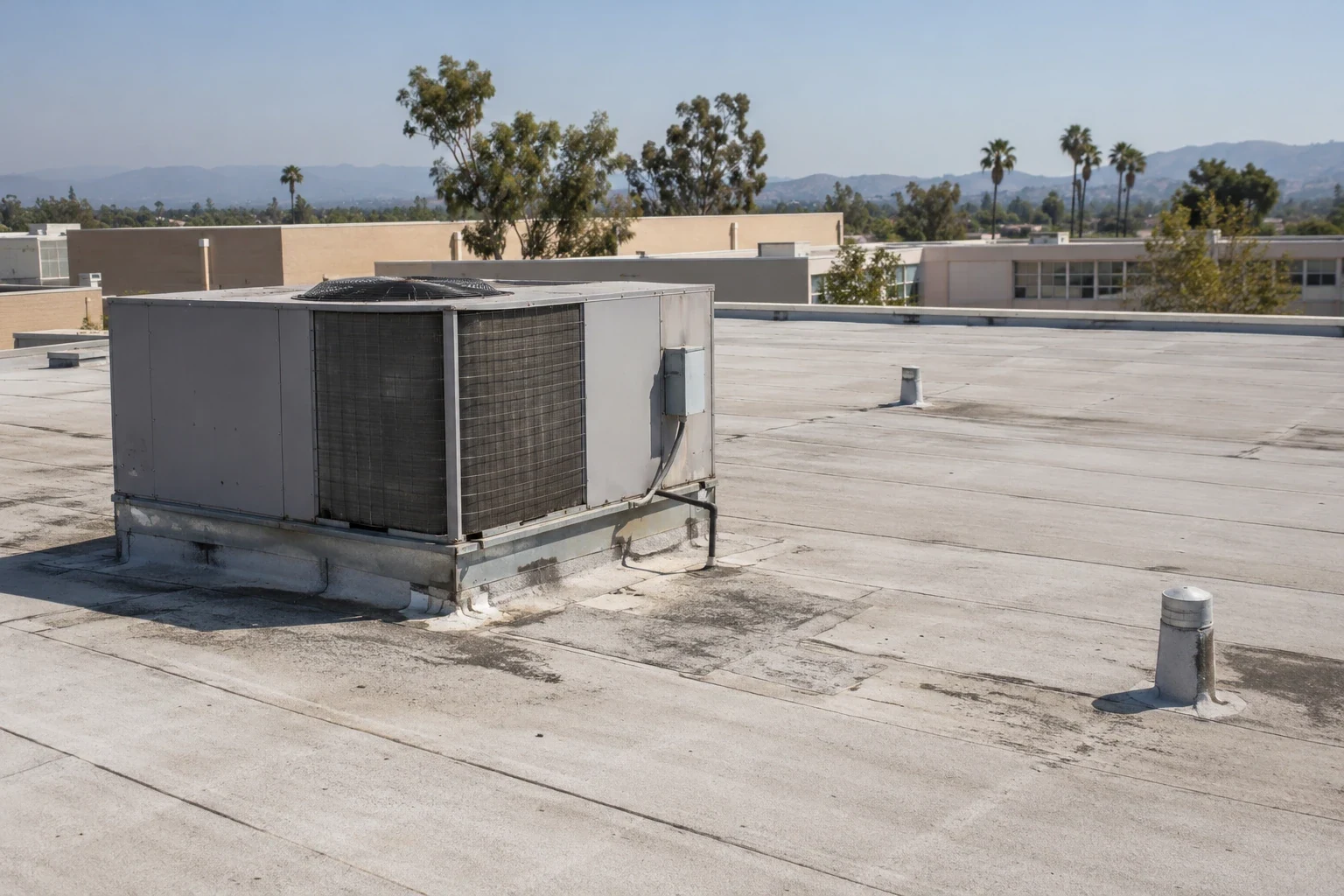
A roof leak above a classroom needs a plan that keeps students and staff away from the work zone. We locate the affected room, trace the water path to a roof section, and identify the access and protection steps before material is opened. District facilities teams often coordinate work across separate buildings, but each assembly and leak history has to be reviewed on its own. In Visalia, Downtown includes government and healthcare employment among its mixed uses, while the Mooney Boulevard Regional Retail Corridor has a different access setting. Those place facts do not establish conditions at a school. The first walk records what was inspected and what the maintenance team should decide next.
Fit Roof Work between School Activities
Before scheduling, we ask which rooms are occupied, when students move between buildings, and what dates the district has reserved for testing, events, or summer maintenance. Roof work can bring noise, lifts, material deliveries, and interior protection. The plan identifies the active roof area and the safe routes below it. If the school remains open, a phased occupied-building plan can keep a small area in work at a time, with a daily check that the roof is closed before the crew leaves.
A calendar needs more than a start date. We identify the person who can authorize access, move a room, protect equipment, or approve an added repair if concealed conditions appear. Campus staff confirm gates, key control, alarm procedures, and any route shared with bus or food deliveries. A weather delay changes the sequence, so the district receives a clear note about what remains open and how it is protected. Those steps make a school break or summer window useful without assuming all buildings can be worked the same way.
Trace Water without Closing More Space
A ceiling stain can sit several feet from the roof opening. Water may travel along insulation, deck flutes, or a structural member before appearing in a classroom or corridor. We check the reported area, nearby rooftop units, drains, seams, skylights, and wall transitions, then mark the tested boundary. If moisture readings suggest a larger area, we map it before proposing removal. The inspection report identifies the evidence and the rooms or roof sections still needing access.
For an active leak over a classroom, we coordinate temporary interior protection and use a safe route that avoids students. If the water path cannot be confirmed on the first visit, the report names the next test instead of assigning a cause. We also check earlier patches and equipment work near the leak. A rapid response can address urgent exposure around the clock; permanent repairs follow after conditions allow the assembly to be restored and inspected.
Identify the Assembly before Specifying a Repair
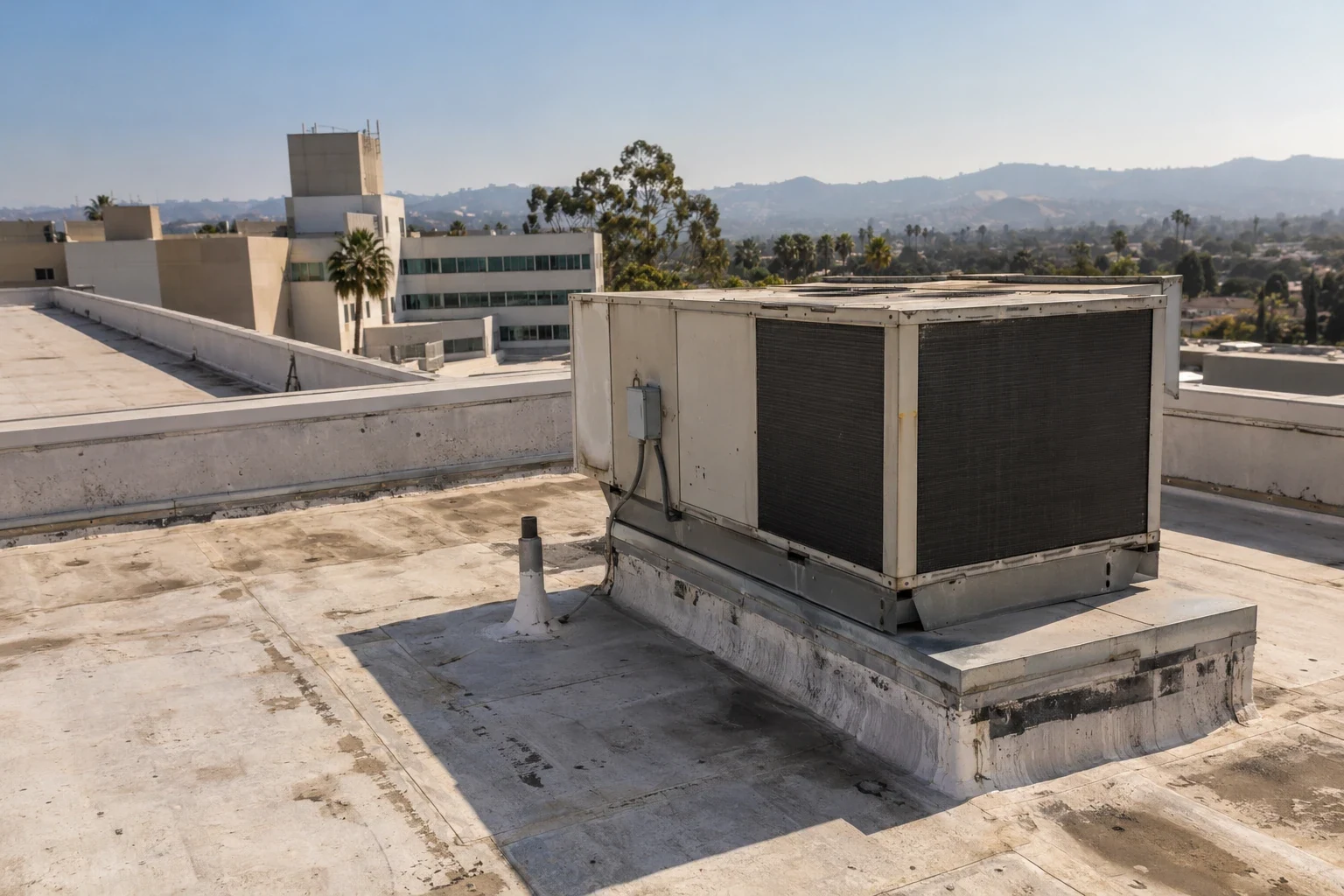
District buildings may have different roof materials, additions, slopes, and edge details. We examine an exposed membrane edge, seam, curb, metal transition, or approved test area before choosing a patch. TPO, PVC, EPDM, modified bitumen, built-up roofing, and coated assemblies do not share one repair method. We record which material was identified and where the repair ties into sound material. A school roof assessment includes drains, flashings, rooftop equipment, and the interior area below the reported condition.
Visalia's hot season can affect exposed sealants and product application windows. Most monthly precipitation falls between late fall and early spring. That weather cycle makes it useful to check drains and open laps before the wetter months, but it does not diagnose a campus roof. We follow the selected system's temperature and substrate requirements, and we avoid coating a wet or unstable assembly. If the roof needs a different layer, the scope states what must be removed, dried, or repaired before installation.
Keep Permitting and Roofing Decisions Distinct
Roof work can require more than one review, especially when the scope changes insulation, deck, drainage, or structural support. Visalia Building Safety states that the 2025 California Building Standards Code became effective January 1, 2026. Applications submitted on or after that date use the 2025 code, while earlier submissions remain subject to the 2022 edition. We can organize roofing information for the district's project team, but the project lead confirms which permit path applies before work begins.
Separating approvals from field diagnosis keeps both records clear. Our roof report describes the membrane, moisture, deck, and detail conditions that we observed. The district's facilities and project staff coordinate submittals, site approvals, and any consultant review. If a permit or design question could change the roofing assembly, we flag the scope item and wait for direction rather than make an unsupported change in the field. A replacement proposal lists the proposed system, tear-off limits, insulation, edge details, and work sequence for the team to review.

Compare Buildings with the Same Record Fields
A district may use a common work-order form, but each roof needs its own map and closeout. We label the building, roof area, test locations, photos, repair material, and conditions left for follow-up. A prior roof plan helps locate equipment and drains, while the visit confirms what remains in place. When several campuses need inspection, a multi-site roof schedule can standardize report fields without treating one building's condition as evidence for another.
Downtown Visalia and the Mooney Boulevard Regional Retail Corridor show two different city settings, not school-specific conditions. For a district property near either area, the school contact determines bell schedules, deliveries, access, and safety routes. We keep those instructions with the work plan and keep roof findings in the building file. A public-agency roofing review can address procurement and approval steps, while general contractor coordination can help when roof work is part of a larger capital project.
Leave the Maintenance Team a Usable Handoff
At completion, we photograph the repaired detail, mark its location, list the material installed, and record any portion that could not be tested. The district receives a concise note about interior protection removed, access restored, and follow-up items that remain. If another contractor will work near a curb or conduit, the photo record helps everyone find the same roof area. The next leak report can then be compared with a known repair boundary rather than a vague campus-wide note.
Keep the roof map, work order, permit records, leak log, and closeout together by building. The file should distinguish completed work from a question that needs another inspection. If a roof holds water after rain, record the date and the area before asking for a drainage review. If a room is affected, note the ceiling location and any equipment or activity beneath it. Send those details, plus access instructions and the district calendar, before a visit. We will identify the first test area and explain what the evidence supports.
Commercial Roofing Questions
Can repairs be completed while a school is in session?
Some work can be phased around classes when access, noise, interior protection, and safe routes are set in advance. We identify the work area and daily close-in point with district staff.
What should a district send before a roof inspection?
Provide the building and room, leak date, roof plan, previous work order, access rules, and any school calendar limits. Those details help us select the first area to inspect.
Does a roof stain require replacing the whole campus roof?
No. We trace the water path and test the surrounding roof material. A localized detail may be repairable; broader moisture or repeated failures can support a larger evaluation.
How are code requirements handled for a district project?
We describe the roofing assembly and proposed work for the project team. The responsible district lead confirms the applicable permit, code edition, and design approvals before construction.
What belongs in a school roof closeout?
Keep photos, repair location, material, tested boundary, access notes, and remaining follow-up together by building. This lets maintenance staff compare later reports with completed work.