Data Center Roofing in Visalia, CA
Property Types We Roof | Visalia and Tulare County
Data Center Roofing
A roof leak near a cable tray or cooling unit needs a measured response. We identify the reported interior zone, check the roof above it, and coordinate access before opening the assembly. A data center may contain critical electrical, network, and cooling equipment, yet the roof conditions still need to be tested rather than inferred from the room name. Visalia's Business Research Park is a distinct land-use category in the City's planning documents, not evidence of a particular data-center tenant. The Visalia Industrial Park is a separate industrial area. We verify the actual building, roof plan, and site controls before recommending work.
Set Access Controls before the First Walk
The facility lead identifies escort requirements, badged zones, roof keys, camera restrictions, and any equipment that cannot be photographed. We agree on which ladders, hatches, and service paths are approved. If the inspection requires access above a controlled room, the operator determines whether a person must remain on site or monitor alarms. We record boundaries and do not enter restricted spaces without permission. The site plan should also show lift placement, fire lanes, emergency entrances, and where materials may be staged.
A standard office roof survey may have different access procedures; a data-center route should follow the operator's controls. A commercial roof inspection can document leaks and roof details without making changes to live equipment. The work order states what the roofing crew can inspect, what requires escort, and which findings must be reviewed by facilities before the scope changes.
Trace Water around Cable and Cooling Routes
Water can travel along conduit, cable supports, deck flutes, or insulation joints before reaching a visible ceiling mark. We compare the report with roof geometry and mark curbs, pipe boots, seams, drains, and wall transitions along the likely path. A split at a cooling-equipment curb may be one cause; a blocked drain or open edge may be another. We note which condition was tested and whether the route continues into a restricted room that the roofing crew cannot enter.
Before a test opening, the owner identifies sensitive equipment and the interior protection required. Temporary water-control measures should be agreed to with the operator. A medical-office roof review also coordinates occupied areas, but a data center's security and equipment controls need site-specific approval. We state if a leak location remains uncertain and list the next safe test rather than treat one ceiling mark as a confirmed roof breach.
Inspect Cooling Units, Curbs, and Cable Supports
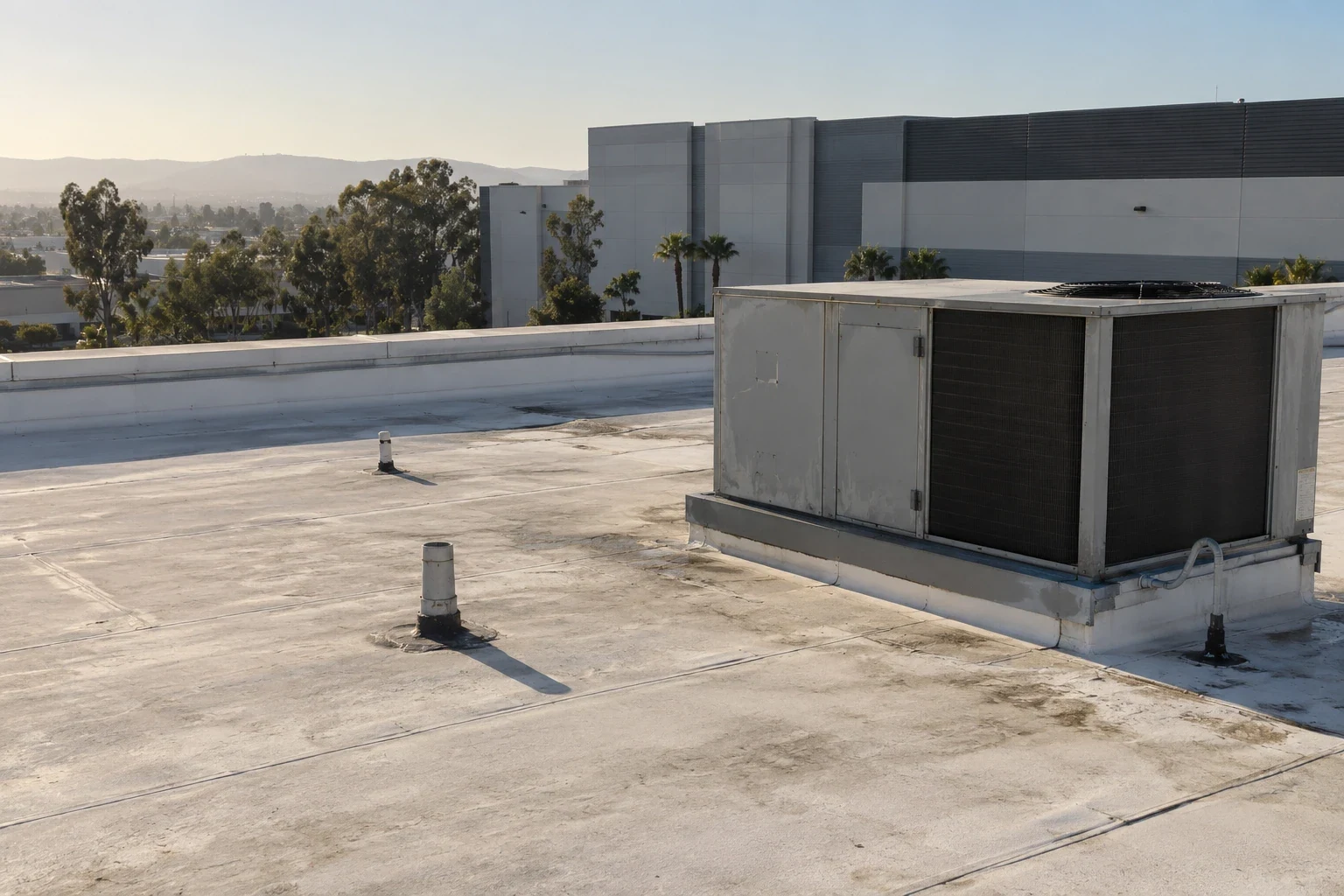
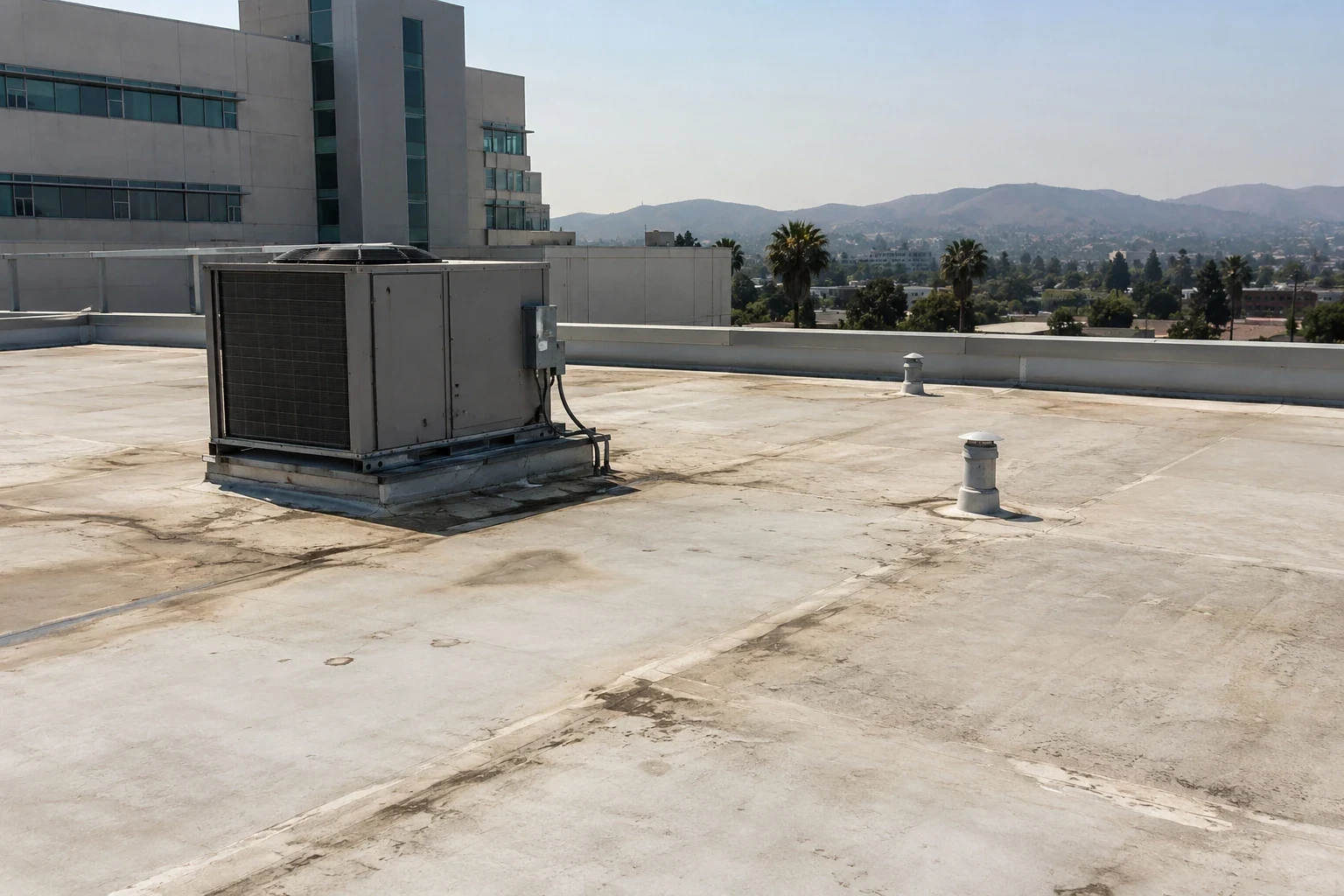
Cooling equipment can concentrate roof penetrations, service traffic, vibration, and drainage changes. We inspect curb corners, pipe supports, conduit entries, walkway pads, and nearby seams for movement or failed flashing. If a unit was replaced, we ask for the work order and detail used at the curb. A new support placed over a membrane may need an approved load path; a rooftop unit's condensate line should not discharge where it keeps a seam wet. We do not disconnect or adjust equipment as part of the roof inspection.
A equipment curb and support assessment can identify coordination needs. We separate roofing, mechanical, and electrical responsibilities so each interface has a designated owner. The TPO system and other single-ply membranes require product-specific flashing, while a metal roof follows different movement details. The project file should state which details need design approval before work begins.
Review Drainage and Backup Paths
Water control matters even when the room below has leak detection. We inspect primary drains, sumps, overflow routes, gutters, and low areas for debris or failed connections. If an outlet is blocked, the roof report separates cleaning from a construction repair. We mark areas where water remains and determine whether a slope issue, deck deflection, or insulation change may be involved. A membrane patch will not correct an undersized or mislocated drain.
The facility team may have a response plan for a water alert. We ask where runoff can go during a repair and whether temporary protection affects a secondary outlet. A drain and scupper scope can be priced separately from a seam repair. Before leaving, the crew verifies that temporary covers, hoses, and debris have not blocked a drain or emergency path.
Verify Visalia Site and Land-Use Context
Business Research Park is a separate land-use category from industrial and light-industrial areas. Visalia Industrial Park materials describe freight and utility infrastructure for that distinct area. These planning labels do not establish that a data center operates on a parcel. We confirm the address, tenant authorization, roof access, utility interfaces, and operating controls with the owner. That avoids describing a proposed land-use area as a facility or implying a customer relationship that is not documented.
For a property within the Business Research Park planning area, we verify parcel boundaries and applicable access rules. A building in the Visalia Industrial Park has its own delivery and escort plan. The roof survey records only conditions observed at the authorized site. If the project is at a different location in the MSA, the plan should identify the actual jurisdiction and the nearest approved route.
Downtown Visalia is another mixed-use employment area described by the City, with professional, government, healthcare, retail, and nonprofit activity. That planning context is distinct from a data-center tenancy. We use the actual parcel and facility authorization to confirm where work is permitted, what roof is in scope, and how the operator wants a leak escalation handled. The land-use name can orient a regional review, but it cannot replace the owner's asset records, access map, or equipment schedule.
Define Testing, Repair, and Change Control
One flashing repair may resolve an isolated leak; a failed curb, wet insulation, or repeated penetration problems may need a broader phase. We map the tested area and list every condition not opened. If a proposal depends on access to an equipment room or an approved roof test, that dependency appears before mobilization. The owner reviews any scope change before a crew crosses the original boundary. A roof repair scope can address a defined defect, while a replacement review compares removal and system redesign if the existing assembly is no longer serviceable.
Closeout should include photos allowed by the operator, repair materials, detail locations, test results, and maintenance instructions. The report can note where future equipment work requires a roofing detail or approval. Share roof plans, leak alerts, equipment schedules, security procedures, and approved photo rules before the first walk. We will identify what the survey confirms and what requires a facilities or design decision before work proceeds.
Commercial Roofing Questions
Can roof work happen above live data-center operations?
It may be possible when the operator approves access, interior protection, alarm monitoring, and work boundaries. The facility team sets controls for critical rooms and equipment.
Does a roof inspection require entering a server room?
Not always. Interior access can help trace a report, but the operator determines whether it is allowed. We can document exterior findings and list an approved next test.
How do you protect cable routes during a leak repair?
The facilities team identifies sensitive equipment and protection rules before an opening. The roofing scope then defines temporary cover, work area, and approvals.
Can a cooling-unit curb be repaired without shutting down equipment?
The mechanical operator decides whether the unit can remain live. We coordinate roof access and flashing work around that decision, without changing equipment controls.
What belongs in a data-center roof record?
A roof map, tested details, photos permitted by the operator, repair materials, access boundaries, and maintenance notes help facilities teams review later work.