Rooftop Equipment Curbs and Supports in Visalia, CA
Commercial Roofing Services | Visalia and Tulare County
Rooftop Equipment Curbs and Supports
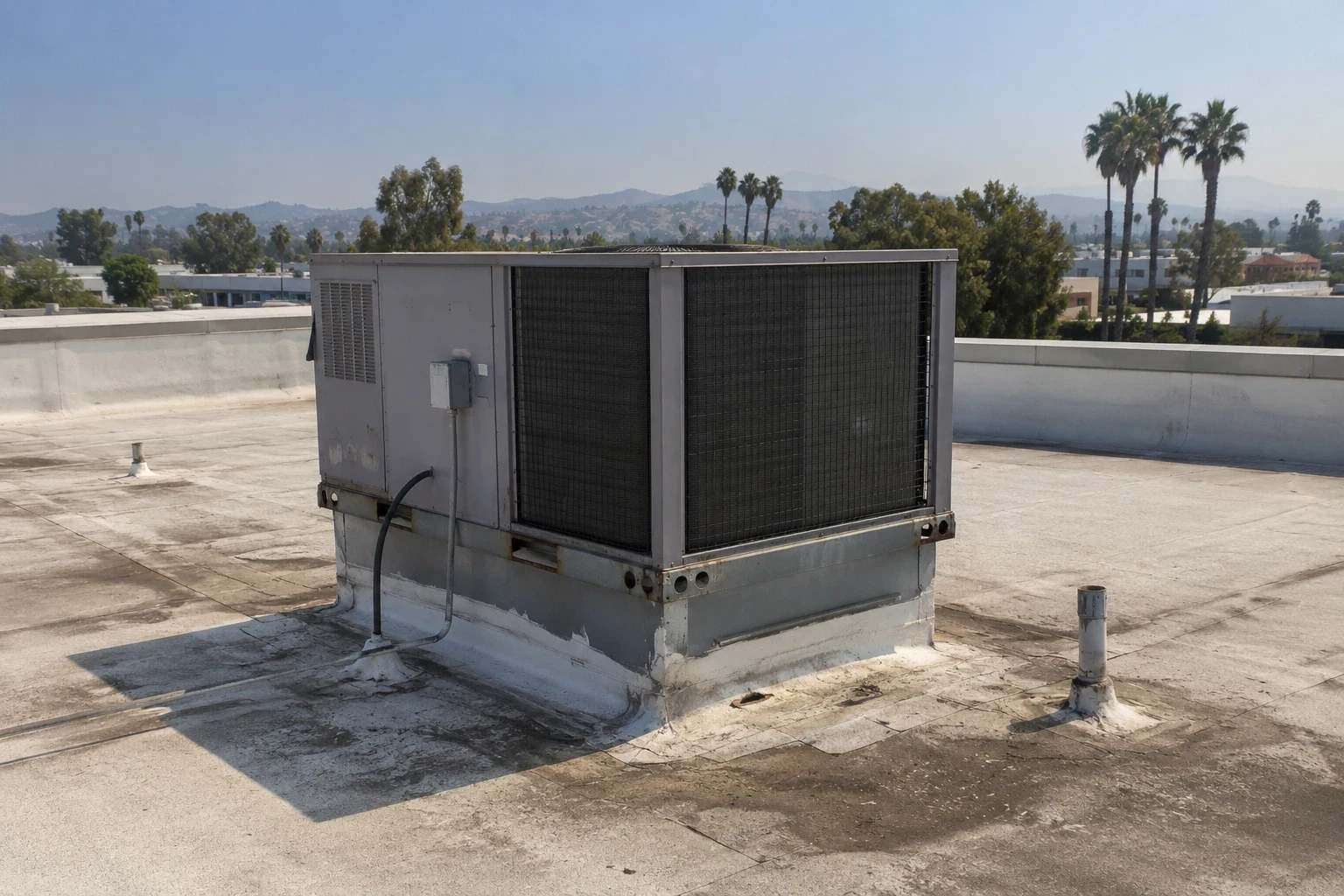
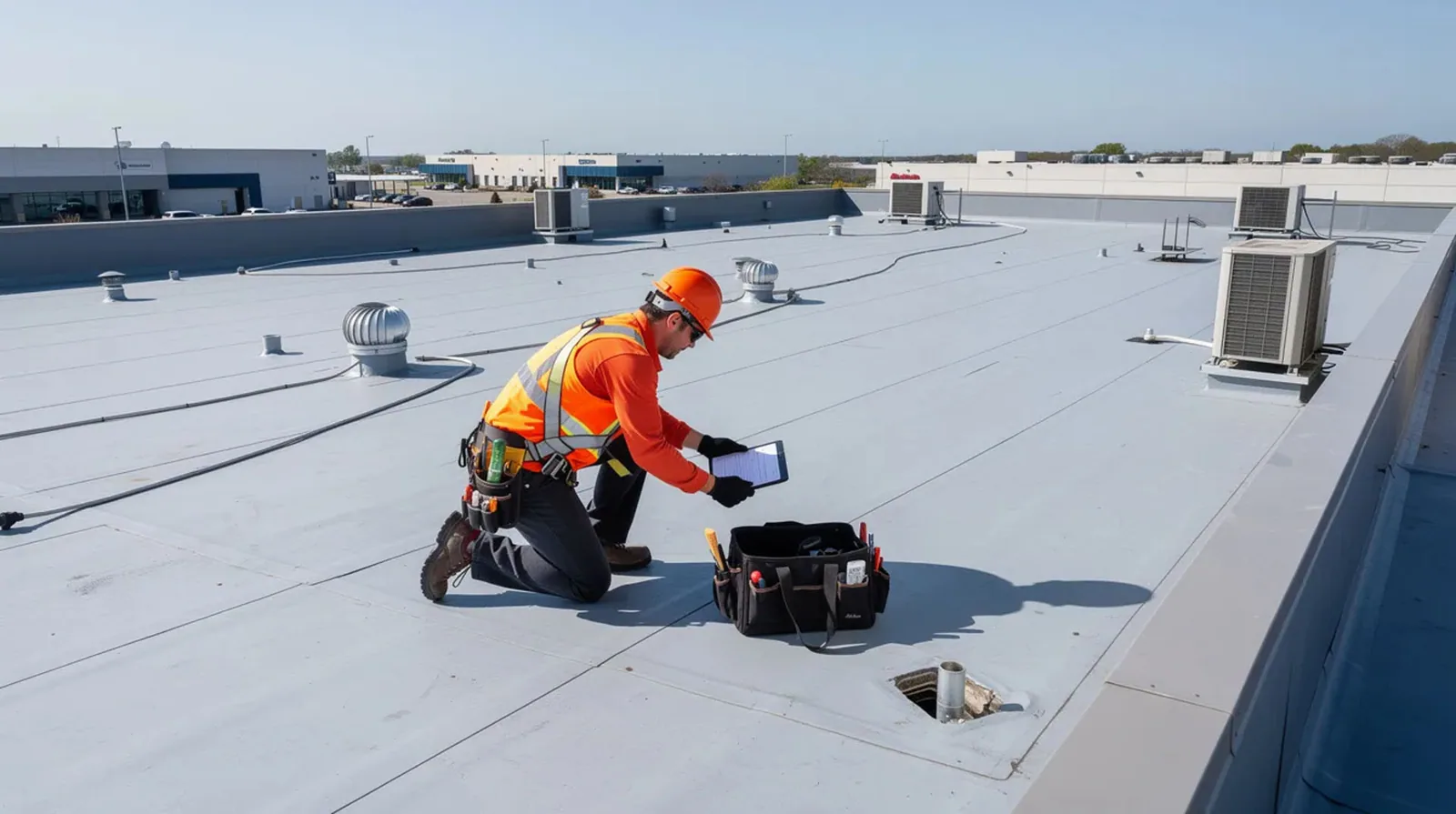
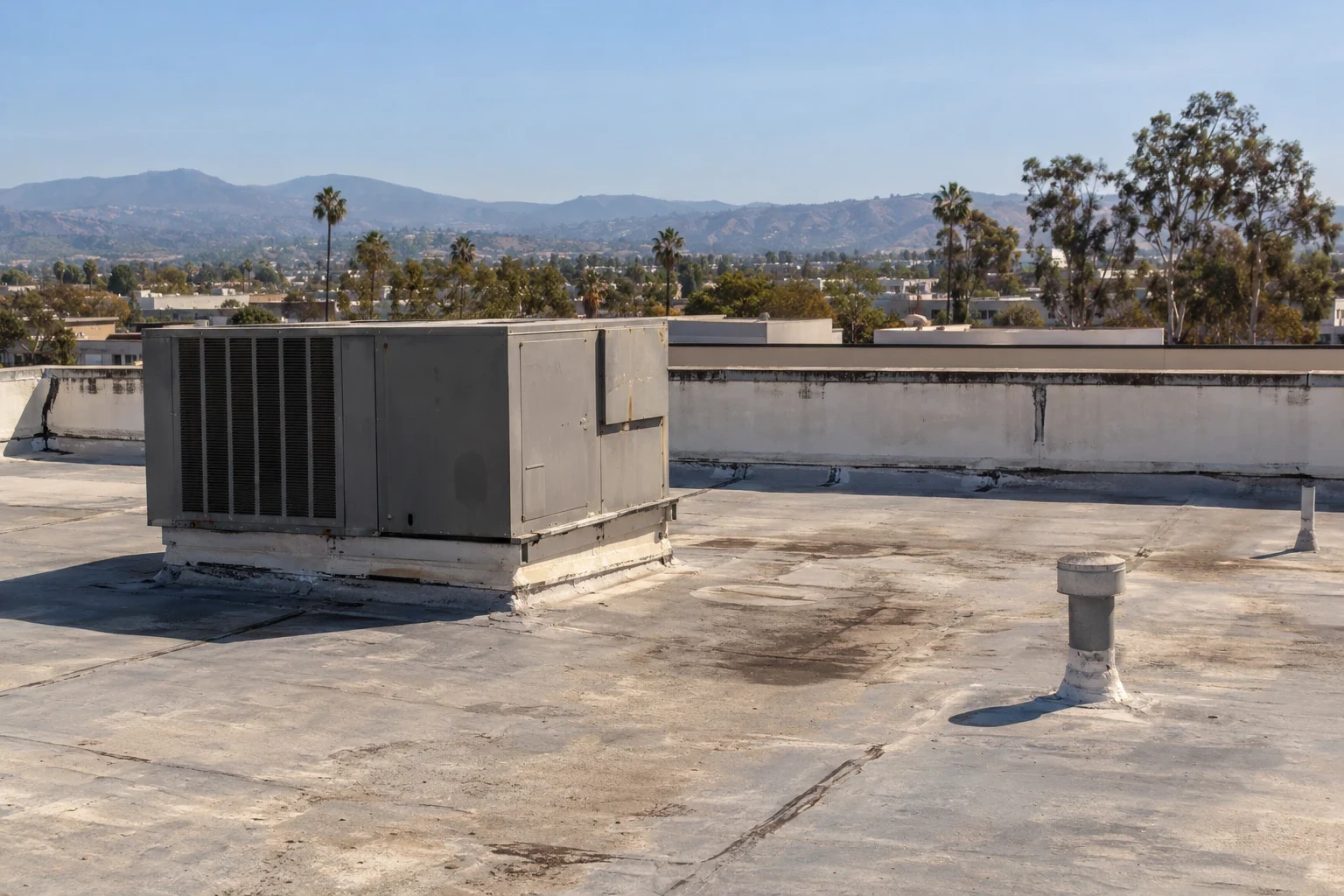
A shifted rooftop unit can pull its curb flashing out of plane before water shows inside. We inspect the curb, membrane transition, fasteners, and nearby seams first. The unit's service history and support condition matter as much as the roofing material. A roof at the Visalia Industrial Park may have active production or delivery windows; a Mooney Boulevard property may need customer access protected. Those details shape the work plan, but the repair begins with the specific curb and tested area, not an assumption about what moved.
Check the Curb before Resetting Equipment
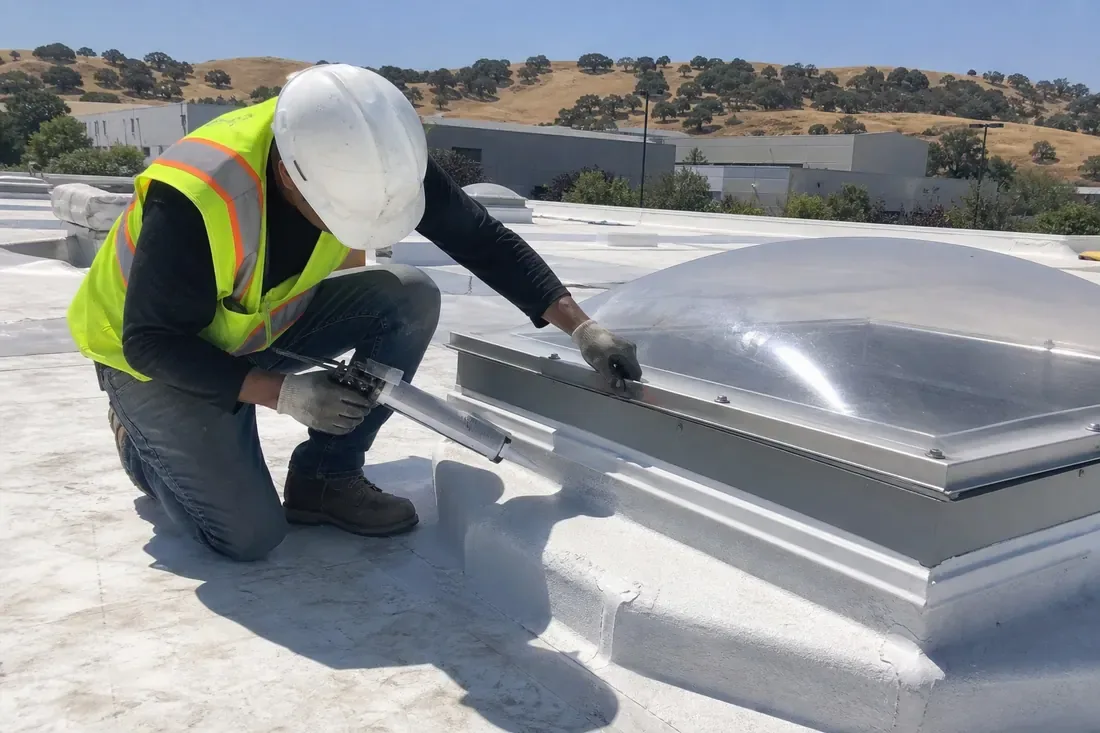
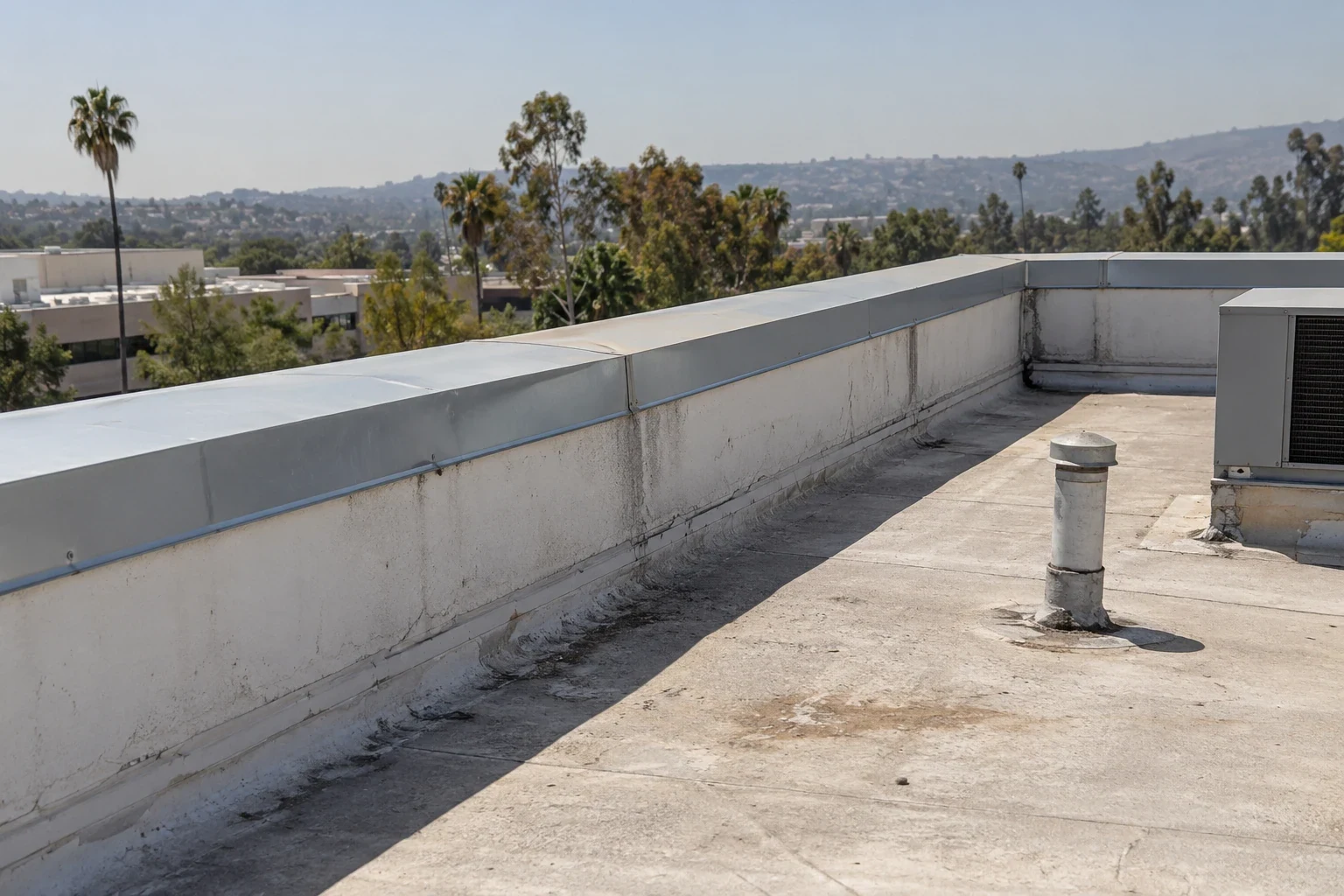
We look for separation where flashing meets the curb, loose counterflashing, exposed fasteners, cracked sealant, and movement at the equipment base. A water mark below the unit can begin at a seam, nearby penetration, or drain, so we compare the roof condition with the reported room and timing. If the curb is concealed by a service platform or a later roof layer, we identify the access needed before opening it. Photos show the curb face, corners, and membrane transition so the owner can see what the scope addresses.
Equipment weight and vibration affect supports, but we do not treat the roof membrane as a structural repair. We note visible rocking, corrosion, or a failed attachment and coordinate the right trade when the curb or frame needs mechanical correction. Before work, the property manager confirms who can shut down or move the unit and how the interior space below will be protected. That boundary keeps a flashing repair separate from equipment work and avoids changing a support without the required approval.
Rebuild the Roof Transition
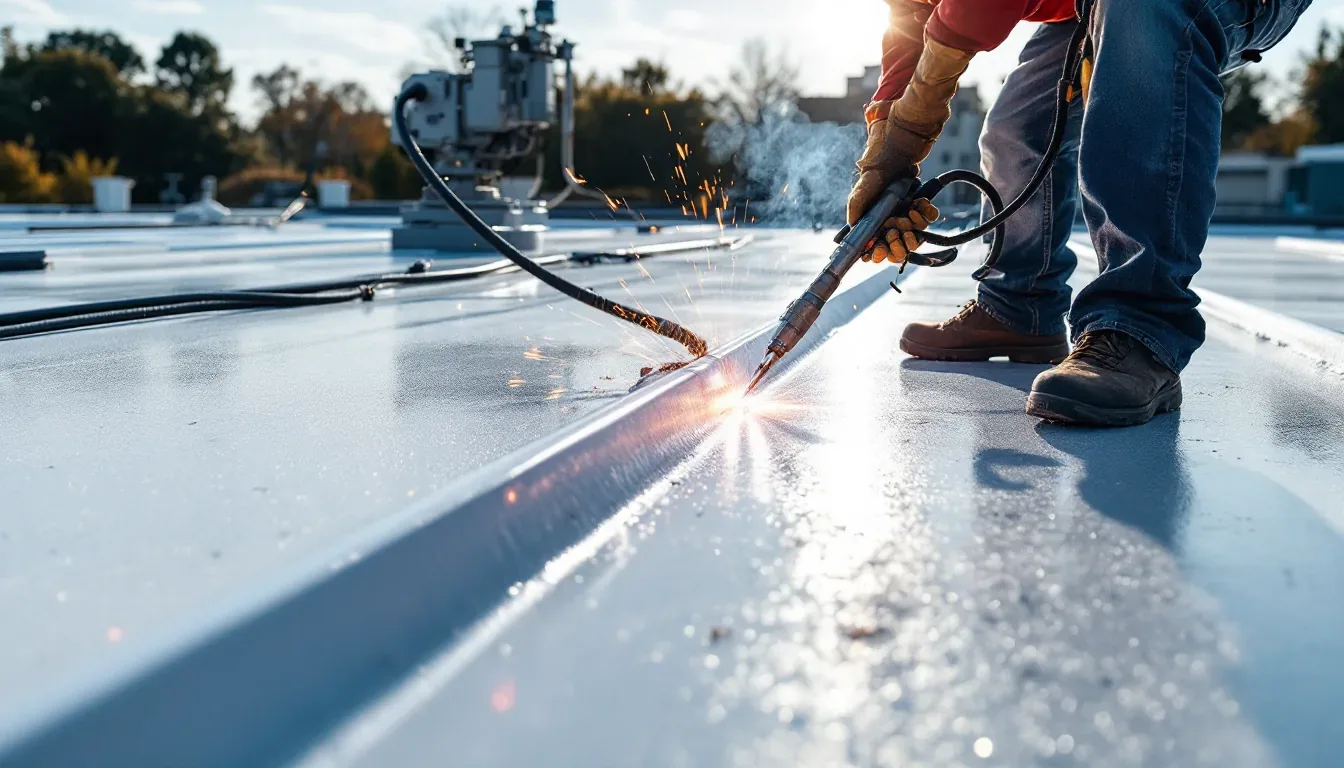
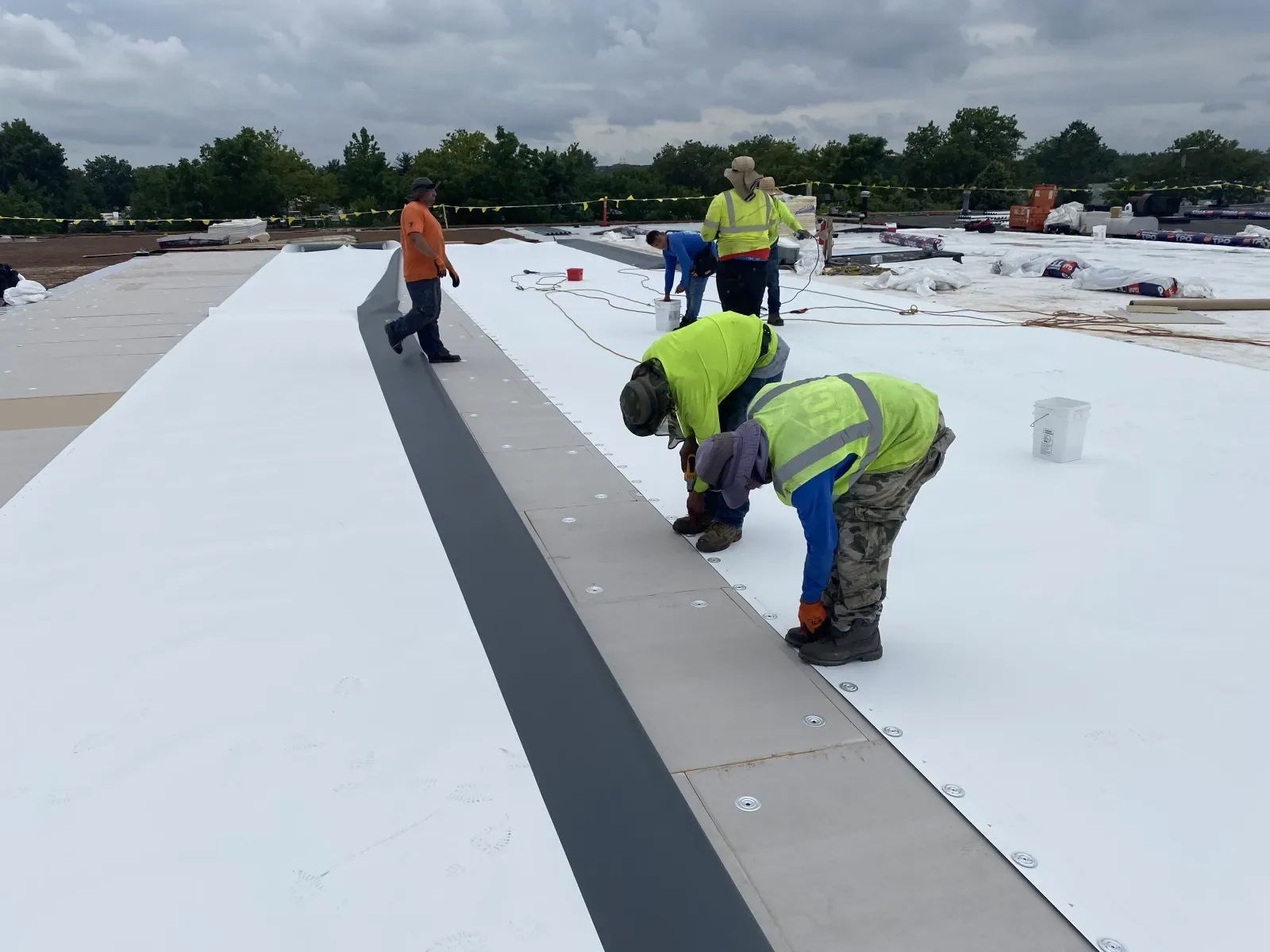
A curb detail has to connect the roof membrane to the vertical faces without leaving a gap at corners or seams. We remove loose or failed material to the extent the approved scope allows, prepare a compatible tie-in, and secure the flashing for the roof system. Sheet membranes need their specified seam or cover-strip method. Asphaltic assemblies need compatible ply and flashing work. Metal roofs call for a detail that respects panel movement. The written scope names the assembly and finish so a later service visit can distinguish new work from older layers.
Water can collect behind a curb if the roof slope or nearby drainage sends it there. We check the uphill side, adjacent low area, and drain route before calling a flashing patch complete. If ponding persists, the repair can stop a leak at the curb while a separate drainage correction remains open. For a wider leak investigation, a roof inspection can map nearby details, and a defined repair scope can address the membrane tie-in without changing the equipment setting.
Keep Pipes and Service Lines off the Membrane
Conduit, refrigerant lines, and small pipes should rest on suitable supports rather than rub across the roof surface. We check whether a support foot has shifted, cut the membrane, trapped debris, or blocked a drainage path. A loose pipe can pull at a penetration when equipment vibrates or a technician moves it. We document the contact point and ask the owner to coordinate any change to the line route or support design with the mechanical contractor. Roofing repairs follow that approved arrangement and preserve the manufacturer's required clearances. When a curb is replaced, its opening, unit footprint, and flashing height must match the roof design. A wider curb can uncover old nailers or insulation at the perimeter; a smaller one may call for a designed transition instead of extra sealant. We verify dimensions before ordering and note where a concealed deck edge could change the scope. The lift plan also keeps the unit load and service path in view.
Support pads and attachment methods must fit the roof material and service conditions. A fastener driven through a membrane without a designed flashing detail can create a new leak path. Where a curb replacement changes the roof opening, the owner may need a coordinated replacement scope for insulation, deck, and flashing rather than a surface patch. Visalia has varied industrial and business-park land uses. A property in those areas may have multiple equipment zones, but each support and curb still needs a building-specific check.
Choose a Work Window for the Roof Surface
Visalia has many hot days and a dry stretch followed by rain concentrated in cooler months. Heat affects membrane temperature, sealant handling, and worker exposure; a later rain tests the transition after installation. We check the product conditions, surface dryness, and forecast before opening a curb detail. If a test area shows wet insulation or a weak deck, we cover it safely and stop before burying the finding. The owner receives a note identifying what was confirmed and what requires another approval.
The industrial park connects to freight, power, gas, water, and wastewater; Highway 99 is a major trucking route. A unit serving a production or distribution building can affect work sequencing and roof access. We confirm equipment shutdown, staging, and return access with the manager rather than assume that the same window fits every facility. A TPO curb detail and an EPDM flashing detail use different materials, so the roof identification stays with the work order.
Leave a Roof Record the Next Technician Can Use
Closeout should identify the unit or roof zone, the repaired curb faces, materials removed and installed, and any test opening made. We photograph the final tie-in and note which adjacent flashing or support remains outside the work. If the mechanical contractor resets a unit after roofing, the manager can ask for a follow-up look at the corners and seams that were disturbed. That record helps separate a new leak report from an older condition and gives the next service crew a concrete place to begin.
The Court and Locust corridor connects mixed-use areas in Visalia, while Mooney Boulevard serves a wider retail district. Those settings can bring different delivery routes, hours, and interior protection needs to rooftop work. A property manager can share the equipment schedule, leak location, access rules, and recent roof notes before a visit. We will inspect the curb and support conditions, define the roof work that is ready to proceed, and identify any equipment decision that needs approval before the flashing is closed.
Commercial Roofing Questions
Can a curb leak if the equipment still runs?
Yes. The unit can operate while a corner seam or membrane transition has opened. We inspect the curb faces and nearby roof details, then mark what is damaged and what needs a mechanical check.
Who moves the rooftop unit for a curb repair?
The equipment change is coordinated with the owner and mechanical contractor. We confirm shutdown, lifting access, and timing before roofing work begins, and we do not reset a unit without the required direction.
Can you repair pipe supports without replacing the roof?
A localized support or flashing repair may fit when the surrounding membrane and insulation are sound. We test the contact area and state the limits so the scope does not imply a full roof replacement.
What if the curb sits in a ponding area?
We inspect the curb, uphill drainage path, outlets, and low area together. A flashing repair can address the transition, while a slope or drainage correction may need its own design and approval.
What should the work record include?
It should show the equipment zone, curb faces repaired, tie-in materials, tested area, photos, and any mechanical work left open. That gives a later visit a clear comparison point.