Manufacturing Facility Roofing in Visalia, CA
Industries We Serve | Visalia and Tulare County
Manufacturing Facility Roofing
A drip near a production line needs a roof answer that does not create a second interruption. We locate the affected area, check what sits below it, and trace the water path through seams, curbs, penetrations, and drains. The Visalia Industrial Park spans manufacturing, food processing, warehousing, and distribution uses, but that district context cannot identify a specific plant's roof assembly or work rules. We need the building contact, process window, and roof plan before setting scope. The first walk separates an isolated detail failure from wet insulation or a broader condition that could change the repair plan.
Set the Work Zone around the Process
Start with the operation underneath the roof. We ask whether a production cell can pause, whether inventory needs protection, which exhaust or intake paths must remain clear, and who can authorize interior access. A roof opening over an active line may need a short, controlled sequence. Another area may tolerate a larger work window after materials are moved. We mark the interior protection, access route, and daily close-in point so the supervisor can coordinate the shift with a defined roof boundary.
Local economic-development information describes a broad freight and utility network serving the industrial park. That regional profile does not establish a given plant's service connections, process equipment, or delivery gate. The manager confirms those details with site staff. A work plan for an occupied facility identifies the area under repair, equipment restrictions, noise window, and who receives a change notice if concealed conditions alter the sequence.
Trace the Leak before Moving Production
Water can travel beyond the visible drip before it reaches the floor. We compare the reported room with roof seams, equipment curbs, penetrations, wall transitions, and drains above or upslope. Deck flutes and insulation joints can move moisture sideways. If a prior repair is present, we inspect its edge and the surrounding membrane instead of covering the same spot again. The inspection record marks tested areas, moisture readings, and any approved opening so a plant manager can see why the repair line stops where it does.
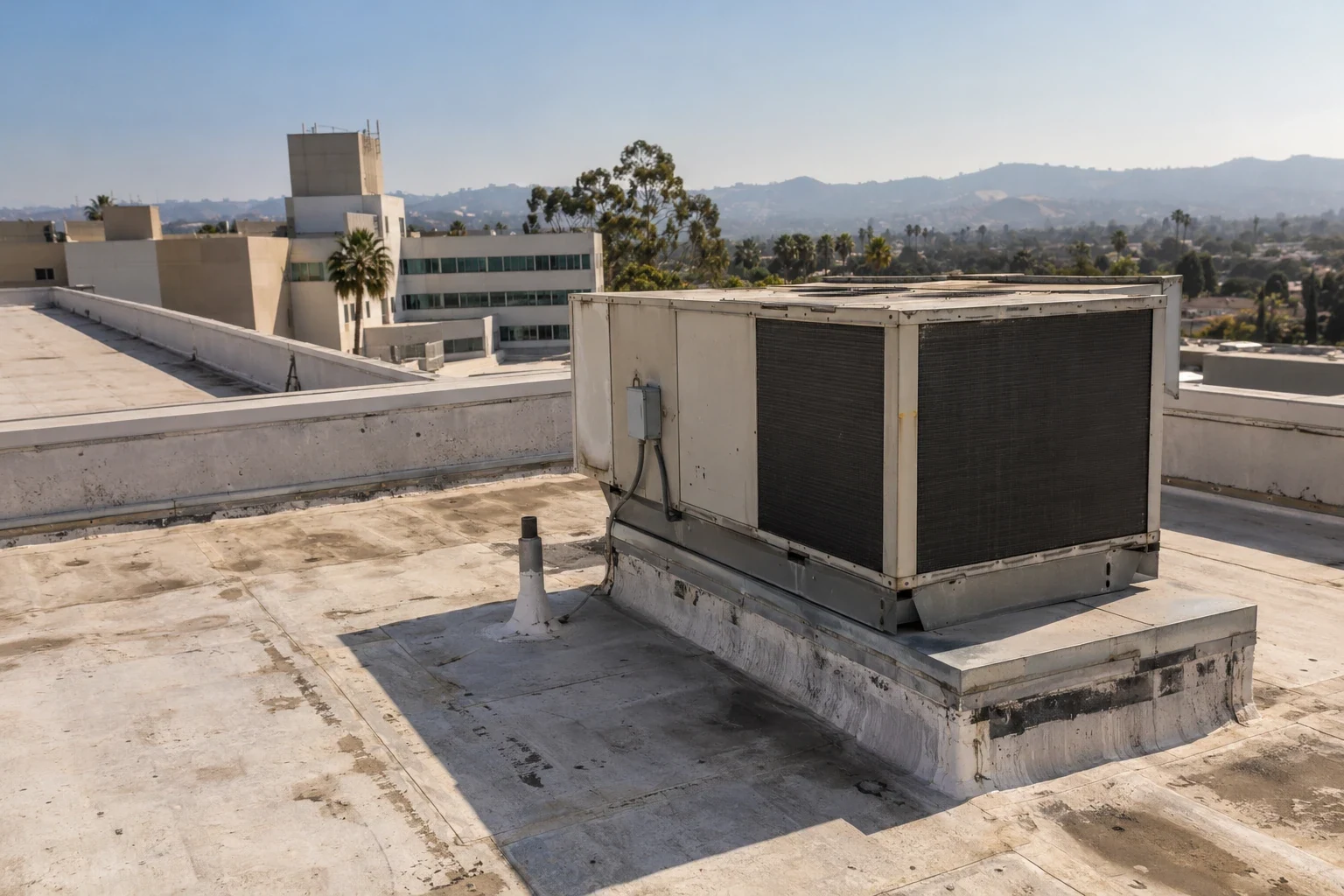
At a process exhaust, the curb and flashing may need a different repair than the membrane field. A mechanical adjustment can disturb the tie-in, so we coordinate the equipment contractor before closing the detail. If moisture extends under the field sheet, we map the wet boundary and identify which rooms need temporary protection. That measured limit helps the operator choose between a contained patch, a follow-up test, and a broader roof review without treating one interior mark as proof that the entire production building is affected.
Identify the Roof before Selecting Materials
Manufacturing additions often meet at different heights or use another assembly. An exposed edge, seam, curb detail, or small approved opening can reveal the assembly. We identify the membrane or metal layer and its attachment before specifying a compatible repair. Surface color alone does not settle the question. A weld, adhesive, asphaltic detail, or liquid flashing has its own preparation requirements. The scope names the known material, the repair product, and any condition that needs confirmation before installation.
Heat affects exposed sealant and membrane surfaces through a long Visalia summer, and the chosen primer or adhesive still has its own installation limits. We check the manufacturer's application guidance, substrate condition, and work-window temperature before a crew opens the roof. A TPO system detail uses different seam preparation from EPDM membrane work. Matching the repair to the installed assembly reduces the chance that a small field patch leaves a weak transition at the curb or edge.
Plan Lifts and Deliveries without Blocking Output
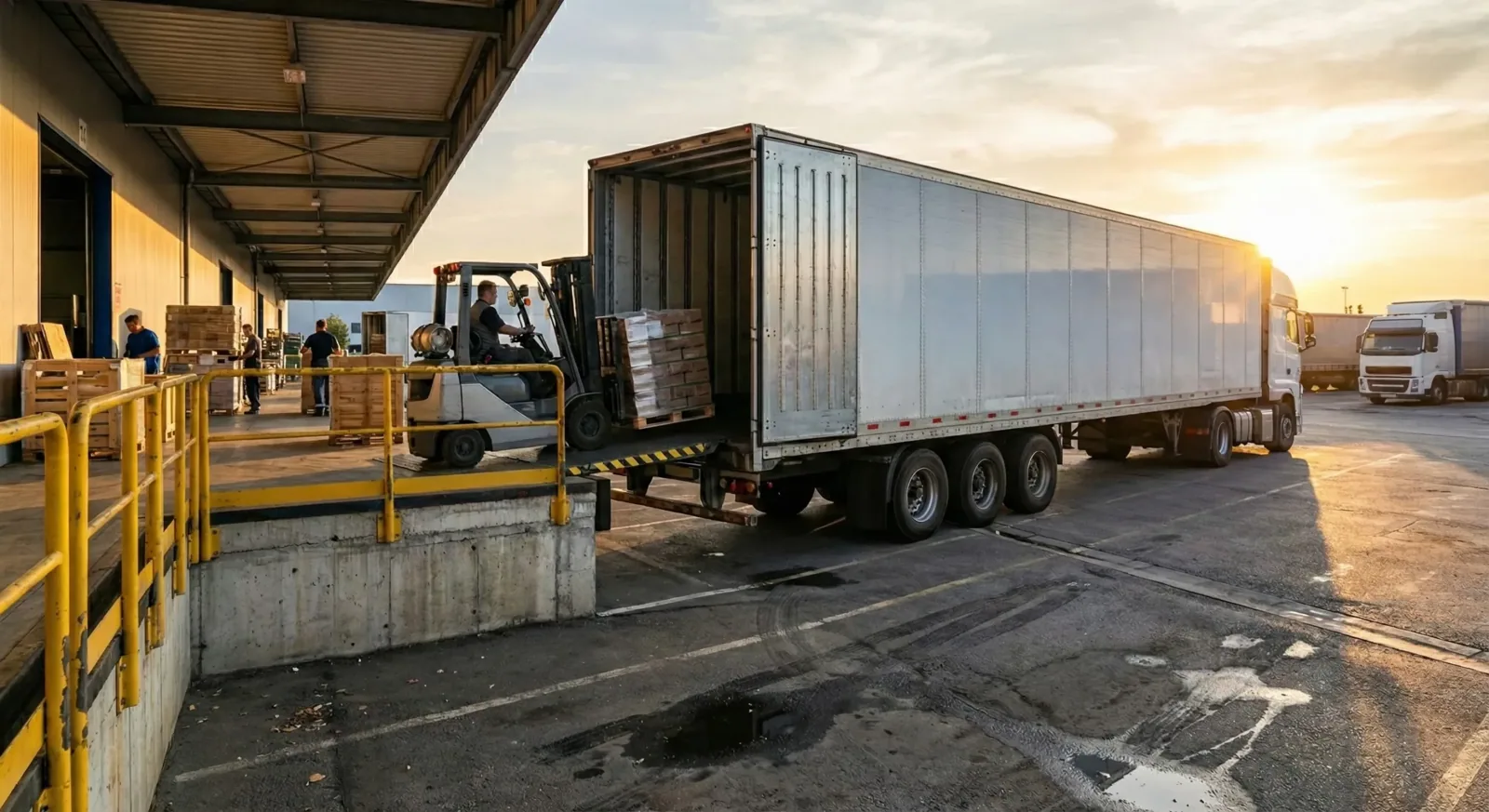
Material delivery is part of the production schedule. Highway 99 serves regional agricultural production and goods movement, while site access remains specific to each facility. We confirm the correct gate, turning clearance, unloading zone, forklift support, and time when a truck can arrive. The plant contact also identifies emergency lanes, pedestrian routes, and areas where a lift cannot set up. These details belong in the roofing scope because a blocked dock or unplanned shutdown can cost more operating time than the membrane repair itself.
Before replacement work, we sequence tear-off, dry-in, insulation, and membrane installation by roof area. Each shift closes the exposed assembly and records remaining open work. If a process cannot stop, smaller work zones may be appropriate, with additional mobilizations stated in the proposal. A replacement scope lists removal limits, deck repairs, equipment protection, and daily close-in checks. The Visalia Industrial Park service area gives local context, while the property manager supplies the live delivery and process instructions.
Keep Drainage and Penetrations in the Same Review
Industrial roofs collect more than rain. Dust, packaging fragments, and material from nearby operations can reach strainers or low areas, so we inspect the drain bowl, sump, overflow, and nearby seams together. Cleaning a blocked outlet will not correct a depressed deck or failed drain flange. We document each condition separately and show which correction can be completed within the immediate repair. Drain and scupper work can be approved alongside membrane repairs without merging two different failure paths into one line item.
Pipe supports, exhaust curbs, cable trays, and equipment screens need clear flashing details. We note movement, loose fasteners, cracked sealant, and previous patching at each transition. If the equipment trade needs roof access, the owner can schedule that visit before final closeout or ask us to inspect the tie-in afterward. The work record identifies the roof area, photo angle, material, and responsible trade. That gives maintenance staff a repeatable way to check the same point rather than relying on a shift note that says only “leak by the line.”
Compare Repair with a Plant-wide Roof Plan
A localized repair fits a defined failure with sound surrounding material. Repeated openings, widespread wet insulation, loose attachment, or deck deterioration may justify a broader assessment. We state what was tested and where the inspection stopped, then compare repair, recover, and replacement using the same roof-area map. A capital plan can separate this year's water-control work from a future replacement window and identify what data the plant needs for that budget discussion.
The Visalia Industrial Park includes production, food-processing, warehousing, and distribution employers, and the wider Highway 99 corridor supports regional goods movement. Those facts explain why operating continuity and delivery access belong in the schedule; they do not predict roof condition. Share the leak log, roof plan, assembly records, shutdown calendar, and equipment work orders before the first visit. A logistics roof plan may highlight dock windows, while portfolio management may prioritize comparable records across multiple buildings. Each manufacturer receives its own tested scope.
Commercial Roofing Questions
Can production continue while a roof section is open?
The sequence depends on the process below and the weather-tight close-in window. We identify the work zone, interior protection, and shift handoff with the plant contact before opening that area.
How do you inspect above process equipment?
We confirm roof access and equipment restrictions, then inspect the curb, flashing, seams, and nearby drainage. If an area cannot be reached safely, the report names the limitation and next access step.
Will you coordinate with the mechanical contractor?
Yes. We identify who owns the curb, support, or penetration and review the roof tie-in before closeout. The work record notes the transition that was repaired and any later check required.
What can make a plant roof repair larger than expected?
Wet insulation, damaged deck, extra roof layers, drain correction, equipment conflicts, and restricted staging can change quantities or sequence. We stop at the approved boundary and document added conditions for review.
How should a manufacturer prepare for a roof replacement?
Provide roof plans, shutdown windows, process hazards, access rules, delivery constraints, and prior repair records. We use them to set work zones, protection, dry-in steps, and site contacts.