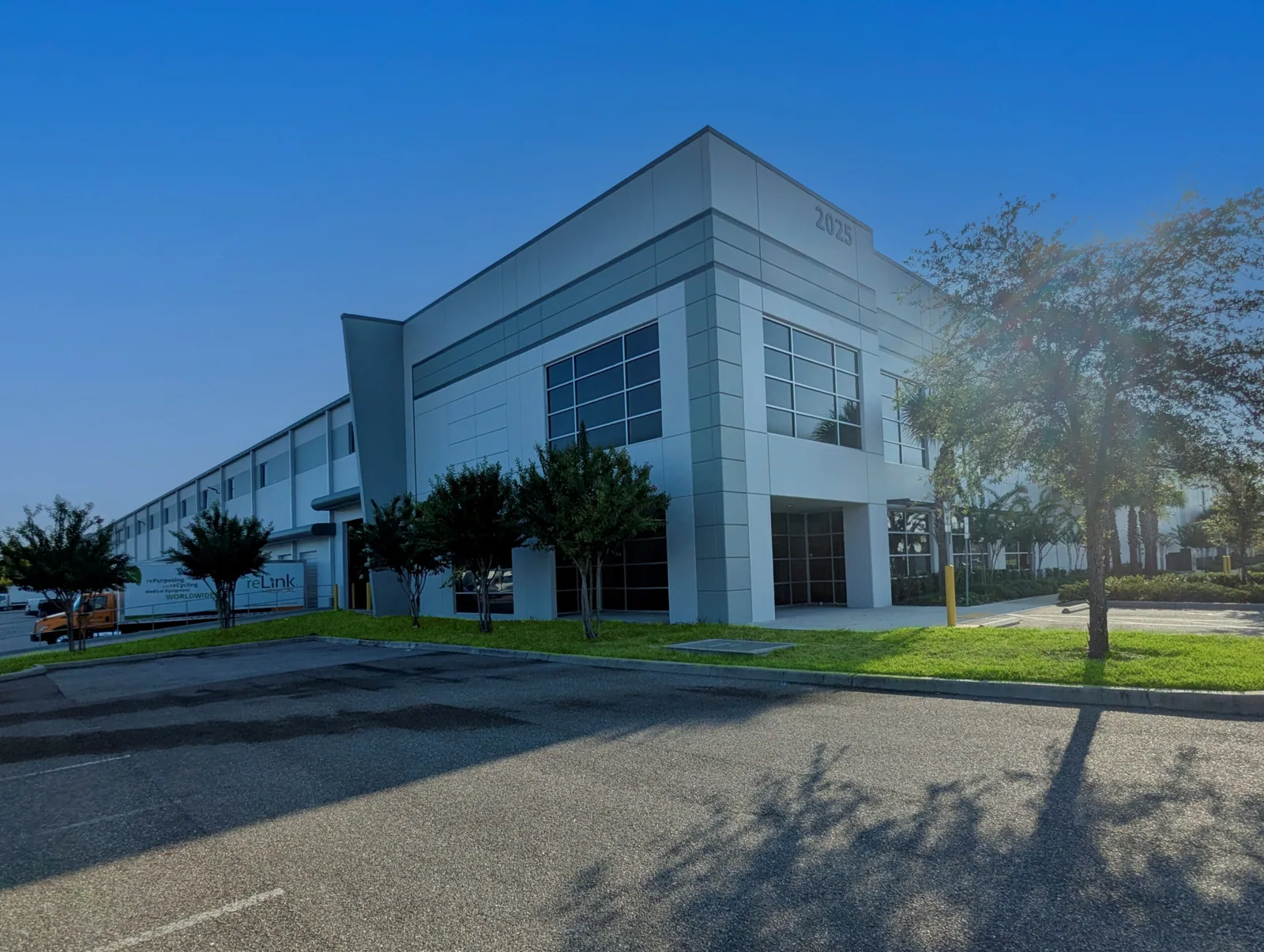
Distribution Center Roofing in Visalia, CA
Property Types We Roof | Visalia and Tulare County
Distribution Center Roofing
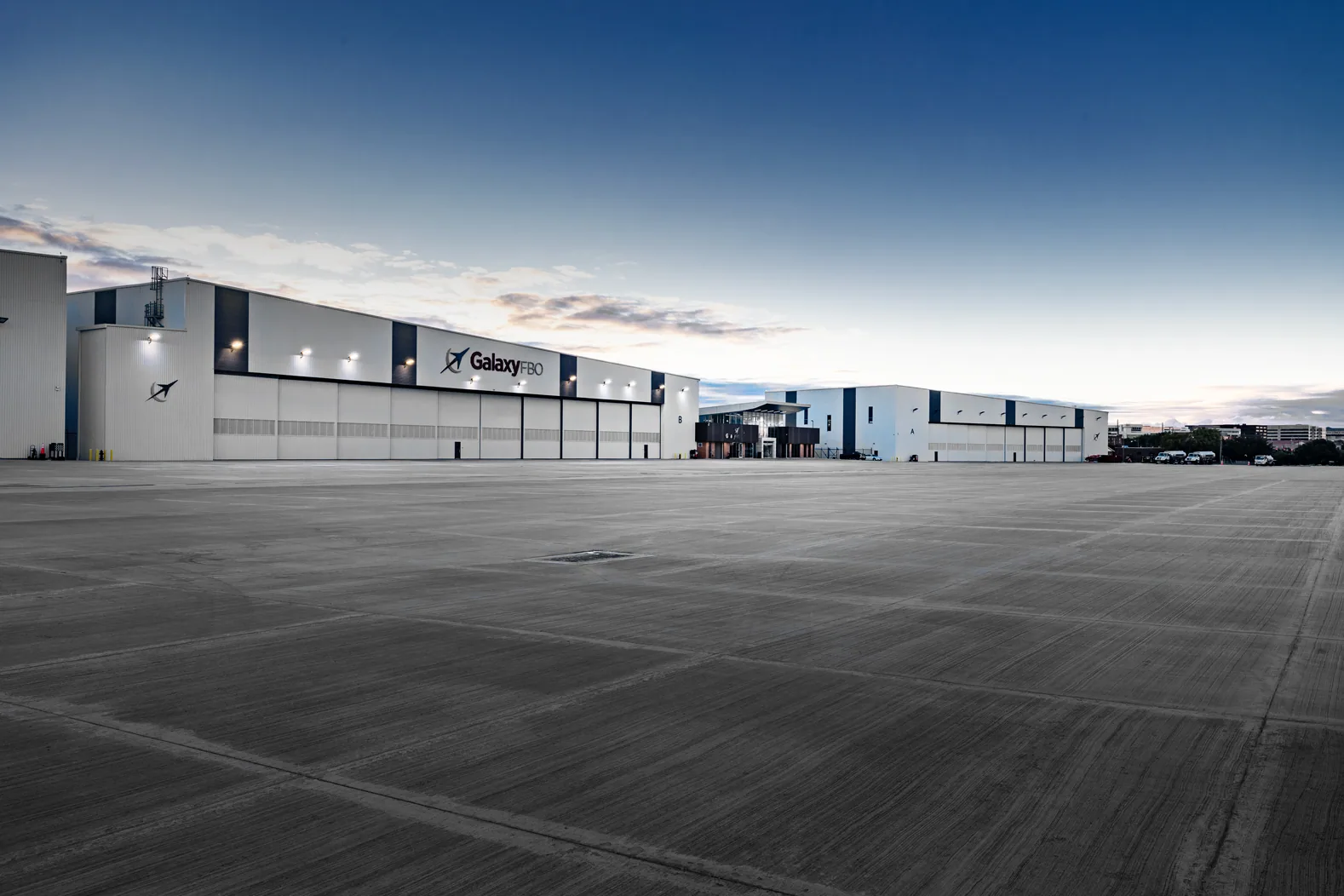
A leak over a conveyor junction can threaten more than the ceiling finish. It can affect electrical controls, cartons, and a shipping lane. We mark the affected zone, inspect the roof assembly above it, and agree on temporary protection before opening material. Distribution centers operate through receiving, sorting, storage, and dispatch, so a repair plan must account for equipment and shift handoffs. In Visalia, freight access near State Route 99 and the Visalia Industrial Park shapes regional movement, but the facility's actual docks, hours, and roof details govern the job.

Trace the Roof Area over Receiving and Sortation
We start with the interior report: the rack or conveyor location, the time water appeared, and whether the mark changed during a shift. Above it, we check drains, seams, curbs, skylights, and roof-to-wall transitions along the likely water path. A stain can be offset from the opening because water travels across a deck flute or along a support. We map the test point and the route checked so the next inspection does not begin from a guess.
Receiving doors, sortation equipment, battery areas, and high-value inventory may need different temporary protection. We coordinate with the manager before moving product or closing an aisle. A warehouse roof inspection also considers stored goods, while a distribution center needs an additional sequence for moving equipment and active outbound lanes. The first record should state the affected operation, interior protection agreed to by the site, and the roof section approved for investigation.
Many centers use overlapping shifts, which means an interior leak may appear while the roof area above it is inaccessible. We ask when the mark began, whether it grew during rain, and which equipment or goods were beneath it. Security footage or a maintenance ticket can help narrow the time window, but it does not identify the roof opening by itself. The exterior walk should follow the likely path from that location toward the nearest drain, seam, curb, or transition. If the path crosses multiple bays, we mark what was inspected and list the next test instead of declaring a roof-wide condition from one observation.
Inspect Conveyor Supports and Rooftop Equipment
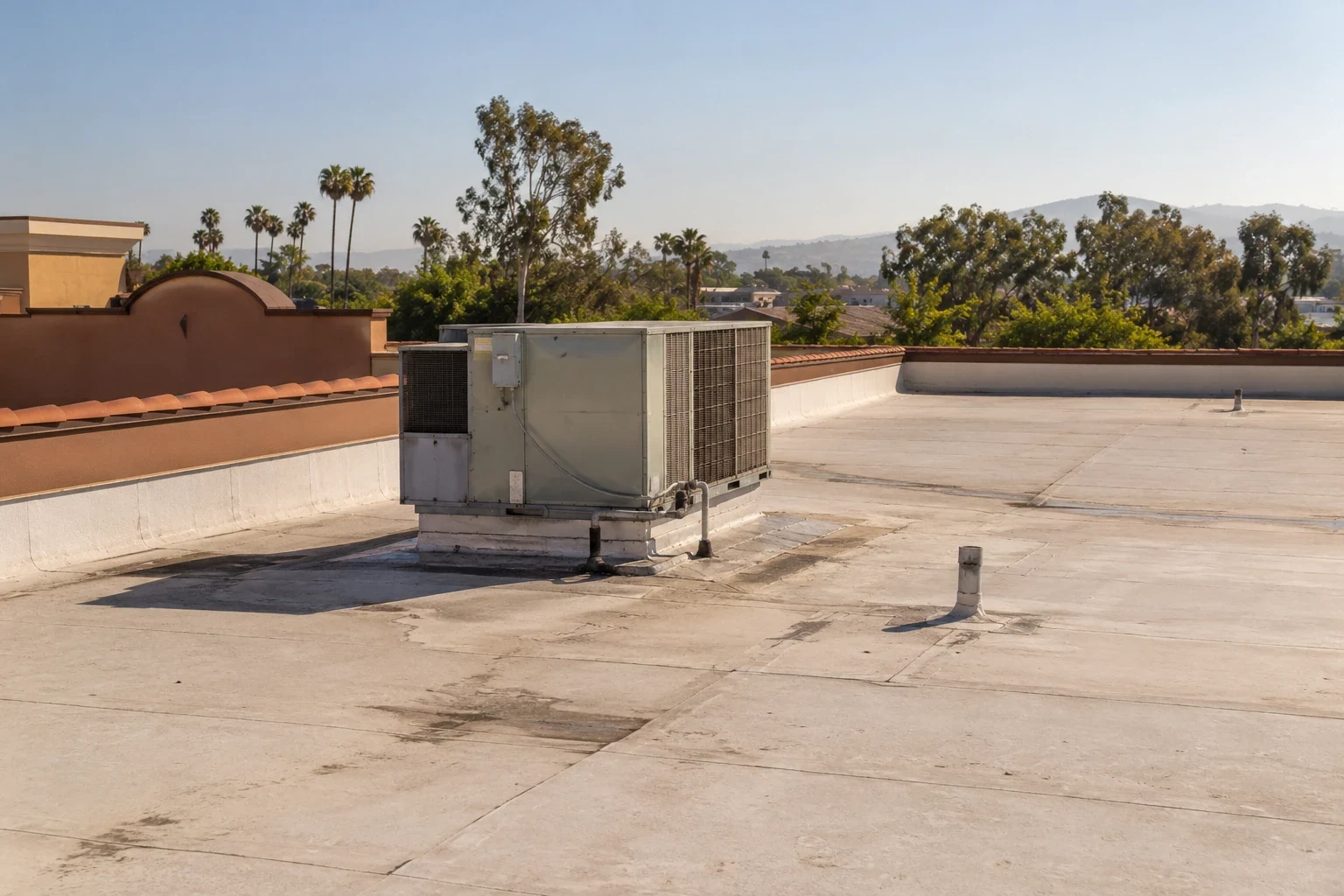
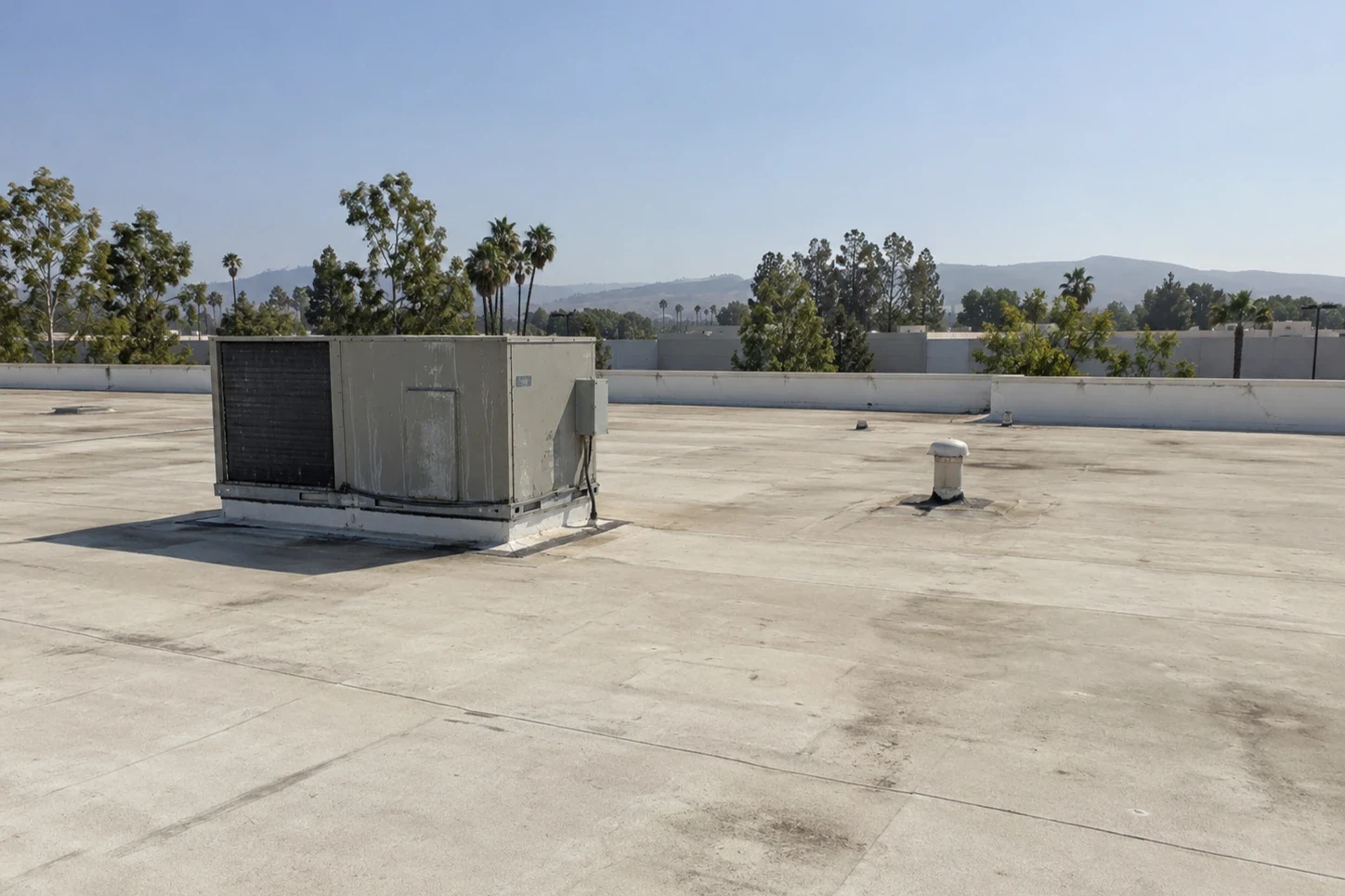
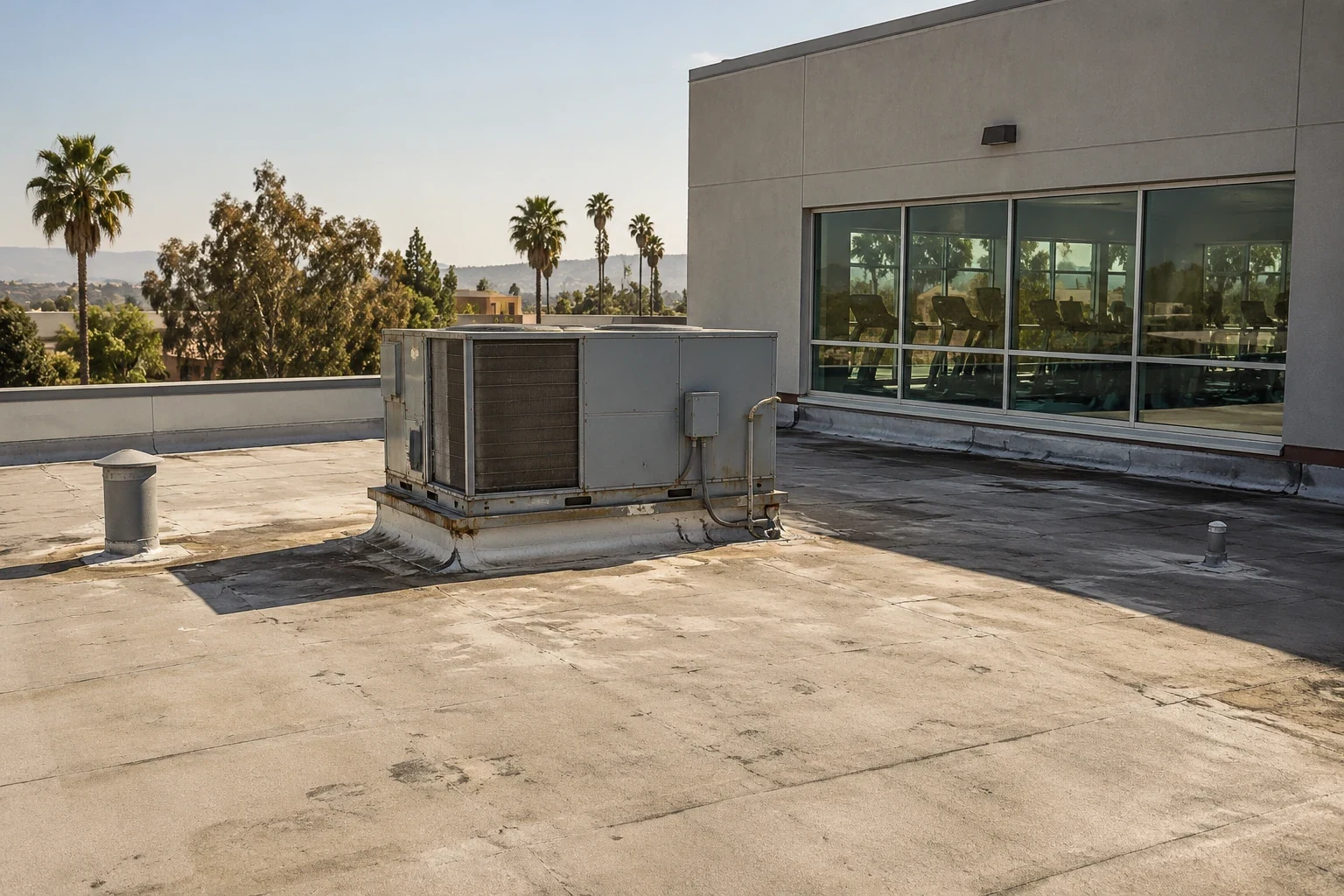
Conveyors, exhaust fans, rooftop units, and communication hardware can create concentrated maintenance routes. We inspect the membrane around supports, curb corners, pipe penetrations, and service pads for cuts, loose flashing, compressed insulation, and repeated foot traffic. A support that moves can stress a seam or open a sealant joint. We note whether the roof detail or the equipment connection is responsible for the observed condition and identify where another trade must participate.
If a conveyor crosses the building below, the roof opening may require a protected zone over controls or product. The property team chooses the safe area and the duration of any shutdown. A manufacturing roof plan may involve process exhaust or a different equipment sequence, but both need a defined curb and flashing boundary. A curb and support review can document interfaces before a roof repair is priced.
Keep Drainage Clear during a High-Activity Shift
Packaging film, dust, and rooftop debris can gather at a drain basket or scupper. We check the primary outlet, overflow path, sump, gutter, and downspout before calling ponding a membrane failure. A clogged strainer may be a maintenance issue; a low deck or separated drain connection may need construction work. We photograph the observed condition and identify whether a proposed repair changes only the roof tie-in or also addresses the outlet.
At parapets and dock canopies, wind-driven rain can find an edge detail that is hard to see from the floor. The team checks counterflashing, termination bars, closure pieces, and sealant movement. We keep open drain paths throughout construction and record any temporary protection that cannot remain in place overnight. If the reported stain is below a long roof run, we check upstream seams before choosing the repair boundary.
Match the Repair to the Actual Assembly
Distribution centers can contain several roof systems after expansions or tenant improvements. A thermoplastic sheet, EPDM, metal panel, or built-up section needs a compatible repair method. We identify the surface by records and field checks, then test an approved location if the membrane cannot be confirmed. The material specification matters around rooftop units, tie-ins, and later mechanical work. A generic patch can fail when its preparation or adhesive does not fit the installed system.
A rubber membrane repair differs from a TPO seam weld, and both differ from metal-panel work. We document the roof zone, product, repair area, and any moisture removal. If an expansion joint divides two roof sections, each side receives its own material and water-path review. The owner can compare one repair area with a broader replacement only after we know what the assembly contains.
Coordinate Freight Access around Visalia
The Visalia Industrial Park has freight-related infrastructure described by local economic-development materials, and State Route 99 is a regional goods-movement corridor. Neither fact determines a particular center's route or dock schedule. We confirm the site entrance, truck turning area, lift placement, and loading peak with the facility manager. If deliveries must continue, roofing materials and debris containers need a location that does not reduce dock capacity or block emergency access.
The Mooney Boulevard Regional Retail Corridor serves a regional retail hub, so a project using those streets may need a different delivery window than a facility near the industrial park. We verify the property address before assigning a staging route. The industrial park service-area review can provide local context, but the roof plan and site safety rules set the actual work boundary. We coordinate notices with security, operations, and tenant contacts rather than announce a generic closure.
Set Repair Phases against Dispatch Commitments
When dispatch cannot pause, roof work may be divided into smaller areas with temporary protection at each end of shift. The sequence should show when a lane, dock, or electrical zone is restricted and when it returns to service. If wet insulation or damaged deck extends beyond the initial opening, the crew stops and presents the finding before enlarging the area. The manager can then decide whether to relocate inventory, adjust operations, or defer the additional work.
Costs depend on access, membrane type, moisture removal, deck repair, equipment coordination, and how many work windows are available. A repair scope can treat a confirmed seam or curb failure. A broader roof survey can map other sections before capital planning. The closeout record lists repairs, photos, materials, and next checks. Share roof plans, leak logs, dock schedules, and conveyor layouts before the first walk so the affected route can be protected while the roof is evaluated.
Commercial Roofing Questions
Can roof repairs happen while a distribution center is operating?
Often, when the work zone, interior protection, dock access, and shift schedule are agreed in advance. The facility manager sets operating restrictions and equipment shutdowns.
How do you protect a conveyor during a roof opening?
The owner identifies the equipment and safe protection zone. We coordinate temporary cover or a controlled shutdown before opening the roof and document when the area is returned.
What causes recurring leaks at conveyor supports?
Movement, poor flashing, repeated foot traffic, damaged insulation, or prior equipment work can affect the roof detail. We inspect the support and membrane together.
Can one distribution-center roof have several membrane types?
Yes. Expansions and tenant work may leave different systems on one building. We map each area and match repair materials to the confirmed assembly.
What does a distribution-center roof report include?
It can show leak zones, seams, drains, curbs, test locations, access limits, photos, and areas not opened. The report separates confirmed conditions from items needing approval or more testing.