Roof Damage Repair
Commercial Roofing in Visalia, CA | Repair | Replacement | Maintenance
Roof Damage Repair in Visalia
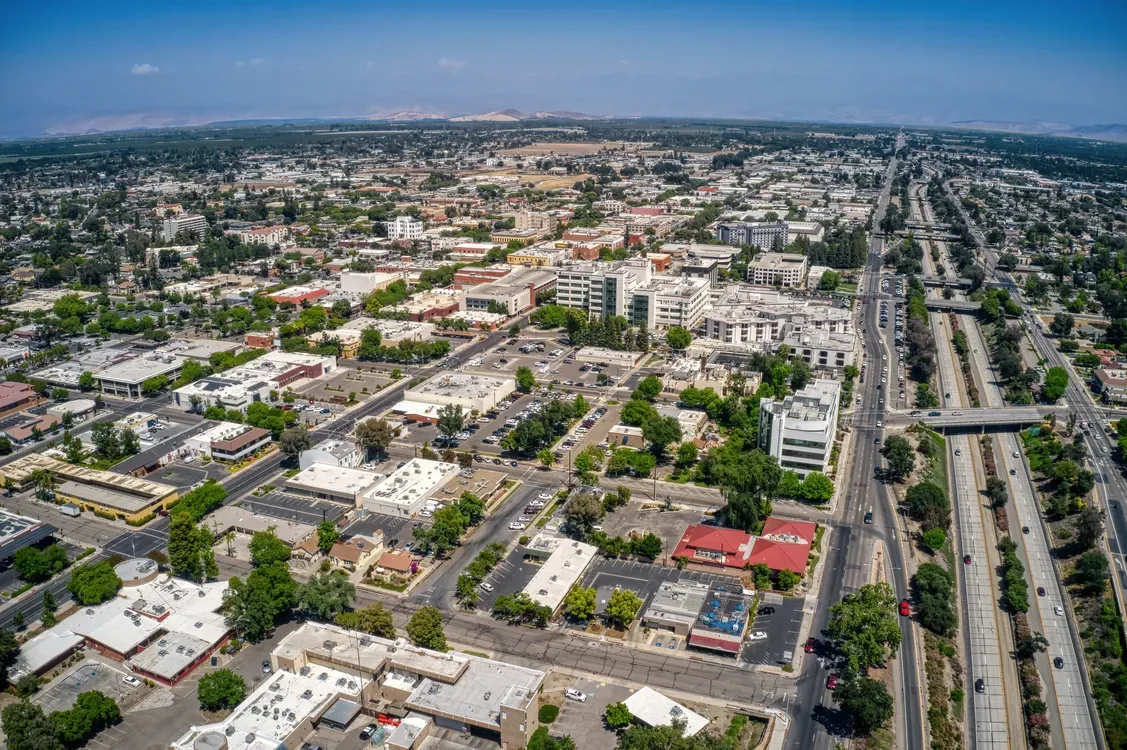
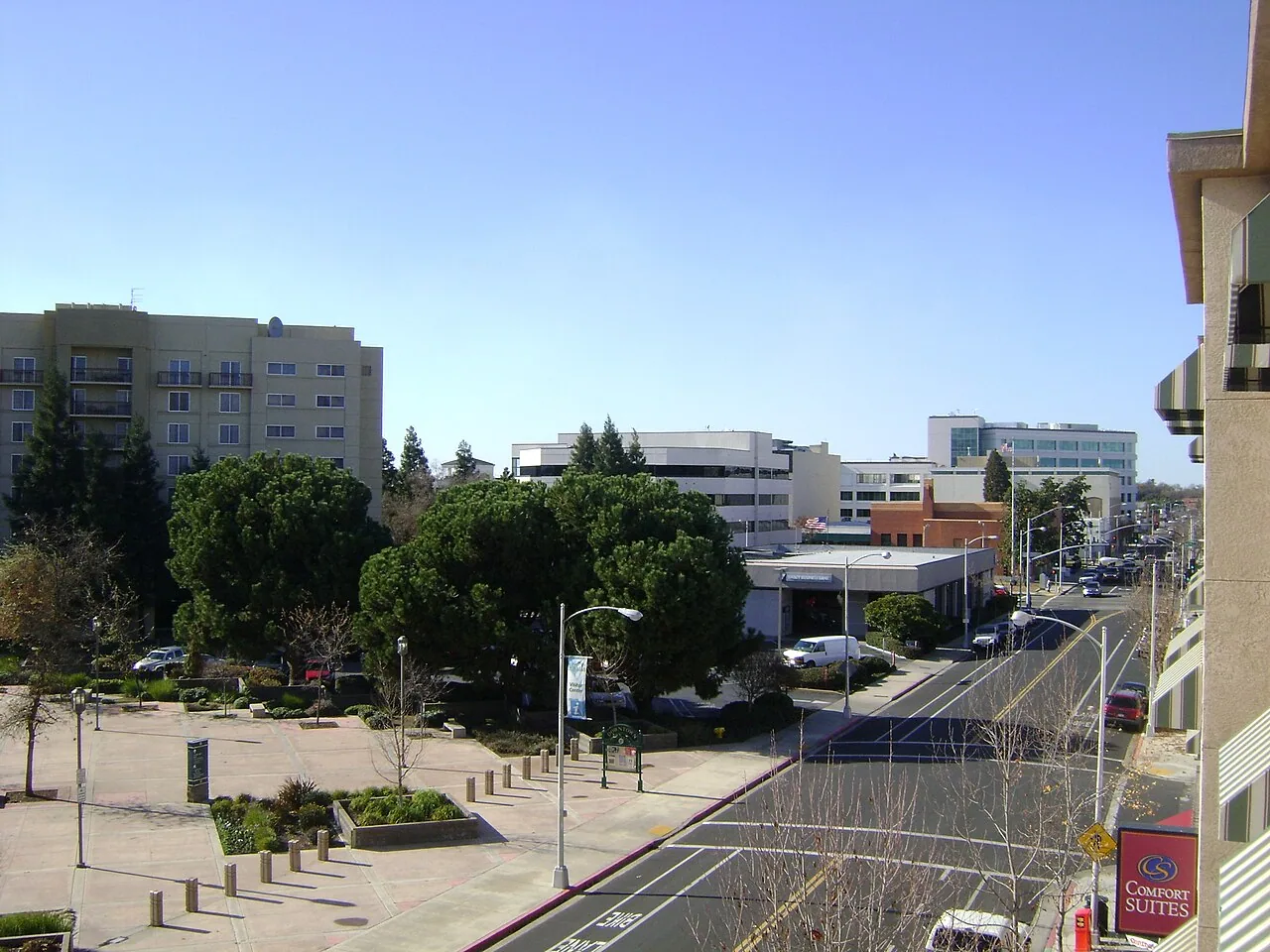
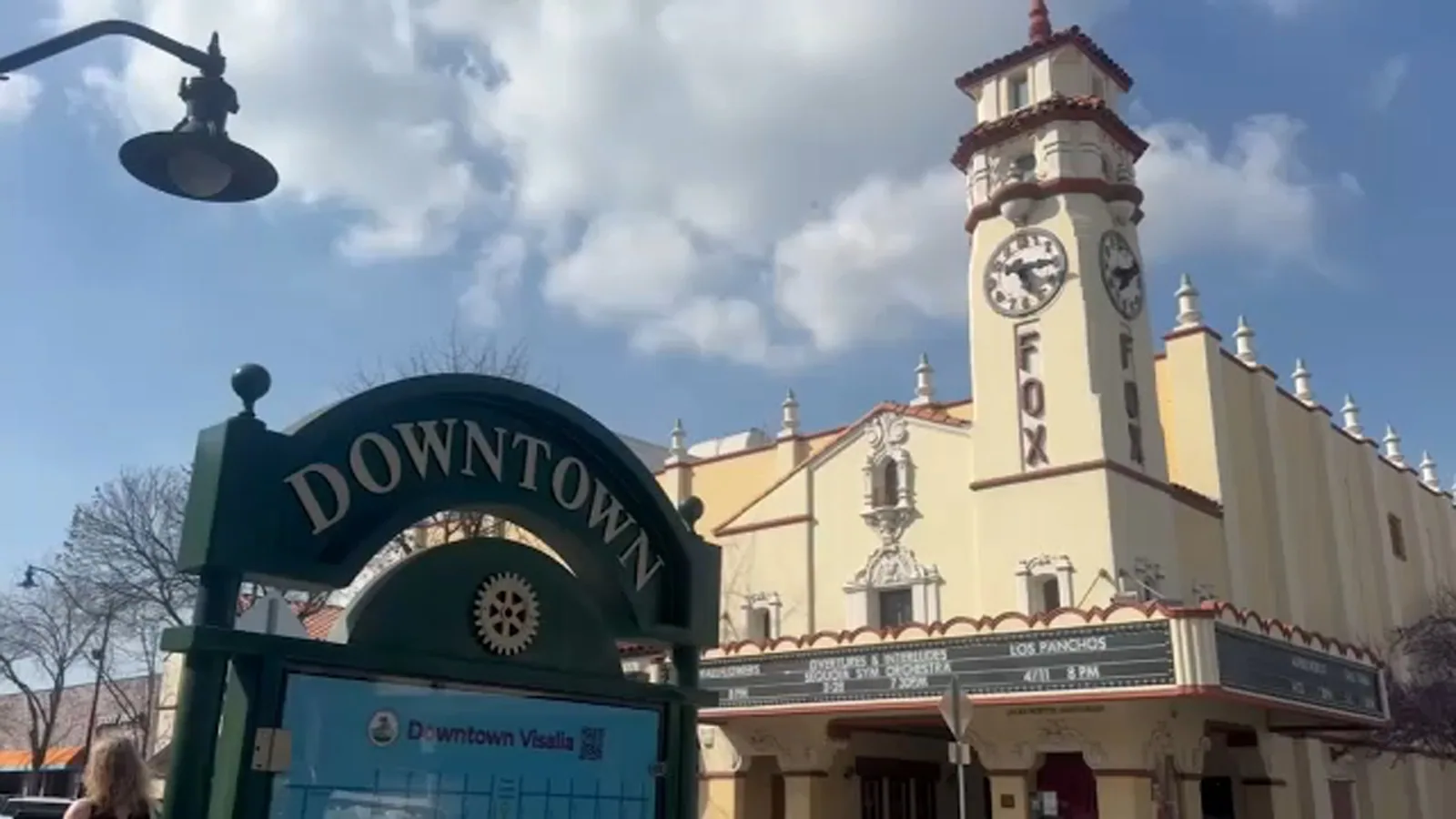
A damaged roof needs a field boundary before anyone decides how much to remove. We record the reported area, inspect nearby seams and penetrations, and check whether water reached insulation or interior finishes. The repair should address the opening and connect to sound material. In Visalia, a long dry stretch can leave exposed details under sustained sun before seasonal rain returns. The Visalia Industrial Park and the Court and Locust corridor contain different operating patterns, so access and staging are confirmed at each property. A photo and test note help the owner separate damage from general roof age.
Commercial Wind Damage Roof Repair
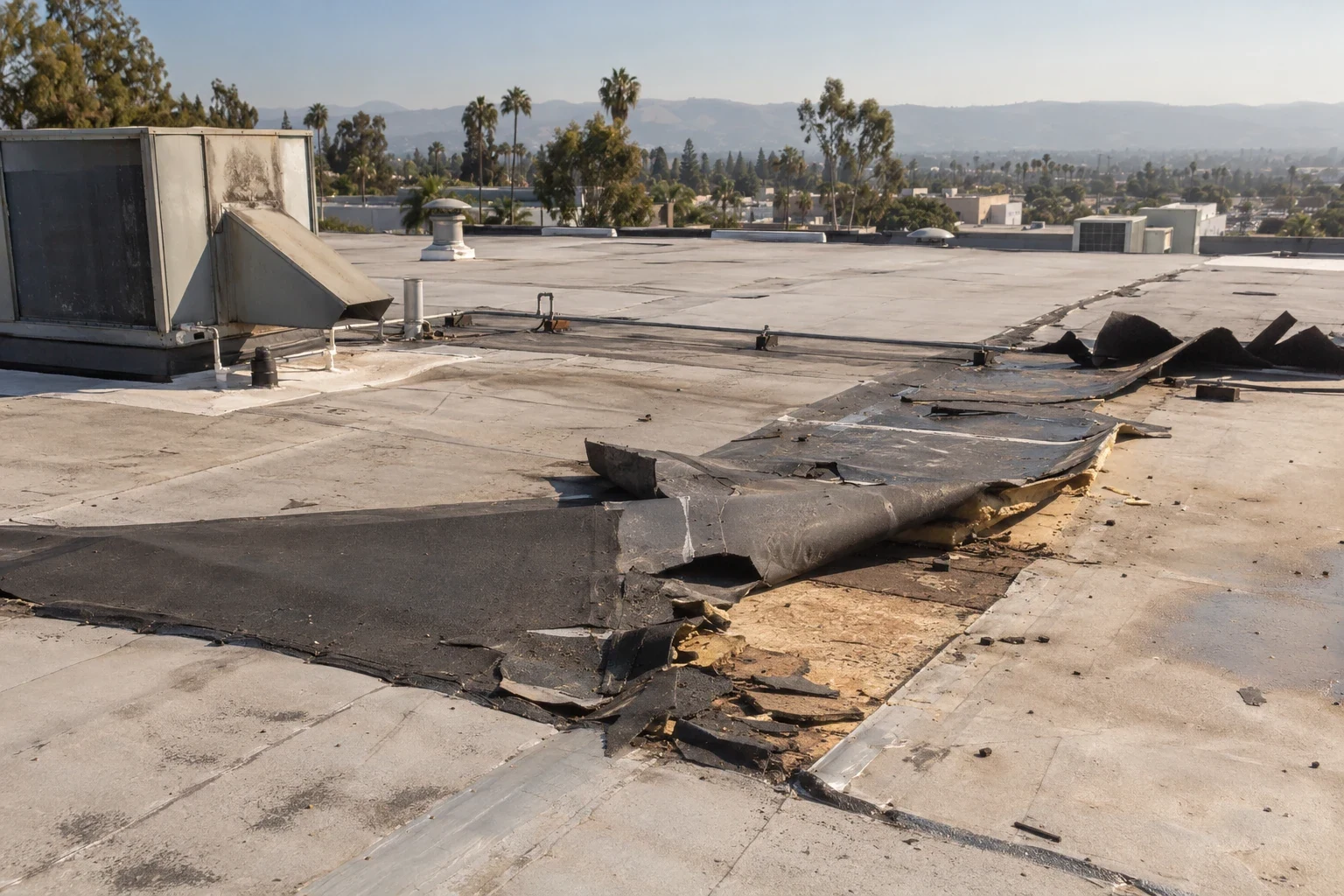
Wind damage roof repair in Visalia, CA starts with a documented check of edges, seams, penetrations, and interior signs before we set a repair boundary.
Commercial Ponding Water Roof Repair
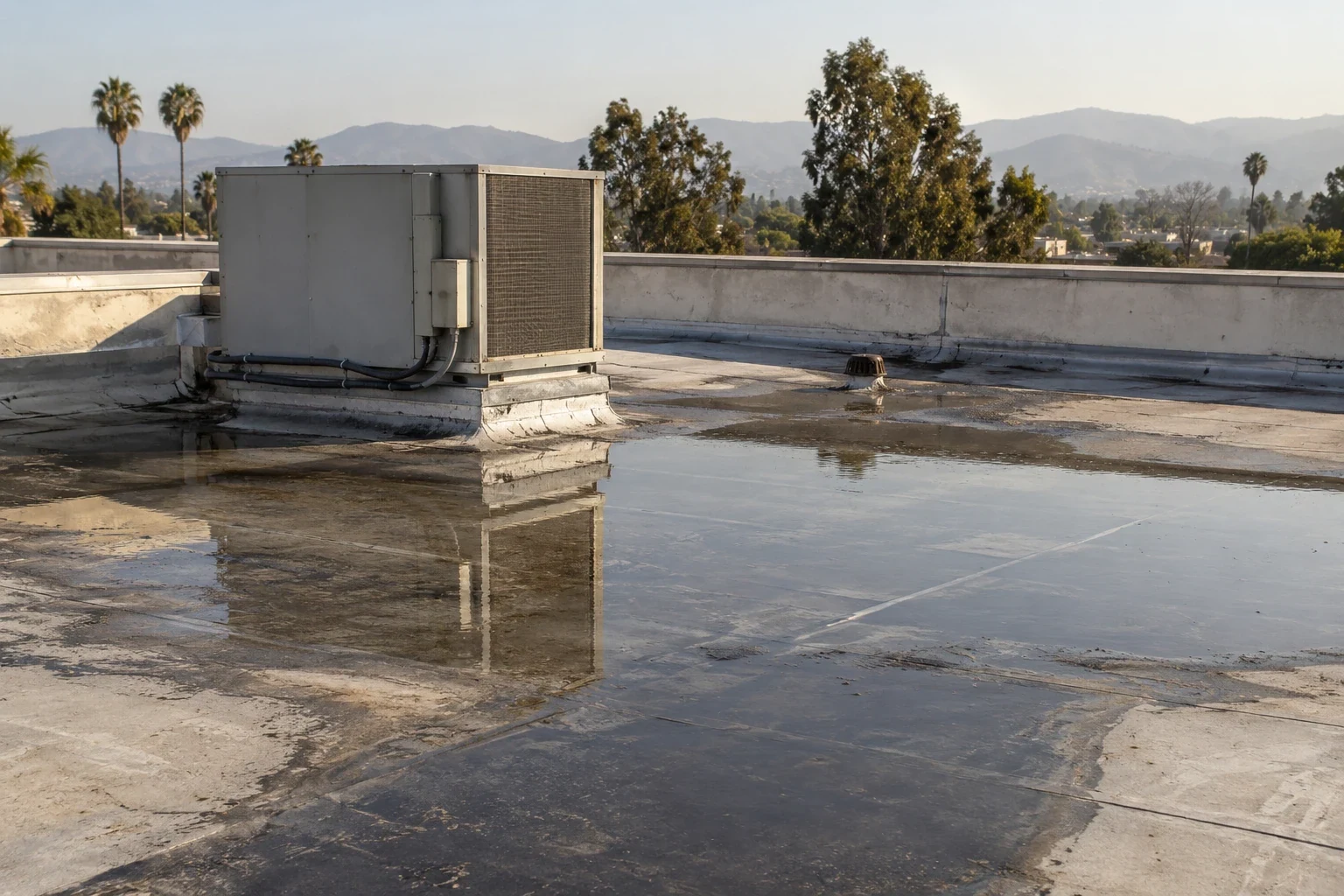
Ponding water roof repair in Visalia, CA starts with outlet, slope, and insulation checks so the repair addresses the cause, not only the standing water.
Commercial Roof Flashing Failure Repair
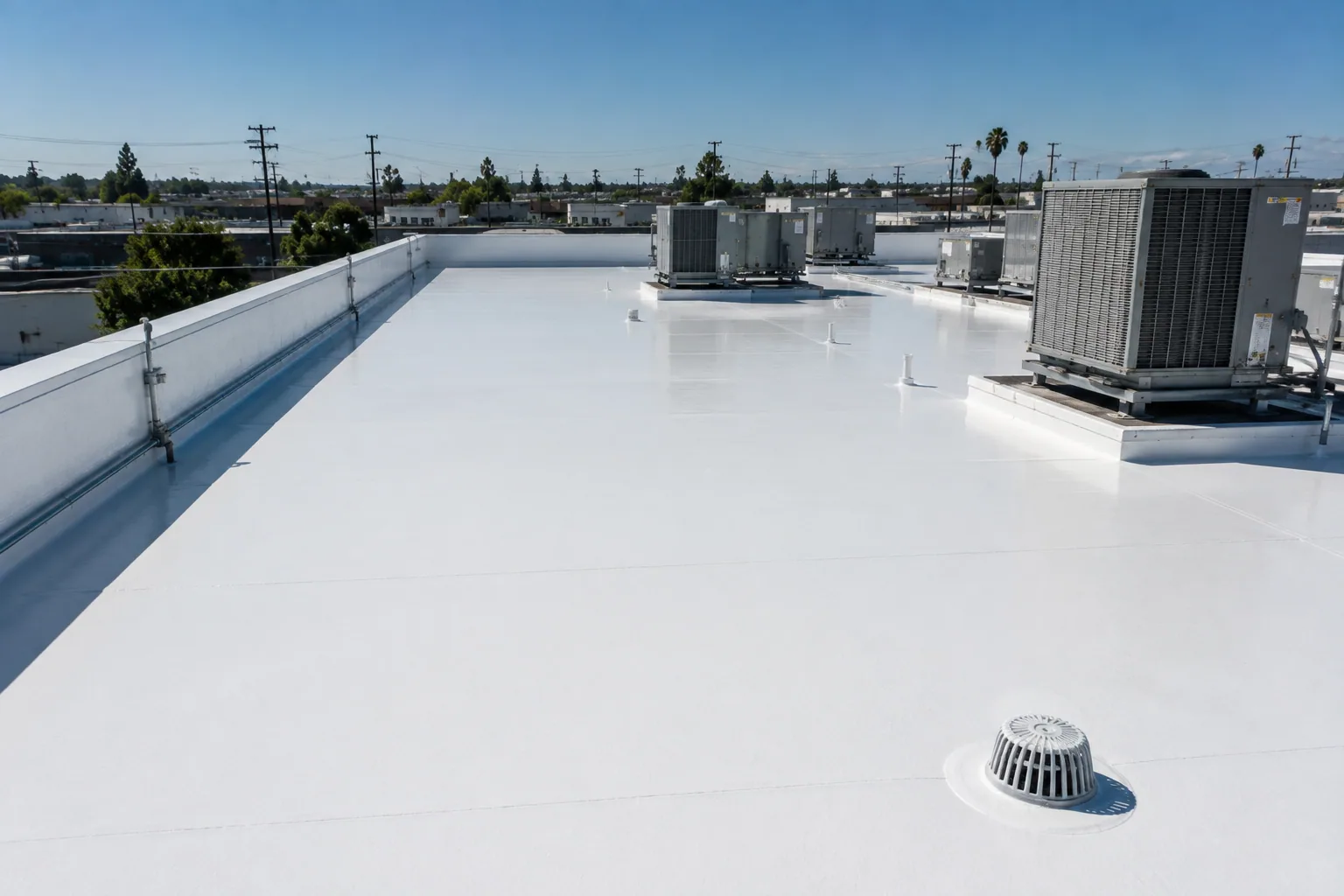
Commercial roof flashing repair in Visalia, CA targets wall, curb, and penetration transitions after we trace the opening and verify the assembly.
Commercial Roof Seam Failure Repair
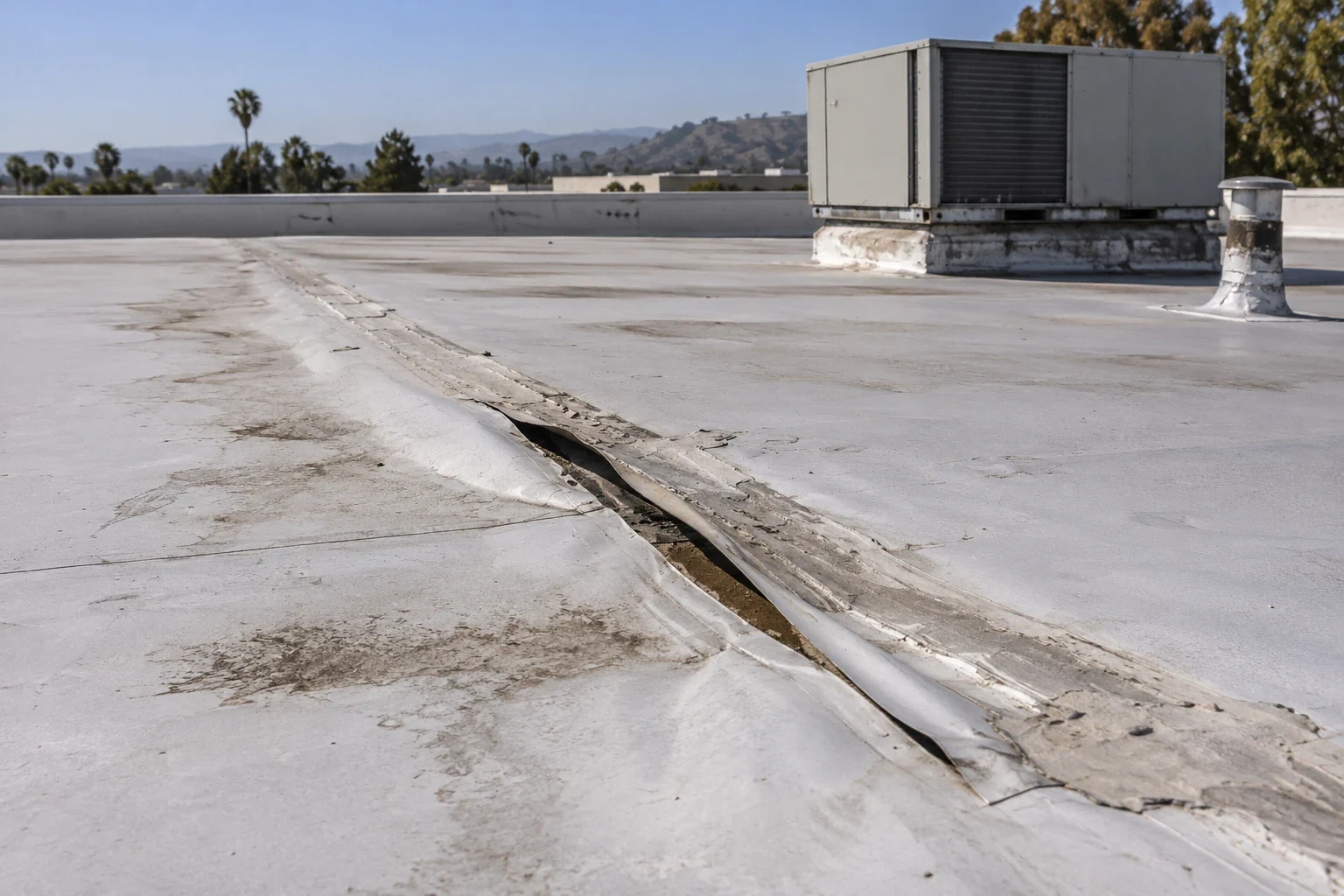
Commercial roof seam repair in Visalia, CA checks the open lap, attachment, moisture boundary, and nearby details before we choose a compatible fix.
Commercial Roof Membrane Puncture Repair
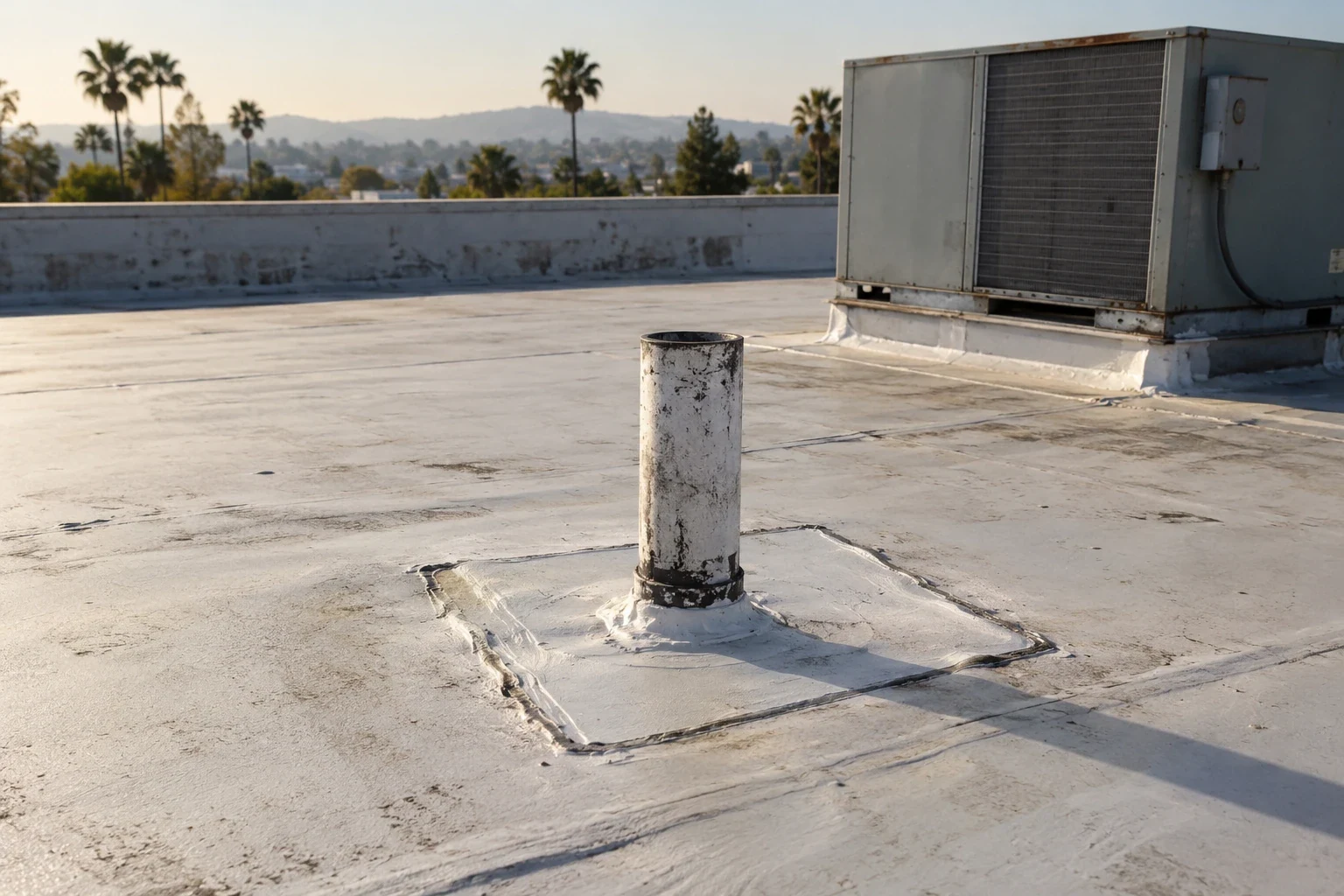
Membrane puncture repair in Visalia, CA traces the opening, checks insulation below it, and restores the roof with a repair sized to the tested area.
Commercial Fire Damage Roof Repair
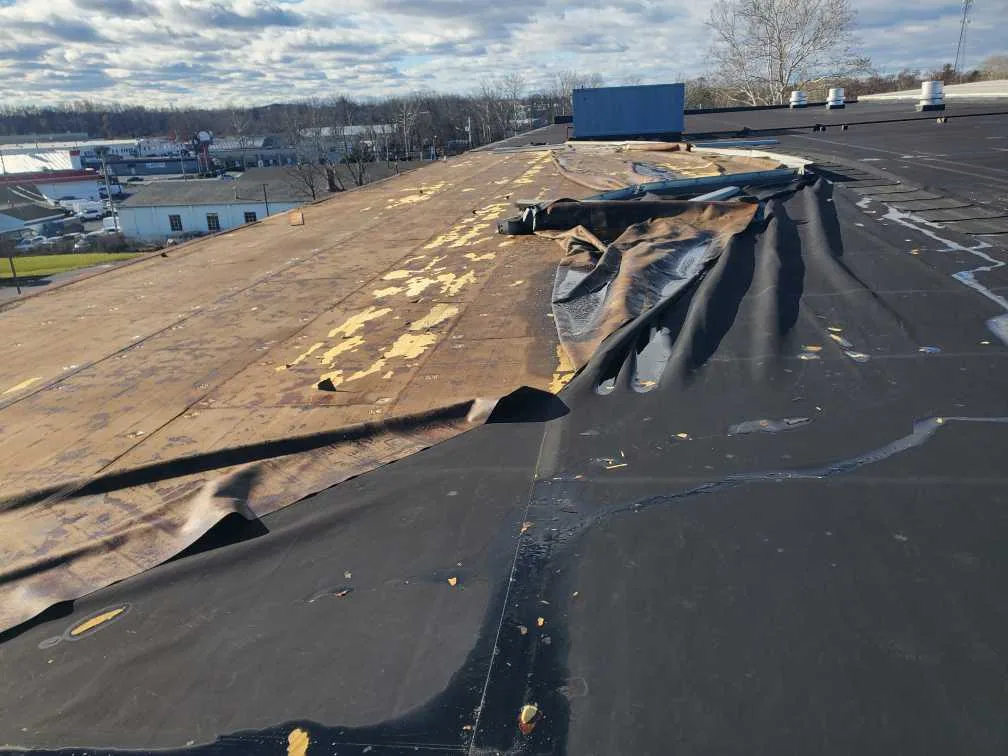
Fire damage roof repair in Visalia, CA documents heat, smoke, membrane, insulation, and deck conditions before we plan temporary protection or replacement.
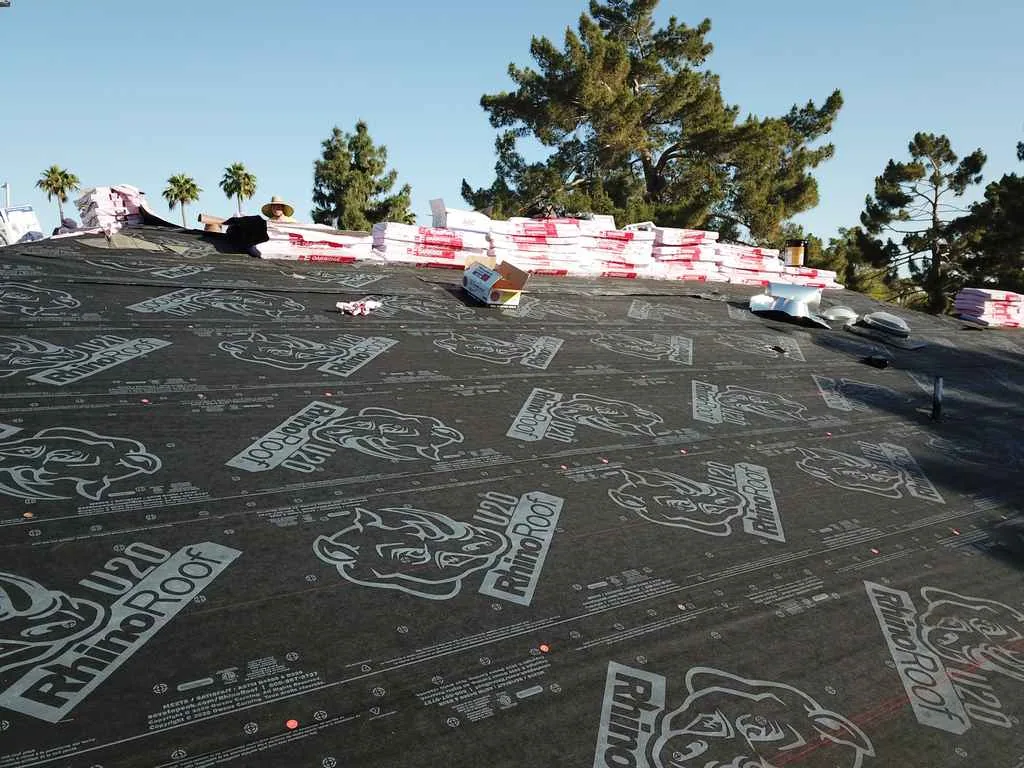
Control water, then inspect
For active water entry, temporary protection and safe access come first. We identify the interior area at risk, protect contents where possible, and document the roof condition before a permanent repair is set. A wind damage roof assessment checks edges, seams, and loose material. If water is holding after rain, a ponding-water review separates blocked drainage from slope, deck, or insulation concerns.
Find the failed detail
Roof damage often starts at a transition rather than across the open field. A curb, parapet, pipe boot, drain, or edge termination can open and let water move beneath the membrane. We inspect that detail and the nearby field as one assembly. A flashing repair restores the transition only after the adjoining materials are checked. For an open lap, seam repair must tie into clean, compatible surfaces. A puncture gets a measured boundary, not a patch placed over untested wet layers.
Measure what the damage changed
After fire, impact, or heat exposure, the visible mark may not show the full affected area. We inspect the membrane, substrate, insulation, and edges around the event. Fire damage roof work may require removal of damaged material and coordination with interior trades. Heat and ultraviolet damage calls for checking brittle details, laps, and exposed sealants. In either case, we record what was tested and where further opening could change the repair.
Keep the next decision clear
The closeout should identify the damaged area, repair materials, photographs, and any follow-up check. It should not imply that untouched sections were proven sound. Visalia's wet season makes drain bowls, scuppers, and laps useful inspection points before rain returns. A manager near Mooney Boulevard or Downtown can compare the new record with earlier work and schedule a dry-season follow-up. Send the leak location, event timing, access window, and prior repair notes; we will scope the first walk around the roof condition.
Commercial Roofing Questions
What happens first during active roof leakage?
We confirm safe access, protect the interior where possible, and identify the area where water is entering. Temporary control precedes a permanent repair scope.
How do you distinguish damage from roof age?
We photograph the affected detail, inspect nearby material, and note the boundary where the assembly changes. A broader recommendation needs evidence beyond a single worn area.
Can a patch cover an area with wet insulation?
Only after the wet material and repair limits are addressed. Covering moisture can hide the condition, so we identify the extent before closing the assembly.
What information helps after wind or impact damage?
Share when it occurred, the interior area affected, roof access details, and prior repair records. We will compare that report with the observed roof condition.
Why photograph the repair after completion?
Photos show the repaired boundary, adjacent details, and any remaining item to monitor. They give the next inspection a reliable point of comparison.