
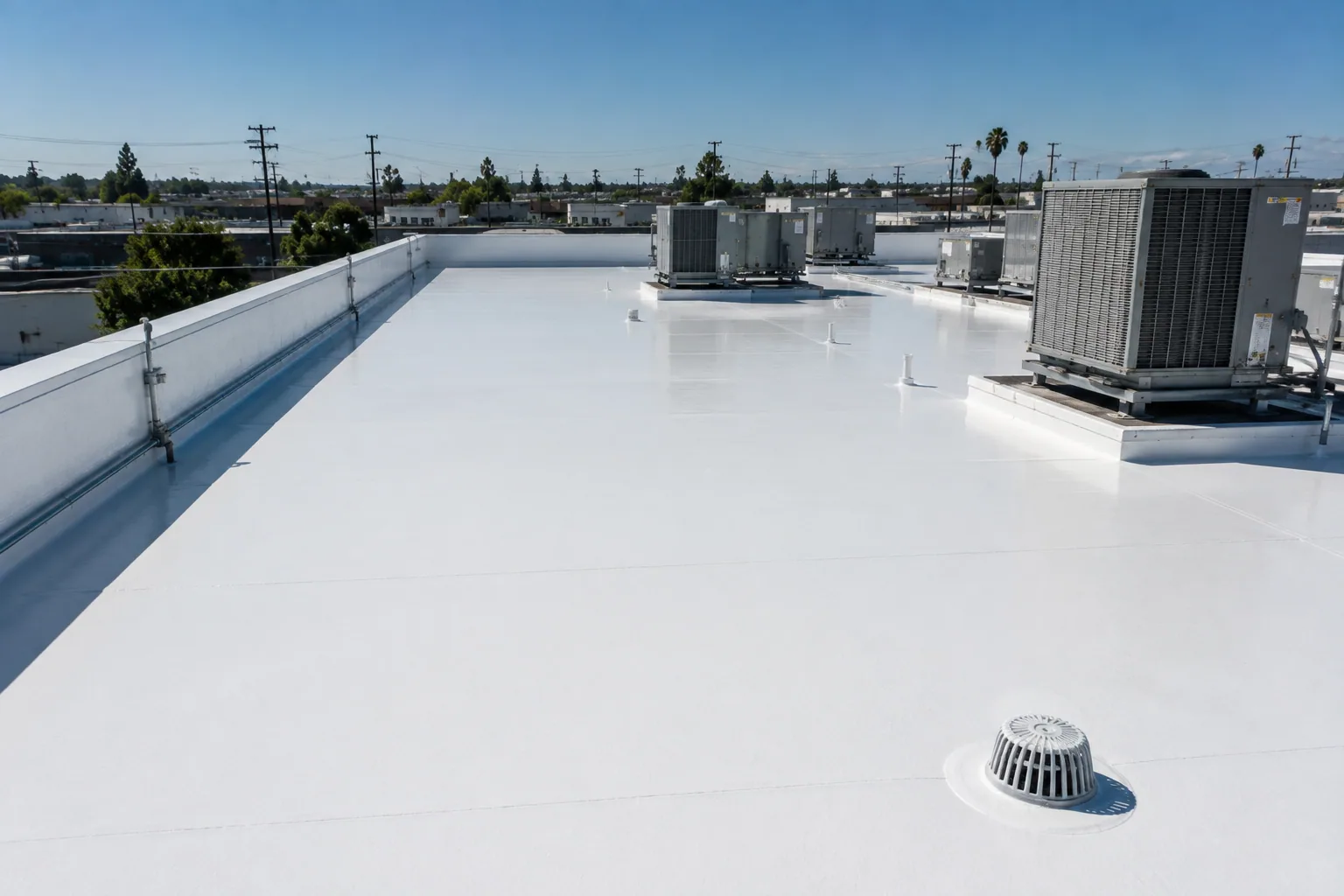
Commercial Roof Flashing Failure Repair in Visalia, CA
Roof Damage Repair | Visalia and Tulare County
Commercial Roof Flashing Failure Repair
A split at a curb corner can send water along the roof before it appears inside. We start at the transition, check the wall or equipment surface, and follow the membrane tie-in past the visible mark. In Visalia, roughly eleven annual afternoons reach 100 degrees. That sustained exposure puts stress on exposed sealant. Repeated heat can stress exposed sealant, but the inspection must identify the actual material failure before we choose a repair.
Downtown Visalia combines office, healthcare, government, retail, and other mixed uses. Court and Locust links the downtown core with the Oval area. These city-planning facts help frame access needs, not the condition of a particular flashing. We confirm the roof system, nearby equipment, interior evidence, and any prior patch. Then we decide whether the detail can be restored locally or whether moisture and movement extend beyond its edge.
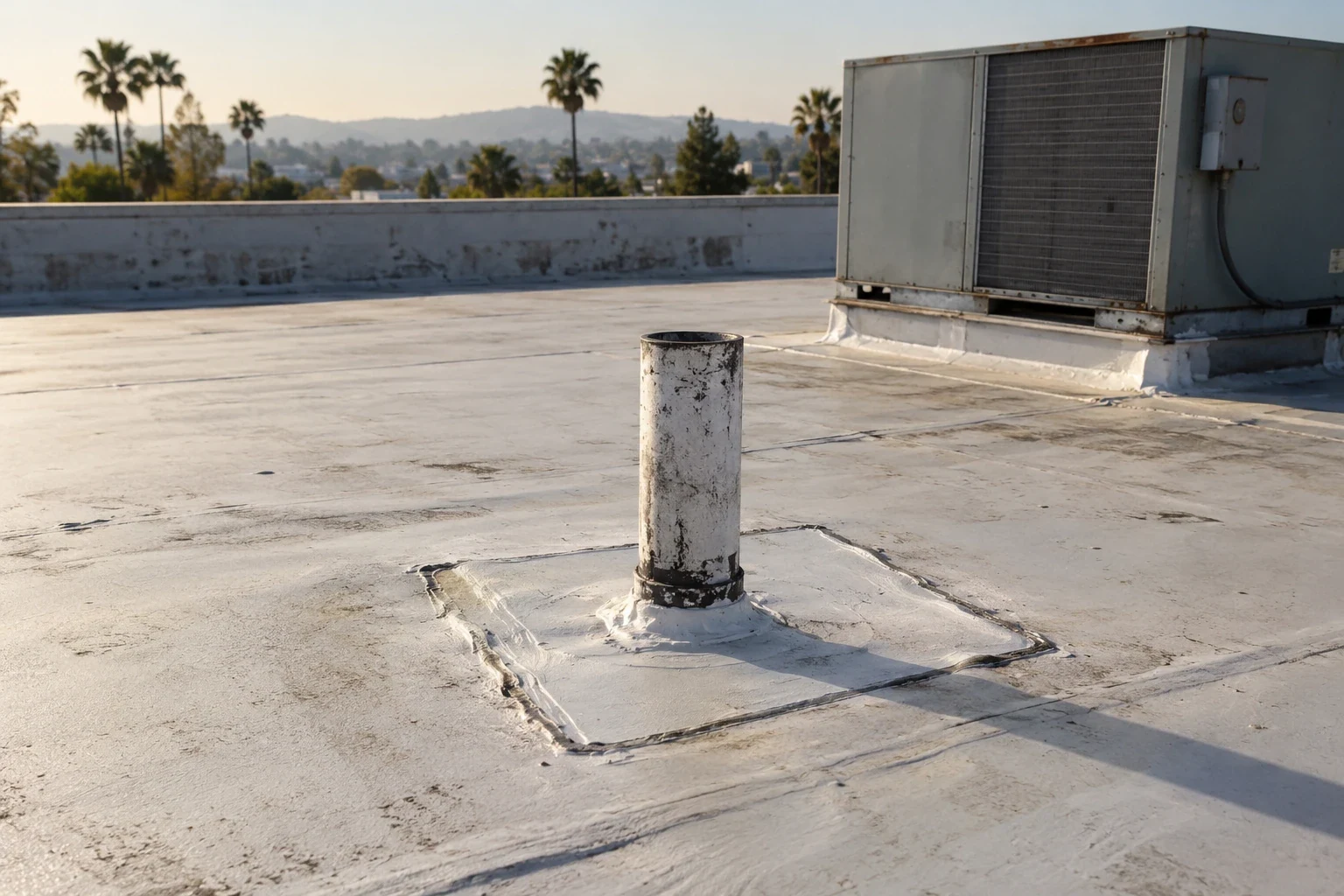
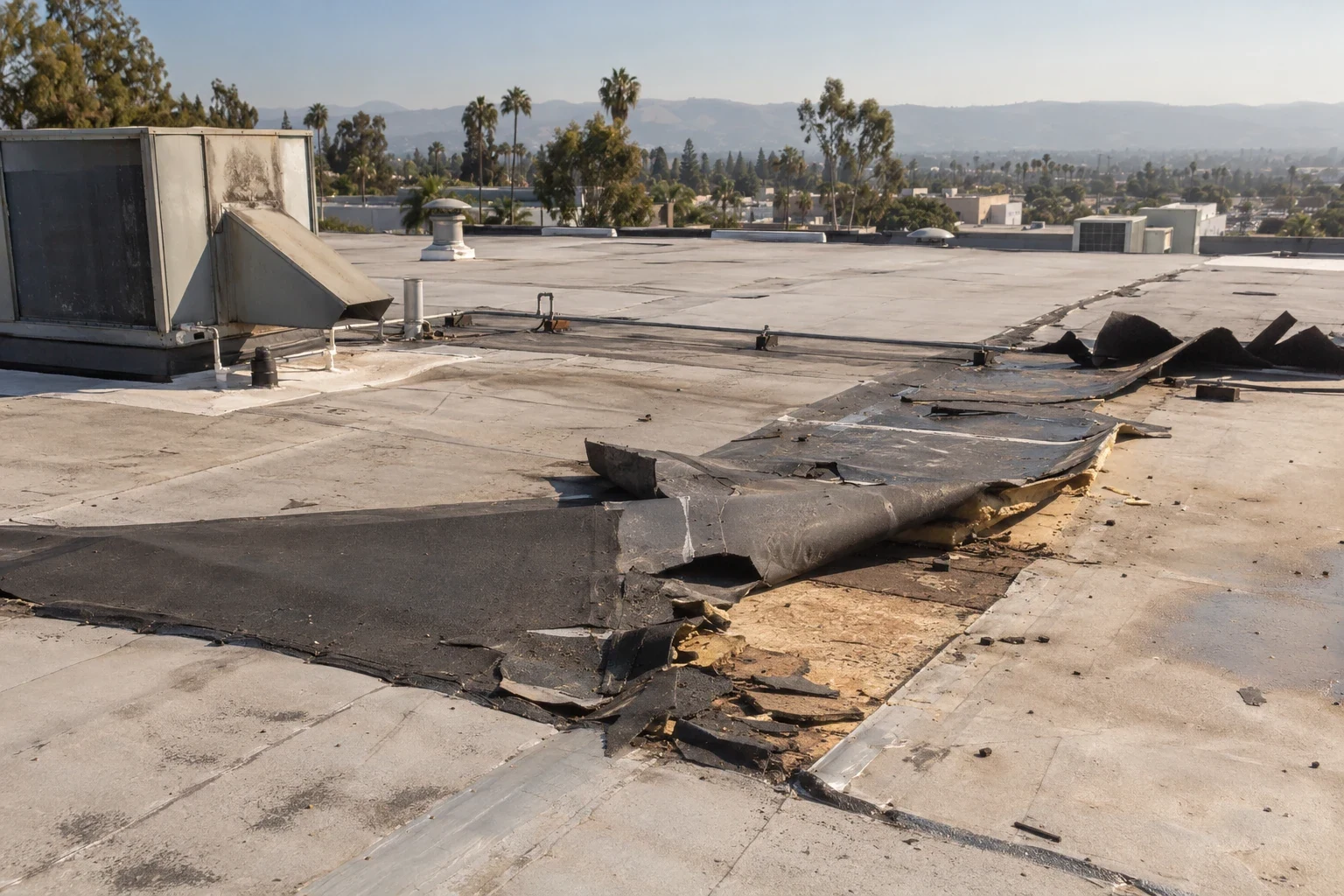
Open the Transition Only as Far as Needed
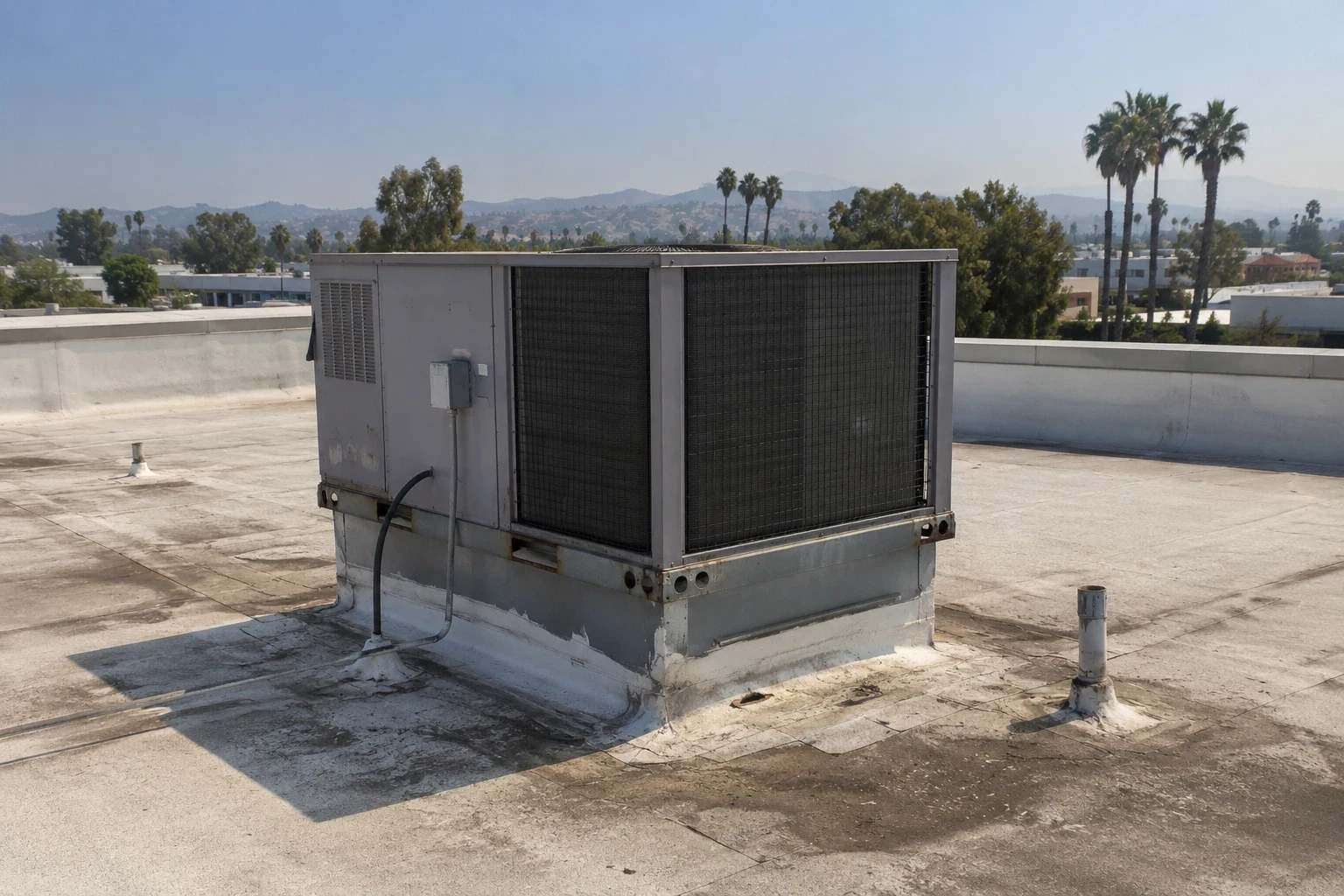
Flashing can fail at a wall base, curb, pipe, skylight, drain, parapet, or edge termination. We inspect the surface bond, laps, corners, fasteners, and the material beneath any lifted section. A bead that has separated from one face may point to movement, poor preparation, or a substrate issue. We test the detail rather than treating every crack as the same repair. If the opening is hidden, we remove only enough material to identify the path and return the area to a protected condition.
Where rooftop units serve occupied space in the downtown district, we coordinate equipment access before opening a curb. We mark each transition so a nearby seam or conduit is not mistaken for the entry point. The penetration and skylight scope covers those details, while a curb review checks the support and flashing around equipment. The inspection record names which component was actually tested.
Separate Sealant Wear from a Failed Tie-In
Sealant is only one part of a flashing assembly. We look for open laps, movement at the curb, a loose counterflashing, damaged membrane, and water trapped below the visible surface. If the roof is coated, we check whether the coating bridges a moving joint instead of solving it. Moisture readings or a controlled test may be needed when an interior stain and roof detail do not line up. We report those findings separately from assumptions about the cause.
Court and Locust is a mixed-use connection between downtown and the Oval. For buildings in that broader district, the property contact confirms operating hours and access to tenant spaces. The roof still gets a site-specific check. We note whether a curb or wall has shifted, whether the membrane remains attached, and whether adjacent insulation is wet. If water has moved beyond the flashing, a membrane opening check may help define the separate boundary.
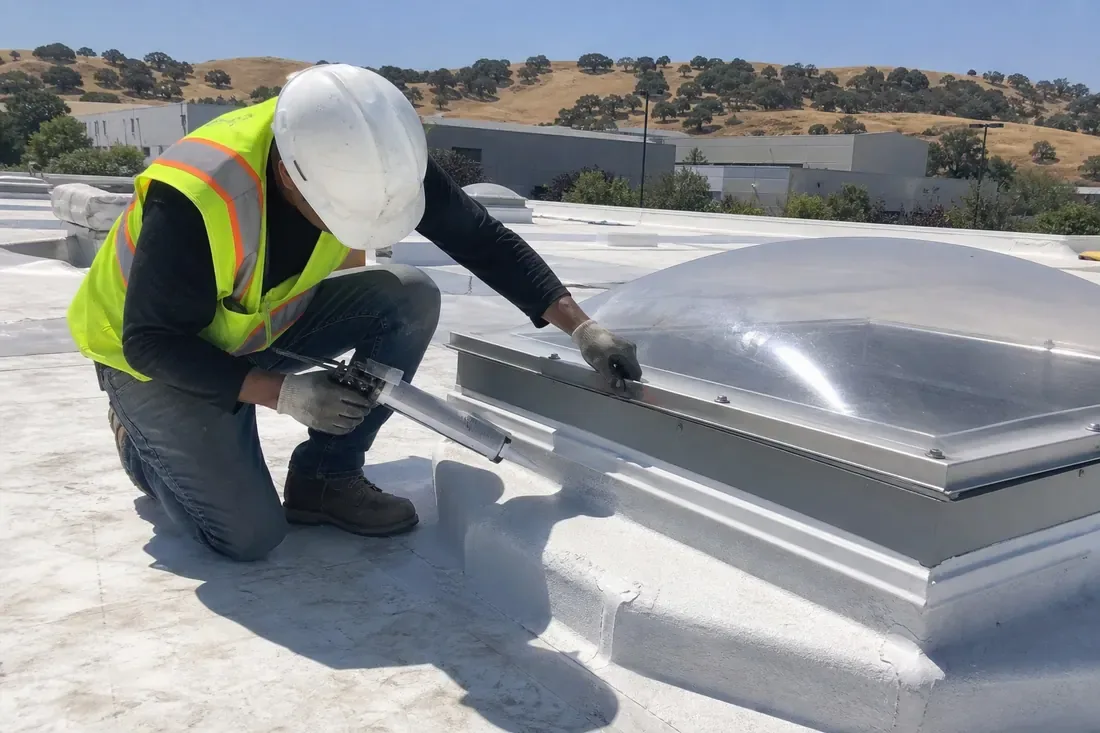
Rebuild the Detail to Match the Roof
Once the cause is clear, we prepare the substrate and use a flashing method compatible with the roof system. That can mean replacing a short membrane section, rebuilding a corner, resetting a termination, or coordinating a metal counterflashing. We avoid adding a surface layer where trapped moisture or loose attachment remains below. The scope states the removed area, materials, tie-in dimensions, and any work that depends on equipment or wall repairs by another trade.
A repair near a retail or healthcare tenant may need protection below and a short access window around the room. We agree on the sequence before material is opened. If the surrounding field is sound, a contained detail repair may be enough. If similar failures repeat at multiple transitions, we compare the broader roof condition with a replacement or restoration option. A commercial repair plan names the tested boundary, while coating restoration is considered only when the roof and joints are suitable for that system.
Time the Work Around Heat and Occupancy
Heat affects how some materials are handled and how long they need before exposure to moisture. We check the forecast, surface condition, product requirements, and work area before setting the shift. Visalia's hot season is a reason to inspect exposed transitions; it does not replace checking the curb, wall, and sealant on the building. The manager receives the expected opening, close-in, and any time the area below needs protection.
Downtown Visalia has a mixed-use employment base, so we ask about patient appointments, office hours, deliveries, and public access where relevant. A phased occupied-building sequence can keep the repair limited to one roof zone at a time. We also identify any mechanical shutdown or roof access control that needs approval. If water is active, an urgent protection visit can precede the permanent detail work.
Record the Flashing That Was Restored
We photograph the corner, curb, wall base, or penetration before and after repair. The closeout shows what material was removed, how the new flashing ties into the existing roof, and what remained inaccessible. If a mechanical or exterior contractor must finish adjacent work, we identify that handoff plainly. The record makes a later leak call easier to compare with the same roof area instead of relying on a broad directional note.
Share the Visalia building location, leak area, roof plan, access rules, and any photos from before a temporary patch. We will trace the path and state whether the flashing itself failed or another component needs testing. The Downtown Visalia coverage area and Oval Park corridor describe broad locations only; they do not imply completed work at any property. The written scope follows the transition we inspect and identifies a next test if the evidence remains incomplete.
When sealant has been reapplied several times, keep the dates and product notes if available. That history can show whether the same joint reopened or a neighboring seam began to move. We do not treat a fresh bead as proof that the underlying bond is sound. A small test opening can answer that question and keep the permanent repair sized to the actual failure. If the transition drains toward a low section, our ponding water review checks whether drainage is a second problem that needs its own scope. For a multi-tenant property, we can label each affected room and access window separately so the facilities lead can coordinate protection below the roof. That record also helps distinguish a recurring flashing defect from a new opening caused by later equipment work or maintenance activity.
Commercial Roofing Questions
Can you seal a flashing crack without removing the old material?
Only when the existing surface is sound and compatible with the repair. We check adhesion, movement, moisture, and the substrate before deciding whether a surface repair will hold.
Why can a leak appear away from a curb?
Water can travel along the membrane, deck, or insulation before reaching the room. We compare the interior mark with nearby transitions and test the likely route.
Does hot weather mean the flashing has failed?
No. Heat is a condition to consider, not a diagnosis. We inspect the actual sealant, lap, termination, and substrate, then connect the recommendation to what moved or opened.
Will you need to shut down rooftop equipment?
We confirm the equipment, safe clearance, and work sequence with the site contact. If a shutdown is needed to reach or protect the detail, it is identified before the crew starts.
How do you keep a repair from covering wet insulation?
We check the area for moisture and mark the tested boundary before closing the assembly. If the wet area continues beyond the opening, the scope shows the additional removal required.
What should I send before the inspection?
Provide the affected room, roof plan, access instructions, repair history, and photos of the transition if available. We will plan the first walk around that evidence.