Commercial Ponding Water Roof Repair in Visalia, CA
Roof Damage Repair | Visalia and Tulare County
Commercial Ponding Water Roof Repair
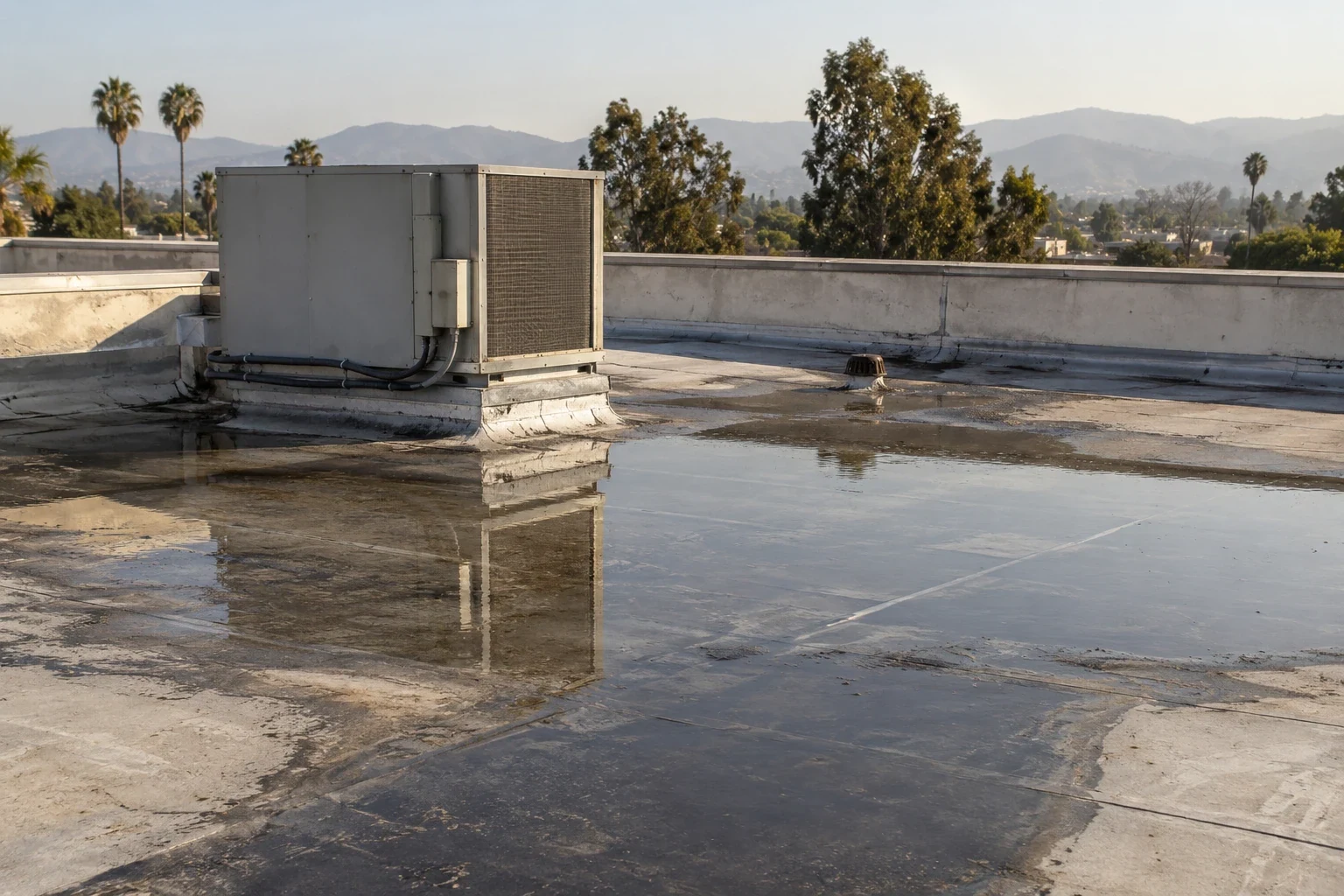
Water that remains after a roof has had time to drain needs a measured check, not a quick coat of sealant. We mark the pond, inspect nearby drains and seams, and look for a low area or compressed insulation that holds water. Visalia averages 10.32 inches of precipitation annually in Visalia's 1991-2020 climate averages, with most monthly rain falling from late autumn through early spring. That seasonal shift makes outlet and lap details worth checking before the wet months.
The Industrial Park supports warehousing, distribution, food processing, and manufacturing, while Mooney Boulevard serves as a regional retail corridor. Those facts describe different citywide building contexts, not the condition of a particular roof. We confirm what the property contains, where runoff should travel, and whether water is still present after drainage time. Then we set a repair boundary that distinguishes a blocked outlet from a broader slope or membrane problem.
Map the Route to Every Outlet
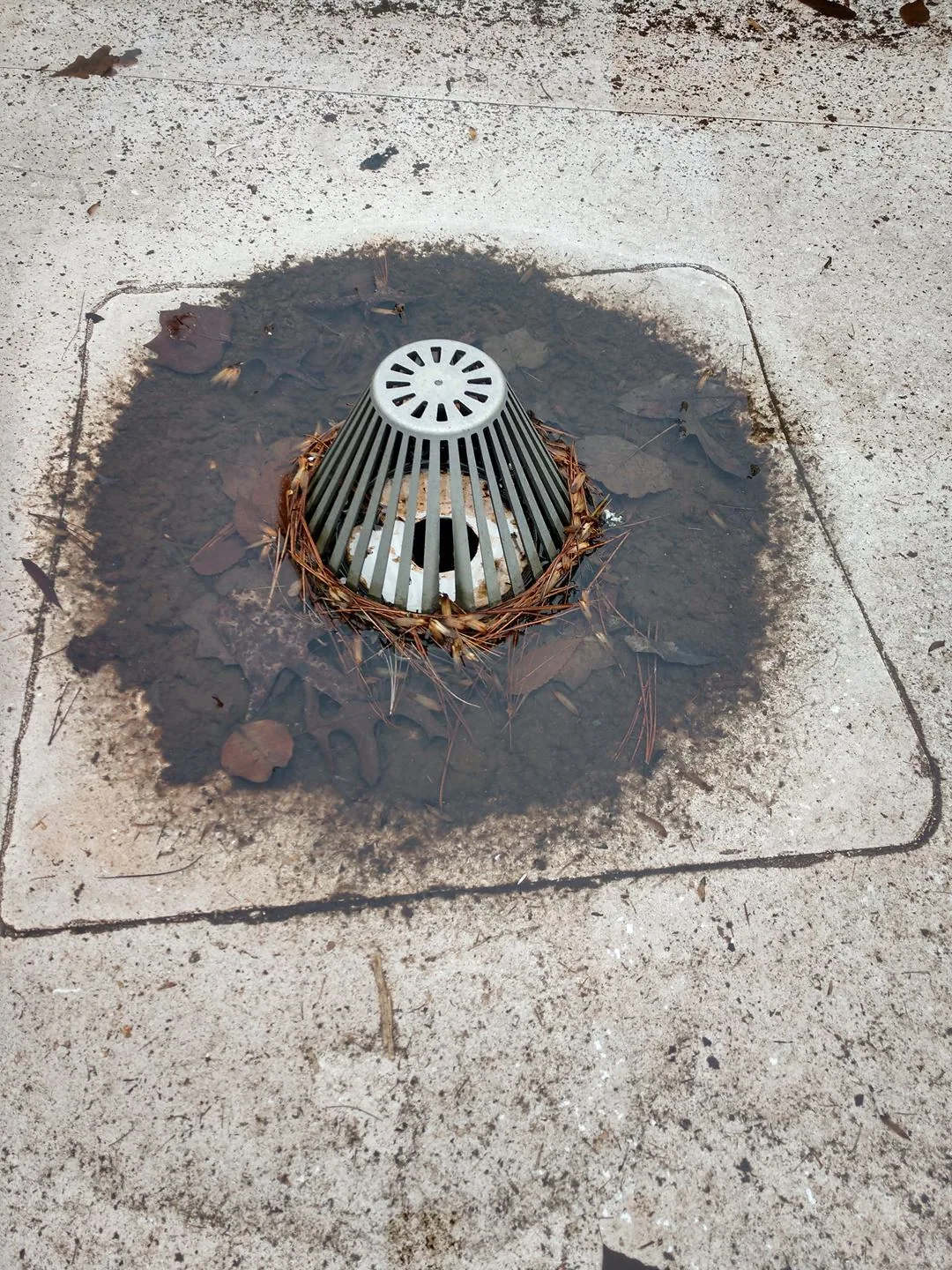
We begin at each drain, scupper, and downspout connection near the pond. The bowl may be clear while the leader below is restricted, or the membrane may have separated from the flange. We remove debris only when access and the building's maintenance rules allow it, then inspect the tie-in and surrounding surface. A controlled water check can help confirm flow, but we agree on where water will discharge and how the area below will be protected before testing.
Visalia has multiple commercial corridors, including Court and Locust and Goshen and Murray. A building in one of those areas still needs a property-level drainage map. We mark the roof edges, drains, scuppers, equipment pads, and any downspout that cannot be reached. A drain and scupper inspection records outlet condition, flange connection, and discharge route. If the opening is actually at a seam, our seam review follows that separate path.
Separate a Blockage from a Low Area
Once outlets are checked, we compare the standing-water outline with the roof plane and any available drawings. A depressed area can reflect the deck, insulation, or support below the membrane. We use a straightedge, level readings, and moisture testing where appropriate to see whether the condition is isolated or spread across the roof. Surface water alone cannot tell us which layer changed, so the report distinguishes observation from a conclusion that needs an opening.
Downtown Visalia includes office, government, healthcare, retail, nonprofit, and entertainment activity in a mixed-use district. For occupied spaces, we coordinate any inspection opening around the rooms below, then restore temporary protection before leaving. A moisture survey can help map a wet boundary when the surface gives an incomplete picture. If insulation is saturated or the deck needs review, we state that work separately from clearing a drain or repairing a membrane tie-in.
Choose Work That Restores the Drainage Path
A small outlet defect may need cleaning, flange repair, or a compatible membrane tie-in. A low area may call for a slope correction, tapered insulation, or a broader roof evaluation. We do not assume a coating will move water uphill or repair a depressed deck. The proposal identifies the component being changed, the materials at the tie-in, and how the finished work will connect to the drainage route. If the roof holds water because an outlet is undersized or poorly located, that design question is identified for review.
At a regional retail corridor such as Mooney Boulevard, the manager may need customer paths and roof access protected during work. We set staging with the site contact and identify any temporary area below that must remain clear. The repair scope can address a confirmed local failure, while a replacement evaluation compares broader correction when drainage problems repeat across sections. We keep each option tied to the measured condition.
Use the Dry Season to Prepare the Roof
Visalia's precipitation normal puts more rain in the cooler part of the year. Before that cycle begins, we can inspect drains, clear approved debris, check membrane laps, and photograph low points with a consistent reference. The inspection does not promise that a roof will remain dry; it gives the owner a record of visible conditions and a list of work that should be completed before regular rain returns. After the next storm, the same images can help compare pond depth and duration.
If water is still present, the manager should note when it was observed and whether the outlet was flowing. We compare that timing with the roof plan, interior report, and any maintenance log. A maintenance visit can schedule repeat checks at the roof sections most likely to collect water. When leakage accompanies ponding, our inspection report separates the water path from the standing-water boundary so the repair does not chase two different conditions as one.
Keep the Test Boundary and Repair Visible
The final record should label each outlet, low point, and area opened. We photograph the route before work, note moisture readings or test conditions, and mark where new insulation or membrane was installed. If some locations sit behind equipment or could not be reached safely, we list them as uninspected rather than implying the entire roof was cleared. That boundary helps the next maintenance visit compare the same locations.
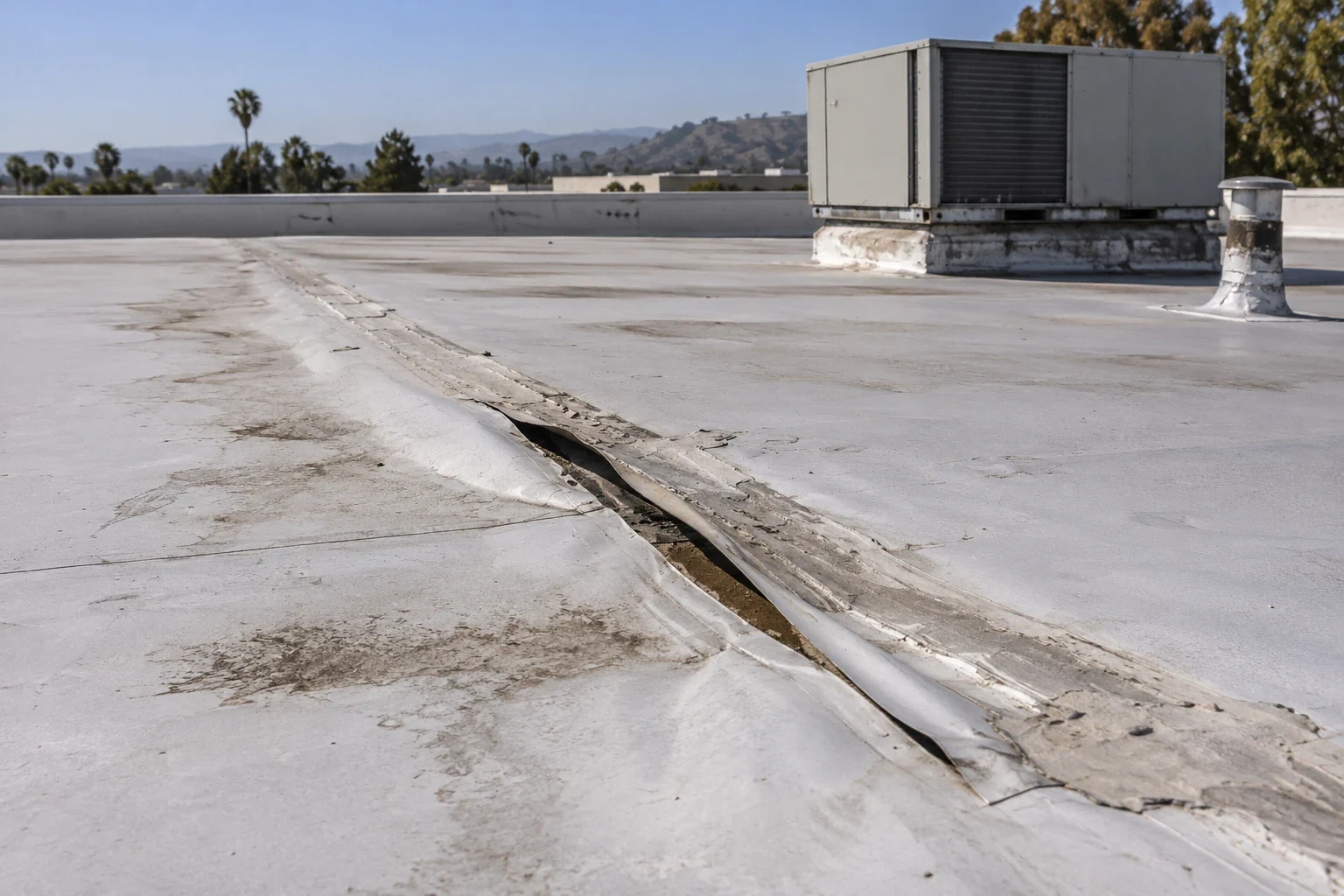
Send the property address, roof plan, date the standing water was noticed, leak locations, and recent drain work. We will inspect the outlets and roof plane, then explain whether the next step is cleaning, a local membrane repair, added testing, or a broader drainage correction. Conditions at the Visalia Industrial Park or downtown do not establish what is on your building. The Industrial Park service area and Downtown Visalia service area describe broad planned coverage, not a record of work at a named property. The scope follows the roof we can inspect, with a clear note for any test that could change the recommendation. For a leak that appears near a wall or curb, we also check the adjacent transition; flashing failure repair addresses that detail when the opening is there rather than at the drain.
For a repeat pond, keep one photo from the same roof position and note how long after rainfall it was taken. That does not replace a level check, but it makes the next comparison more useful. We can see whether the water line changed, whether debris returned, and whether an outlet review or a slope investigation should come first.
Commercial Roofing Questions
How long should I wait before calling about standing water?
Record when the rain stopped and whether the pond shrinks as the roof drains. If water remains or is entering the building, we can inspect the outlet and surface without waiting for another storm.
Can a drain be clear while water still collects?
Yes. A low point, restricted leader, damaged flange, or changed insulation can hold water even when the bowl is open. We check the full route from roof surface to discharge.
Will a coating correct a ponding area?
A coating does not correct slope or a depressed deck. We identify why the water remains before comparing membrane repair, insulation correction, or a larger roof scope.
Can you test a drain while the building is operating?
We plan the test with the property contact, including discharge, interior protection, and access below. The work window is set before water is introduced.
What if insulation is wet below the pond?
We map the tested area and separate wet material from dry sections. The recommendation states what needs removal and what remains outside the opening.
What records help you find the cause?
Share the roof plan, drain maintenance notes, leak dates, photos after rain, and any prior repair report. Those details help us compare the pond boundary with the interior water path.