
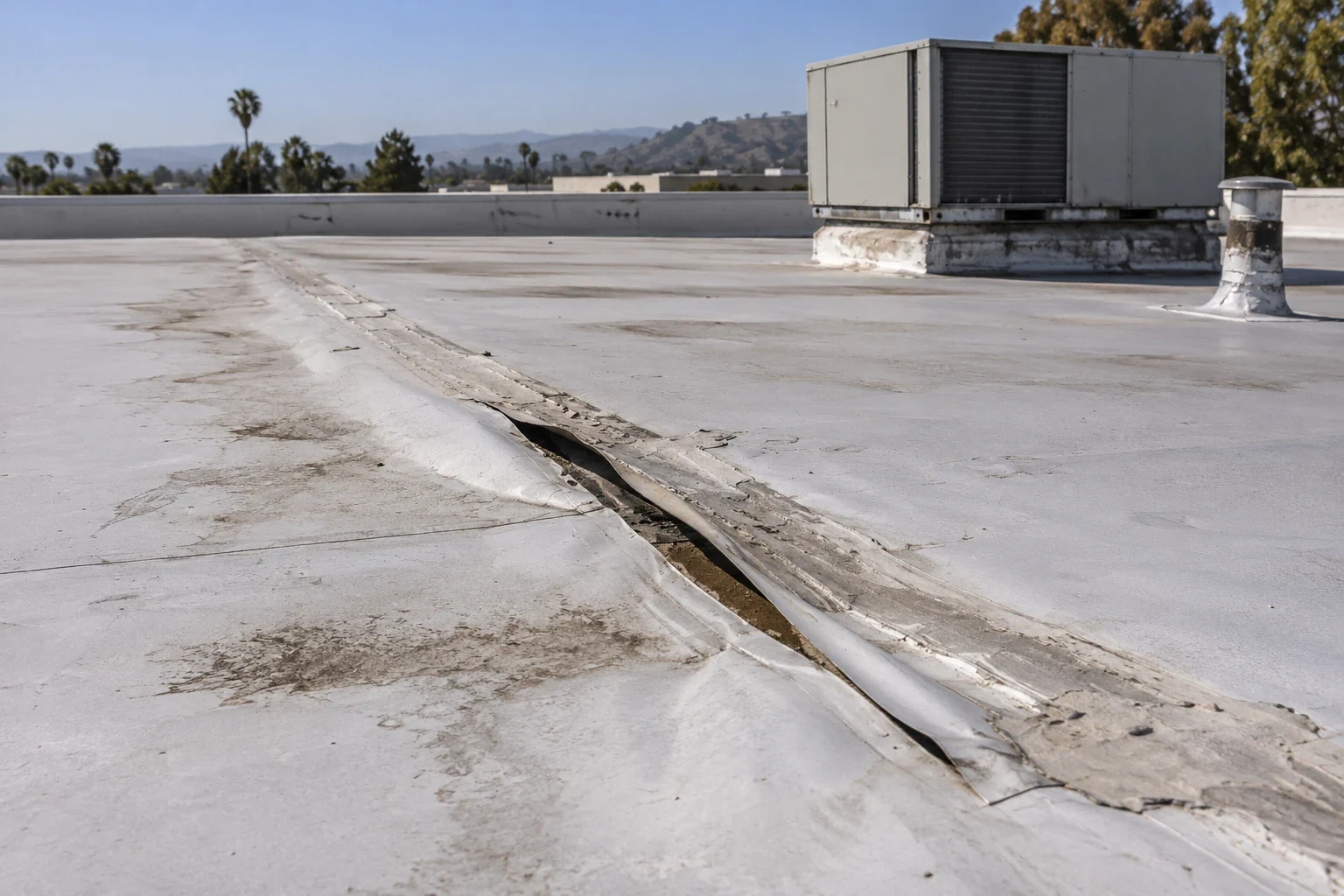
Commercial Roof Seam Failure Repair in Visalia, CA
Roof Damage Repair | Visalia and Tulare County
Commercial Roof Seam Failure Repair
An open membrane lap needs more than a bead across the visible gap. We check how far the seam has separated, whether the sheet is still attached, and if moisture has moved beneath it. Visalia's climate averages show 10.32 inches of mean annual precipitation, with most monthly rain concentrated from late fall through early spring. The dry interval is a useful time to inspect seam ends and edge details before recurring rain puts the tie-in to work.
The Visalia Industrial Park supports manufacturing, food processing, warehousing, and distribution. Court and Locust is a mixed-use corridor between downtown and the Oval. These are broad planning and economic contexts, not claims about a particular roof. We identify the building use with its manager, inspect the actual assembly, and mark the tested boundary. Then we determine whether one seam can be restored or whether movement continues into another roof section.
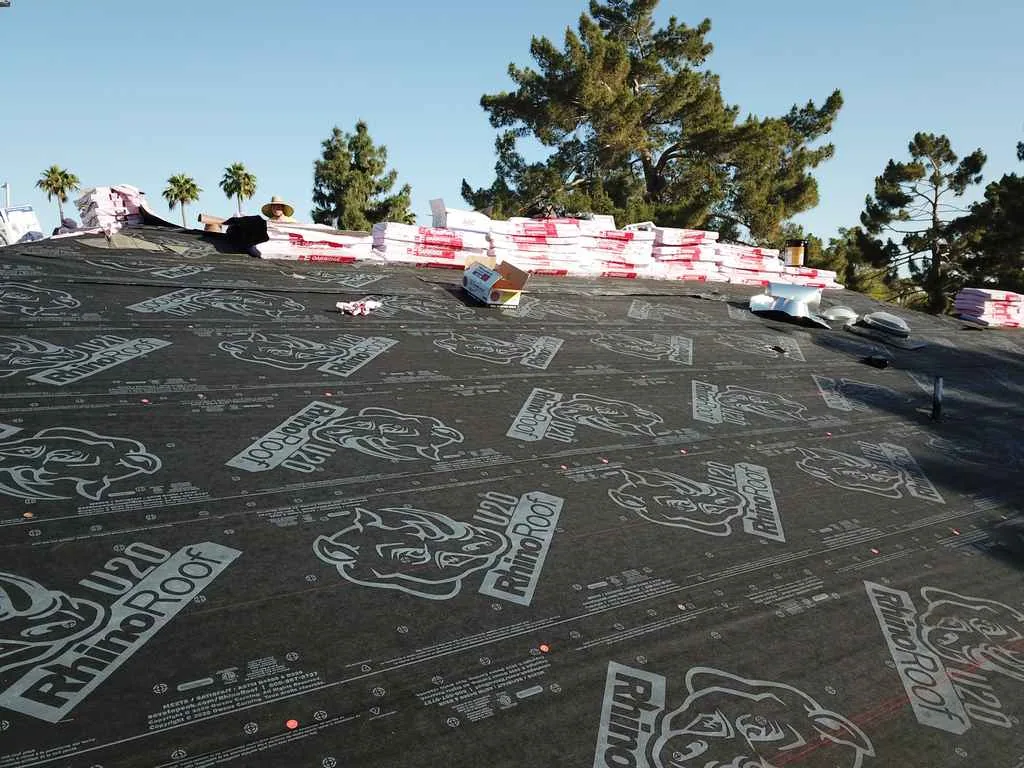
Find the Full Length of the Separation
We follow the seam in both directions and inspect its end laps, intersections, and nearby penetrations. A gap may be limited to one splice, or it may continue under a cover strip or coating. We check whether the membrane edges are clean, whether the bond or weld remains continuous, and if the sheet has shifted. The repair scope should name the length examined and any area hidden by equipment or an existing patch.
At a warehouse or production building near the Industrial Park, an active leak can affect stock or a work area below. We coordinate access and interior protection with the site contact, then trace the water path above the affected room. A roof inspection documents the seam, while flashing repair addresses a separate transition if the leak route turns at a curb or wall.
Test the Lap Before Opening More Roof
A seam probe can show whether the lap is bonded or welded through its width. We check the material type, temperature history when known, surface contamination, and signs of prior repair. If the assembly is unfamiliar, a small test area can establish how the layers respond before we remove a longer section. Moisture testing helps determine whether insulation below the seam needs attention. We keep the test area visible in photos and do not infer a roof-wide failure from one separated point.
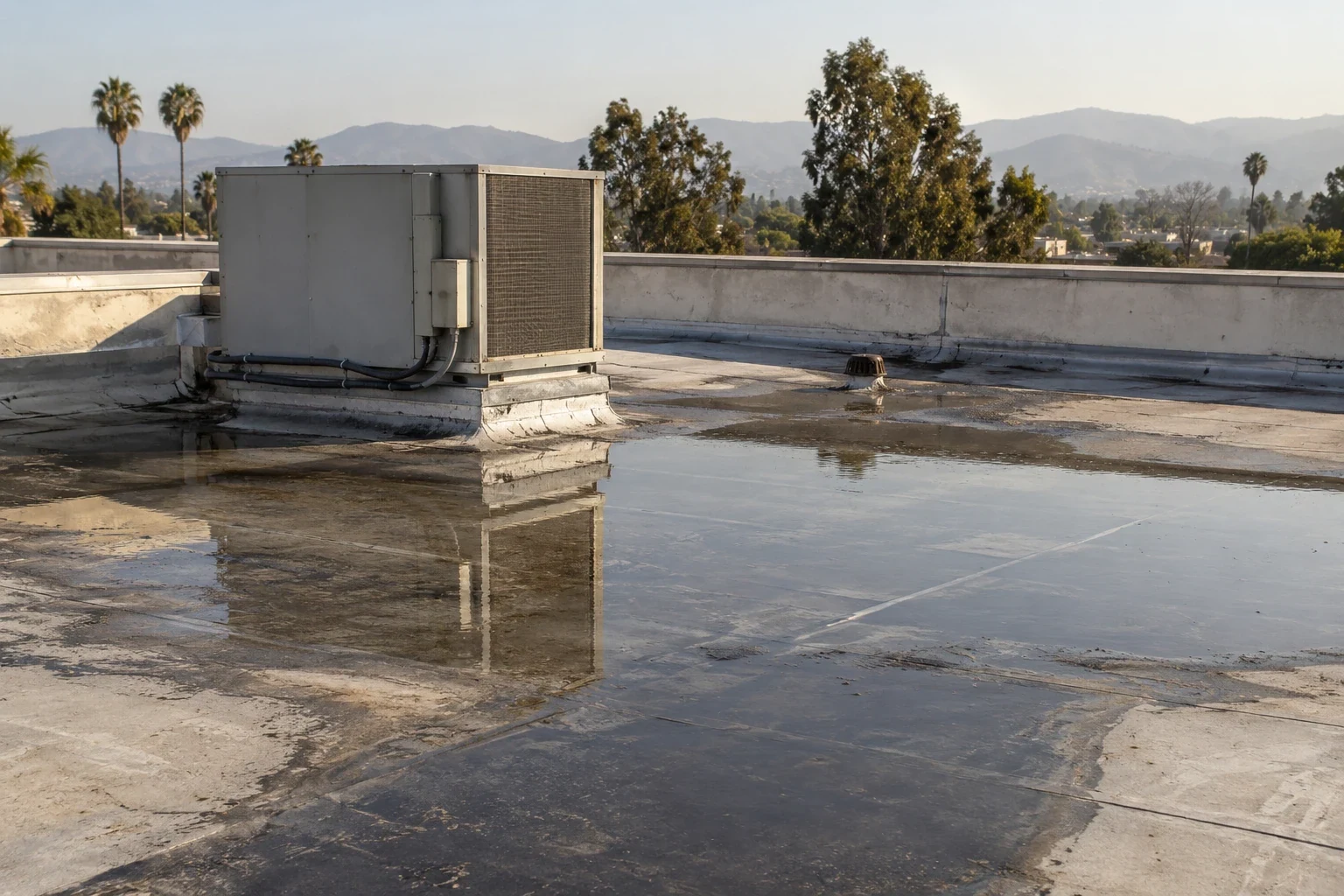
Court and Locust connects downtown with the Oval-area businesses, a city-identified mixed-use corridor. For a property there, we plan the test around access to the space below and any tenant schedule. The moisture survey can help map wet material when the surface does not show its boundary. If ponding is present beside the seam, our ponding-water assessment documents drainage as a separate condition.
Restore the Lap with Compatible Materials
After we confirm the system and substrate, we prepare the surface and restore the seam using compatible material and equipment. That may require cleaning, drying, removing failed repair material, re-welding, or installing a new membrane section. A cover strip cannot correct wet insulation or loose attachment underneath. We identify where the repair stops, how each end ties into sound material, and what must be protected until the assembly is closed.
If several seams show the same separation, we compare condition across the roof before pricing isolated patches. Widespread movement may make restoration or replacement more useful than treating each lap as a separate call. The repair scope lists the tested sections and materials. A recover evaluation checks moisture and attachment first, while a replacement study sets the tear-off and close-in sequence when the existing assembly has broader limits.
Protect the Building During the Work Window
Seam work may involve heat, adhesives, temporary openings, or equipment on an occupied roof. We confirm fire controls, ventilation needs, access routes, and who can approve an interior closure before starting. If a room contains sensitive inventory or active work, we protect it and sequence the repair by roof zone. The written plan says when each section opens and closes so a manager can coordinate tenants and other trades.
Visalia's wet season follows a long warm period, so scheduling depends on both surface conditions and the forecast. We do not promise a dry roof because a seam was repaired; we describe the tested area and any remaining limitations. For a time-sensitive leak, an emergency response can provide temporary protection before permanent work. The Industrial Park service area and Court and Locust corridor are separate broad locations with distinct access considerations.
Keep the Seam History with the Roof Plan
We close the work with before-and-after photos, the seam location, material used, and any moisture findings. The report should distinguish a tested section from adjacent laps that were visible but not opened. If the roof plan uses a different seam layout than the field, we mark the current configuration so future inspections can find the same joints. That prevents a later repair from being placed by an old drawing alone.
Send the leak location, roof plan, prior seam repairs, access rules, and recent weather date before a visit. We will inspect the lap, check the substrate, and explain whether the repair is local or part of a broader condition. If moisture or attachment cannot be confirmed without additional opening, the scope names that next step. A manager can then compare a repair, restoration, or replacement option using the same roof-area labels and a clear list of what remains outside the tested boundary.
Where production, deliveries, or customer access continue below, we also record the protection and work windows that were used. That makes future planning easier if another seam needs attention. The file should show which trade controls adjacent equipment or penetrations and where the roofing scope resumes after that work is complete.
For a multi-zone roof, we can label each lap by section and mark the limits of access. The manager can compare the repair record with future leak reports and see whether the same joint reopened or a nearby transition changed. That distinction helps direct the next inspection without expanding a small repair into an unsupported roof-wide scope.
Before the crew leaves, we identify any seam segment that was not tested because of equipment, locked areas, or unsafe access. A return visit can then focus on that specific limit and record what changed.
Commercial Roofing Questions
Can an open seam be welded without replacing the sheet?
Often, if the membrane edges and attachment remain suitable. We probe the lap, check the substrate, and confirm that a new weld can tie into sound material.
How do you know whether water traveled under the seam?
We compare the interior leak with the roof location and use moisture testing or a small opening when needed. The report marks the tested boundary and any area that remains uncertain.
Will a seam patch fix ponding beside it?
Not by itself. We document drainage and seam failure separately, then price each correction that the roof condition supports.
Can work be phased over an operating facility?
Yes. We coordinate protection, access, ventilation, and each daily close-in with the property contact. The work plan identifies which section is active.
When should I consider a larger roof scope?
A broader review is useful when separation repeats across several seams, moisture reaches multiple areas, or attachment has changed. We compare those findings with a contained repair.
What records help you inspect a recurring seam leak?
Send the roof plan, repair dates, leak timing, material notes, and photos from prior work. We will compare the same seam ends and test points on the roof.