
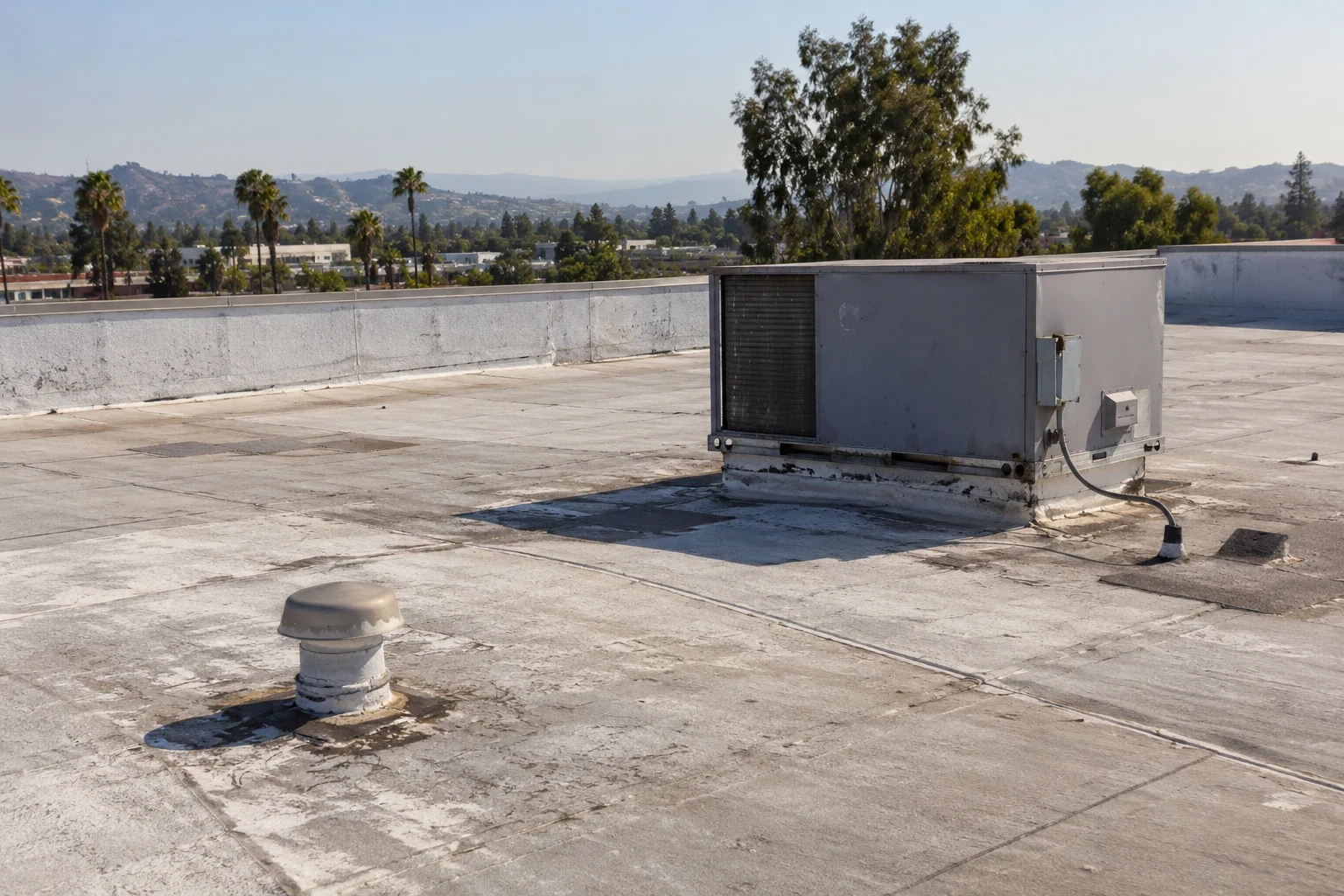
Commercial Roof Repair in Visalia, CA
Commercial Roofing Services | Visalia and Tulare County
Commercial Roof Repair
A repair should stop the failure without hiding what caused it. We start with the leak report, inspect the roof section above it, and trace water through seams, drains, curbs, and wall transitions. A ceiling mark in a Visalia warehouse does not identify the roof opening by itself. The water path may cross insulation or follow a deck flute before it appears inside. On properties near Mooney Boulevard or the Visalia Industrial Park, access and operating hours can shape the work plan, but the repair boundary still follows the tested condition. The first visit separates a local detail failure from a problem that reaches farther into the assembly.
Locate the Failure before Opening the Roof
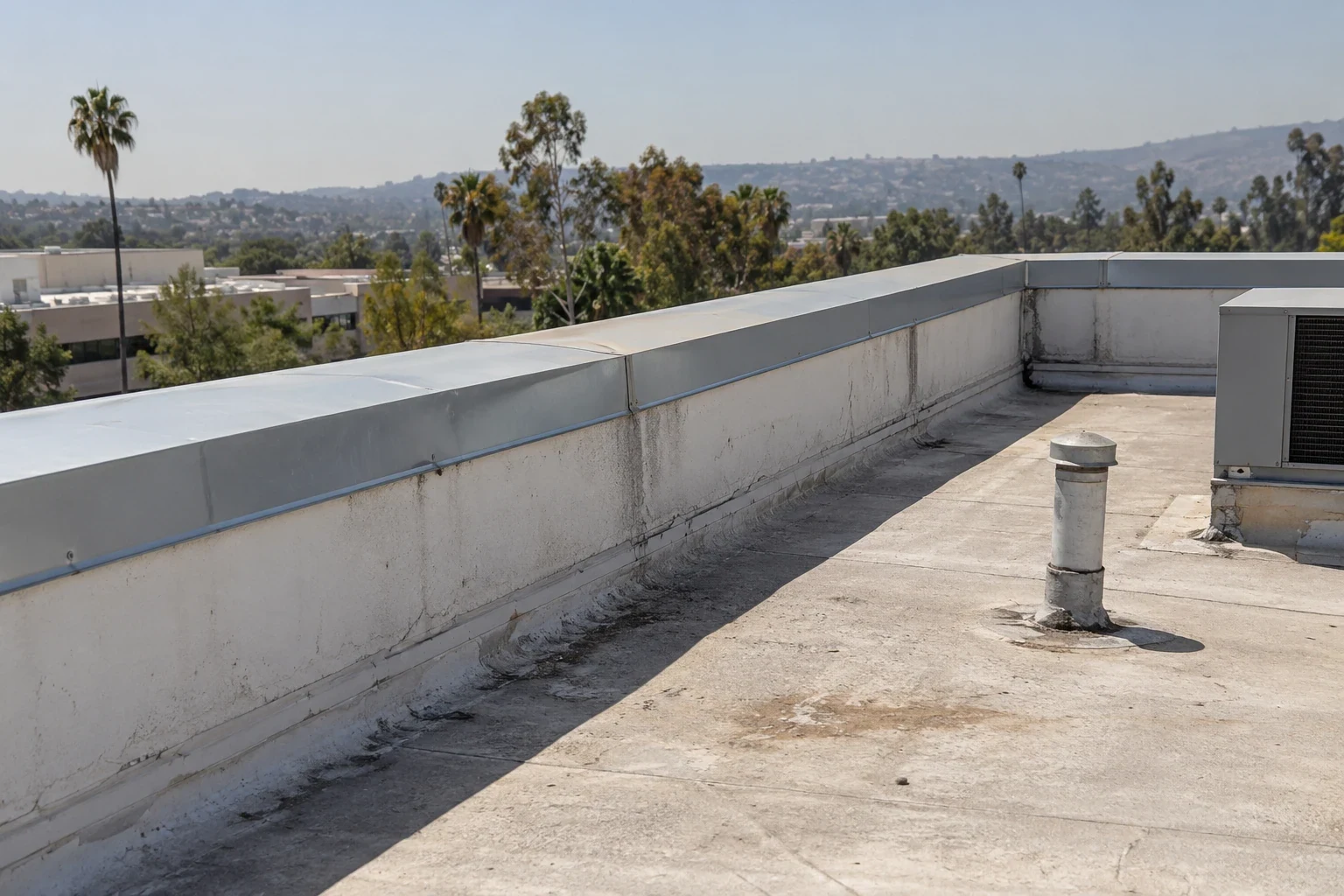
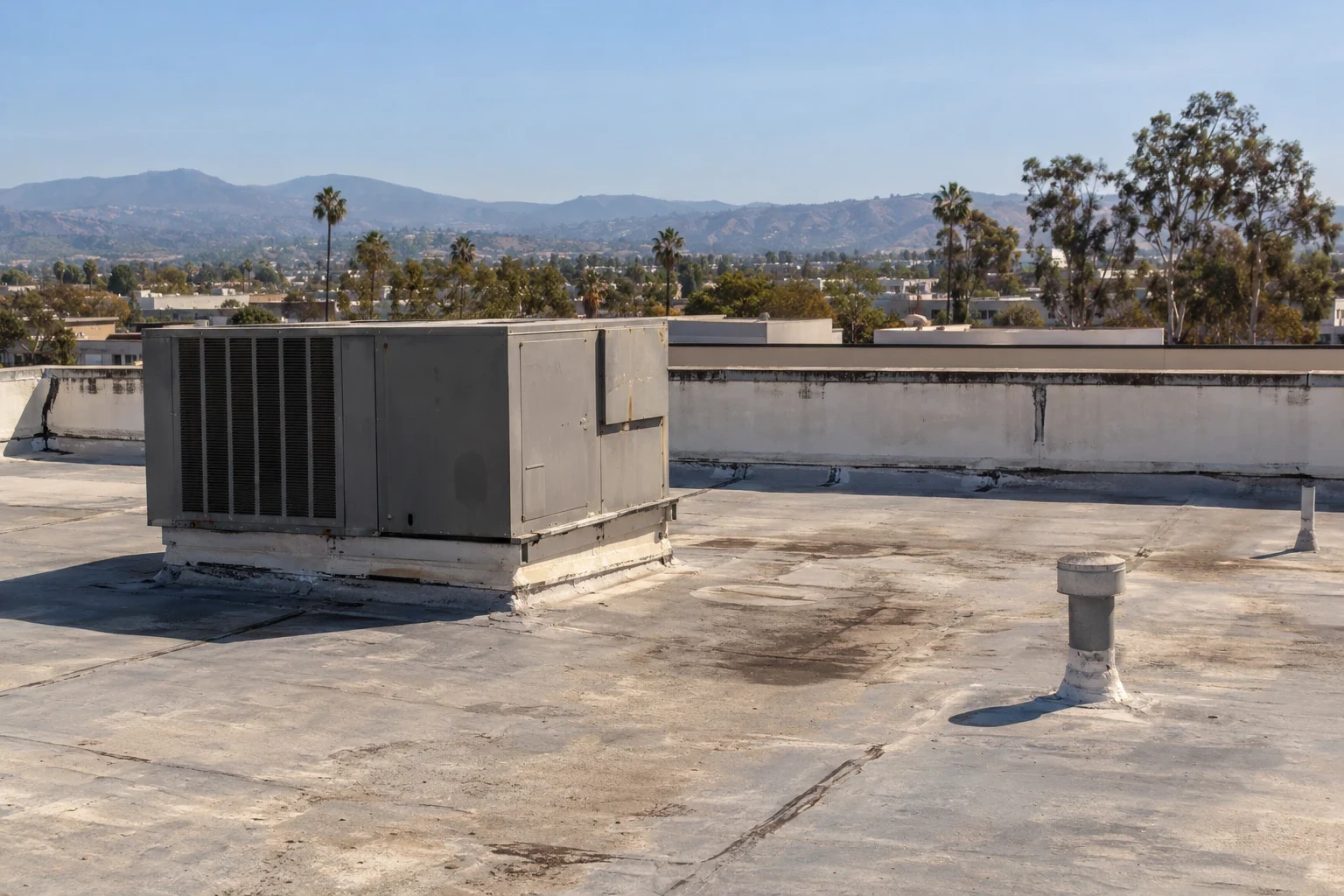
We ask when the leak appears, what weather preceded it, whether it moves with wind direction, and which interior areas are affected. That history helps choose the roof details to inspect. We look above the stain at penetrations, seams, drain bowls, scuppers, edge metal, and places where older repairs meet the field membrane. If water has traveled, the closest roof defect may not be directly over the ceiling mark. Photos and a simple roof sketch keep the investigation tied to a place the maintenance team can revisit.
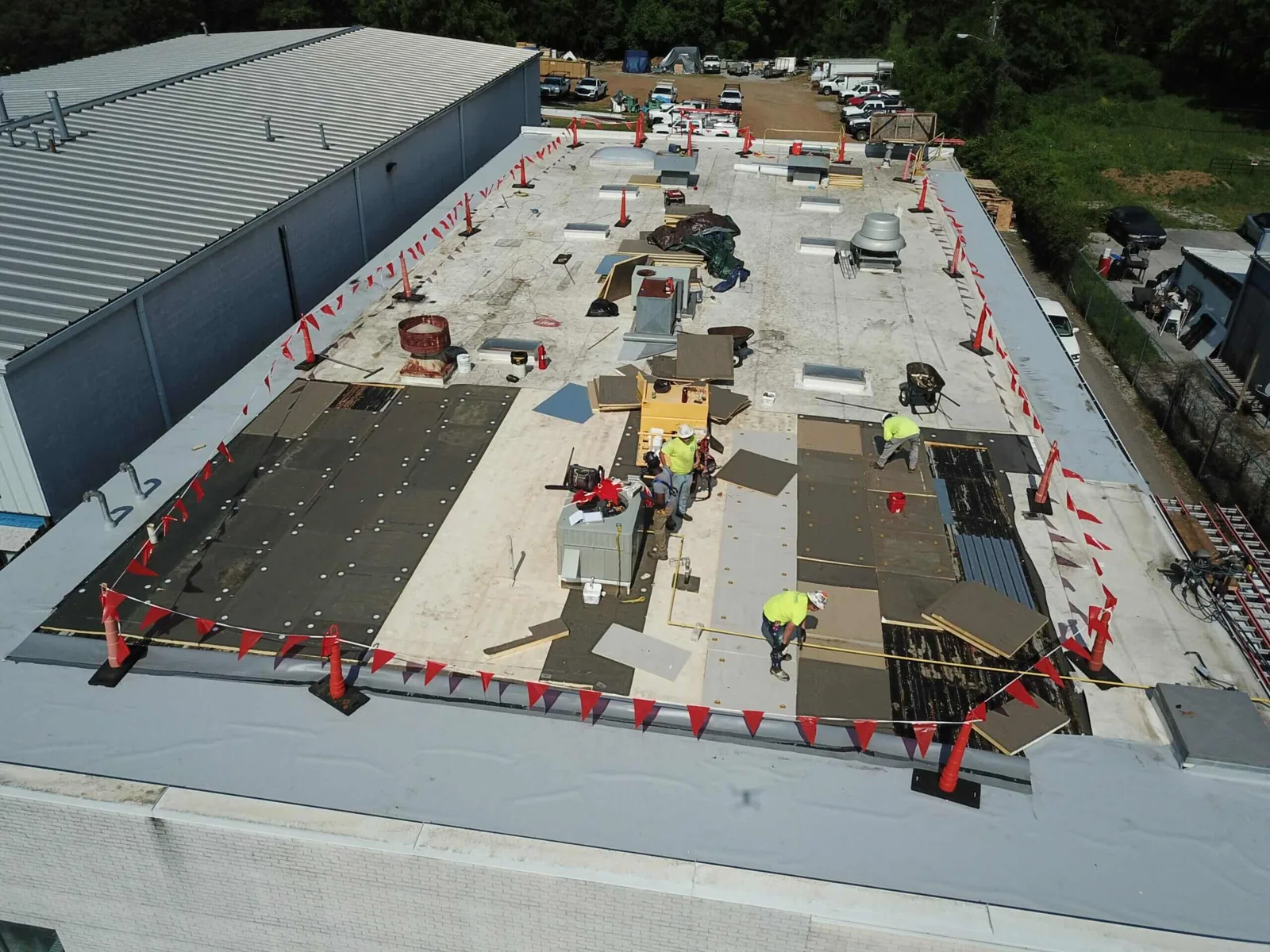
Safety comes first on a roof with fragile skylights, loose materials, exposed wiring, or equipment hazards. The crew confirms access, fall protection needs, and any building rules before moving across the surface. We do not cut an opening just to make a repair look decisive. If a moisture check or test cut is needed, the area is marked, agreed with the owner, and closed after inspection. That sequence avoids turning a small report into a larger opening without a reason.
Repair the Detail that Failed
Different failures call for different repair details. A split seam needs compatible membrane and a properly prepared bond area. A loose termination may need securement and new flashing. A leaking pipe penetration may require removing failed sealant, rebuilding the boot or flashing, and checking the support around the pipe. At a drain, the repair must tie into the bowl and keep debris from blocking the outlet. A coating placed over dirt, moisture, or a moving seam will not make those conditions disappear.
We identify the roof material before selecting repair products. TPO, PVC, EPDM, modified bitumen, built-up roofing, metal, and coating systems use different preparation and joining methods. An incompatible patch may separate or become difficult to repair later. Where the system is unknown, we review roof records or test a small area before specifying a material. The repair note records the surface condition, the detail rebuilt, and any adjacent area that remains outside the scope.
Follow Drainage through the Roof Section
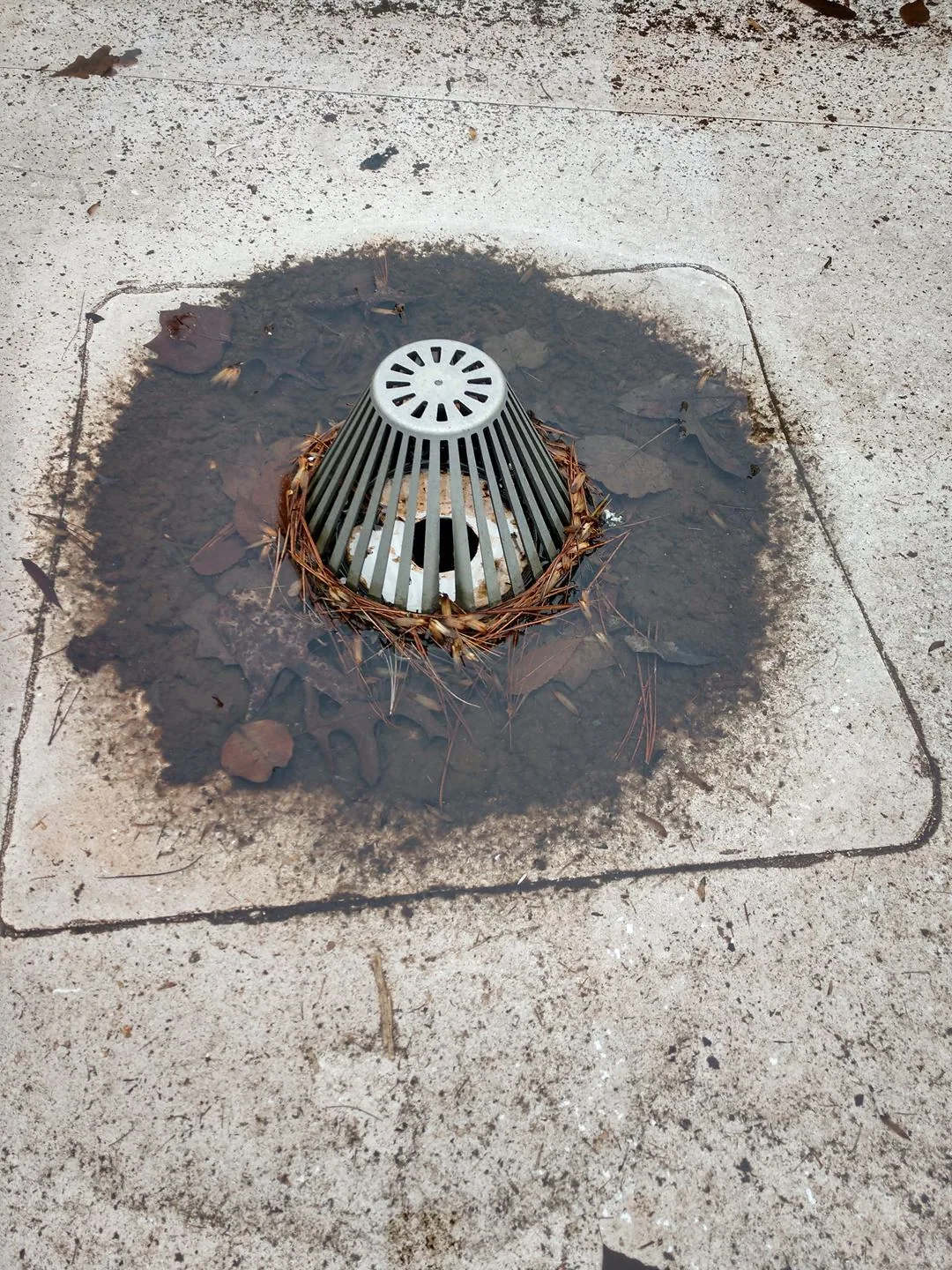
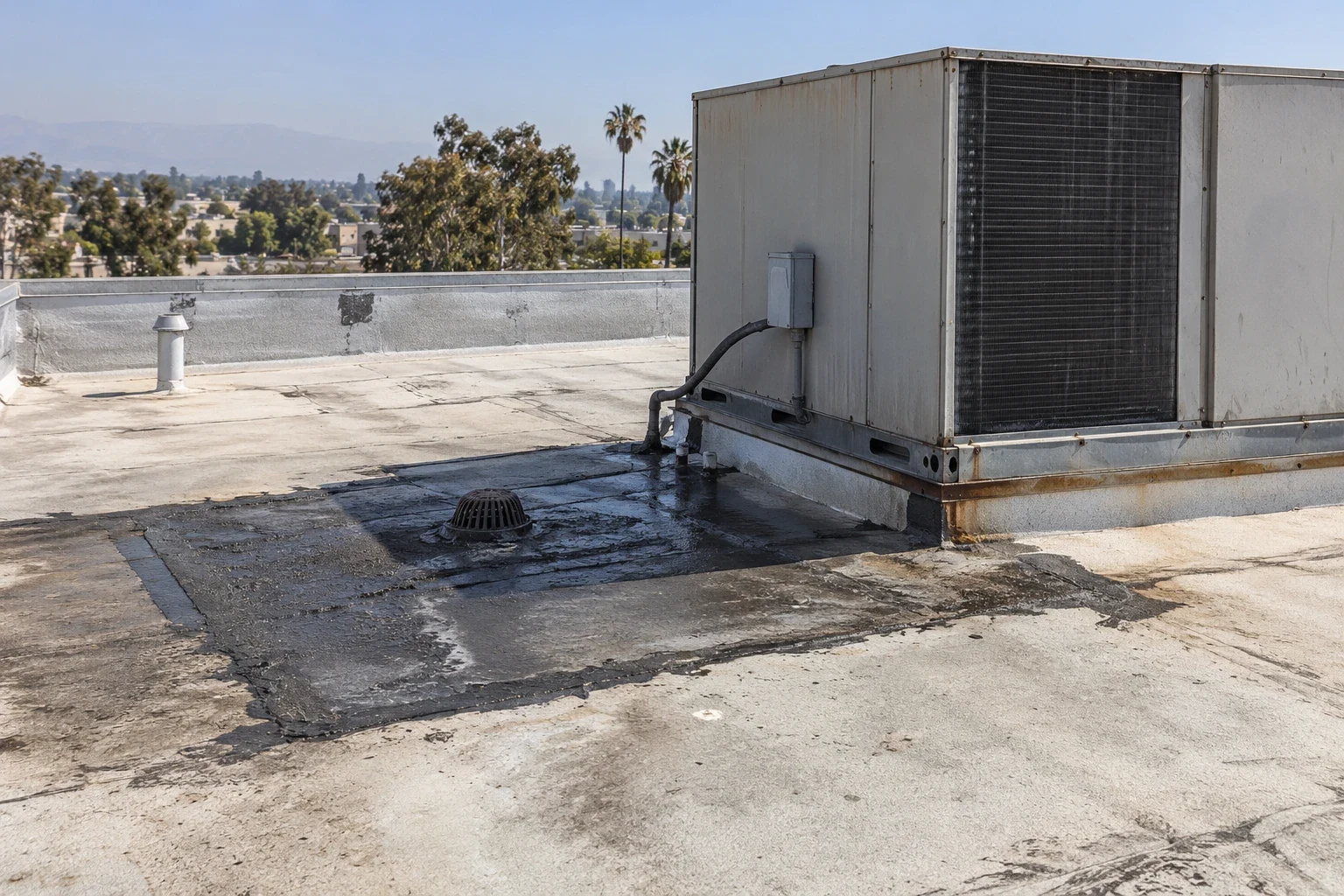
Standing water can point to a blocked drain, low area, damaged sump, or a change in roof slope. We check the outlet, strainer, leader, overflow route, and the membrane around the drain before calling it a surface-only issue. If water leaves the bowl but remains nearby, the roof may have a depression or deck movement that needs separate review. A repair can restore the detail around a drain while the larger drainage question remains open; the written scope should distinguish those tasks.
Visalia averages 10.32 inches of annual precipitation in Visalia's climate averages 1991-2020 normals, with most monthly rain falling from late fall through early spring. That seasonal pattern makes it useful to confirm the roof can move water before the wet months. We clear only what the owner authorizes and avoid sending debris into a leader. If the leak tracks back to an outlet or edge, we document the water route and photograph the repaired boundary so maintenance staff can compare later observations.
Set a Repair Limit the Owner Can Verify
A written repair boundary should show the affected roof section, the materials removed, and the transition where new work ties into sound material. If insulation is wet, we mark how far it extends rather than stopping at the first dry-looking surface. If the deck is damaged, we describe how the opening will be handled and who will approve any added work. This makes it possible to review a small repair without implying that concealed roof conditions have been inspected everywhere.
Repair limits also help compare immediate work with a larger roof decision. One isolated opening with dry surrounding material may support a localized repair. Repeated leaks, widespread wet insulation, loose attachment, or multiple failed details may justify a broader inspection or replacement study. The Visalia Industrial Park includes manufacturing, warehousing, and distribution activity; those uses make it useful to identify the roof zone and equipment affected, without assuming that all buildings there use the same assembly. The same caution applies across Downtown Visalia, where buildings serve different uses and have different histories.
Coordinate Access and Return Visits
We confirm the contact who can arrange roof access, the route to the work area, and which interior spaces need protection. A repair near active receiving, food handling, customer entry, or occupied offices may need a specific work window and advance notice. The plan should name where tools and materials will be staged, how debris will be removed, and whether the area below can remain in service. When the roof needs to dry before a compatible repair can be installed, we say so and set an interim weather-protection step instead of promising a same-visit permanent fix.
After work, the owner should receive photos, a description of the detail repaired, and any follow-up item that could not be resolved in the first scope. If a return visit is needed after rain, record the location and conditions observed. For planning beyond a localized fix, review commercial roof inspections, drain and scupper repairs, or replacement options. Each service answers a different question; the report should make clear which one the evidence supports.
Use Local Conditions as Context, Not Diagnosis
Visalia's climate averagess 94.7 Visalia days per year with highs at or above 90 degrees Fahrenheit in its 1991-2020 normals. Heat can make surface temperature, worker exposure, adhesive limits, and exposed sealant condition relevant during a repair. It does not prove why one roof is leaking. The inspection has to identify a failed lap, flashing, penetration, drain, or other detail at the building. Along the Mooney Boulevard regional retail corridor, a repair may also need customer-safe staging. Near Goshen and Murray, a service route and equipment access can matter to the property manager.
We keep those local references proportionate. Citywide weather averages describe seasonal conditions, not the exact roof. The corridor facts describe land use and access, not the condition of a particular building. A TPO repair and an EPDM repair require compatible materials, so roof identification comes before either specification. Roof conclusions come from what the crew can inspect and test. Where a leak report cannot be reproduced, we document the inspection area and recommend the next check rather than naming a cause without evidence. That record leaves the owner with a clear choice about monitoring, investigation, or a defined repair.
Commercial Roofing Questions
Can you find the roof opening from an interior ceiling stain?
Not from the stain alone. We trace the report to roof details above and nearby, then check whether water could have traveled through insulation or along the deck.
What if the leak stops before the inspection?
We use the reported timing, weather, and affected interior area to guide the roof walk. Photos and a sketch can help, but we will label any cause that remains unconfirmed.
Will a repair correct a roof that holds water?
It can repair a failed drain or membrane detail, but it will not correct deck movement or poor slope by itself. We separate the local repair from the drainage condition.
How do you keep a repair from spreading?
The boundary follows the tested material. We remove unsound layers as needed, tie into compatible dry material, and photograph the edge of the work for the closeout record.
What should I have ready for the visit?
Provide access details, leak dates, interior photos, roof plans or repair records, and any restricted operating hours. That information helps us inspect the right zone safely.