Commercial Roof Replacement in Visalia, CA
Commercial Roofing Services | Visalia and Tulare County
Commercial Roof Replacement
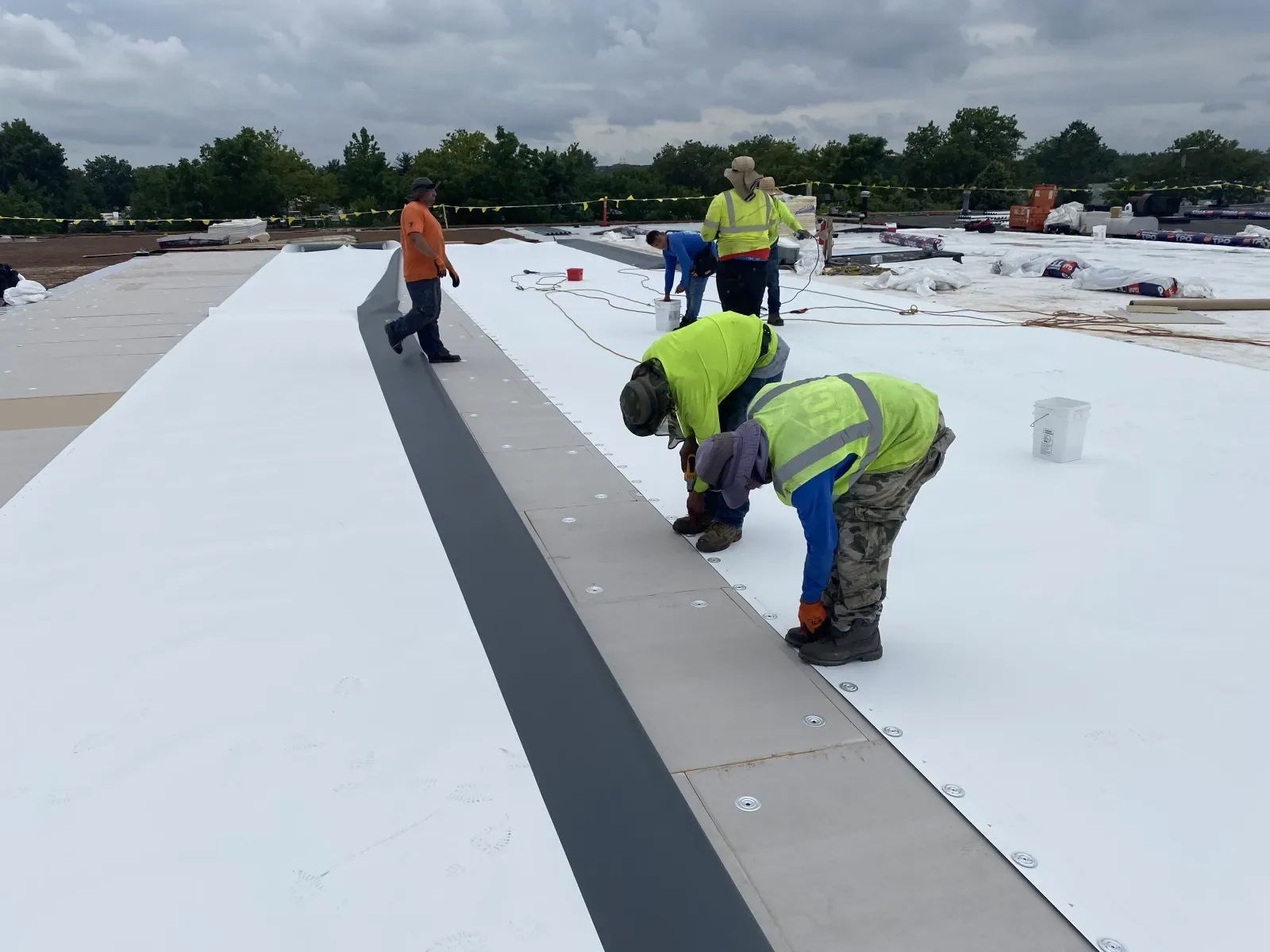
A replacement decision starts with what is below the membrane, not how old the roof looks from the lot. We inspect the assembly, locate wet insulation, check drainage and edge details, and identify what can remain before comparing a recover with a tear-off. In Visalia, heat and ultraviolet exposure work on seams and sealants through a long warm season; seasonal rain then tests drains and transitions. The same replacement plan will not fit a warehouse in the Visalia Industrial Park and a retail roof near Mooney Boulevard. Each building gets a scope tied to its deck, access, operating hours, and the evidence from the roof walk.
Find What the Existing Roof Can No Longer Do
Repeated leaks do not automatically mean every square foot needs to come off. A roof may have one failed curb, a weak perimeter, or a drainage problem that has widened the repair area over time. It may also have wet insulation, loose attachment, brittle surfacing, or several old layers that make another repair poor value. We map the visible conditions first, then test areas where the roof assembly is in doubt. The result separates a localized failure from system-wide wear.
That distinction changes the choice between continued repair, a recover, and replacement. A patch may be suitable when adjacent material is dry and stable. A recover may be considered when the existing roof remains sound enough to support another assembly and local code and manufacturer requirements allow it. A tear-off is more likely when moisture, attachment, deck damage, or incompatible layers prevent a reliable overlay. We state which conditions support each option instead of presenting a single scope as inevitable.
Inspect the Deck, Layers, and Details
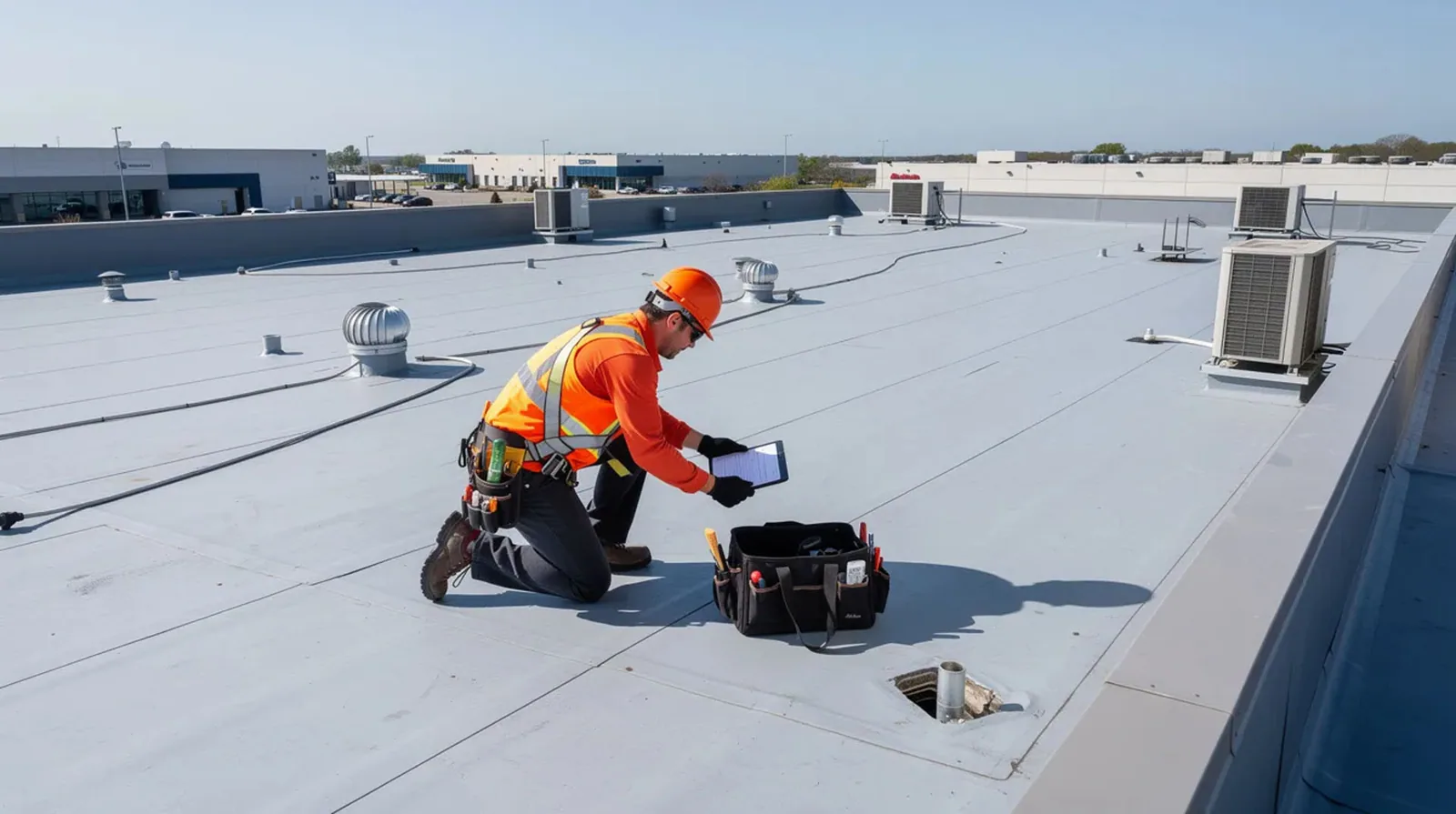
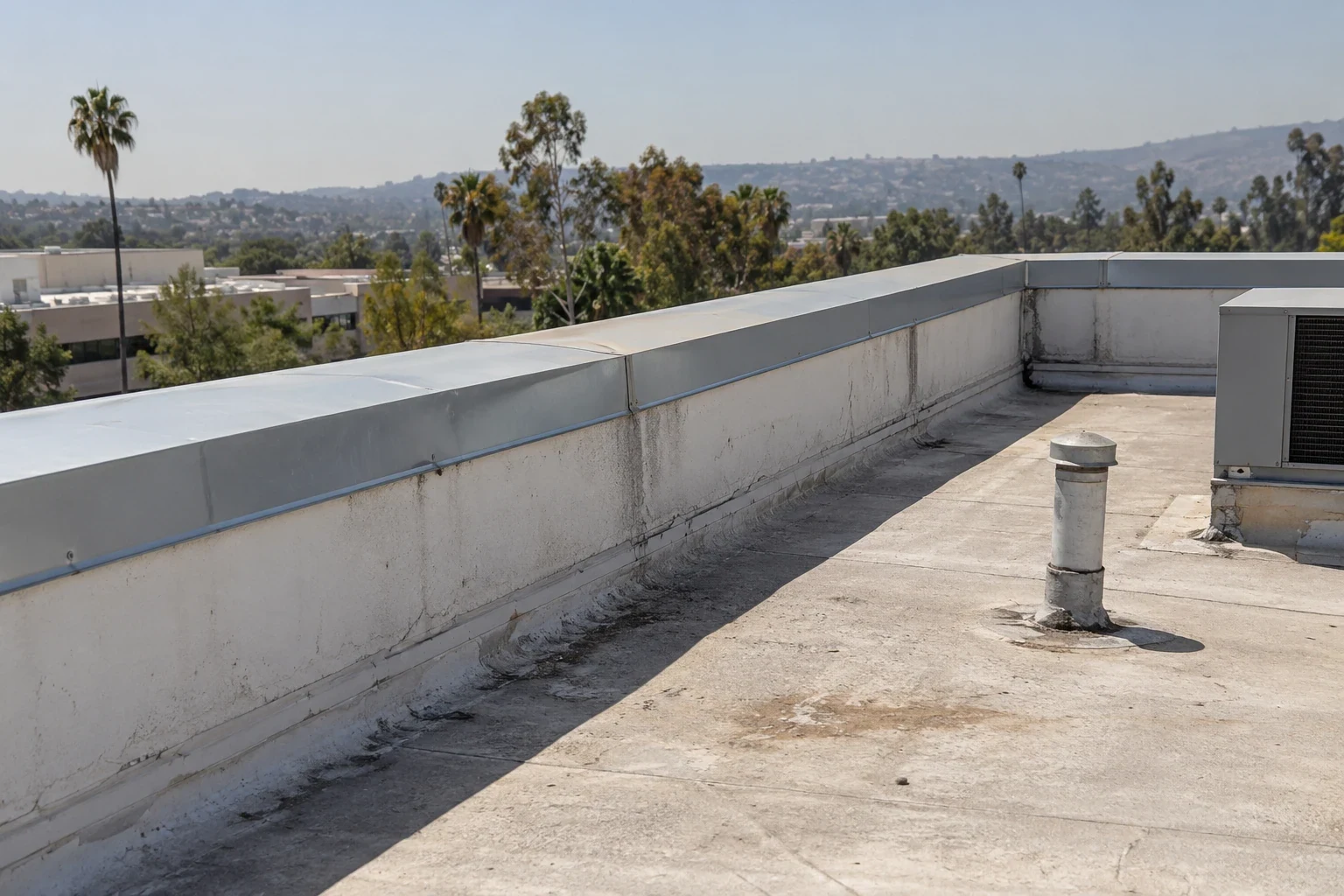
Before the replacement scope is priced, the roof walk should answer practical questions. How many roof layers are present? Are seams bonded, mechanically attached, or covered by prior repairs? Does insulation feel firm and dry at representative test points? Are drain bowls open, and does the surface slope toward them? At curbs, skylights, walls, and edges, does the flashing remain attached and high enough for the selected system? We record conditions by roof section so a manager can distinguish observed damage from assumptions.
Core cuts may be useful when surface readings or interior clues do not settle the moisture question. Their locations should be agreed on first, with openings closed and documented. A replacement also calls for deck review where rust, deflection, or attachment failure is suspected. No small sample proves the condition of every area; it helps define where more investigation is warranted. The final record identifies tested locations, repair limits, and unresolved items that could change the work.
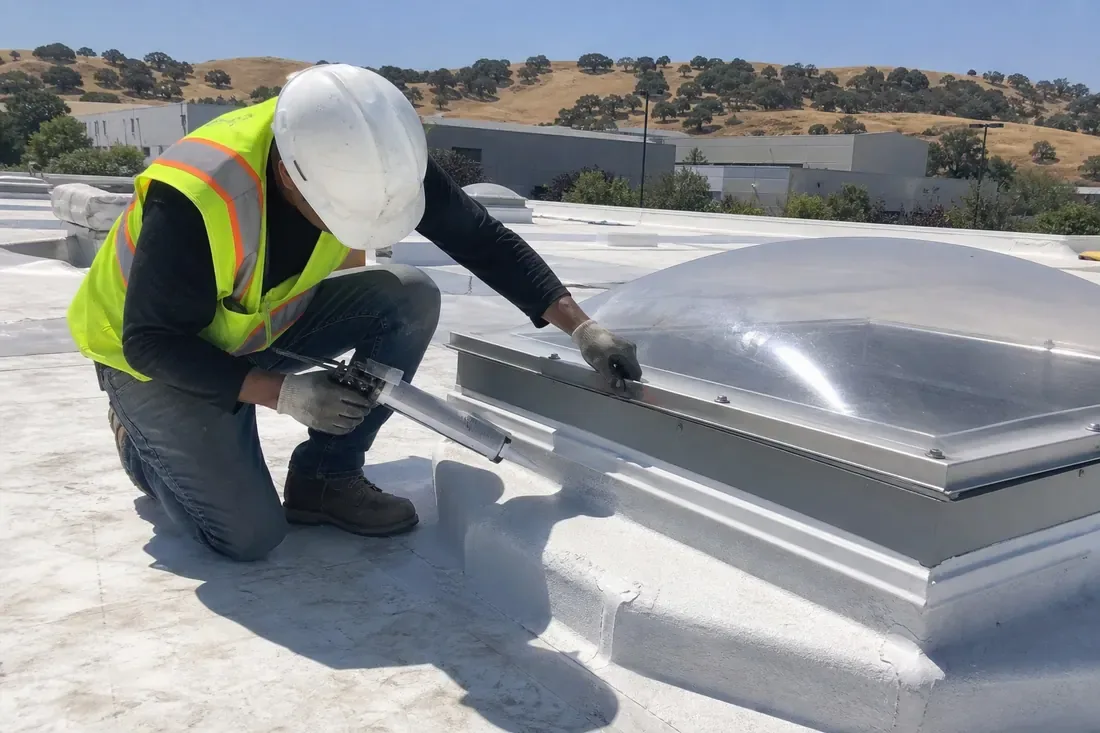
Compare Recover and Tear-Off Scopes
A recover can limit demolition and keep more of the existing roof in place, but it is not a shortcut around moisture or code checks. Wet insulation needs to be found and removed. Existing membrane must be attached well enough for the new assembly. Added height at drains, doors, rooftop equipment, and perimeter metal must be addressed. If those conditions cannot be resolved within an overlay scope, the estimate should show why a tear-off is the more reliable path.
A tear-off exposes the deck and permits replacement of damaged insulation and details, while bringing more removal, disposal, protection, and work hours into the schedule. A phased replacement may make sense on a large occupied property when the roof can be divided into workable zones. We compare like for like: assembly layers, insulation needs, edge and drain work, access, disposal, and closeout documentation. The owner can then weigh first cost against what the roof record says about risk and future maintenance.
Plan Around Visalia Heat and Seasonal Rain
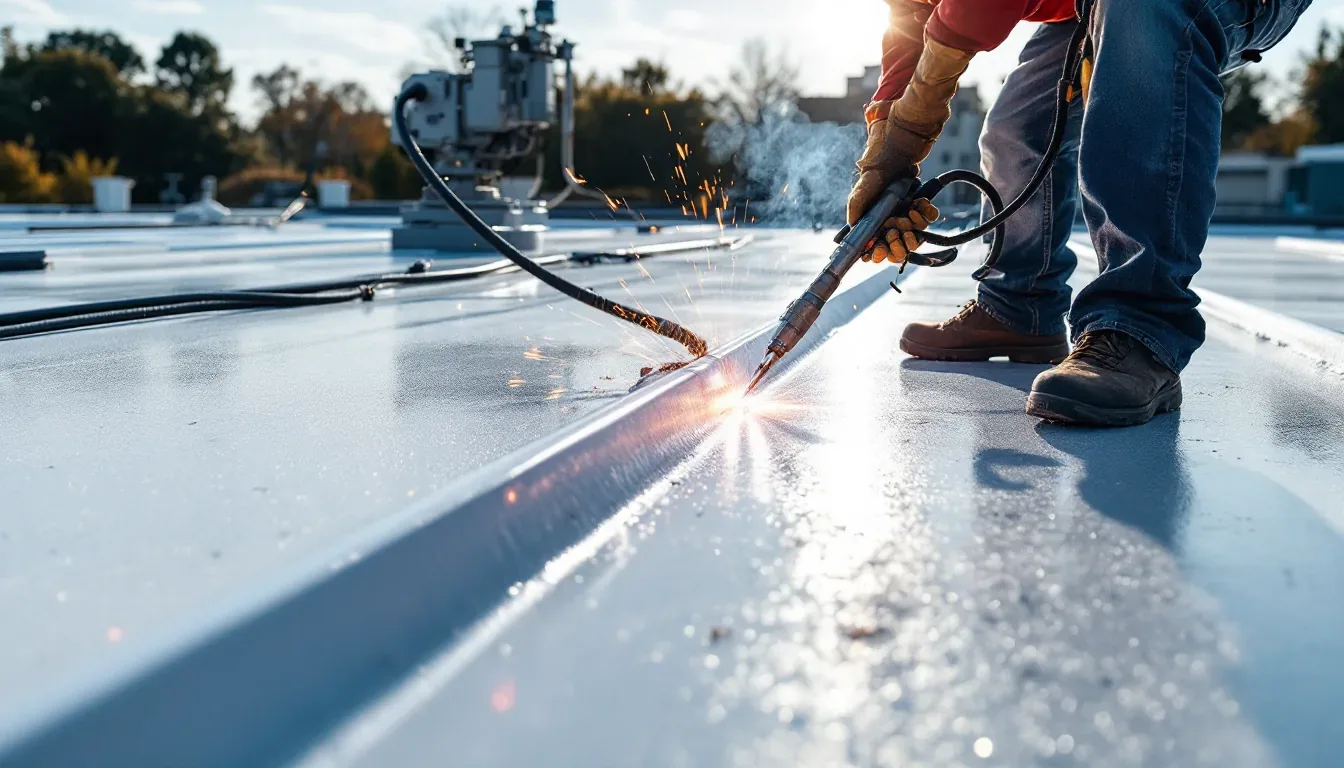
Visalia’s Visalia 1991-2020 normals record 94.7 days each year with highs at or above 90 degrees Fahrenheit. That local climate figure is useful context for material handling and exposed details, not a substitute for the roof’s actual condition. Long hot periods can increase movement at edges and penetrations and make surface temperatures important during installation. The crew must follow the selected system’s temperature, adhesion, and curing requirements. A summer work plan should also account for worker exposure and the building’s cooling schedule.
The same Visalia's climate averages shows average annual precipitation of 10.32 inches, concentrated mostly from late fall through early spring. Replacement work must protect open roof sections if weather interrupts the sequence. Temporary dry-in, daily closure lines, drain protection, and interior safeguards belong in the plan. For a property near the Industrial Park or a public-facing roof along Mooney Boulevard, the work zone should be staged so deliveries, customers, and tenants keep a safe route. Weather planning is part of the scope, not a note added after mobilization.
Set a Work Sequence the Building Can Absorb
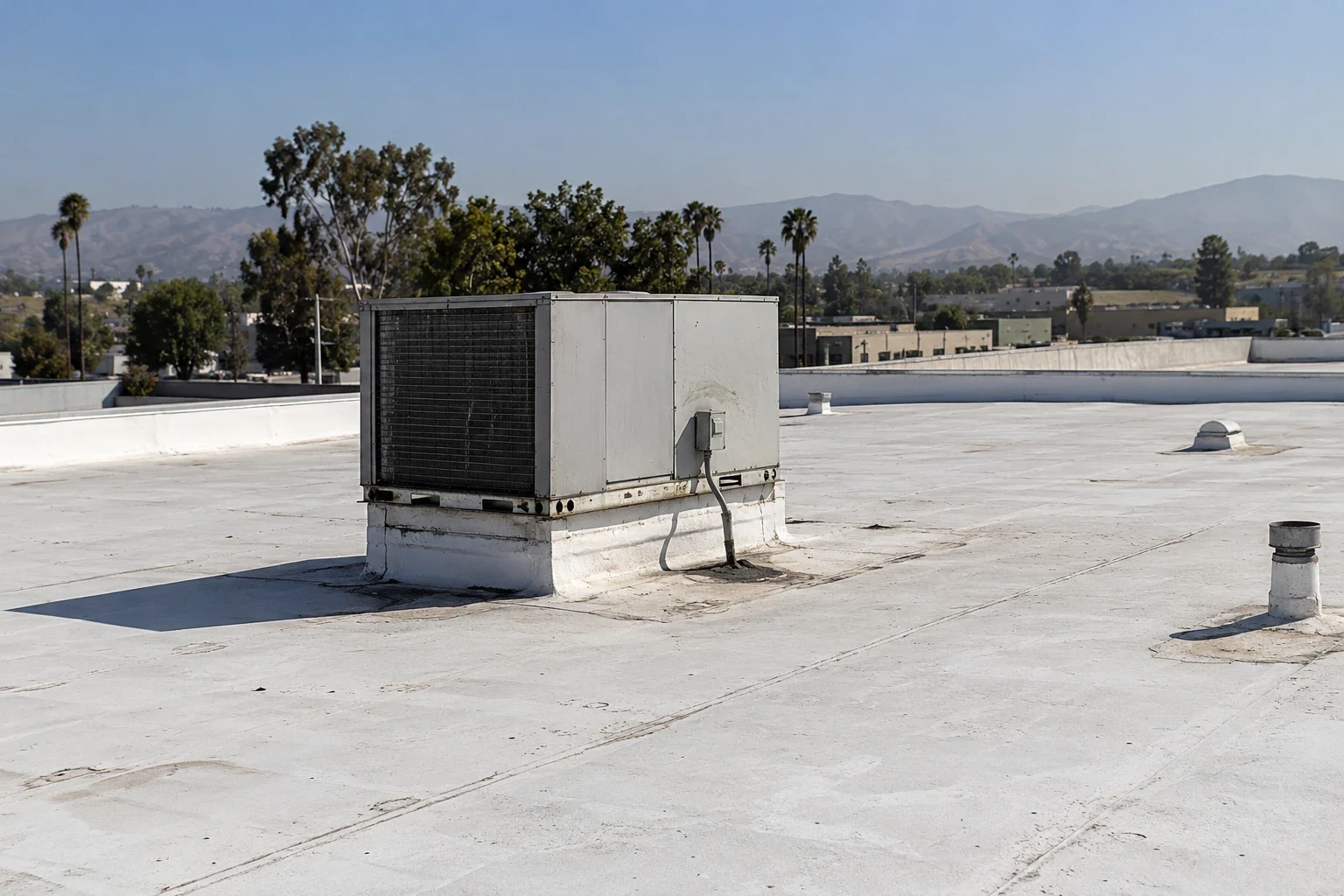
Replacement affects more than the roof surface. A lift may need a reserved setup area. Materials and removed layers need a route that does not cross a busy entrance or loading path. Interior areas below the work may require dust protection, shutdown windows, or advance notice. On a warehouse, dock activity and rooftop equipment can affect the order of roof sections. In a retail or office setting, public access and tenant hours may control when demolition or noisy fastening takes place.
We build the sequence around the property’s operating requirements and the manufacturer’s installation details. The manager should identify sensitive rooms, production windows, deliveries, after-hours rules, and who can approve temporary closures. A phased plan can reduce the area exposed at one time, though it may lengthen the overall duration. The proposal should describe what the crew needs from the owner, what protection is included, and how a change in deck or insulation condition will be reviewed before the scope expands.
Leave a Record for the Next Roof Decision
At closeout, the owner should be able to see what assembly was installed, which sections received replacement, and where details required special work. Keep product and warranty documents with photographs of drains, edges, penetrations, and any areas that were repaired before the new system went down. Note the date, observed conditions, and maintenance items that remain. This record helps the next manager understand whether a future ceiling stain is near old work or a new penetration.
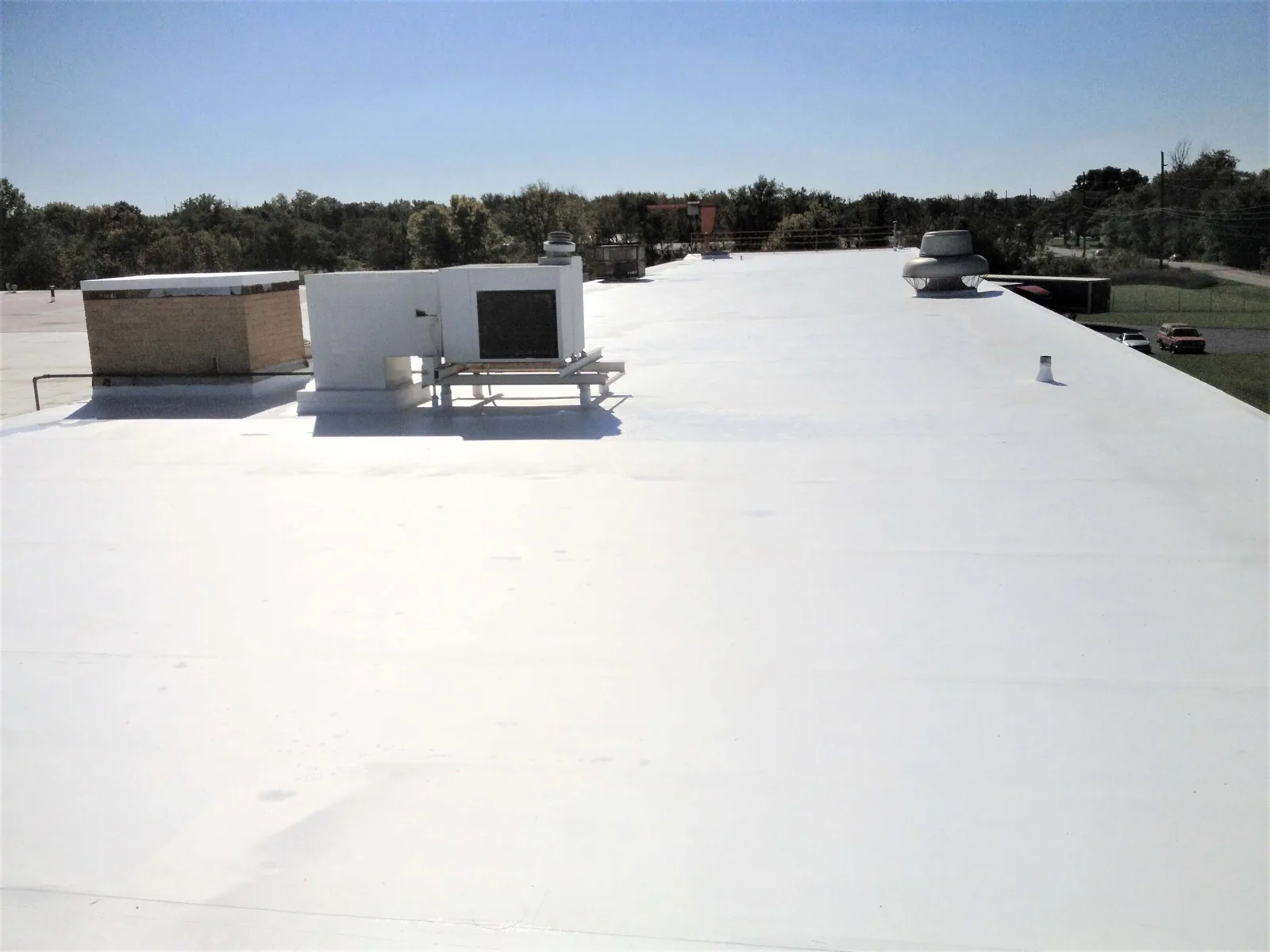
A useful replacement scope also states its limits. It should identify what could not be seen before tear-off, how concealed conditions will be handled, and who approves added work. A roof walk after installation can confirm drainage paths, edge attachment, and protection around equipment. The service record can then guide routine checks after the first seasonal rain and during the next hot stretch. For related decisions, compare commercial roof inspection, roof recover options, occupied-building sequencing, and drain and scupper work. Review TPO and silicone options only after moisture and attachment checks. The mixed uses in Downtown Visalia also make the work window part of scope.
Commercial Roofing Questions
How do you decide between a recover and tear-off?
The deciding evidence is moisture, attachment, deck condition, roof layers, code limits, and whether the added assembly height can be handled at edges and drains. We document those findings, then compare both scopes where each is feasible.
Can replacement be phased while the building stays open?
Yes, if the roof layout, weather protection, access, and building operations support a safe sequence. We divide the work into zones and agree on protection and notice before starting each section.
Will a replacement correct ponding water?
Only when the scope addresses the cause. We check drain capacity, blocked outlets, slope, and deck deflection. New membrane alone will not correct a low area that holds water.
What can change the replacement scope after tear-off begins?
Concealed deck damage, wet insulation, extra roof layers, or unsuitable attachment can change the work. The proposal should define how those conditions are photographed, priced, and approved before crews proceed.
What should a property manager send before an estimate?
Share the roof plan if available, leak locations, access limits, known repairs, sensitive areas below, and operating windows. Those details help set the inspection and staging plan.