
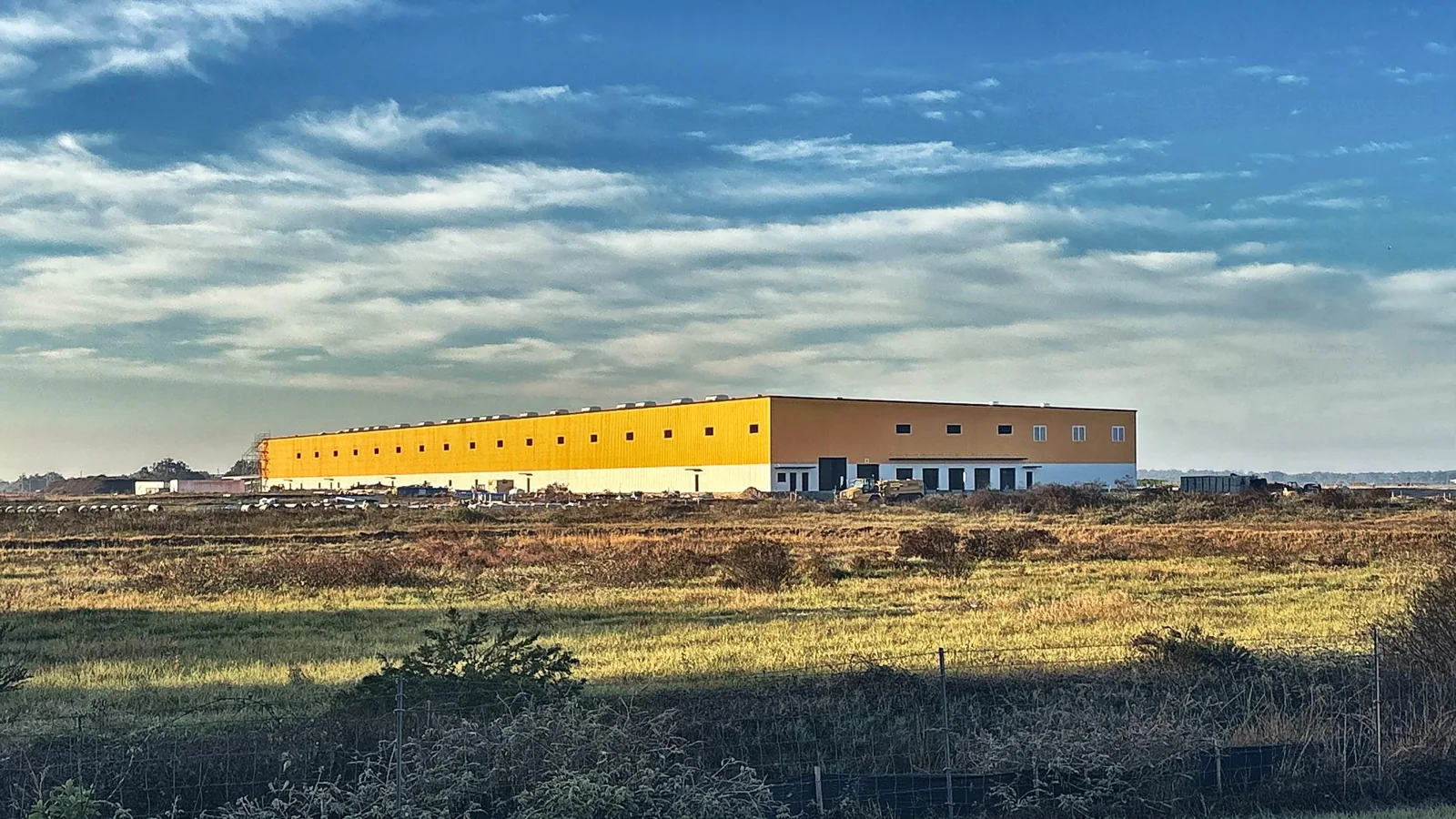
Manufacturing Plant Roofing in Visalia, CA
Property Types We Roof | Visalia and Tulare County
Manufacturing Plant Roofing
A brown mark below a production line can come from a roof seam, an exhaust curb, or a pipe support added during equipment work. We compare the interior report with roof conditions above the affected zone before choosing where to open material. Manufacturing plants often have process schedules, controls, and safety areas that cannot be interrupted without planning. A repair boundary must protect the operation and identify which trade owns each transition. In Visalia, the Santa Fe Commercial and Industrial Area and the Visalia Industrial Park provide broad industrial context, but the actual process, roof system, and access plan come from the facility.
Locate the Roof above Process Equipment
We ask the facility team which line, exhaust point, or service platform sits below the reported leak. That detail helps locate the roof zone without assuming water drops directly beneath its entry point. We mark the ceiling stain, deck direction, overhead piping, and equipment that could limit interior access. Above, we inspect curbs, seams, edge transitions, and nearby roof penetrations. If a second opening may affect production, the manager approves the location and protection plan before the crew proceeds.
A plant can contain separate roof sections over production, utilities, laboratories, and shipping. We map those areas by assembly and note which require a restricted work window. A warehouse roof review may focus on inventory and dock access; a manufacturing survey also checks exhaust discharge and process limits. For a roof condition inspection, we record observed conditions without treating process equipment as proof of a roof defect.
A plant may also have a server room, controls cabinet, or production network that changes how a leak response is staged. The data-center roof sequence treats critical equipment access as a planning item, though the controls at this plant still come from its own operations lead. Before testing above that room, we confirm whether power, process controls, or network gear require temporary covers or a shutdown. The report names the interior zone and the person who approved access. That record helps the next shift understand what was checked and which area remains protected while the roof crew moves to another section.
Review Exhaust, Heat, and Roof Penetrations
Process exhaust can carry heat, moisture, oils, or particulates onto nearby flashing. We inspect the discharge location, curb, counterflashing, sealant, and membrane for residue or deterioration. The facility should identify what the exhaust carries and whether its operating temperature changes during a production run. We do not infer chemical compatibility from the name of the business. Product and manufacturer guidance should control any repair material selected near the discharge.
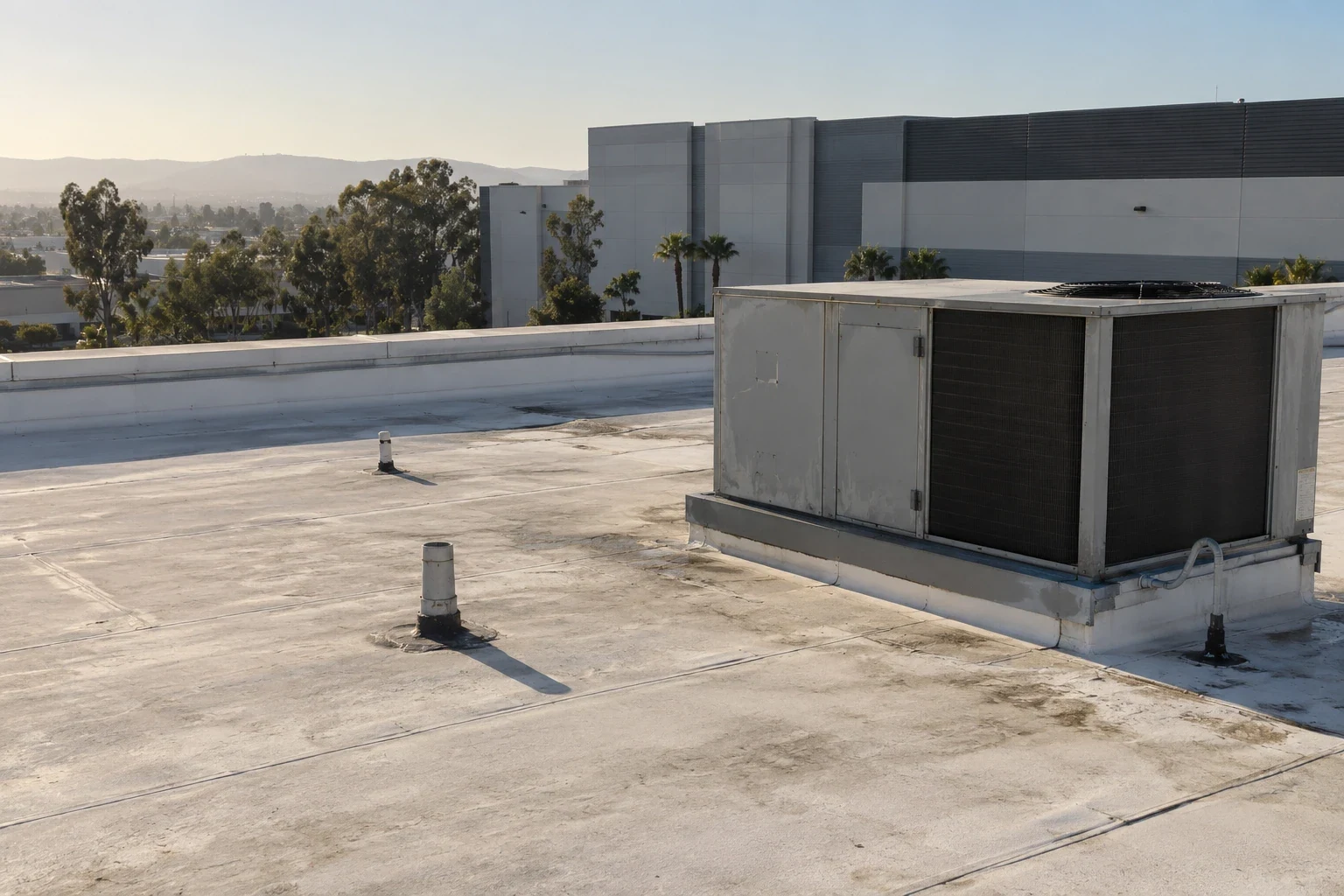
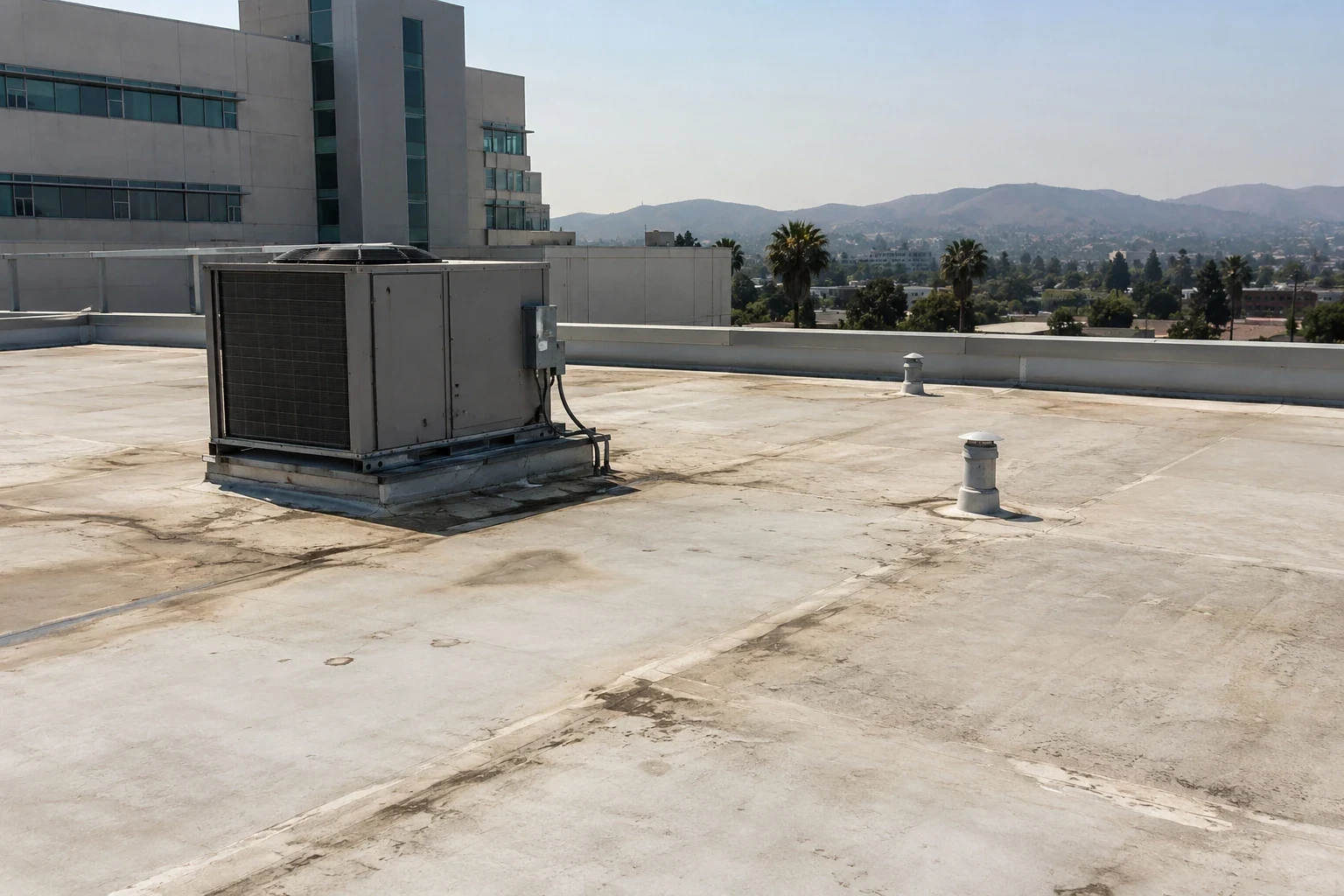
New ducts, conduits, pipe supports, and equipment rails can create later leak paths if they penetrate or load the membrane incorrectly. We check whether a support bears on the deck, whether a curb is stable, and whether the flashing allows movement. Rooftop equipment curb work can be defined separately from perimeter metal repairs. Each line item shows access, shutdown, and coordination assumptions so the operations team can schedule the work.
Separate Membrane Damage from Deck Conditions
Vibration, repeated service access, and equipment changes may stress a roof detail. We inspect for loose fasteners, cracked sealant, open seams, compressed insulation, and deck movement near equipment bases. A visible membrane split does not establish whether the deck below is sound. If an approved opening is needed, the report records its location, layers, and any deterioration found. One test area cannot be applied to other production bays without additional evidence.
We identify whether the plant has TPO, PVC, EPDM, metal, or an asphaltic roof before selecting materials. A standing-seam panel needs a different movement detail from a modified-bitumen system. The estimate marks each assembly and repair boundary. If deck replacement, structural review, or insulation changes appear necessary, those are presented as separate decisions rather than hidden inside a membrane patch.
Protect Drains and Low Areas during Production
Dust, process debris, and windblown material can collect at roof drains. We check the strainer, bowl, sump, overflow route, gutters, and scuppers, then note whether water can leave the affected area. A blocked outlet may require cleaning; a low deck or disconnected drain detail may need a separate correction. We mark standing water and compare it with the roof plan. The repair should not close a drain or direct runoff toward a service entrance.
At a parapet, roof-to-wall transition, or expansion joint, the membrane must connect to the flashing detail without blocking movement. We identify signs of water at the interior and trace the path back to the roof zone where safe. A drainage scope can address an outlet, while TPO seam work addresses a different failure. We schedule both only after production access and temporary protection are agreed with the manager.
Coordinate Industrial Site Access in Visalia
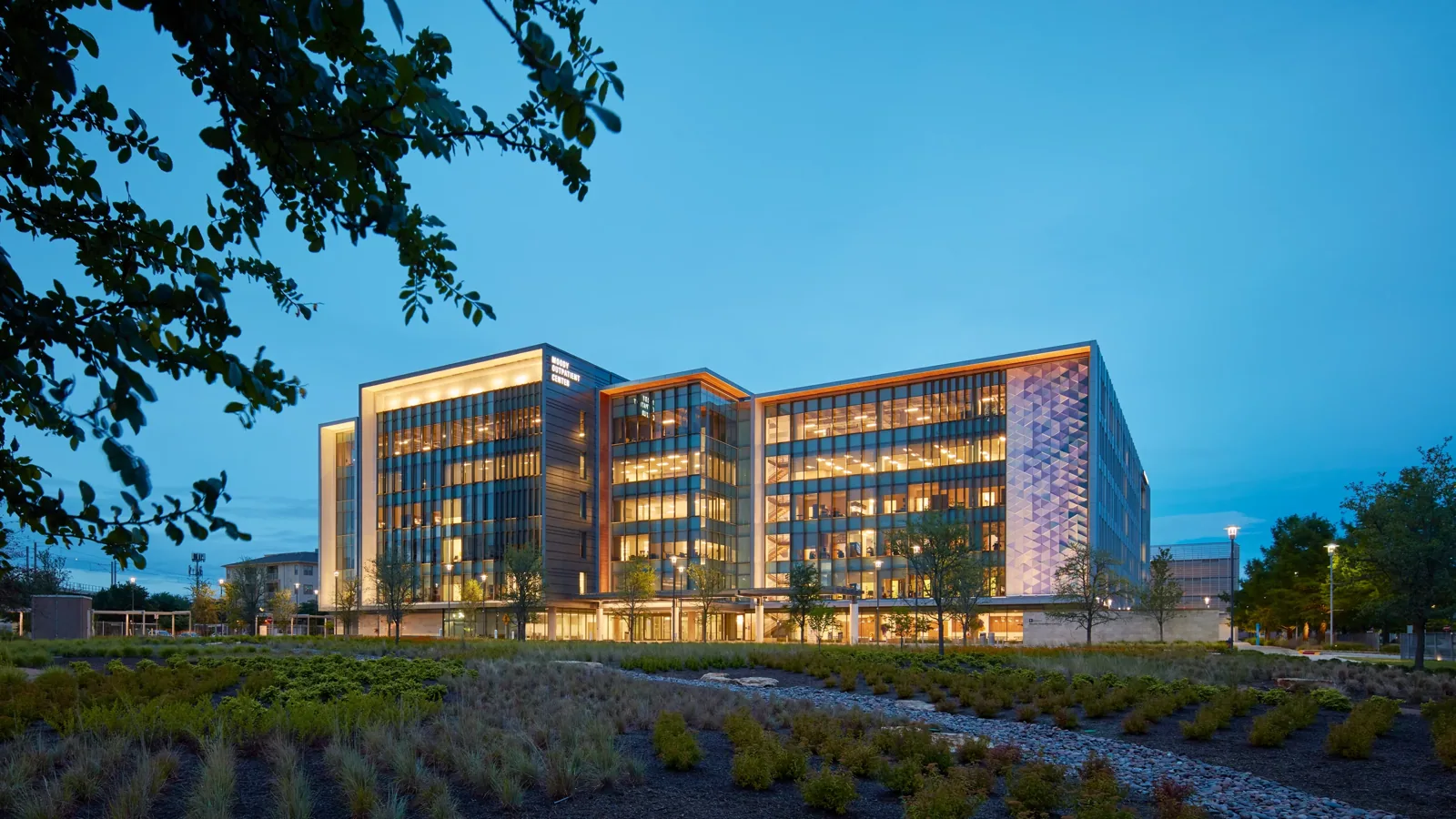
Industrial space is present along Santa Fe Avenue in a mixed-use tract. The Visalia Industrial Park has freight and utility infrastructure described by the local economic-development organization. Those descriptions are useful location context, not confirmation of any particular plant's use or equipment. We verify the building address, delivery gate, lift path, and site safety rules. If the facility has hot work, confined-space, food-safety, or contractor orientation requirements, the owner identifies them before mobilization.
Operations may require a shutdown during exhaust changes, fire-alarm work, or temporary water protection. We list the specific interruption and keep it distinct from roof production time. A Santa Fe commercial-industrial area assessment should confirm the parcel's location, while a project at the Visalia Industrial Park still needs its own crane and truck plan. The work sequence records who escorts the crew and which production zones remain live.
Phase Repairs around Production Windows
A small curb leak may be repaired during a planned maintenance window if the surrounding membrane is sound. Repeated leaks, wet insulation, or corroded deck can require a larger phase. We show the findings by roof area and identify what needs another test before the estimate expands. A repair scope addresses confirmed damage; a replacement review can compare removal and new assembly work when repair boundaries become broad.
The proposal separates temporary protection, access, removal, insulation, deck repairs, membrane, flashing, and equipment work. It states the production windows assumed and which approvals are needed if hidden damage appears. After completion, the roof record lists materials, photos, tested areas, and open maintenance items. Share process schedules, roof plans, recent equipment changes, leak tickets, and safety rules before the first walk. We will identify what the roof shows and where the next decision affects the plant.
Commercial Roofing Questions
Can manufacturing continue during roof repair?
Often, if the work zone, interior protection, safety controls, and production window are agreed with the facility manager. Some equipment or process areas may need a temporary shutdown.
How do you inspect near process exhaust?
We check the discharge, temperature or residue context provided by the facility, and the surrounding flashing and membrane. Material compatibility follows product requirements, not an assumption.
Does roof vibration mean the membrane has failed?
Not by itself. We inspect the support, deck, attachment, seams, and nearby equipment history to determine whether movement caused a roof defect.
What if a repair opening finds damaged deck?
Work pauses at the approved boundary while the owner reviews photos, measurements, and a change description. Deck or structural work is priced and approved separately.
How are plant roof repairs coordinated with other trades?
The project identifies equipment, exhaust, electrical, and fire-system interfaces, then assigns work windows and responsibility for each transition before mobilization.