Commercial Roofing in Visalia’s Santa Fe Commercial and Industrial Area
Service Areas | Visalia and Tulare County
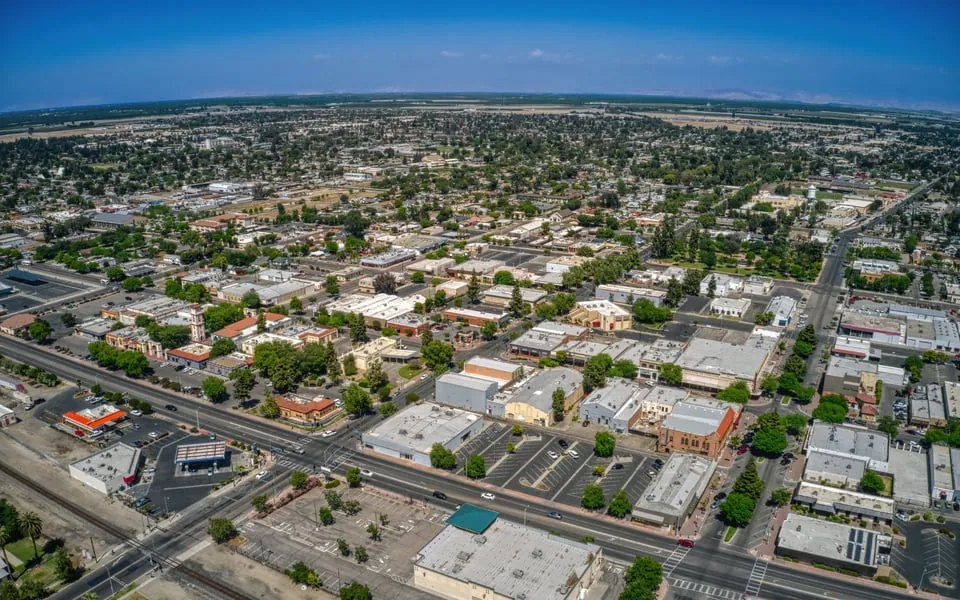
Santa Fe Commercial and Industrial Area
A puncture near a production curb or a seam beside a service-commercial building calls for different checks. Santa Fe Avenue includes an industrial area within a mixed-use tract that also contains neighborhood and service-commercial uses. We use that district description for orientation only. The actual roof assembly, operation, and access rules must be confirmed at the property.
Map the moisture before pricing
Water may travel beneath a membrane or along the deck before appearing in an office or work area. We start with the interior stain, note its timing, and look above it for seams, penetrations, drains, and wall transitions. If the likely path is unclear, the inspection defines a small test rather than guessing at a broad repair. Findings are recorded by roof section.
Santa Fe's mixed land-use context can include active work areas and customer-facing spaces, but the plan does not identify the use of every building. The manager tells us which operations cannot stop and which spaces need protection. A commercial roof inspection documents the roof conditions we can verify without claiming a prior project or known roof failure in the district.
Separate roof zones and additions
Industrial and service-commercial roofs often carry changes made over time: new curbs, exhausts, electrical supports, and membrane patches. We note where materials or attachment change and inspect each zone as its own assembly. A previous repair may show where someone saw water, but its presence does not prove the current entry point. We compare the detail with surrounding membrane and insulation before recommending removal.
Before climbing, we confirm the approved access route, fall protection, equipment restrictions, and any escort requirement. The surrounding tract includes office, commercial, industrial, and residential uses. Those labels do not determine site operations. The property representative sets the roof walk and ground-level limits for that specific building.
Check discharge and roof slope
We examine drain bowls, sumps, strainers, scuppers, overflow routes, and the surface leading to them. Water may remain because debris blocked an outlet, insulation has compressed, or slope is inadequate. Each cause has a different correction. We record ponding location and approximate depth, then compare it with seams, flashings, and interior reports instead of treating standing water as a complete diagnosis.
A roof drain that empties onto a wall or loading area can create a separate site issue. We trace discharge to the ground and note where the manager should confirm drainage beyond the roof edge. Cleaning an outlet belongs in maintenance; correcting a low area may require a larger assembly scope. A roof maintenance program can record repeat observations across dry and wet seasons.
Inspect penetrations and terminations
Equipment curbs, pipes, conduit supports, parapets, and metal edges concentrate movement. We look for open laps, split sealant, loose terminations, and repairs that do not bond to the surrounding membrane. Where service access could disturb an existing detail, we coordinate with the equipment owner before moving or lifting anything. A repair scope names the transition and closure method rather than using a blanket sealant allowance.
Long seasonal heat is context for reviewing exposed details, but it does not establish the condition of a given roof. The Visalia normal is not a roof-surface reading. We check the installed system and the manufacturer's application limits on the work date. An EPDM roofing assembly is only considered when its substrate and tie-in details are compatible with the existing roof.
Define the repair and its assumptions
If a single seam, flashing, or penetration is the confirmed source and the field around it remains sound, a bounded repair may be enough. We describe removal limits, preparation, replacement material, and the repair tie-in. Where insulation is wet, it must be removed or otherwise addressed before close-in. The estimate should state how concealed damage changes the work and who authorizes that change.
A commercial roof leak repair can stop a localized leak while preserving unaffected sections. If the roof has widespread moisture, recurring failures, or attachment concerns, we compare repair with commercial roof replacement. The scope lists tear-off, insulation, substrate, edge metal, protection, and staging assumptions. That lets an owner see why options differ before committing to a broader project.
Coordinate equipment and site activity
Production or service equipment may need to remain online while roof work proceeds. The manager identifies shutdown approvals, sensitive intakes, access windows, and ground routes for material handling. We keep each opening inside a section that can be closed safely at shift end. When work is phased, the sequence states which roof areas are complete, protected, or still awaiting testing.
A production schedule can change the order of roof sections. We ask which equipment must keep running, whether intakes or exhausts need protection, and how deliveries move below the work zone. If a crew opens several areas at once, each needs a documented close-in plan. A phased sequence can reduce exposure, but it may add mobilization time. The manager can compare that tradeoff with a single larger work window before selecting an option.
We also confirm where a crane, lift, or debris container can go without blocking the site's approved route. If the tenant controls delivery times, those limits belong in the work plan. Photos in a roof condition report give the manager a dated record of each section and any deferred condition.
Record evidence for the next maintenance cycle
The final record identifies what failed, where the repair stopped, which materials were installed, and any concealed condition found after opening. Label photos by building and roof zone, and keep unresolved items in a separate list. That record helps distinguish a new leak from water that was already inside the assembly before the repair.
An estimate is easier to review when labor, access, removal, and material allowances are tied to the work area. We state whether lifting equipment, traffic control, night work, or interior protection is included, and note what would change the price after the roof is opened. These lines help an owner compare bids on the same basis. They also show where a field condition needs approval before the crew continues.
Santa Fe Avenue and the Visalia Industrial Park or Business Research Park are separate local contexts; each property needs its own roof history. A roof asset management can link plans, warranty dates, inspections, and completed scopes to an asset without assuming two buildings are alike. Provide the roof plan, access rules, leak location, and operating window so we can focus the first inspection.
Commercial Roofing Questions
Can a roof be repaired while a production line stays active?
That depends on access, interior protection, fumes or odors, equipment clearances, and the location of the repair. We map those limits with site staff and phase work only where the close-in plan remains safe.
What causes water to appear away from a roof seam?
Water can migrate beneath the membrane or through insulation before it reaches a ceiling. We compare the interior report with roof details and use testing to confirm the path before setting a repair limit.
How do you handle unknown roof layers?
We review plans and visible edges first. If layer count or moisture affects the decision, the scope may include a controlled test opening, with the owner approving how concealed conditions are handled.
Is an existing coating enough to make a roof serviceable?
Not by itself. We inspect adhesion, underlying moisture, seam and flashing condition, and drainage. If the existing surface cannot support the proposed system, we explain preparation or removal requirements.
What should be in a phased reroofing schedule?
List the roof areas, sequence, access route, equipment coordination, temporary protection, daily close-in checks, and who accepts each completed section. These details help operations plan around the work.