
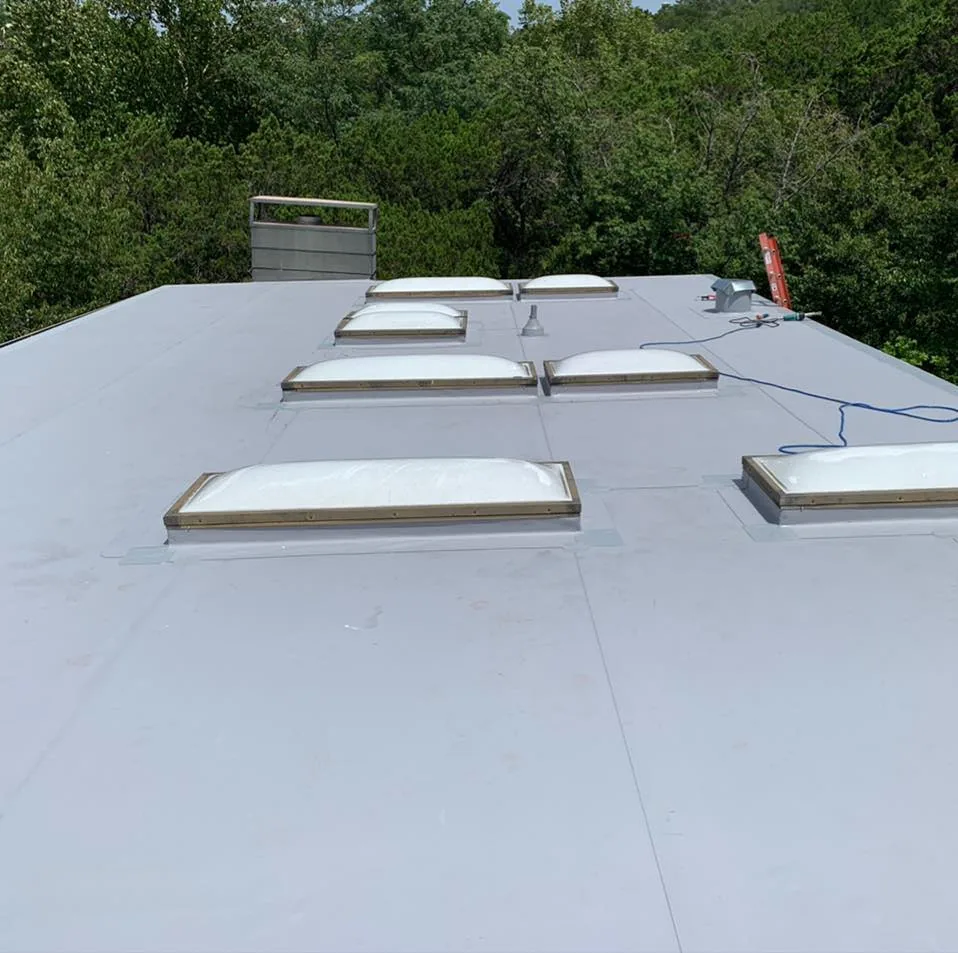
TPO Roofing in Visalia, CA
Roof Systems | Visalia and Tulare County
TPO Roofing
A TPO seam that opens at a corner can let water travel before a ceiling mark appears. We inspect the weld, nearby flashing, penetrations, and drainage before deciding whether the repair stays local. The membrane's condition, attachment, and prior repairs matter more than its color. In Visalia, long hot periods put exposed surfaces and sealants under repeated heat, while seasonal rain tests seams and edge details. A warehouse near the Visalia Industrial Park and a retail property on Mooney Boulevard may use different roof layouts, but both need a building-specific inspection.
Test the Weld before Replacing the Sheet
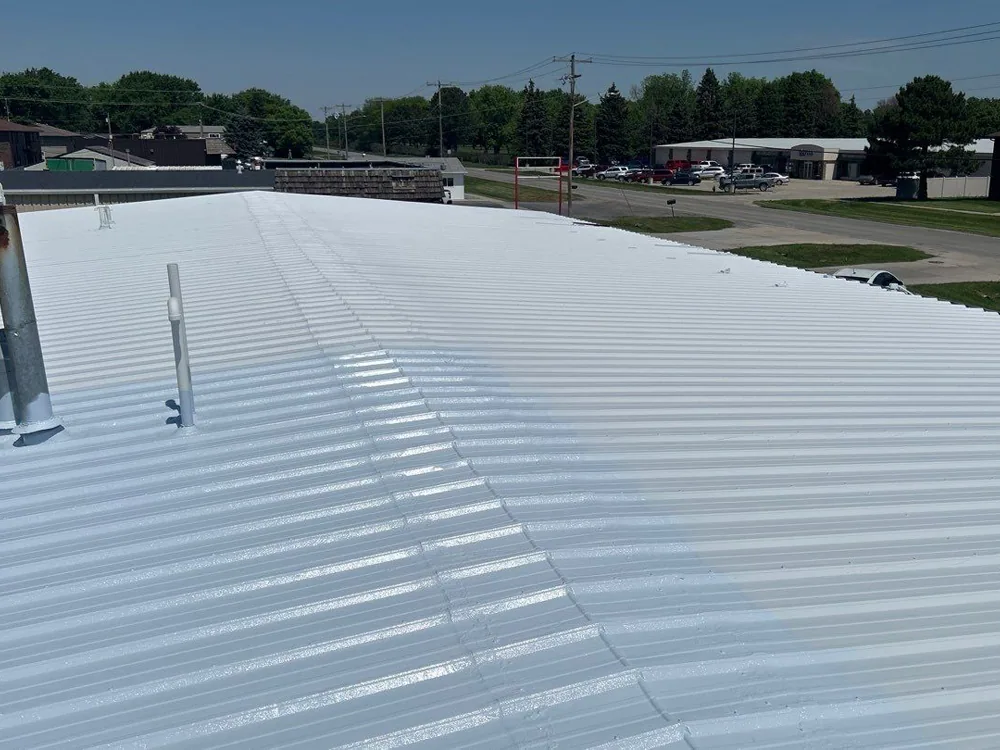
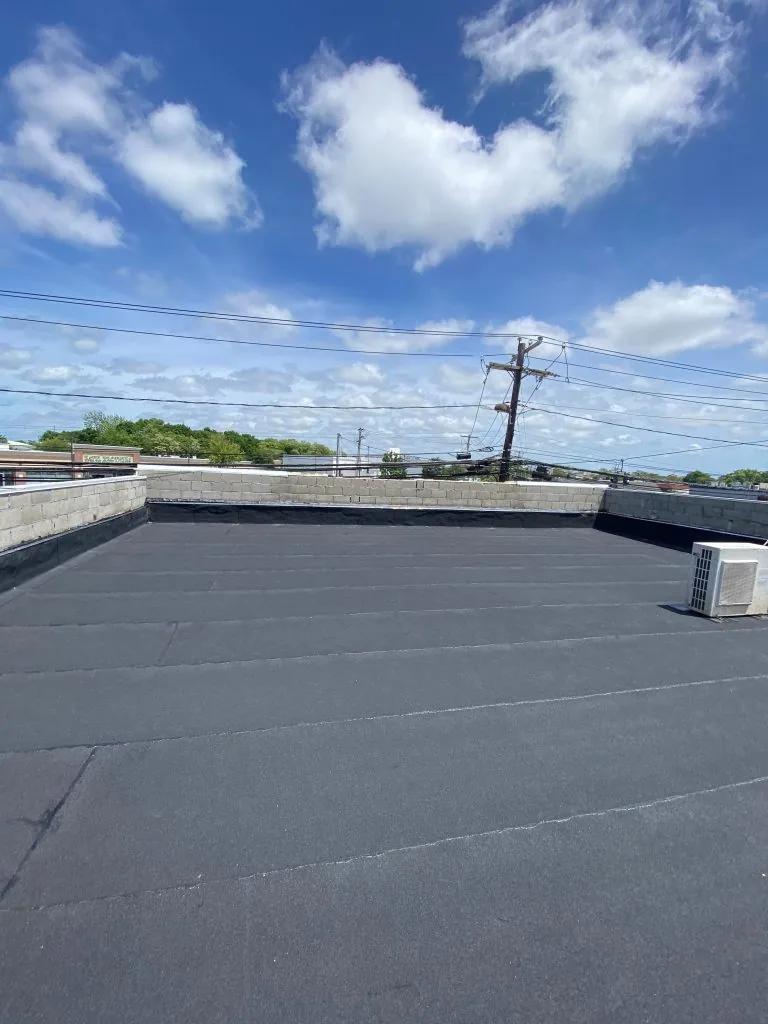
We examine laps for separation, fishmouths, contamination, patch edges, and heat damage. A probe can reveal an unbonded section, but the finding belongs to the tested seam, not every joint on the roof. We mark the location, length, and condition, then check whether movement, poor preparation, or a prior repair contributed. A compatible heat weld may restore a limited area. If the sheet has shrunk, split, or lost attachment across a broader zone, a larger repair or replacement scope may be needed. The estimate records the number of seams inspected, the joints tested, and the areas that could not be reached safely. Where water follows a corner, we check the field lap and vertical flashing as one transition instead of pricing a strip of membrane without its termination. A later EPDM repair uses different material preparation and cannot be treated as a TPO weld.
Field-weld settings depend on the membrane, conditions, and equipment. The crew checks a sample weld, adjusts the machine to the manufacturer's requirements, and verifies the finished seam. At penetrations and corners, prefabricated or field-formed flashing must match the roof detail. A patch placed over dirt or a moving joint can fail again. We document the preparation and repair boundary so the owner can compare future checks. A TPO repair scope can isolate a seam or flashing failure without treating the entire roof as failed.
Follow TPO through Curbs and Drains
Curbs, pipes, skylights, and wall transitions break the open membrane field. We inspect corners, vertical height, termination, support movement, and the seal around each penetration. A service technician may shift a line or unit support, leaving stress at the flashing. At a drain, we look at the bowl, clamping area, sump, strainer, and overflow. If water remains after an outlet clears, slope or deck movement may need separate review. The scope should say which detail is repaired and whether the nearby low area remains open.
Reflective sheet can show dust, scuffs, or water lines, but those marks do not identify the cause of a leak. We compare them with seams and roof records, then test the likely area. If the building has a modified bitumen addition or an older EPDM section, tie-ins need a compatible transition rather than an assumption that all surfaces accept the same patch. An inspection record can map those transitions before a replacement or overlay is priced.
Check Fasteners, Edges, and Wind Details
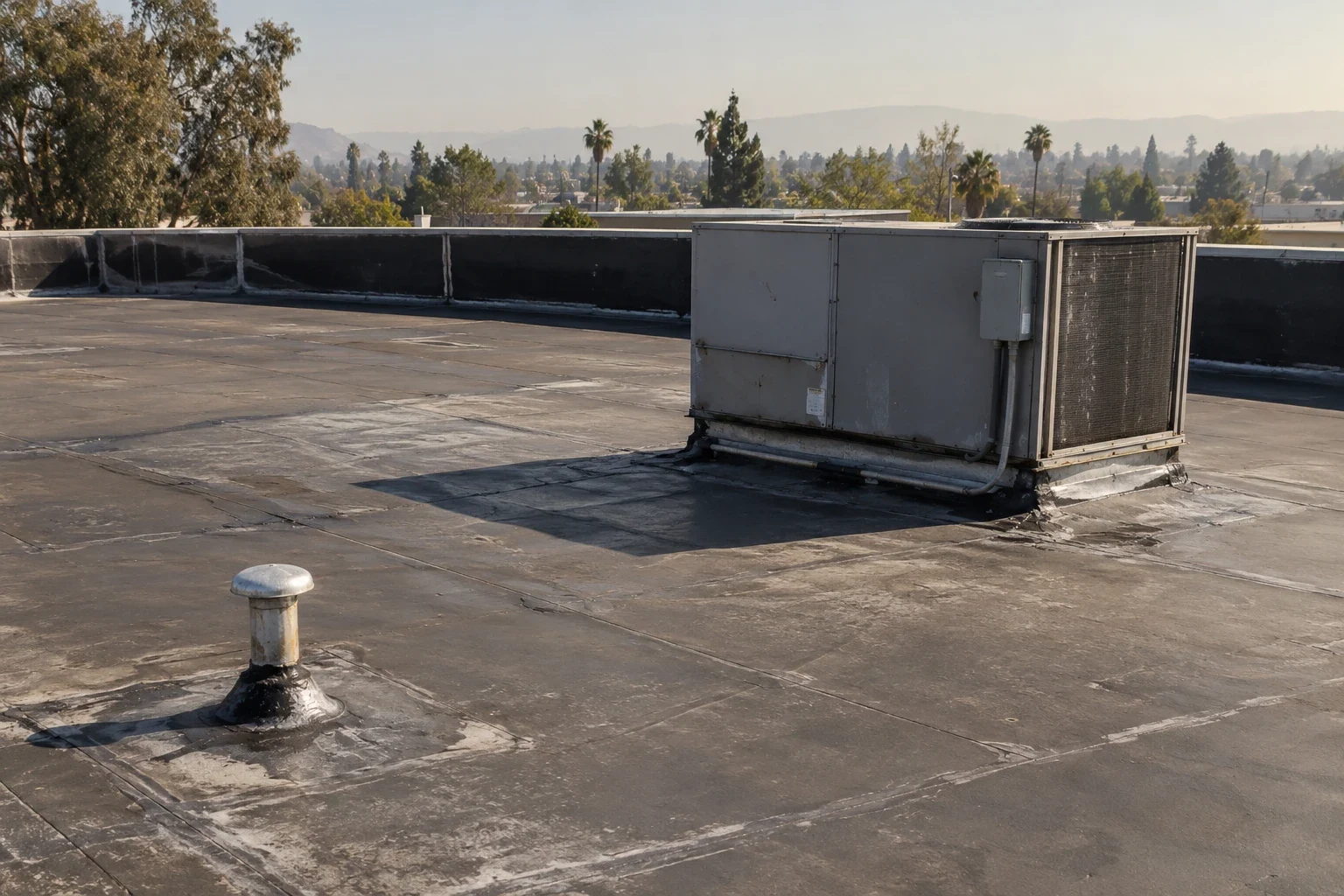
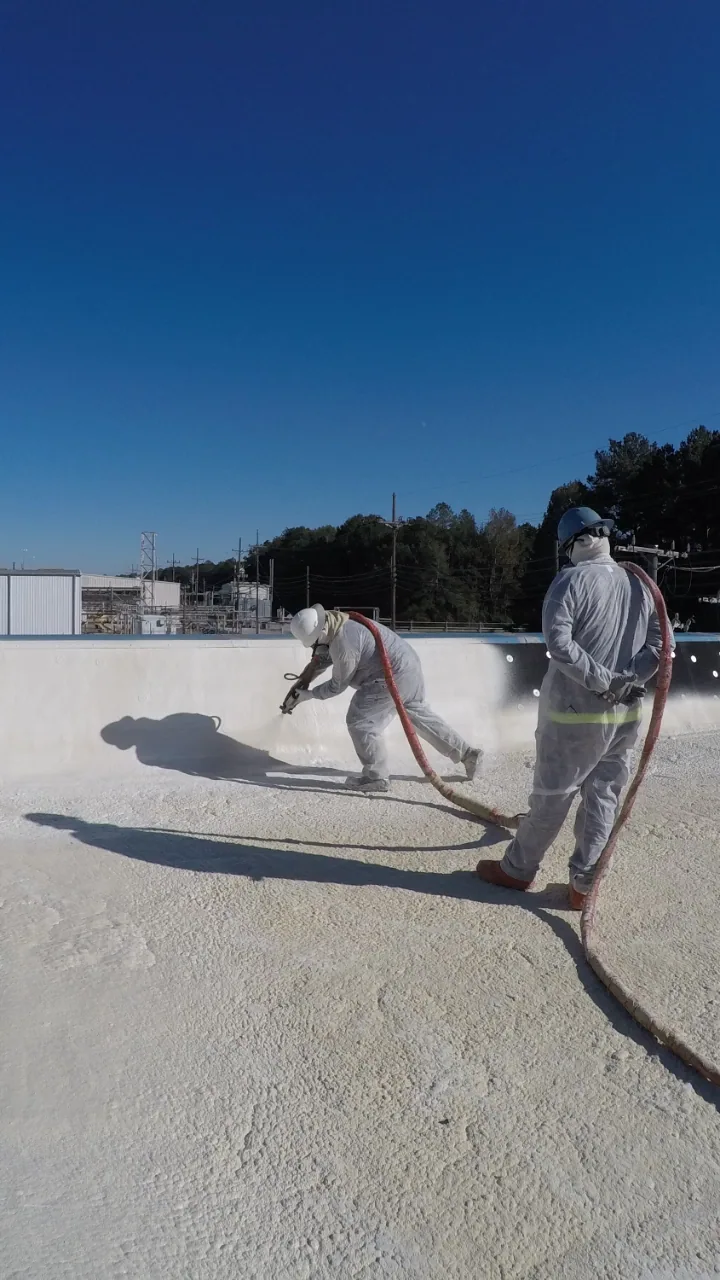
A mechanically attached TPO system depends on the specified fastening pattern and the deck beneath it. We inspect exposed plates, fastener pull-through, perimeter securement, and areas where the membrane billows or moves. A missing fastener cannot be replaced by adding one at a convenient spot without checking the design. If the deck is thin, corroded, or damaged, the attachment question needs review by the project team. We record the test location and do not extend a limited pull test to untested roof zones.
At parapets and outside corners, edge metal and termination details must match the approved assembly. A loose edge can admit water and change wind performance at the same time. The edge-metal scope should coordinate with the membrane termination so a separate metal repair does not leave the TPO edge unfinished. For a different single-ply assembly, the PVC membrane system uses its own material and welding requirements; appearance alone does not make the two products interchangeable.
Plan TPO Work around Visalia Conditions
Visalia's 1991-2020 climate averages record frequent days above 90 degrees and most monthly precipitation in the cooler months. The crew checks surface temperature, wind, moisture, and product limits before welding or applying adhesives. A hot membrane can change how the sheet handles; overnight moisture can delay preparation. We schedule open sections so they can be closed within the approved work window, then protect exposed insulation if a hidden condition changes the plan. The record notes the conditions that affected installation.
The Visalia Industrial Park supports manufacturing, food processing, warehousing, and distribution, while Mooney Boulevard serves a wider regional retail area. Highway 99 is a major trucking corridor, which can affect freight access and material staging at industrial properties. Those locations can bring truck access, equipment schedules, or customer paths into the roof plan. We confirm those conditions with the property manager at the specific site. The industrial-area roof scope and the Mooney Boulevard retail district are separate service targets, not a single roof. For drainage around TPO seams, review a drain and scupper correction where the tested conditions call for it.
Compare Repair, Recover, and Replacement
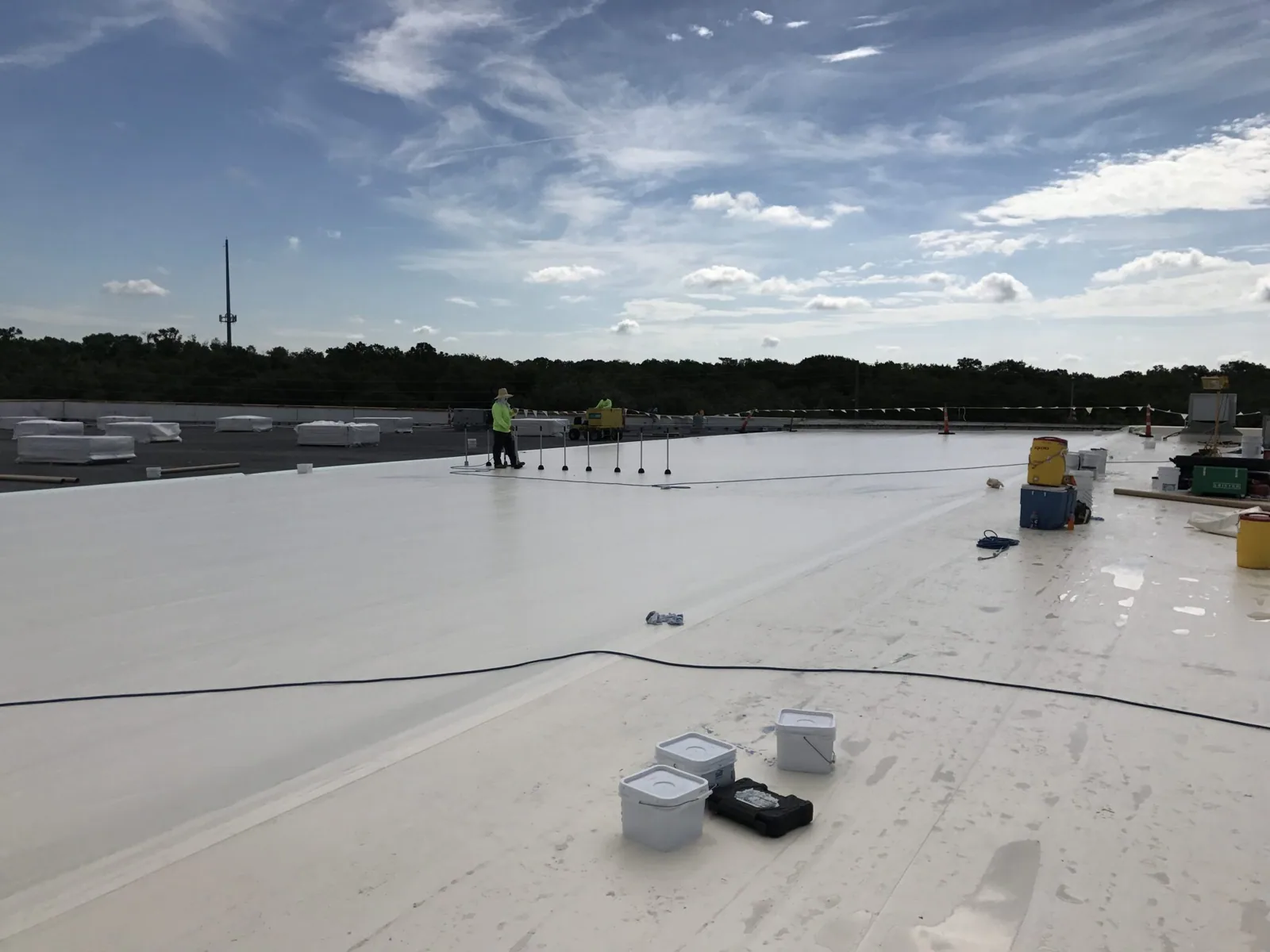
Repair cost and timing depend on seam length, flashing access, attachment, wet insulation, deck repairs, and whether other trades must move equipment. We identify what the inspection confirmed and which quantities could change after an approved opening. A recover may be considered only if the existing layers are dry, stable, and compatible with the selected assembly. Repeated seam failures or widespread moisture can make a larger replacement scope more useful. The owner can compare options against the same roof map rather than a visual guess from the ground.
After work, we provide the membrane system, repair locations, test details, and photos permitted by the project. The roof record can note a dry-season check before Visalia's wetter months and identify seams to revisit. If the building has rooftop units, solar rails, or pipe supports, those interfaces should appear in the maintenance notes. Share the leak location, access plan, roof plan, and prior repair records before the first walk. We will inspect the tested area, show the repair boundary, and identify the next decision if the membrane condition extends beyond it.
Commercial Roofing Questions
How do you check a TPO seam for a leak?
We inspect the weld, probe accessible laps, and compare the finding with the reported water path. The note records the tested section and does not assume an opening in one seam proves a roof-wide failure.
Can a damaged TPO patch be welded again?
A repair may be possible when the surrounding sheet is sound and can accept compatible preparation. We check contamination, shrinkage, moisture, and the edge of the earlier patch before setting the repair limit.
Does TPO require a particular fastener layout?
The attachment pattern follows the approved assembly, deck, and project design. We inspect the installed pattern and any failed plates, then route a change through the design authority rather than add fasteners by guess.
Will a TPO roof work in Visalia heat?
The system's product requirements and the actual roof conditions control. We check surface temperature, seam condition, insulation, and drainage, then plan installation around the manufacturer limits and the weather window.
What should a TPO repair record show?
It should identify the roof zone, weld or flashing tested, repair material, boundary, photos, and any adjacent detail left outside scope. That gives the next inspection a precise comparison point.