Modified Bitumen Roofing in Visalia, CA
Roof Systems | Visalia and Tulare County
Modified Bitumen Roofing
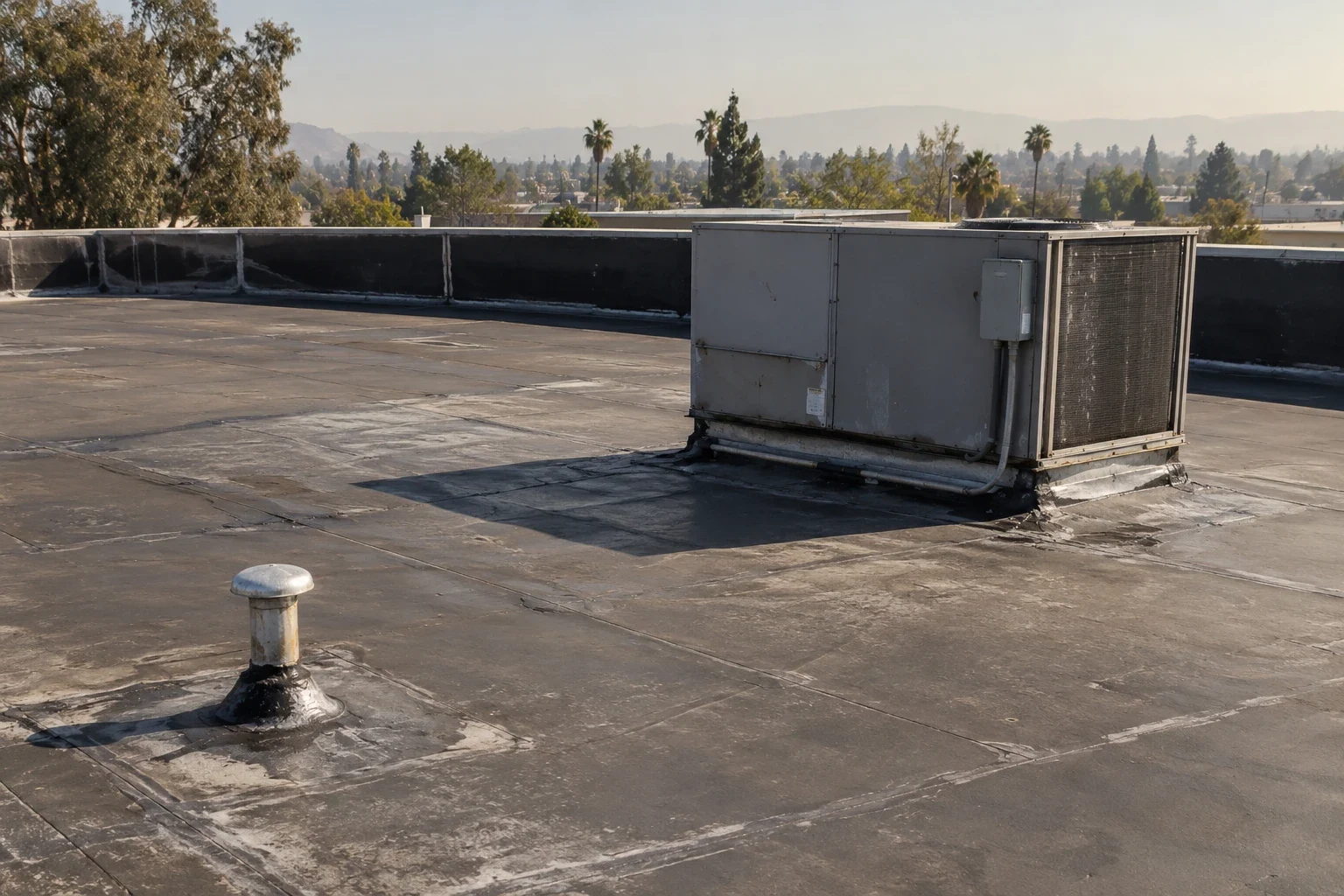
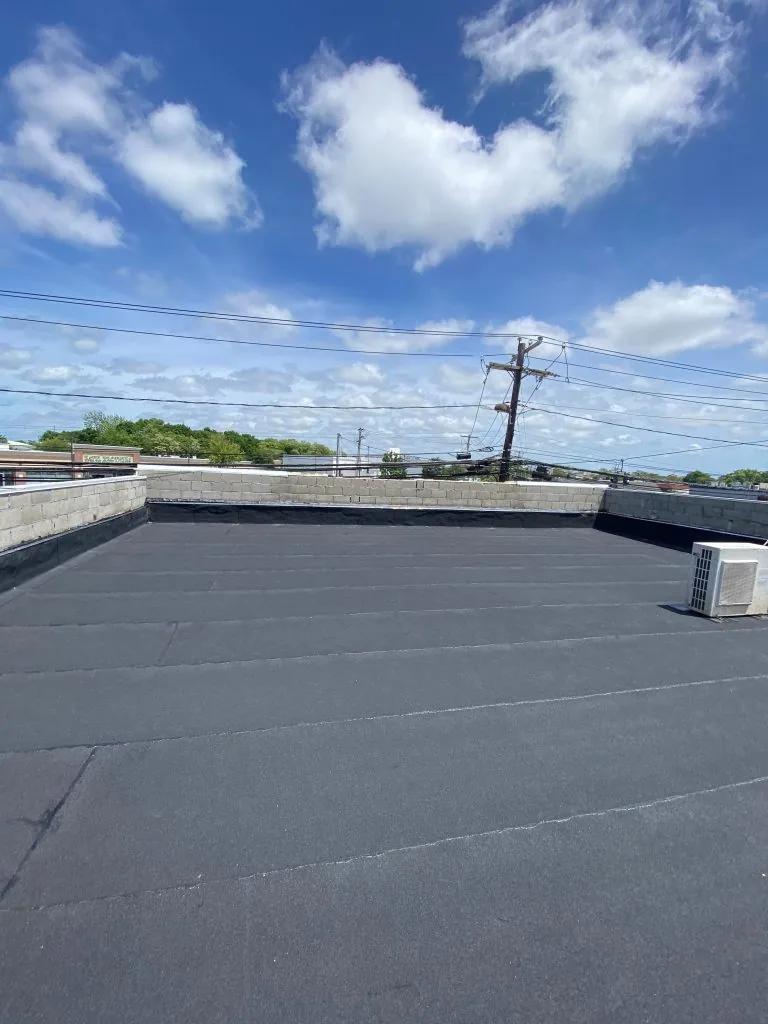
A split cap sheet can expose the ply below before an interior leak appears. We inspect laps, flashing, blisters, granules, and drain transitions to see whether damage stays at the surface or reaches the assembly. Modified bitumen roofs may use SBS or APP systems and different application methods. The material and attachment need confirmation before a patch is selected. In Visalia, long hot periods can age exposed asphaltic details, while rain later in the year tests seams that have loosened or opened.
Identify the Plies and the Application Method
We check roof records and visible transitions to identify the base sheet, cap sheet, surfacing, and prior repairs. A roof can have multiple layers from different project dates. We note where the system changes and whether the old material is adhered, mechanically attached, or installed by another method. A blister may result from trapped air or moisture; cutting it without a plan can expose more of the assembly. The inspection records the location and recommends a test only when the result would change the scope.
Modified bitumen can be installed with heat, cold adhesive, or self-adhered products, depending on the specified system. A torch-applied detail needs fire precautions and the project-approved hot-work controls. We confirm substrate condition, weather, nearby combustibles, and fire-watch requirements before scheduling that method. A repair should tie new plies into sound material with the specified lap and surfacing. The asphaltic repair scope identifies the affected section rather than covering a blister with a patch that has no sound boundary.
Repair Laps, Curbs, and Surface Wear
At a lap, we check whether the sheet has opened, lifted, or lost bond. At a curb or parapet, we follow the membrane into the flashing and verify its termination. Granule loss can leave asphalt exposed to sun and foot traffic, but a bare area alone does not tell us how far the assembly has deteriorated. We inspect surrounding plies, seams, drains, and earlier patches. The work note shows whether the proposed repair covers a seam, flashing, surfacing, or several conditions at once. The installation method affects access and staging. A torch scope needs a controlled hot-work area and a fire watch where required; an adhesive or self-adhered system still needs the substrate and ambient conditions to meet its product limits. We confirm where the crew can stage rolls, how combustible materials are protected, and whether adjacent trades can remain in the area. Those requirements can change the work window and the size of each section opened, so they belong in the estimate rather than in a day-of reminder.
Water can travel beneath a cap sheet or follow a deck flute before it reaches a ceiling. We compare leak timing with roof slopes, drains, penetrations, and interior reports. A clear drain does not prove that the roof has positive slope, and a low area may need a separate correction. The drainage review can map an outlet and scupper condition, while a storm repair visit can document a recent opening or impact. Each scope stays tied to the area inspected.
Check Insulation and Deck before Covering
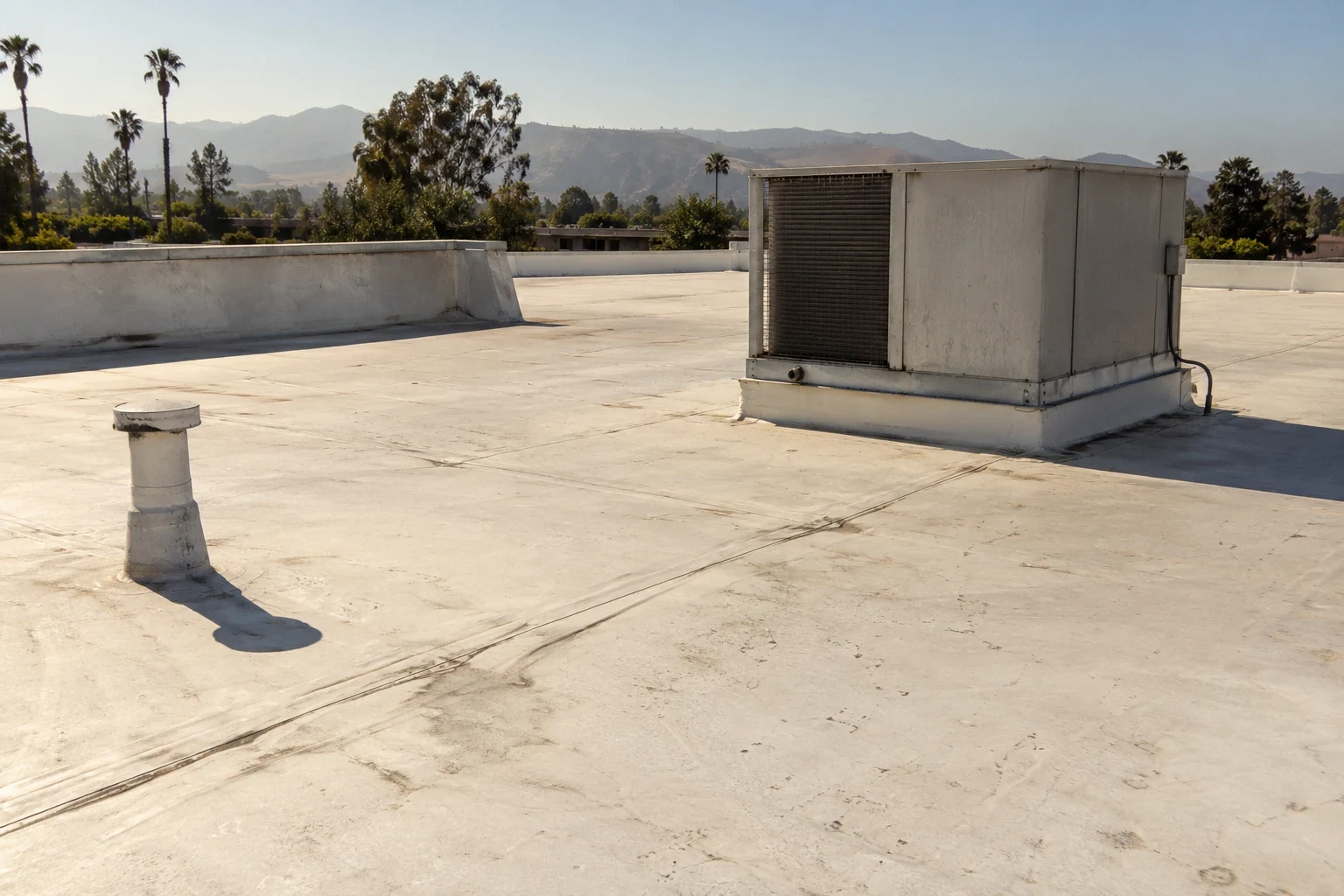
Modified bitumen may sit above insulation and cover board that cannot be judged from the cap sheet alone. If moisture patterns or soft areas justify testing, we mark an approved opening and photograph each layer. Wet insulation needs removal or another specified correction before it is covered. A core sample at one spot only describes that location. The report maps the test and states whether additional openings would change the repair or tear-off quantity.
Heat exposure and repeated repairs can affect the roof differently from one field to the next. Visalia's climate averages record a long stretch of high temperatures and annual rain concentrated in the cooler months. We use that climate context to plan work conditions, not to diagnose a particular roof. A roof inspection can separate visible surface wear from a condition below the membrane. If wet material extends beyond the repair boundary, a cover-board and insulation scope may need to be priced with the new roof assembly.
Plan Materials and Access around Visalia Sites
The Visalia Industrial Park supports food processing, manufacturing, warehousing, and distribution activity. Those uses can affect delivery routes, rooftop equipment access, and the timing of hot-work operations, but the property manager confirms each building's actual requirements. A crew may need a protected path and a designated area for rolls, adhesive, or removed material. We agree on the roof route and any interior protection before starting. If the work area includes a kitchen exhaust, unit, or electrical service, the responsible trade clears the detail before the membrane is opened.
Downtown Visalia has retail, government, professional, nonprofit, and healthcare employment in a mixed-use area. A project there may need different pedestrian, tenant, or delivery controls from an industrial roof. We confirm the location and access conditions on the actual property rather than infer them from a district. The Industrial Park service area and Downtown Visalia are separate broad areas. A phased reroof plan can help coordinate sections when the building remains in operation.
Compare a Local Repair with Tear-Off
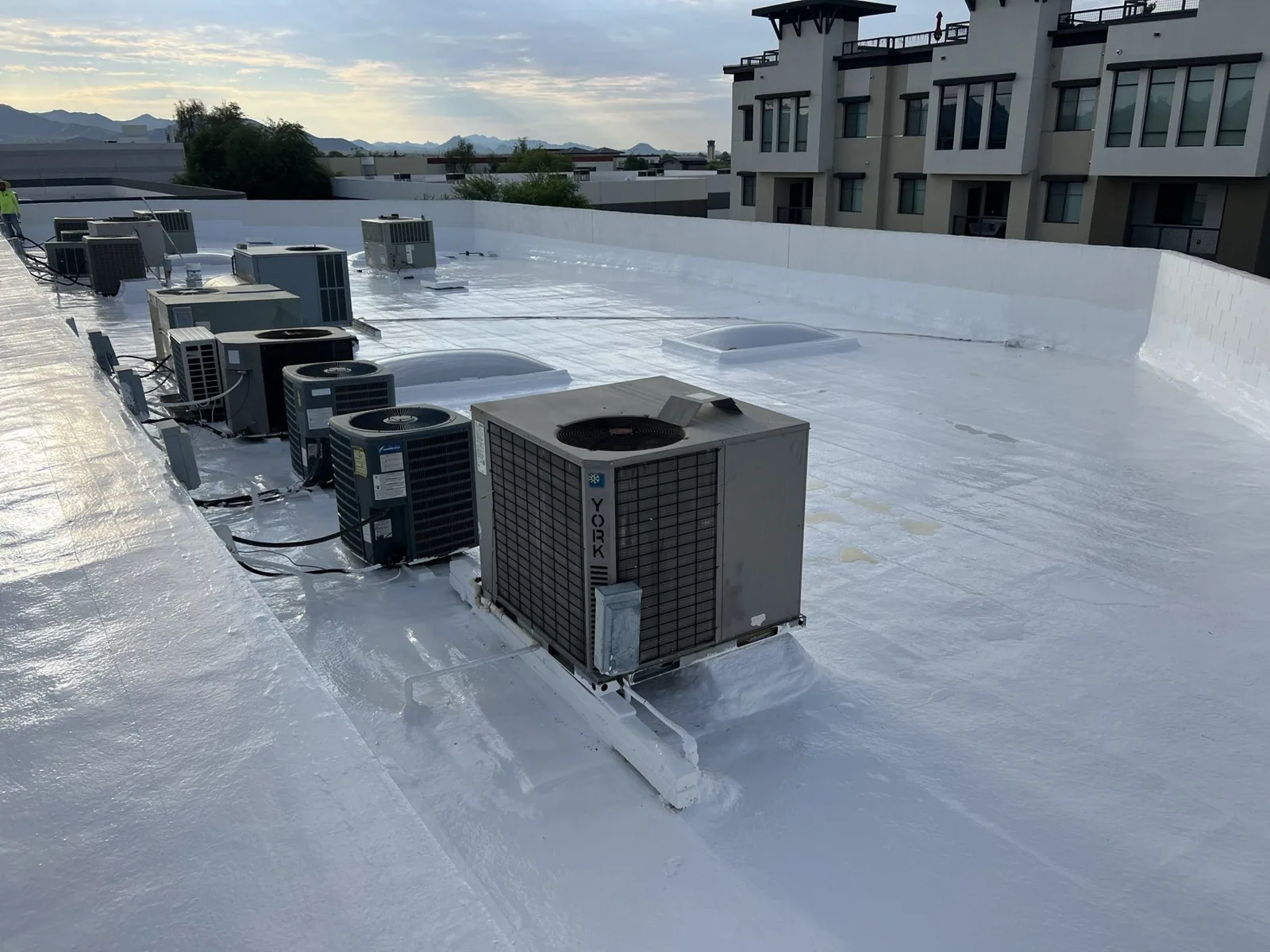
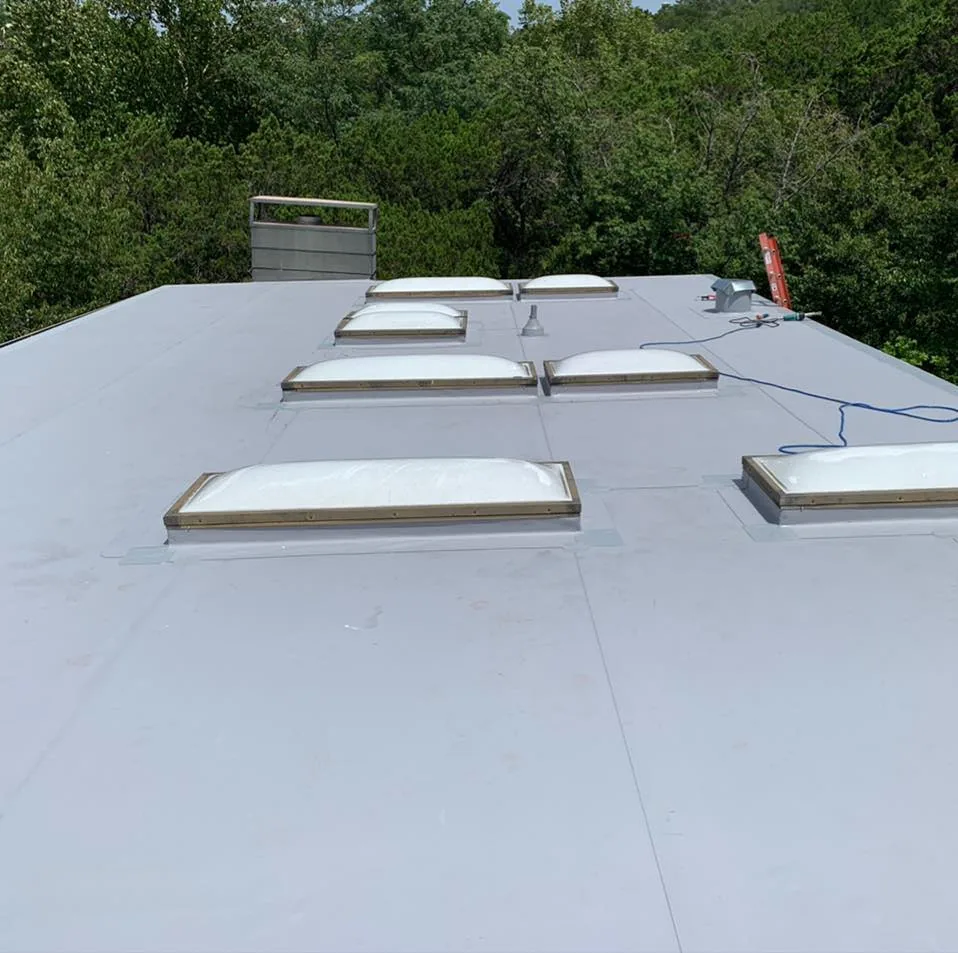
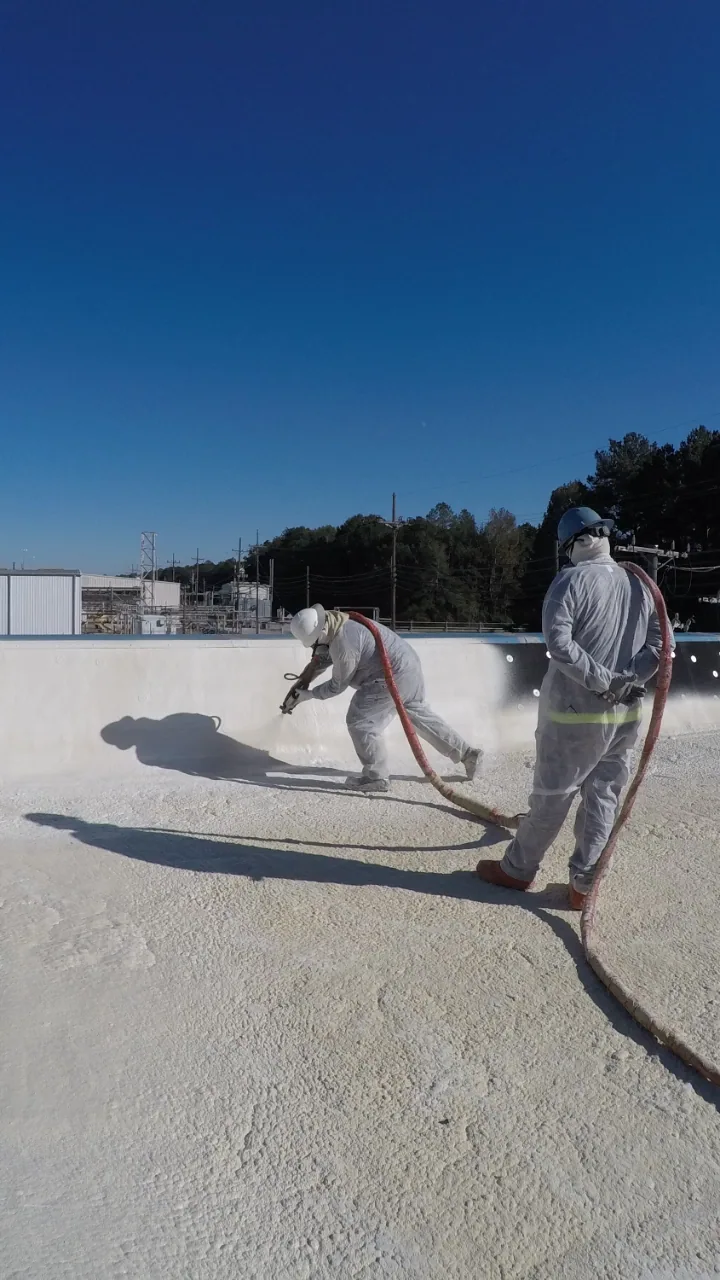
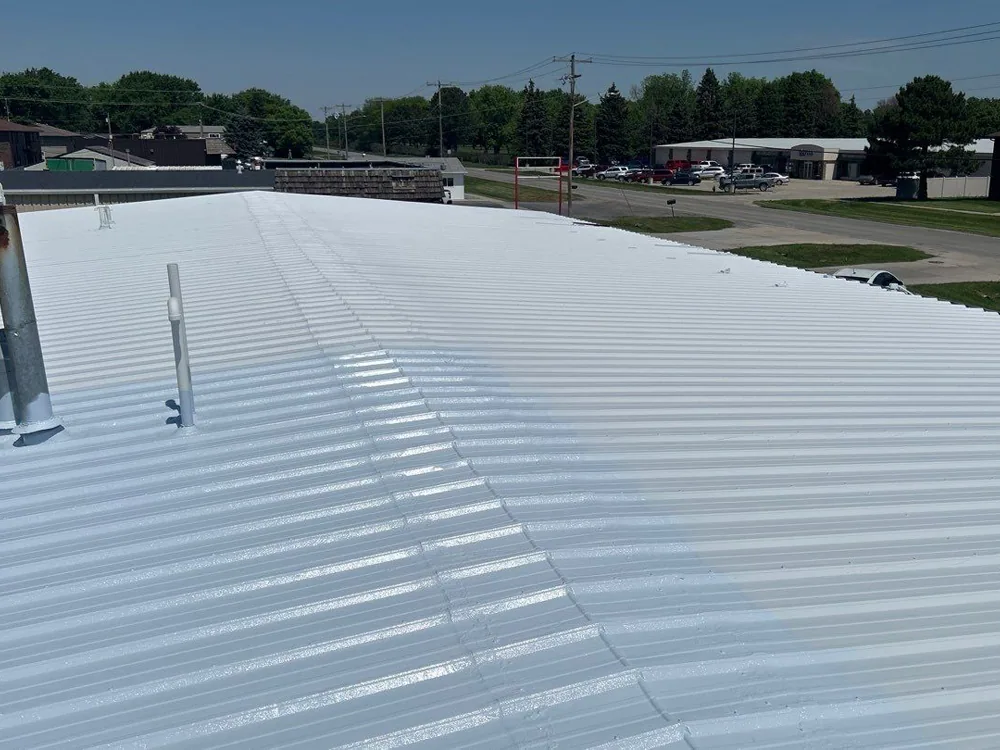
Cost depends on repair size, ply count, access, hot-work controls, moisture removal, deck repairs, and disposal. We identify quantities that are visible and mark the ones that require an approved opening. A limited split with sound surrounding plies may support a local repair. Blisters across multiple areas, recurring leaks, or wet insulation can shift the decision toward a broader scope. We compare repair, recover, and replacement using the same test locations and explain where another layer would add weight or conceal damage. A built-up roof assembly also uses multiple plies, but its surfacing and interply construction call for a different inspection path. A TPO membrane has welded seams rather than asphaltic laps, so the patch material and preparation cannot be carried from one system to the other. We identify those differences before a repair is priced.
After work, the roof record identifies the system, application method, areas opened, new materials, and any fire-safety controls used. It also notes which transition or low area still needs review. Before the next rainy period, a manager can revisit the same lap and drain locations rather than rely on memory. Share prior roof documents, leak timing, access restrictions, and any hot-work requirements before the first walk. We will show what the modified-bitumen assembly can support and what needs separate testing or approval.
Commercial Roofing Questions
How can you tell whether modified bitumen has failed?
We inspect cap-sheet splits, open laps, blisters, flashing, granule loss, and the conditions beneath approved test areas. The report separates visible wear from confirmed moisture or deck damage.
Can a blister be patched from the top?
We first identify what is trapped beneath the cap sheet and whether nearby plies are sound. A patch is selected only after the condition and repair boundary are established.
Does a torch-applied repair need extra controls?
Yes. The project must establish hot-work approval, fire precautions, protected combustibles, and a fire watch where required. We confirm those requirements before scheduling heat-applied work.
What if water remains after a drain is cleared?
We check the roof slope, low area, and drain connection. A blocked outlet and a depression are separate conditions, so the estimate identifies which one the scope addresses.
When should modified bitumen be replaced?
Widespread wet insulation, repeated ply separation, poor attachment, or damaged decking can favor replacement. We map tested areas and show what evidence supports each option.