Storm Damage Roof Repair in Visalia, CA
Commercial Roofing Services | Visalia and Tulare County
Storm Damage Roof Repair
A fresh ceiling mark after rain gives us a place to start, not the full repair boundary. We inspect the roof area above it, follow the water path, and check seams, edge metal, penetrations, and drains before opening the assembly. Visalia’s normal rainfall is concentrated from late fall through early spring, so a wet roof may have several connected details to check. A warehouse in the Visalia Industrial Park and a storefront in the Mooney Boulevard Regional Retail Corridor can require different access plans. The repair still starts with what the roof shows.
Protect the Interior and Keep a Clear Record
We first confirm where water is entering the occupied space, whether equipment or inventory needs protection, and who can approve roof access. Temporary protection may be needed while the surface is wet or while the damaged detail is being tested. The manager should record when the leak appeared, what weather preceded it, and whether water is still moving. Those notes help our crew select the roof zones to inspect, but they do not prove that wind or rain caused a specific opening.
Photos from inside and on the roof give the repair record a clear starting point. We label the affected room and roof zone, then show the visible damage, nearby seams, and any temporary measure installed. If the building remains open, we agree on a route that avoids tenant areas, loading activity, and sensitive equipment. The next update should say which area is protected, which detail is under review, and when the manager can expect a repair scope or return check.
Check the Details that Could Admit Water
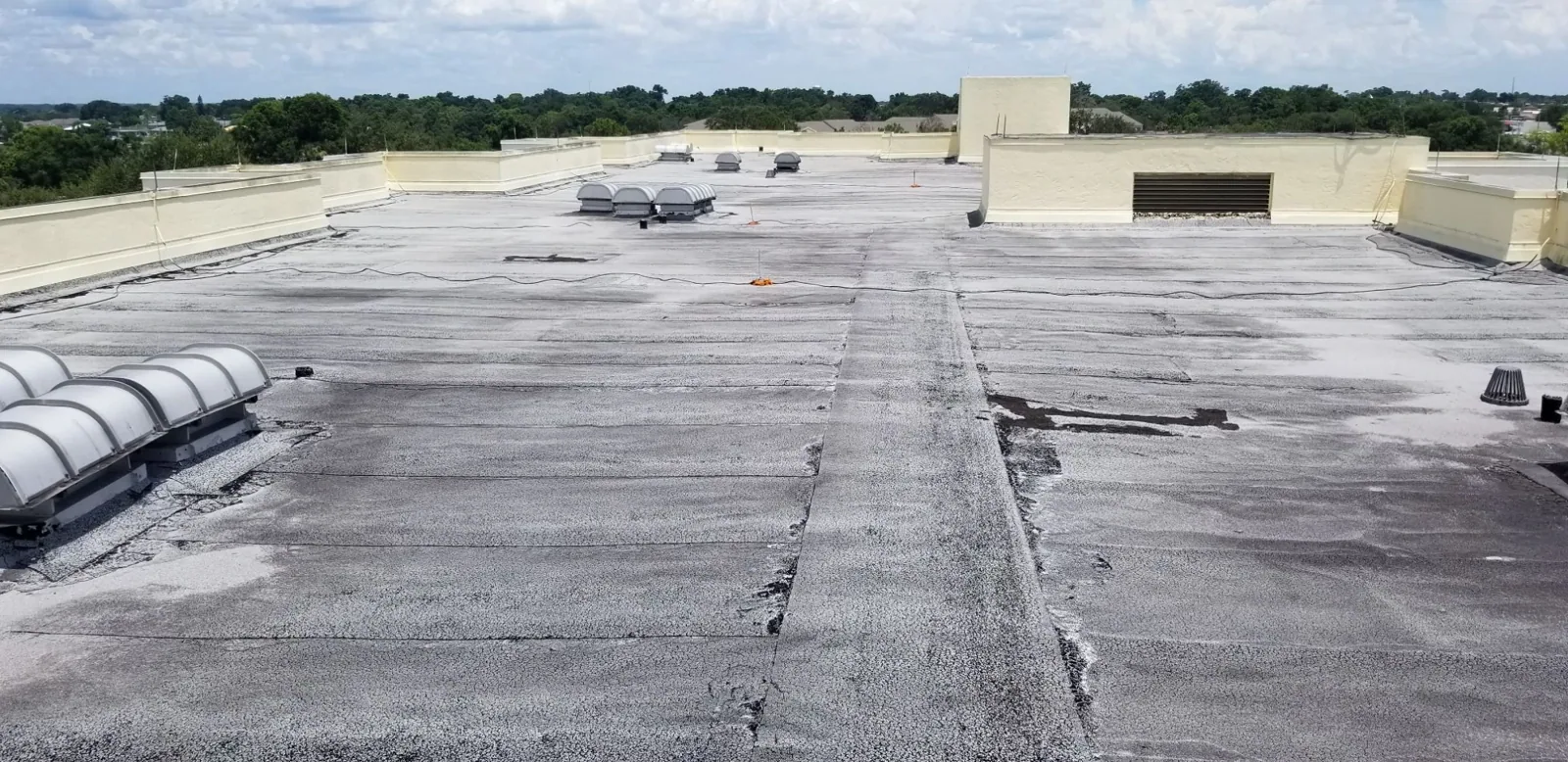
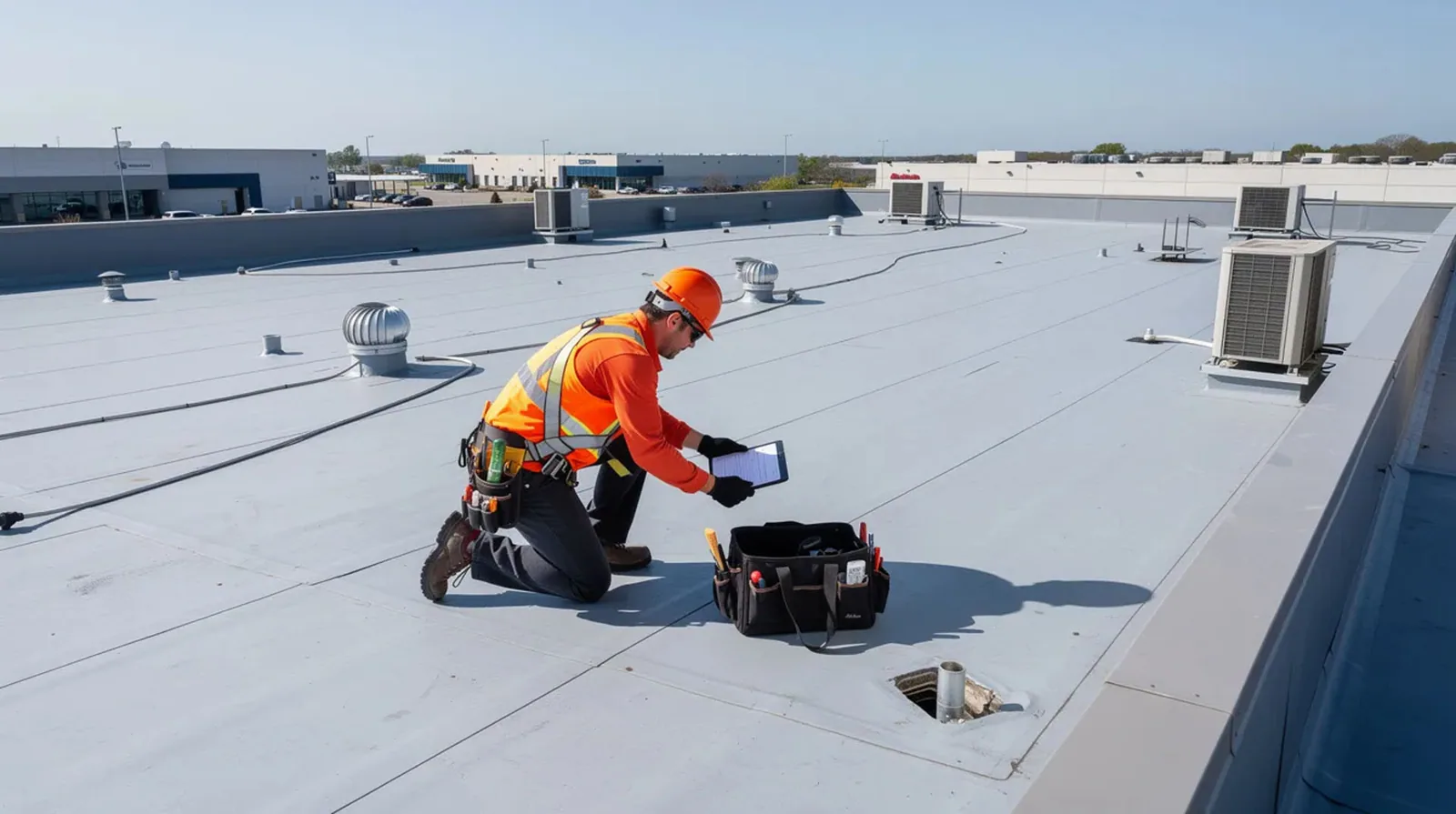
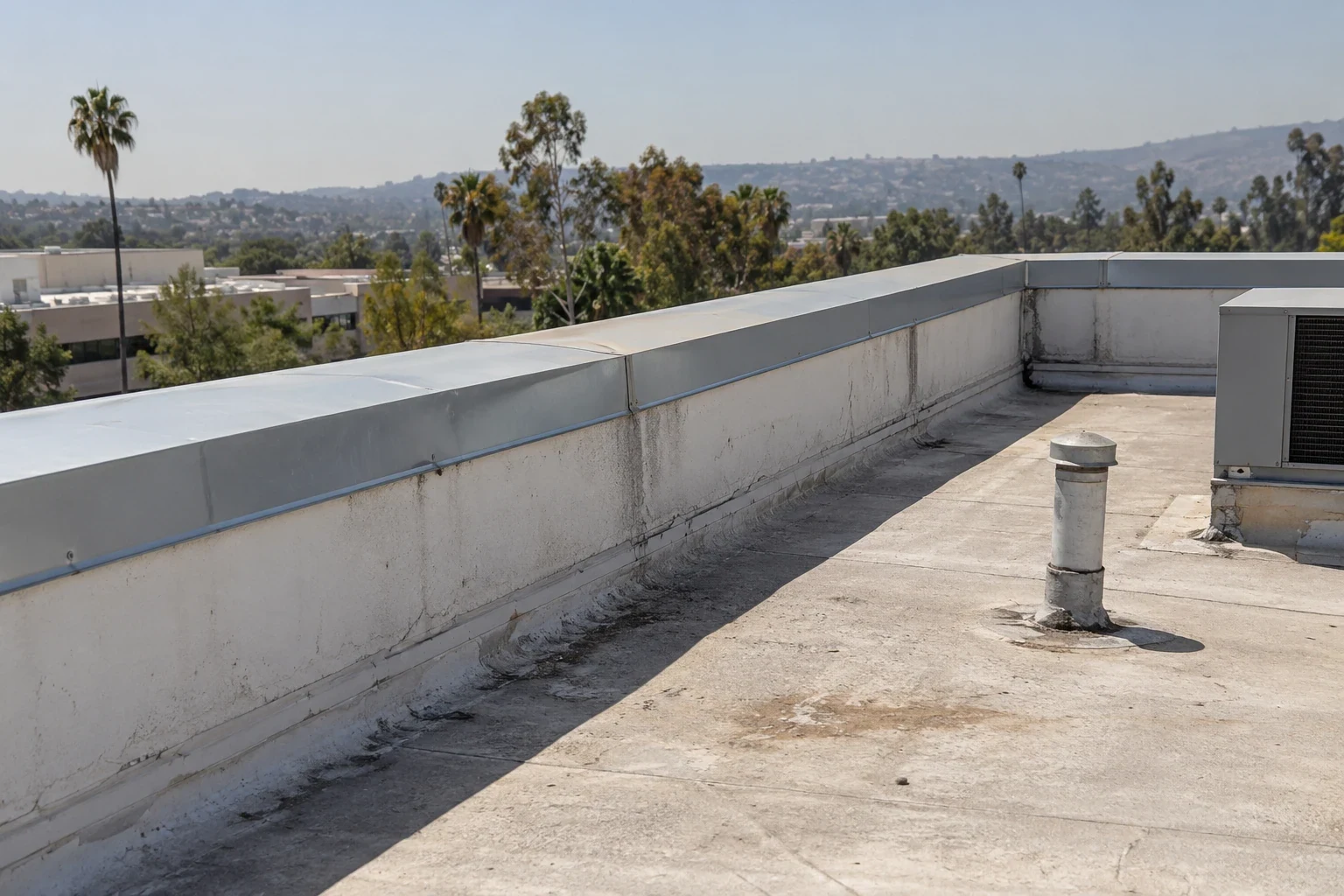
On the roof, we look for displaced edge metal, lifted flashing, punctures, open laps, damaged penetrations, debris impact, and water held around drains. We compare those findings with the reported interior location and mark places where the water could travel under the membrane. A ceiling stain can be offset from the actual opening, especially where water follows a deck flute or insulation joint. We avoid cutting into the assembly until the roof evidence points to a test area and the owner approves the opening. Where safe access allows, we compare the affected bay with a dry neighboring area and photograph both conditions. That comparison helps define a test boundary without assuming the entire roof shares the same damage.
The Visalia station’s rainfall normal is 10.32 inches for the year, concentrated in the cooler part of the calendar. That context helps us choose an inspection and repair window, but it does not establish that a specific roof sustained storm damage. Near Downtown Visalia, occupied commercial and professional buildings can require careful interior coordination. The roof record should state the observed condition at that property rather than generalize from the season or nearby land use.
Define the Repair after Testing the Boundary
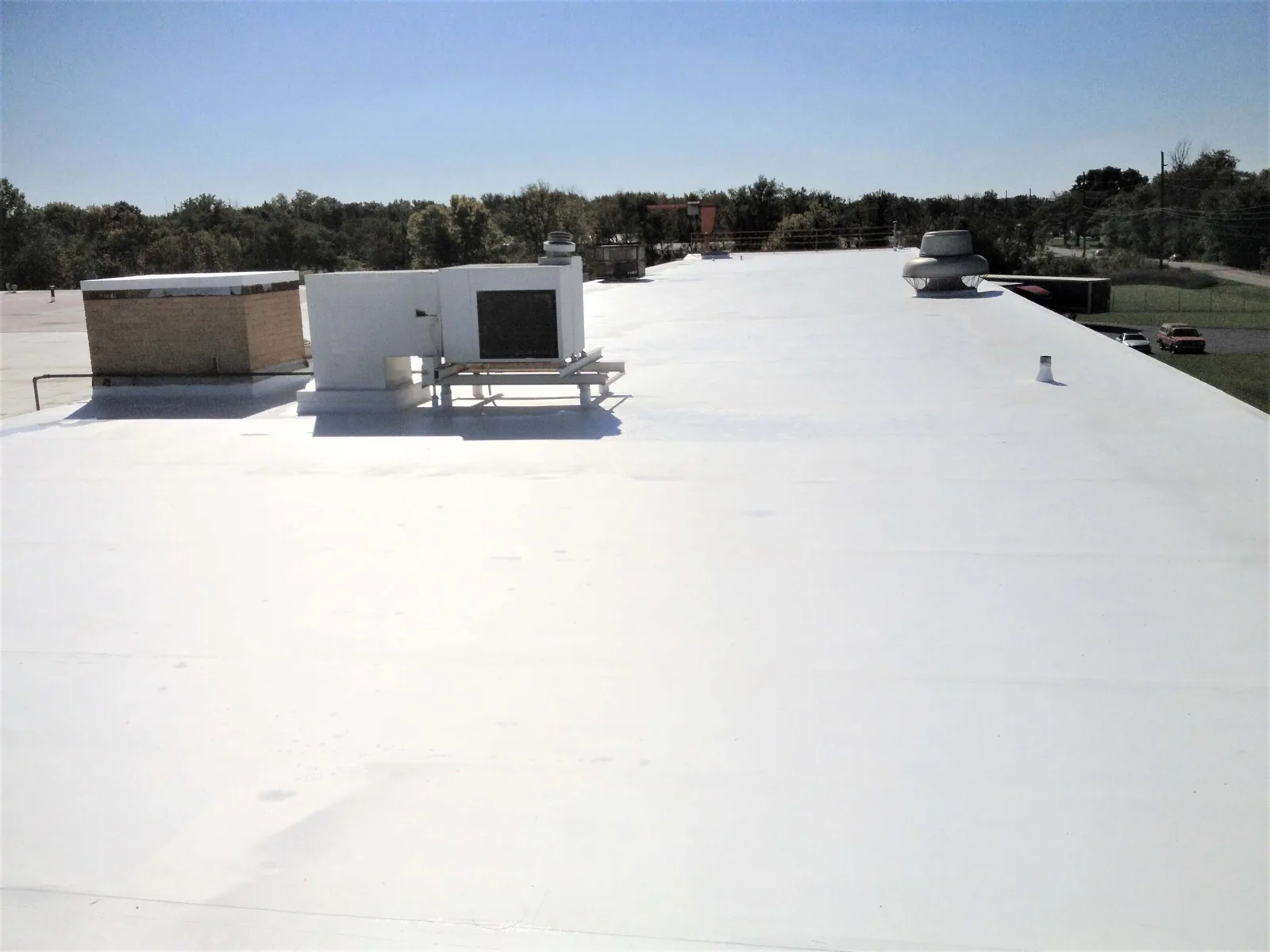
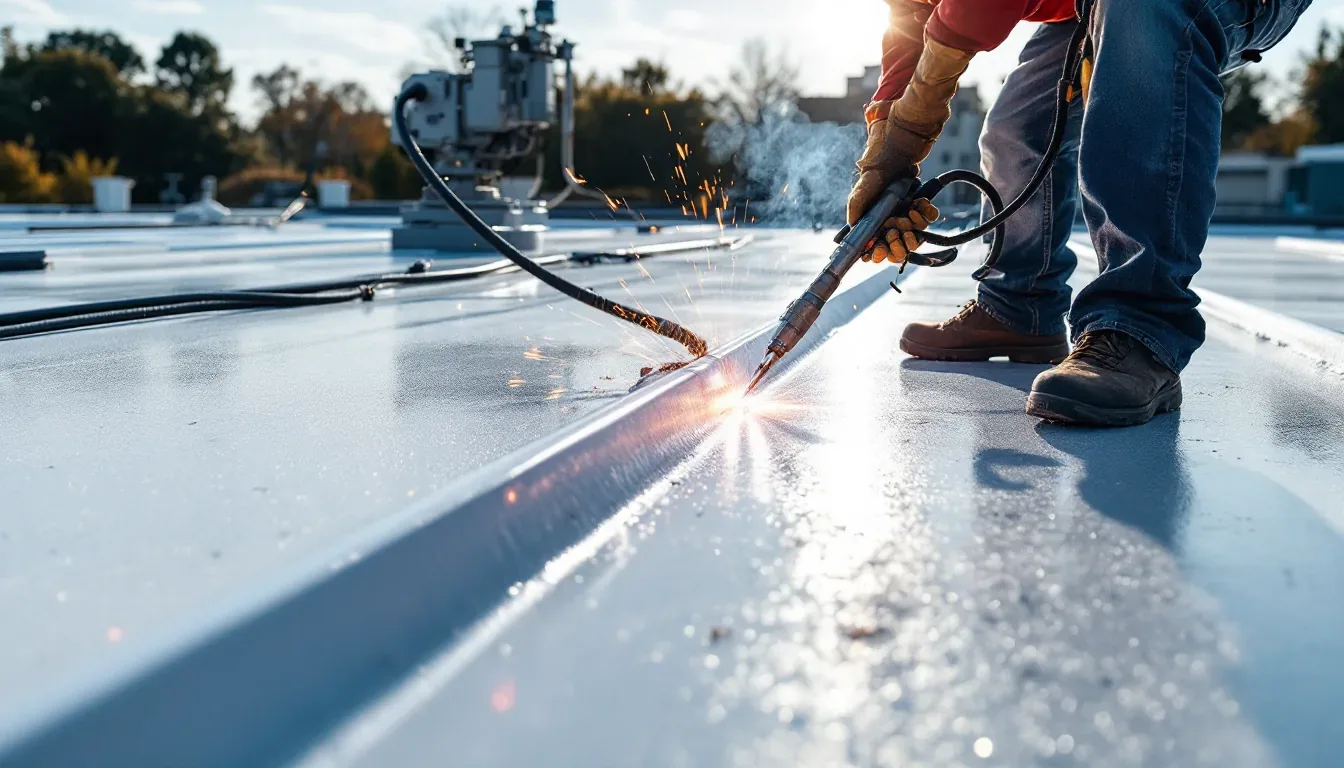
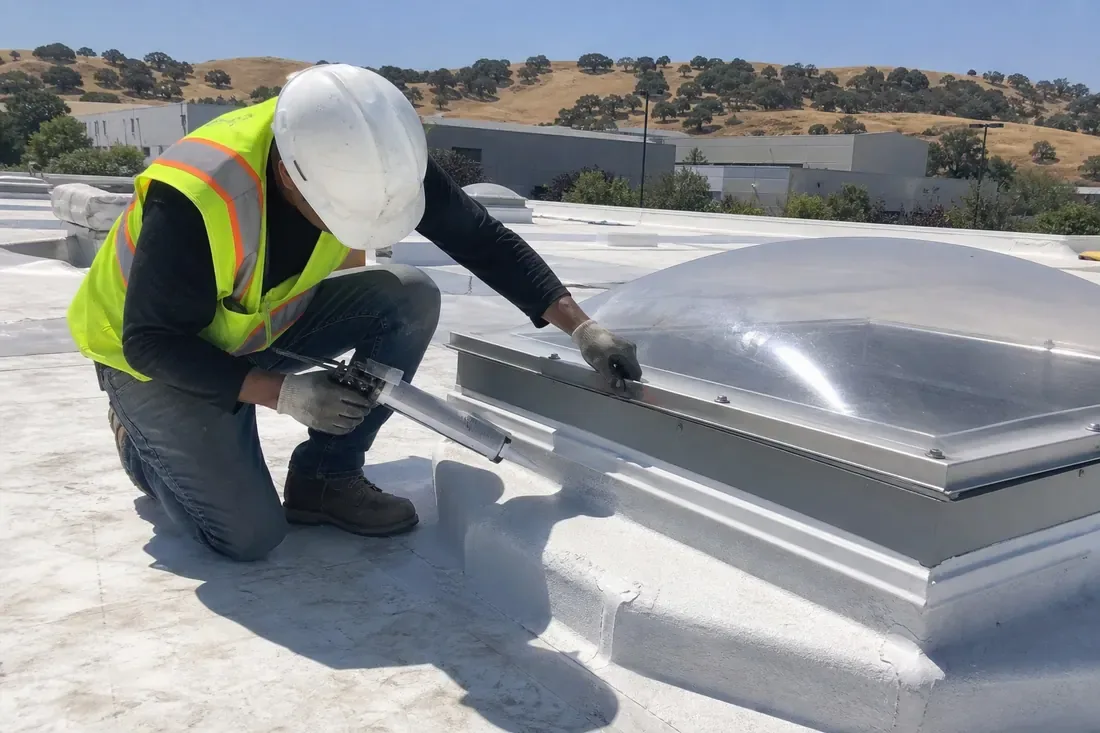
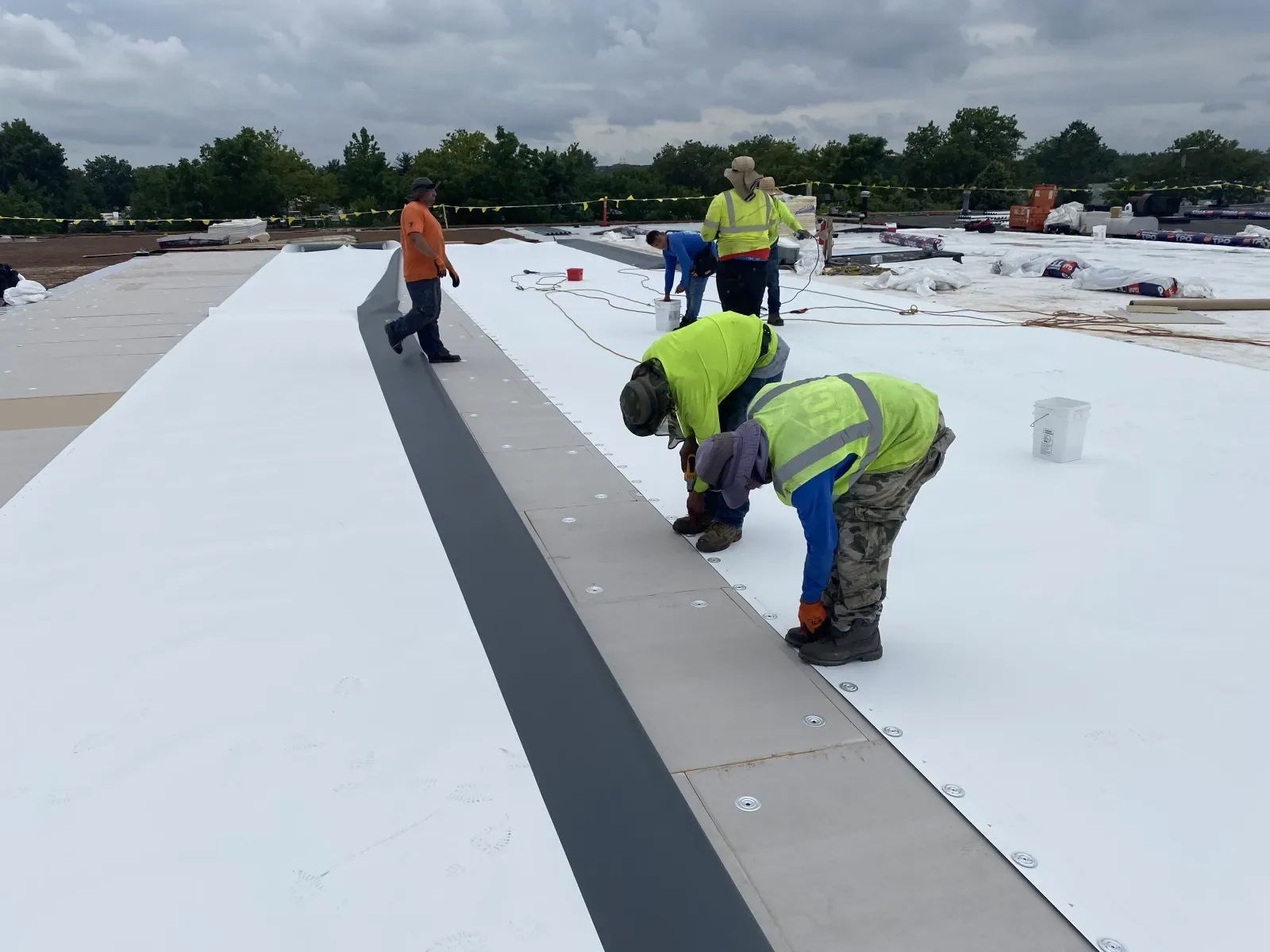
A compatible membrane patch, rebuilt flashing, secured perimeter, or drain detail each calls for a different repair. We identify the existing material and prepare the substrate so the new work bonds or ties in as intended. If insulation is wet, we map how far the affected area extends and document whether the deck needs further inspection. The written scope lists materials removed, repairs made, and any adjacent area left outside the boundary. A patch over a damp or moving surface can hide the condition without correcting it.
When a roof section is dry and sound beyond one failure, a localized repair may be appropriate. Multiple openings, recurring leaks, or wet insulation across several zones can change the decision. We can document the tested area through a commercial roof inspection, then compare repair work with a larger replacement scope if the assembly supports that review. We do not treat a weather report as a substitute for a roof assessment or an insurance determination.
Coordinate Access around the Property
Repair timing depends on surface moisture, safe roof access, material conditions, and the area below the work. We confirm whether the space can stay occupied, which entrances or loading lanes must remain clear, and how tools will be moved. Mooney Boulevard serves as a regional retail hub for Tulare and neighboring Kings counties. A retail property there may need customer-safe staging and work outside a peak access period, but each manager sets the actual operating constraints.
For a facility with active distribution or production, we ask about equipment shutdowns, deliveries, roof hatches, and interior protection before mobilizing. The Visalia Industrial Park supports manufacturing, food processing, warehousing, and distribution activity, but those uses do not tell us how one building operates. We verify site rules directly, then give the property manager a schedule for inspection, repair, and any return check. If new damage appears during the work, we pause at the agreed boundary and get approval before expanding the scope.
Close the Repair with Usable Evidence
After the work, we photograph the repaired detail, show the tie-in to sound material, and note what was tested. The record also identifies temporary protection, exclusions, and follow-up items. A later rain may provide useful conditions for a return observation, but the owner should report the location and timing rather than assume a dry interior proves every roof area is sound. If the water path reaches another zone, the next visit can be scoped from the new evidence.
For an insurance file, we can supply dated photos, repair notes, and the observed condition without promising how a carrier will decide coverage. The building manager can keep those records beside the maintenance history and roof plan. When the roof includes drains or edge transitions, drainage repairs and edge-metal work may need separate line items. A clear record makes the next roof decision easier to review.
Commercial Roofing Questions
What should I send before the first visit?
Share the leak location, photos from inside, when water appeared, roof access rules, and any recent repair notes. We use that information to choose the roof zones to inspect and plan interior protection. It helps narrow the first walk, but the roof condition sets the repair scope.
Can you stop water before a permanent repair?
We can assess whether temporary protection is safe and suitable while the roof is wet or under review. The crew will explain where the temporary measure applies and what it cannot address. A permanent repair follows after the surface and existing assembly are ready for compatible work.
Does a leak after rain prove storm damage?
No. Rain can reveal an older opening, a blocked outlet, a failed seam, or another detail. We document the roof condition and timing, then identify what the evidence supports. The cause and any insurance decision remain separate questions from the repair scope. Photos and dated notes help preserve the sequence for review. The manager can attach these to the roof record for future reference. This chronology can also guide an upcoming maintenance visit.
Will the inspection require opening the roof?
Not always. We begin with visible details, the interior report, and roof records. If a test opening would clarify wet insulation or the repair boundary, we identify its location and request approval before cutting. We close any opening within the agreed scope.
What goes in the completion record?
We provide photos of the repaired area, the material and detail addressed, and the boundary inspected. The record also notes temporary protection, conditions not tested, and any return check that remains open. Those details support maintenance follow-up and an insurance file.