Commercial Roofing in Oval Park Corridor, Visalia, CA
Service Areas | Visalia and Tulare County
Oval Park Corridor
Restaurants and small businesses share the Oval perimeter, so roof work has to account for more than the surface above one tenant. In Visalia, CA, Oval Park is a mixed-use commercial node, with restaurants and small businesses around the perimeter. We inspect the actual building, trace reported water, and set a repair boundary that fits the roof and the occupied space below. A field walk checks seams, penetrations, drains, and edges before we price repair, recovery, or replacement.
Find the Opening Beside the Tenant Space
A restaurant ceiling stain can follow a path from a nearby curb or seam. The water may move before it reaches the room. We begin with the location and timing of the leak, then compare it with roof penetrations, exhaust equipment, membrane laps, and wall transitions. We check each detail that could feed the stain. A failed sealant joint may need a precise repair. Wet insulation under a broad section needs a wider boundary and may need testing.
Because the Oval is a multi-property district, a manager may coordinate several tenants or separate owners. That does not make the roofs identical. We label each building and roof section, then record observed conditions on that property only. The commercial roof inspection report can separate an active opening from wear that needs monitoring. The repair scope should show the exact work zone, materials, and any condition that cannot be seen until the roof is opened.
Confirm Shared Access Before Mobilizing
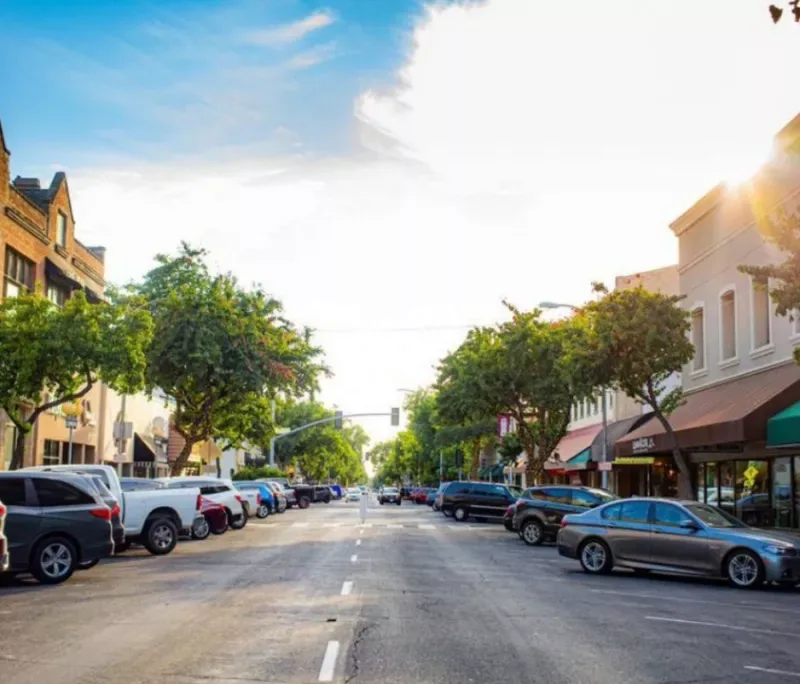
Court and Locust connect downtown with the Oval area through a mixed-use corridor. That setting can matter when Downtown Visalia visitors, deliveries, and building service routes overlap, but the route inside each property must be confirmed directly. We ask who controls the roof hatch, where a lift may stand, which entrances stay open, and when deliveries arrive. The answers shape equipment placement and the order of work.
For a repair above a tenant, we set a protected path for tools and materials and agree on the interior area that may need temporary cover. If several units share a roof, the manager identifies the contacts and notification sequence. We keep the work boundary narrow where conditions support it. If the membrane or insulation is wet beyond that boundary, we stop and review the finding before expanding. Clear authorization avoids opening more roof than the approved scope permits.
Follow Water to the Outlet
Drainage is easy to overlook when a leak appears near a parapet or equipment curb. We inspect drain bowls, strainers, overflow routes, scuppers, and the roof surface feeding each one. Food debris or windblown material can collect at an outlet, while a low spot can hold water against a seam. We distinguish blocked drainage from a failed waterproofing detail and from a slope issue. Each diagnosis changes the repair.
Restaurants and small businesses around the Oval share a multi-property setting. Opening hours and customer access should be checked, not assumed. Before work, we protect the route below and plan how to keep temporary materials from reaching entrances or service areas. If an outlet or scupper is the failure point, our drain and scupper repair scope states the metal, membrane, and discharge work separately. A stain alone is not enough to define that repair.
Check Sealants and Membrane in the Hot Season
Visalia's recurring hot days and dry season place sustained exposure on roof surfaces. Regional conditions help set maintenance priorities, but we still inspect each roof surface. We look at exposed laps, sealant transitions, corner patches, pitch pockets, and penetration boots for cracks or loss of adhesion. A small opening can admit water during the wetter part of the year. The inspection records the location and extent before a repair is chosen.
Hot weather also affects the repair window. We check the roof surface temperature and the application range for primers, adhesives, and coatings. Some work can move to an earlier part of the day; other materials need the roof to cool or dry. We prepare and close only the area we can protect. A silicone coating system system may be appropriate over a sound, compatible roof, but it will not resolve active moisture below the membrane.

Keep a Local Fix Local
A targeted repair can work when the failed detail is isolated and surrounding materials remain secure. We remove loose or wet material to the point where the substrate is sound, prepare the surface, and tie the new flashing or membrane into a stable area. If repeated openings occur at multiple seams, the pattern can indicate broader movement or aging. We explain that distinction without treating every roof as a replacement candidate.
Cost is driven by access, layers, wet insulation, edge details, drainage correction, work height, and the amount of interior protection needed. A roof recover or overlay can retain an existing assembly when moisture, attachment, and code conditions permit. A commercial roof replacement may be better when concealed conditions or incompatible layers require removal. The estimate identifies material, repair line, and exclusions so an owner can compare work across separate buildings.
Sequence Work around Business Hours
Commercial activity around the Oval is spread across a multi-property area. A roof crew still needs a building-specific work window. We confirm opening hours, delivery times, customer paths, kitchen or equipment needs, and the point where the roof can be made watertight before the day ends. For a small repair, work may stay above one tenant. A larger project may need separate zones and daily coordination with more than one manager.
The Court and Locust corridor provides a connection between downtown and the Oval. We use that broader context only to ask about access and delivery constraints; we do not assume how a particular tenant operates. A written phase plan identifies the protected ground area, roof opening, materials route, interior measures, and close-in point. If occupants remain below, the occupied-building reroofing process sets responsibilities before work begins.
Leave Each Property with Its Own Record
Closeout photos should identify the building and roof section, not just the district. We record the opening, repair detail, materials installed, and any nearby condition that needs later attention. That lets a manager compare a future leak with the prior work without assuming every Oval property shares the same roof. When the scope involved a test cut or concealed moisture, the record states where that test occurred and what it found.
Share tenant contact rules, roof access instructions, leak reports, prior repair invoices, and any known hours when noise must stop. We can inspect the affected property, define the work, and provide a written record after completion. Managers can then plan the next inspection or capital decision without mixing conditions across buildings. For a second property in the area, schedule a separate roof walk and keep the findings distinct.
Commercial Roofing Questions
Can a roof repair be completed before lunch service?
Often, if the repair area is accessible and the condition is isolated. We confirm application limits, interior protection, and close-in time before selecting a work window.
Does the Oval district mean our buildings share a roof type?
No. Nearby businesses may have very different roof assemblies. We inspect each property to identify the installed system, condition, and any limits on repair or recovery.
Will you need to close a restaurant entrance?
We plan a material route and protected work zone with the manager. If a path must remain open, staging and phasing are adjusted before mobilization.
How do you handle several tenants under one roof?
We identify the building owner contact, tenant notices, sensitive rooms, and each work area. A shared roof plan can coordinate access while keeping the repair record tied to each section.
When is a coating a reasonable option?
Only after the roof is checked for moisture, attachment, surface compatibility, and detail condition. We correct those issues before pricing a restoration coating.