
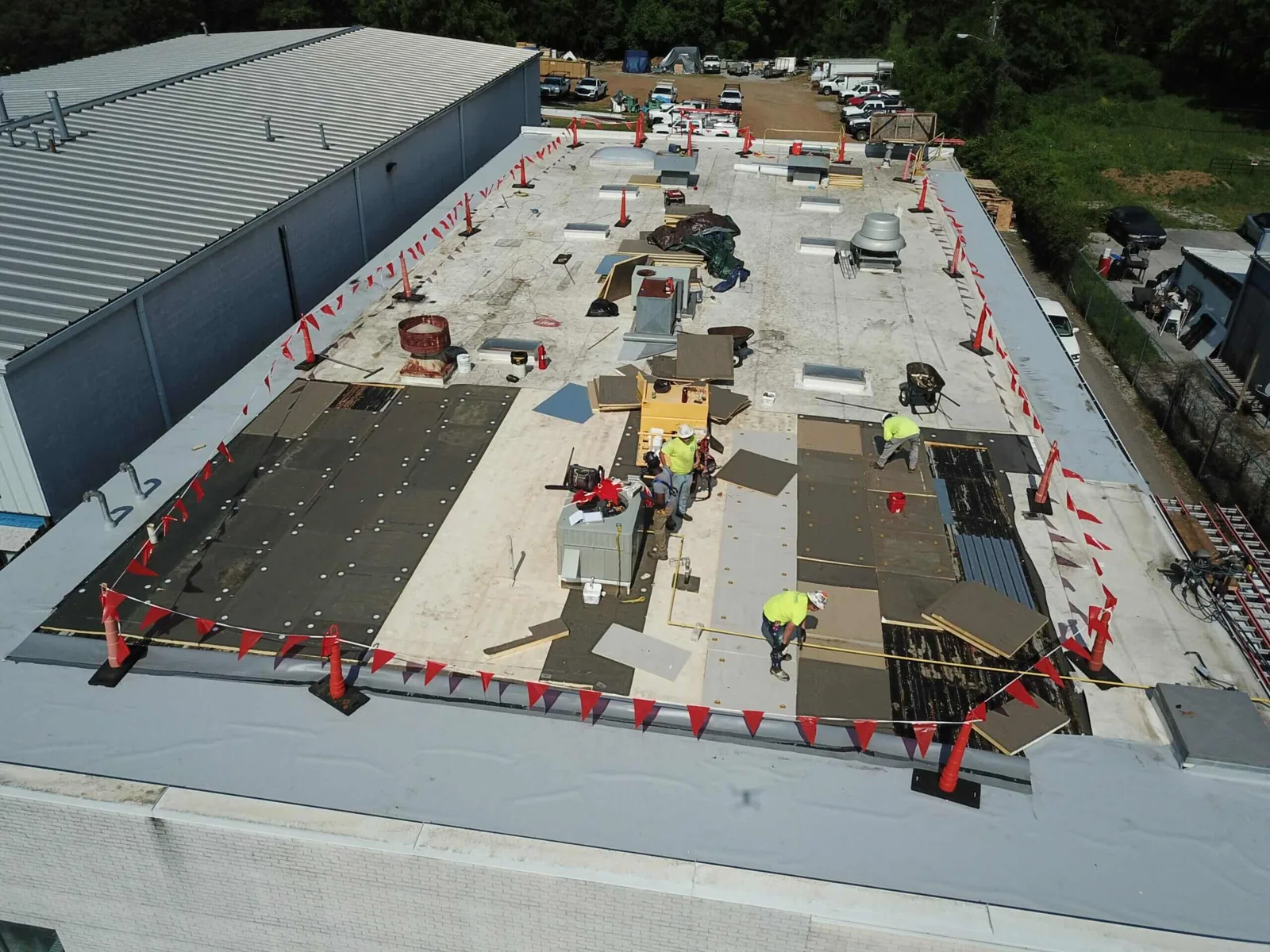
Commercial Roof Recover and Overlay in Visalia, CA
Commercial Roofing Services | Visalia and Tulare County
Commercial Roof Recover and Overlay
A recover adds a new roof assembly over an existing one. It can reduce tear-off, but only when the roof below is dry, secure, and compatible with the proposed system. We inspect the layers, attachment, drains, edges, penetrations, and interior leak history before recommending an overlay. In Visalia, long hot periods put movement and adhesion details under steady stress, while the late-fall-to-spring rain pattern tests drainage and seams. A roof at Visalia Industrial Park may have large equipment zones; a retail building on Mooney Boulevard may need a quieter work window. The building facts set the investigation, not the answer.
Confirm the Existing Roof Can Carry Another Assembly
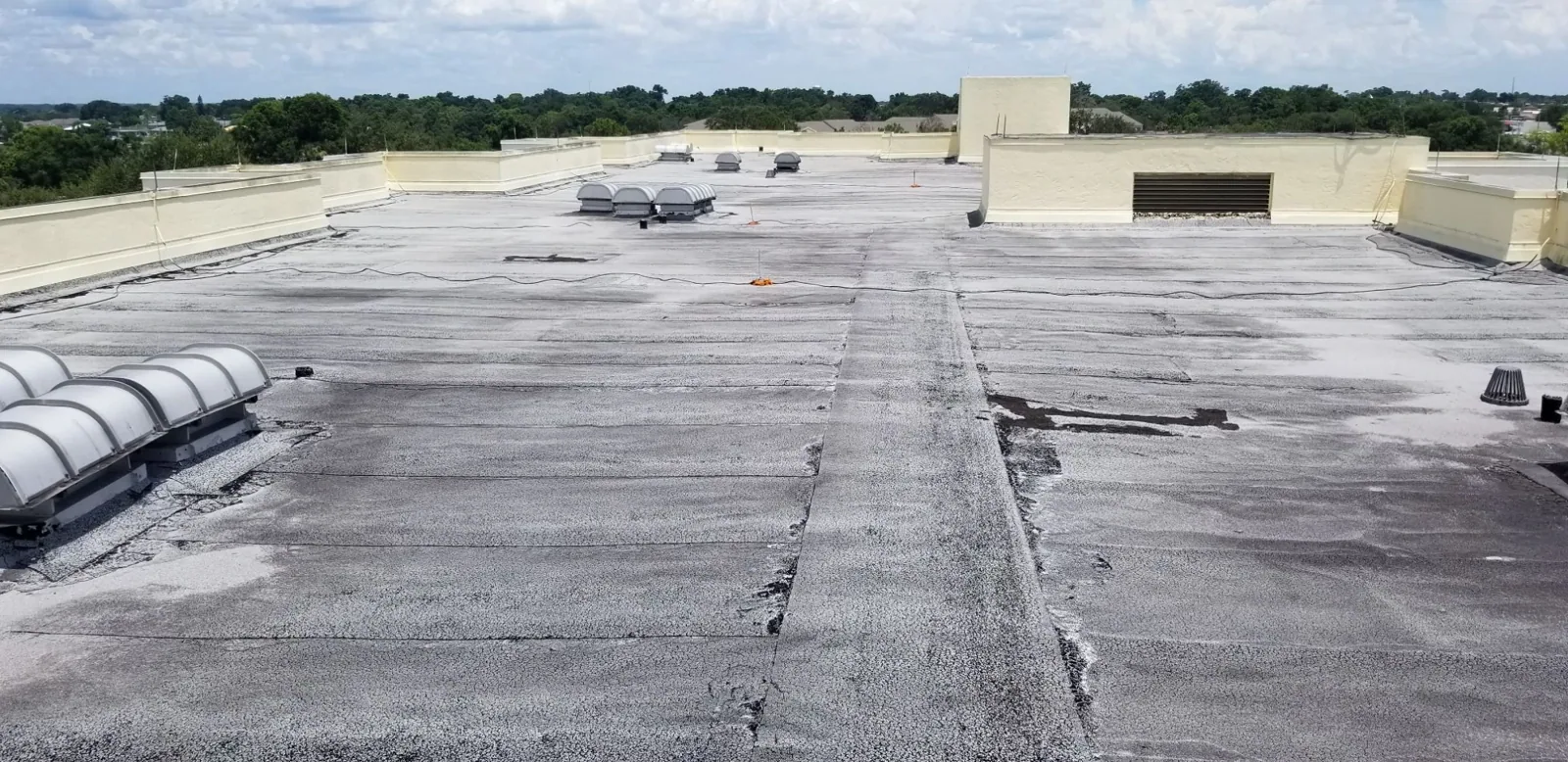
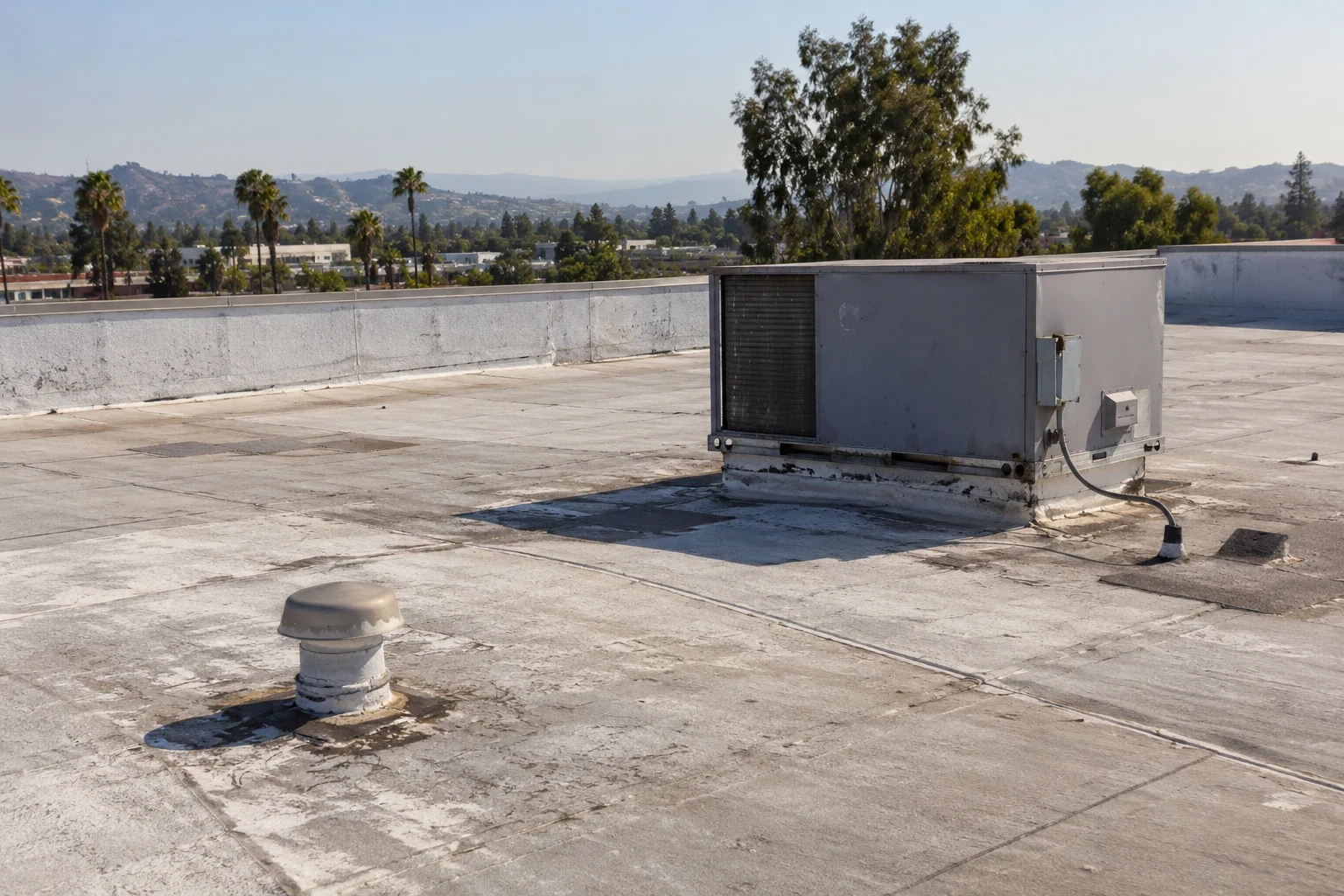
The first recover question is whether the existing roof is a stable base. We look for loose membrane, open seams, failed fasteners, soft insulation, crushed cover board, ponding, and signs that water has moved beneath the surface. A new layer can conceal those conditions without correcting them. If moisture is present, the affected material needs to be located and removed or the overlay should be reconsidered. If attachment is weak, the proposed system needs an approved way to connect through the existing layers to a sound substrate.
Existing roof count and history matter too. Local code, fire classification, wind requirements, manufacturer instructions, and warranty terms can restrict how an overlay is built. We record the layers that can be confirmed and call out areas that need a core or test cut. That gives the owner an honest comparison instead of assuming the entire roof qualifies. A commercial roof inspection can document the starting condition before any recover option is priced.
Map Moisture before It Disappears under New Work
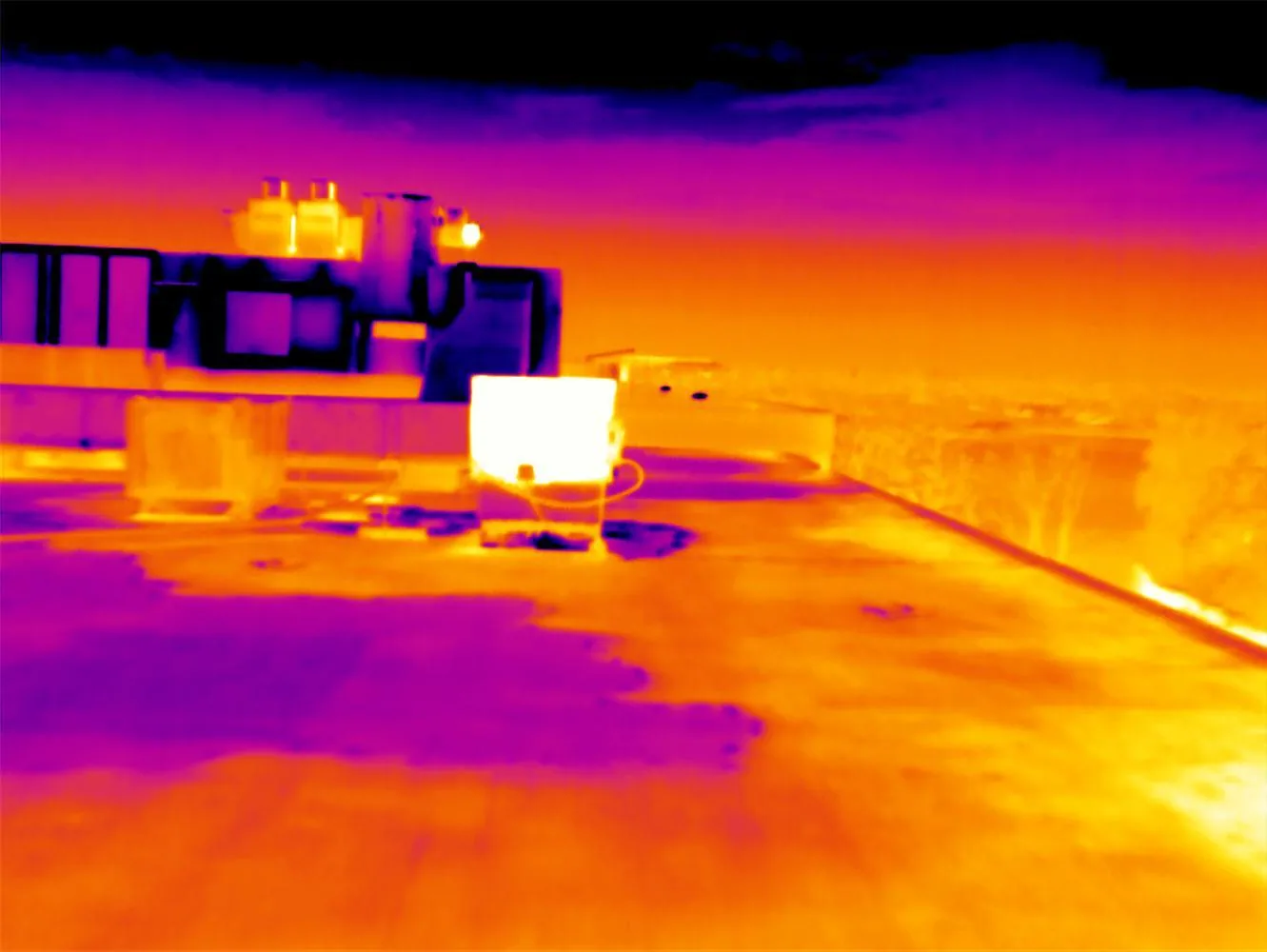
Moisture is a recover boundary, not a minor note. Water can travel laterally through insulation and appear indoors far from the roof opening. We compare interior staining, infrared indications when conditions support that method, surface changes, and representative test cuts. A thermal scan alone does not prove wet insulation; the readings need to be checked against roof construction and the weather conditions at the time. When a core is warranted, we agree on the location, protect the opening, record the layers, and close the test area.
For a large roof, the findings are mapped by zone. Dry areas may remain eligible while a wet area is removed and rebuilt, if the transitions can be detailed reliably. If the wet pattern is extensive or the insulation no longer supports fastening, a tear-off may produce a cleaner assembly. A written scope should show the tested points and the limits of each conclusion. Owners can compare that map against leak calls, maintenance records, and repairs around drains or equipment rather than relying on a single roof-wide label.
Check Attachment at the Field and Perimeter
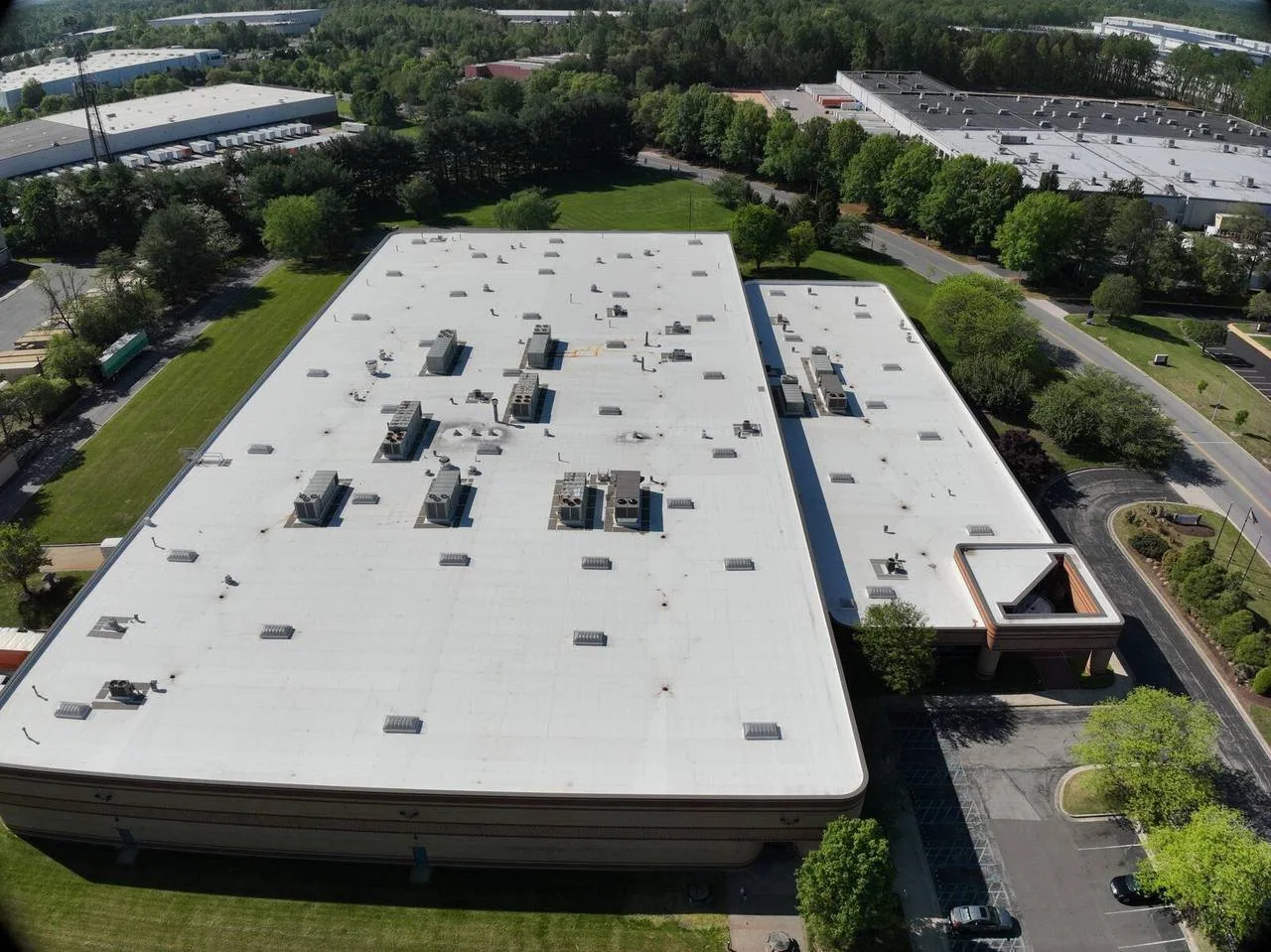
A recover depends on the old roof staying attached while the new system is installed and through its service life. We inspect membrane pull, fastener condition where visible, edge securement, wall terminations, and the substrate available for new attachment. At curbs and skylights, the added height can make existing flashing too short. Perimeter metal may need to be raised or replaced. The estimate should name these details because a sound field sheet does not compensate for a weak edge or open transition.
We also account for rooftop units, conduits, gas lines, drains, and access ladders. Each penetration must receive a compatible detail at the new finished height. An overlay over a Visalia Business Research Park building, for example, should not assume the planning designation reveals the actual roof construction. The property is checked on its own. A recover could be practical where records and inspection support it; where they do not, we set a test area or compare replacement. The goal is a supported connection, not a hidden uncertainty.
Resolve Drainage and Finished Height
Every added layer changes roof elevation. That affects drain bowls, scuppers, overflow openings, door thresholds, parapet transitions, rooftop supports, and the clearance around equipment. Before proposing a recover, we verify that water can still reach outlets and that the detail can be rebuilt at the new elevation. A raised drain may require an extension. A shallow parapet may need a new coping or counterflashing configuration. These details should be drawn or described, not left as a field assumption.
Ponding deserves separate attention. If a roof holds water because drains are blocked, cleaning and maintenance may address part of the issue. If the deck has deflected or the slope is inadequate, another membrane layer will not restore drainage. We trace low points, confirm outlets, and distinguish surface irregularity from structural movement. The local rain season makes this useful before winter storms arrive. See commercial drain and scupper service when outlet height, clogging, or overflow routing is part of the recover decision.
Match the Overlay to Heat and Rain Conditions
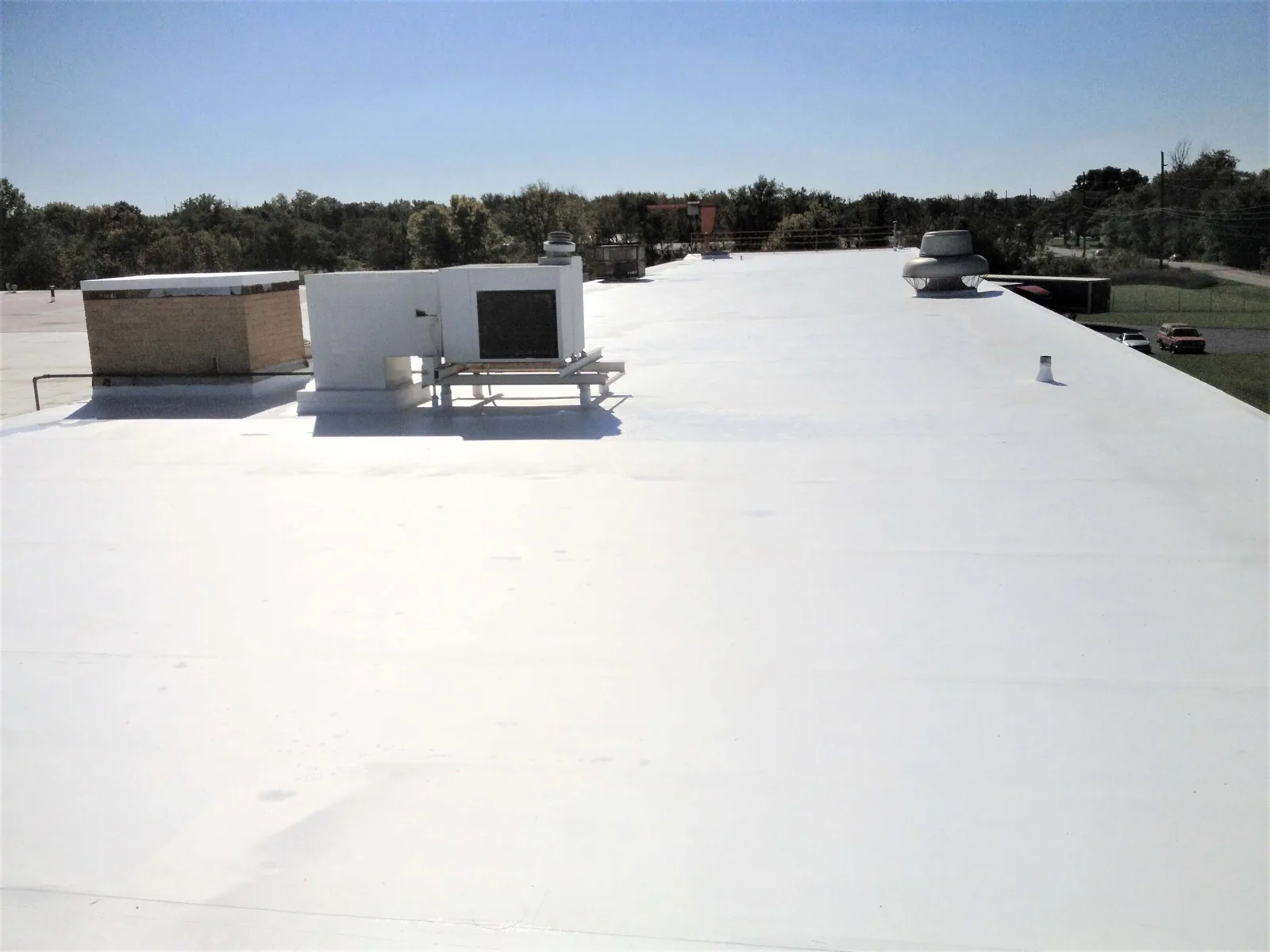
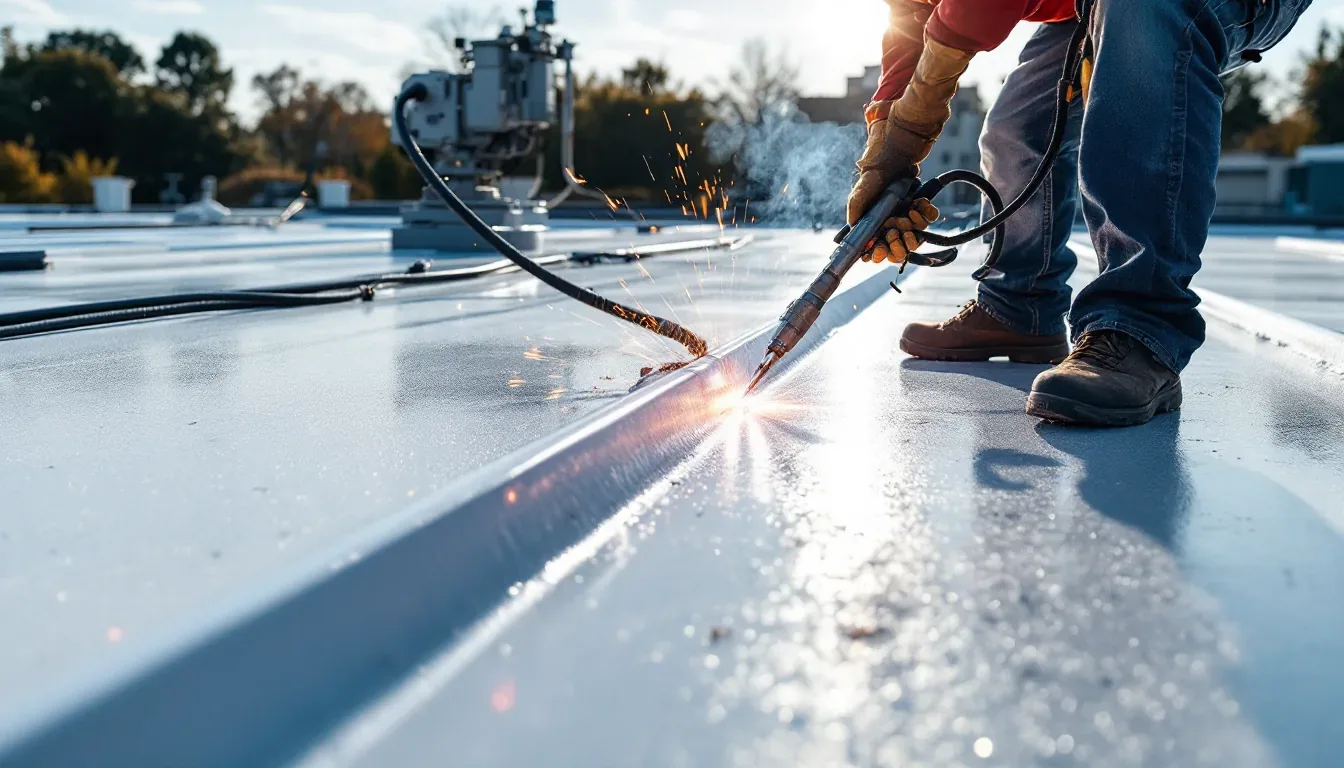
For Visalia, Visalia's 1991-2020 climate averages counts 94.7 annual days reaching at least 90°F. Prolonged heat can affect adhesives, membranes, exposed sealants, and the hours when crews can safely work. Installation must follow the selected manufacturer’s temperature and curing limits. We plan staging so materials are stored as required and the daily closure line remains secure if work pauses. A hot roof can also change when a property manager wants access or when a tenant route needs protection.
The same station records a mean 10.32 inches of annual precipitation, most of it between late fall and early spring. Before a recover begins, drains and temporary water paths must be clear. The work plan should limit how much roof is opened, protect test areas, and identify how an unexpected shower will be handled. In a mixed-use area such as Downtown Visalia, keep entrances and occupied rooms protected. Roof condition, season, and building hours all shape the sequence, but none should replace confirmation of the existing assembly.
Compare the Full Cost and the Limits
A recover can reduce removal and disposal, yet added flashings, drain work, substrate repairs, and equipment adjustments still belong in its cost. A tear-off includes more demolition but exposes the deck and lets the crew replace unsuitable insulation. We compare both alternatives by the same roof zones, work hours, protection, perimeter scope, and closeout records. If an overlay is conditional on a test cut or concealed deck condition, the proposal should say so and identify how approval will happen.
For owners with an active leak, a local repair may buy time while a replacement or recover study is completed. On a warehouse tied to the Visalia Industrial Park or a storefront near the Goshen and Murray corridor, phasing can keep access available but may extend the schedule. We record immediate work separately from capital options. Related choices include full replacement, targeted repairs, and TPO roofing or silicone coating systems, where compatible.
Commercial Roofing Questions
How do you know if a recover is allowed?
We check the existing roof layers, local code limits, fire and wind requirements, attachment, and manufacturer criteria. The building and the proposed assembly both have to qualify.
Can wet insulation remain under an overlay?
No. Wet material should be located and addressed. We map the tested area and show whether dry sections can remain or whether broader removal is the sounder scope.
Does a recover solve ponding water?
Not by itself. Drain capacity, outlet height, slope, and deck condition need to be checked. The new assembly must preserve a workable path to the drains and overflows.
What happens if a test cut finds another roof layer?
We document the layer and review code, fastening, and height implications. Any scope change should be explained and approved before the crew builds over it.
Can the building stay open during recover work?
Often, if the sequence, material route, overhead protection, and temporary closures are coordinated with the property manager before mobilization.