KEE Roofing in Visalia, CA
Roof Systems | Visalia and Tulare County
KEE Roofing
A KEE membrane may resemble another white thermoplastic sheet, but a repair still depends on the confirmed product and its approved detail. We check the seam, surface, flashing, drains, and records before choosing a material. KEE systems use a PVC alloy formulation, yet not every PVC roof is a KEE product. In Visalia, sun exposure and seasonal rain make it useful to inspect exposed transitions before they split or lift. A commercial roof near the Visalia Industrial Park also needs an access plan that fits the building's operation.
Confirm the Membrane before Selecting a Repair
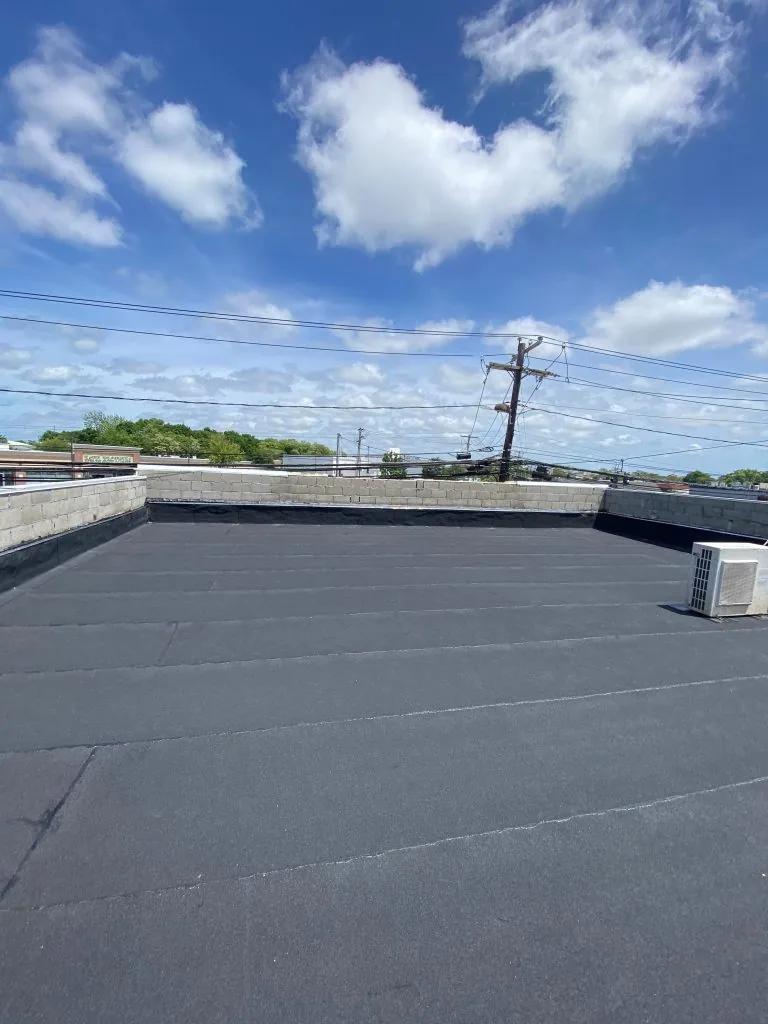
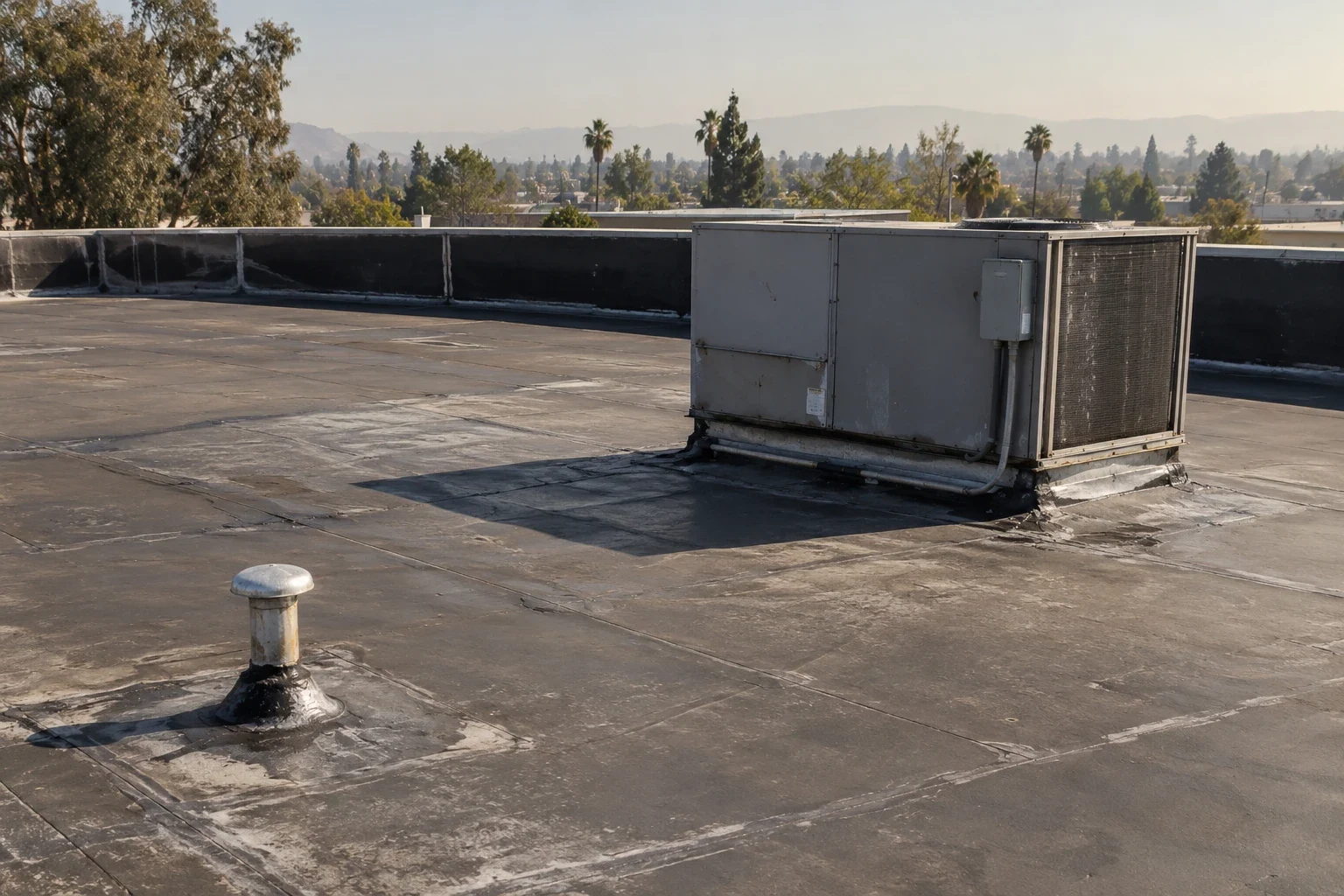
We review roof records, labels, prior repair notes, and any visible system markings. Then we inspect seams, curbs, pipe boots, edge metal, and areas with repeated patches. A visual match is not enough to identify the formulation. If the record is unclear, we explain what small test or product documentation would resolve before ordering a repair material. That step matters at a tie-in where a later PVC repair or coating may have covered part of the original sheet. A roof that has been added to over time may contain KEE in one zone and another assembly elsewhere. We photograph the transition and mark where the confirmed material changes. If an existing liquid flashing, coating, or patch meets the sheet, compatibility is checked before a repair is specified. A small test area may be needed when records and visible details do not settle the product identity. That step prevents a convenient color match from driving the material choice.
Weld condition also needs a field check. We inspect the joint edge for separation, contamination, wrinkles, and stress where a sheet turns at a corner. A probe test defines only the section reached. If a seam remains bonded, the problem may sit at a nearby curb, drain, or support. The repair map should show what was tested and what stays open. A roof inspection can trace the reported leak across those details before a larger KEE repair or replacement scope is prepared.
Match Chemical Exposure with the Roof System
KEE's alloyed PVC construction is selected for specific performance needs, but the application still depends on the exact manufacturer system. We ask what the roof is exposed to, where exhaust discharges, how equipment is serviced, and what cleaning products are used. The product data and project specification determine whether the proposed material fits. We do not assume that a generic PVC cleaner, adhesive, or patch will work on a KEE membrane. The closeout record lists the product system and the repair method used.
The Visalia Industrial Park includes food processing and manufacturing among its business activity. Those categories do not prove that a particular roof has grease, solvent, or chemical exposure. We inspect around vents, service routes, and equipment at the actual building and ask the manager about maintenance conditions. Where the surface has residue, the crew uses a preparation method allowed by the specified system. A PVC roof and a TPO system have their own approved repair processes, even when both are thermoplastic.
Check Transitions, Drainage, and Edge Securement
We follow the sheet to drains, parapets, curbs, skylights, and metal edges. At each transition, the flashing height, corner finish, termination, and nearby fasteners can affect how water moves. A blocked outlet may hold water against a seam, while an open corner can let it under the membrane. We separate the drainage finding from the KEE repair so the owner can see which condition each price addresses. If a transition meets an older assembly, the plan identifies the material on both sides before the tie-in is selected.
Edge securement deserves its own check on a low-slope roof. We inspect loose coping, open laps, exposed fasteners, and changes in the perimeter detail. A metal repair should finish at the membrane termination rather than leave a gap between scopes. A coping and edge-metal repair can be coordinated with the roof assembly, while a drain and scupper review can address the outlet route. The scope marks tested edges, tie-ins, and any area not reached during the visit. Location-tagged closeout photos let the next service crew compare those seams and flashings before rain returns. That record can price follow-up work without reopening a finished detail.
Schedule Field Work around Visalia Conditions
Visalia's climate averages record many hot days and rainfall concentrated in the cooler part of the year. We check the surface, wind, moisture, and product limits before welding, applying primer, or sealing a detail. Heat and dust can change preparation, while rain can interrupt an open repair. The crew sizes the work area to the time available and protects exposed material if an inspection reveals wet insulation or damaged decking. The record notes the condition that changed the schedule, along with the repair boundary.
The Mooney Boulevard retail district serves shoppers from across Tulare and neighboring Kings counties. A roof project in that district may need customer access protected, while an industrial-property schedule may depend on deliveries and equipment. We confirm the building's actual conditions. The Mooney Boulevard regional retail district and the Visalia Industrial Park are separate multi-property areas, not evidence about any specific roof. Roof access, staging, and interior protection are approved with the property manager before materials move.
Set a Repair Boundary the Owner Can Review
A KEE repair estimate depends on seam length, flashing access, preparation, insulation condition, deck work, and whether equipment must be moved. We state which materials and roof zones were confirmed, and where a concealed condition could change the quantity. If a small seam is isolated and the surrounding assembly remains sound, a local repair may fit. If the same failure appears across several zones or testing finds wet insulation, the owner can compare a broader scope against replacement. The choices follow the evidence rather than the membrane label alone.
At completion, the roof record includes the product identified, prepared surfaces, welds or flashings repaired, photos, and any recommended follow-up. If product identity remains uncertain, the record names the test or documentation still needed instead of using a guess as a specification. A dry-season check can revisit exposed seams before the rainy period. Send the Visalia roof plan, leak location, access rules, and repair history before the first walk. We will identify the KEE system, test the likely failure, and show the next decision in writing.
Commercial Roofing Questions
How do you tell KEE from other PVC roofing?
We use the roof records, product labels, and field details to confirm the system. If those do not identify the sheet, we state what documentation or test is needed before choosing materials.
Can any PVC patch repair a KEE roof?
No. The selected repair must meet the specific membrane manufacturer's requirements. We identify the product, prepare the surface, and follow the approved procedure for the tested area.
Does KEE prevent damage from rooftop chemicals?
Exposure resistance depends on the specific product and the actual substance, concentration, and contact time. We compare the roof condition with product documentation and do not infer protection from the KEE label alone.
What if the KEE seam is sound but water still appears inside?
We trace the report to nearby curbs, drains, walls, and penetrations. The tested seam is recorded separately from any detail that remains unconfirmed.
When should the estimate include replacement?
Repeated failures, wet insulation, poor attachment, or damaged decking can change the roof decision. We show those findings and compare repair with replacement using the same tested roof zones.