Commercial Heat and UV Roof Damage Repair in Visalia, CA
Roof Damage Repair | Visalia and Tulare County
Commercial Heat and UV Roof Damage Repair
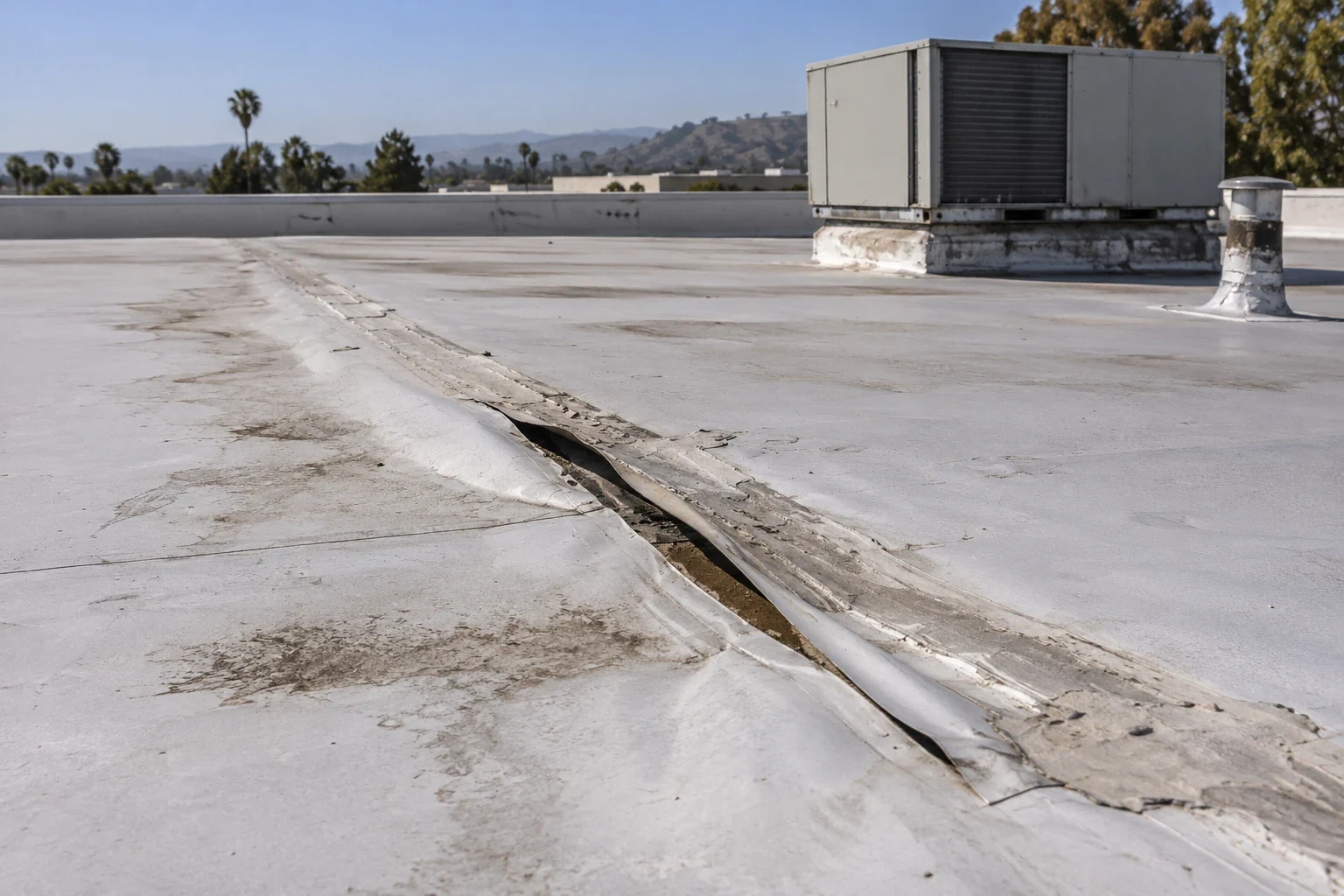
Brittle sealant around a curb can be an early sign that a roof detail needs attention, but it does not prove the membrane below has failed. Visalia recorded nearly 95 days at 90 degrees or warmer and about eleven days reaching 100. We inspect exposed joints, laps, coating, and membrane surface, then test any area where heat has changed flexibility or bond.
Visalia Industrial Park includes manufacturing, food processing, warehousing, and distribution activity. Mooney Boulevard is a central shopping route serving households from across Tulare and Kings counties. Those city facts point to varied building operations, not roof conditions at a particular property. We confirm the system and access requirements with the manager, then determine whether the finding is surface wear, a failed seam, moisture below the membrane, or a need for broader restoration.
Separate Surface Aging from a Leak
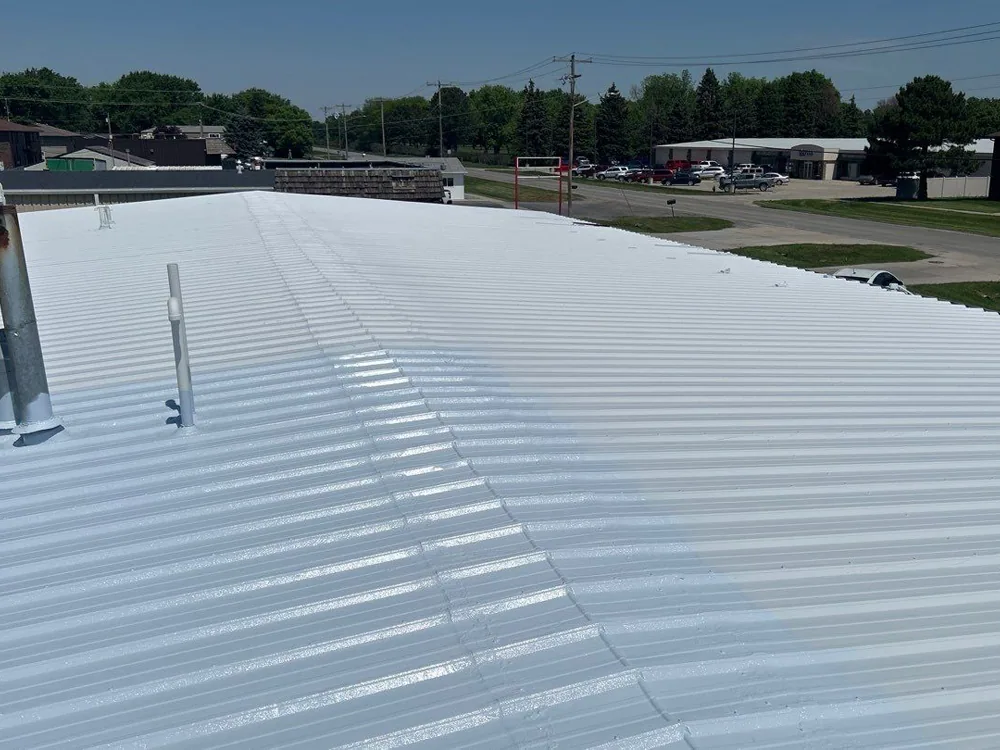
We inspect color change, chalking, cracking, blistering, and loss of flexibility across representative roof areas. A weathered surface may still be continuous, while a small split at an edge can admit water. We compare the exposed field with protected areas and examine seams, penetrations, and drainage details. If coatings are present, we identify their type where records or testing allow and check adhesion before recommending another layer.
On the Industrial Park's manufacturing and distribution properties, the owner may need roof work sequenced around operations, equipment, or inventory. We verify those needs on site rather than assume a particular tenant or schedule. Our field record identifies each tested area, and seam repair is scoped separately when a lap has opened. Surface wear alone does not justify sealing over every detail.
Check Sealant and Flashing at Exposed Transitions
Sun and heat act first on exposed materials around curbs, pipes, parapets, and edge metal. We check whether sealant has hardened, pulled away, or cracked through; whether a termination remains secure; and whether the membrane below can still accept a compatible repair. A failed bead may need removal and replacement, while a moving substrate needs a different correction. We do not use a coating to bridge an active joint without checking why it moved.
Mooney Boulevard supports a regional retail role, and roof access there may need to avoid customer activity or mechanical service windows. The site contact confirms the actual building schedule. Our penetration and skylight review checks those transitions, while flashing failure repair covers a confirmed open tie-in. If moisture lies below the surface, a moisture survey can help map its extent before we close the assembly.
Compare Repair with Coating or Replacement
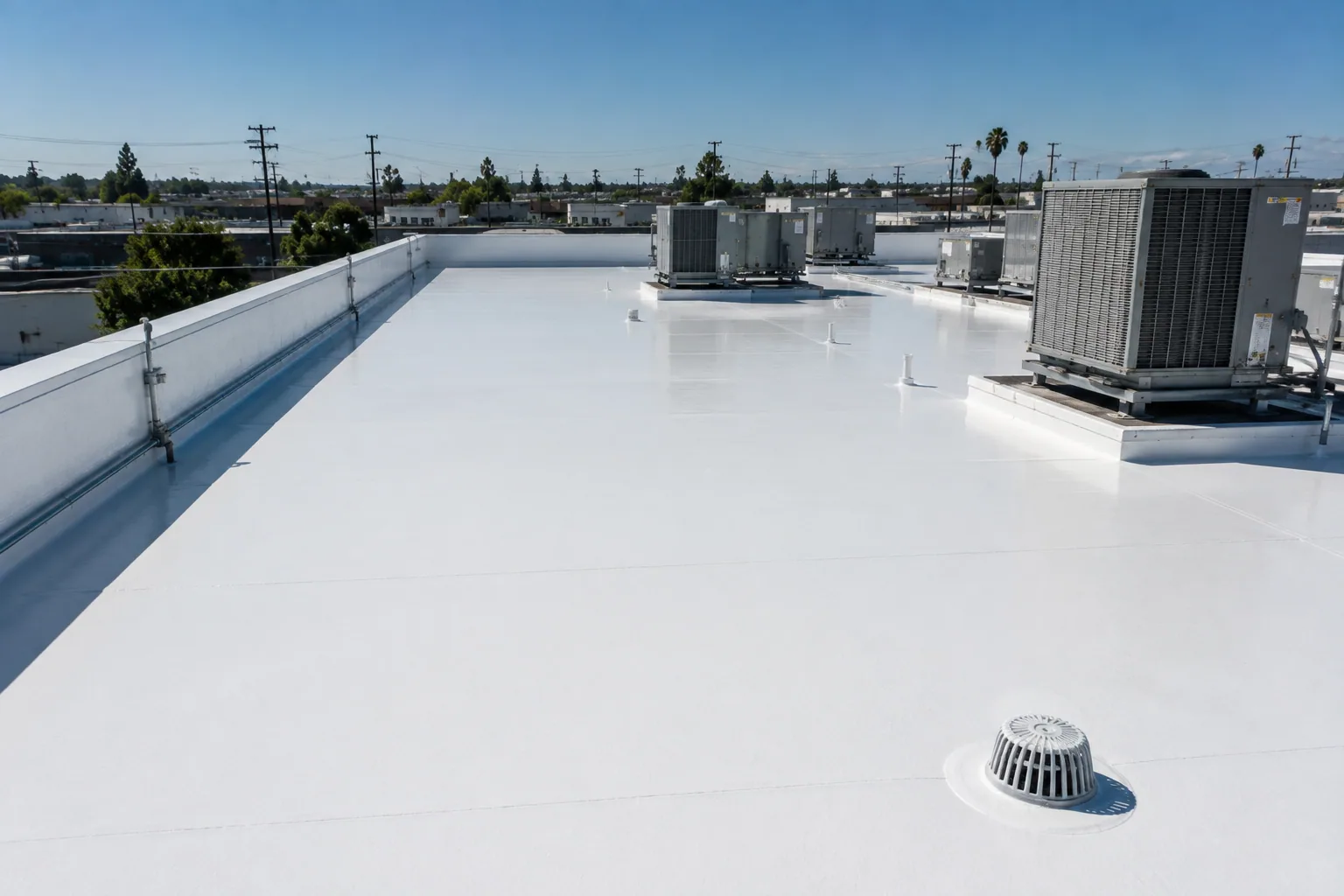
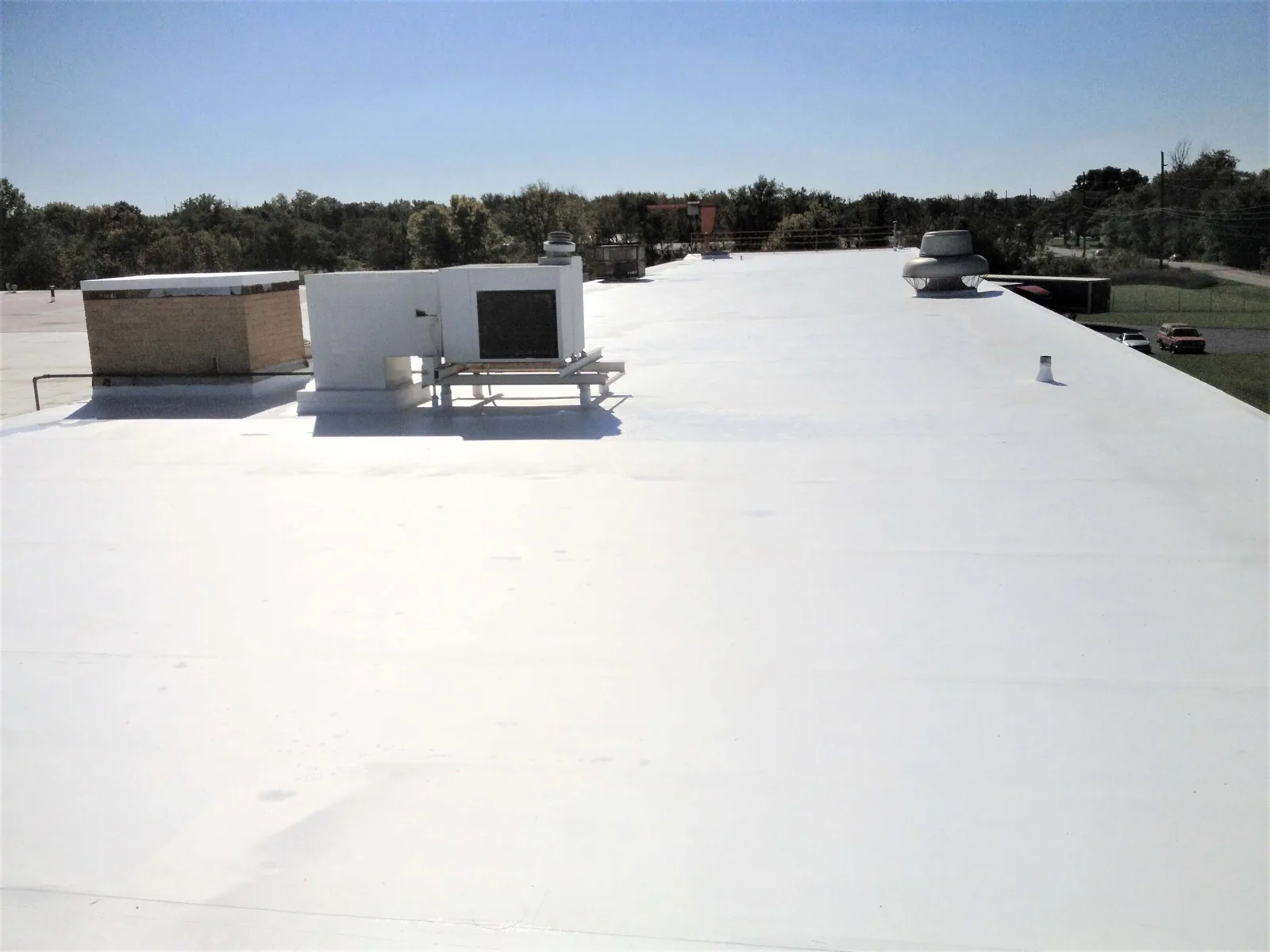
A local repair can restore one failed joint or split when the surrounding roof remains sound. A coating may suit a roof with adequate attachment, dry insulation, and a compatible surface; it cannot correct wet layers or broad movement. Replacement becomes a stronger option when deterioration is widespread, details repeatedly fail, or the system has reached a condition that local work cannot stabilize. We show the evidence behind each path and identify assumptions that need testing.
For a roof above an occupied retail or production area, we also price protection and phasing. The coating restoration scope identifies preparation, reinforcement, and areas excluded from treatment. A replacement evaluation compares tear-off, insulation, edge details, drainage, and close-in sequence. Where a small leak accompanies heat wear, a localized membrane repair can address the opening while the owner considers longer-term capital work.
Plan Work for Surface and Operating Conditions
Application requirements, roof temperature, shade, wind, and the forecast affect when some repairs can be completed. We check product instructions and the actual surface before setting a work window. If a material needs a dry substrate or a curing period, that condition is stated in the schedule. We also confirm where equipment, workers, and materials can move without crossing unprotected roof areas.
Visalia's hot stretch makes early inspection and maintenance useful, while rain is concentrated in the cooler months. We use that cycle to plan a dry-season walk, but the immediate scope follows what the roof shows. A maintenance visit can record changing sealant and coating condition. For an occupied facility, a phased work plan sets daily close-in, tenant protection, and any short shutdown before the crew opens a section.
Track the Same Areas from Season to Season
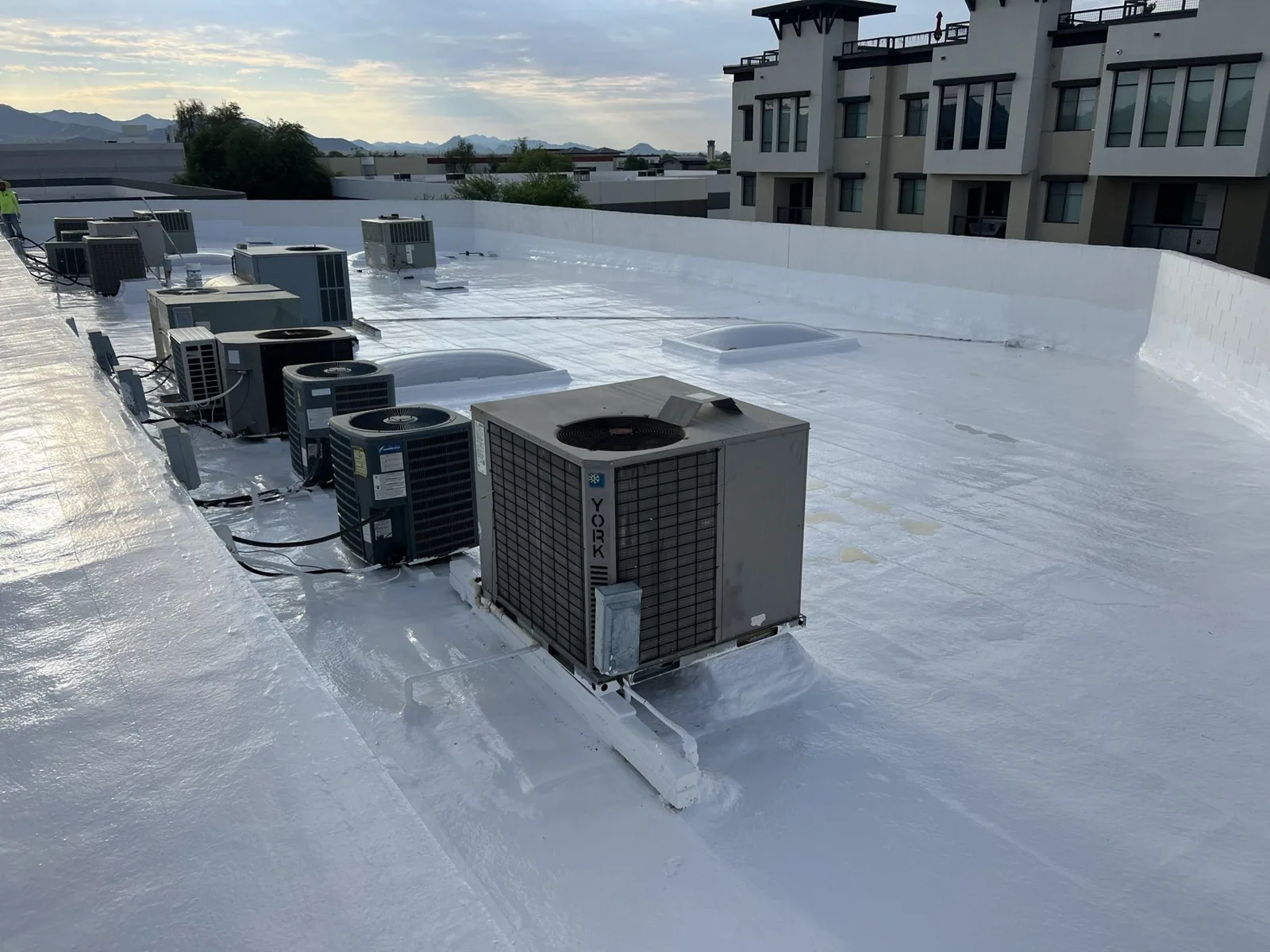
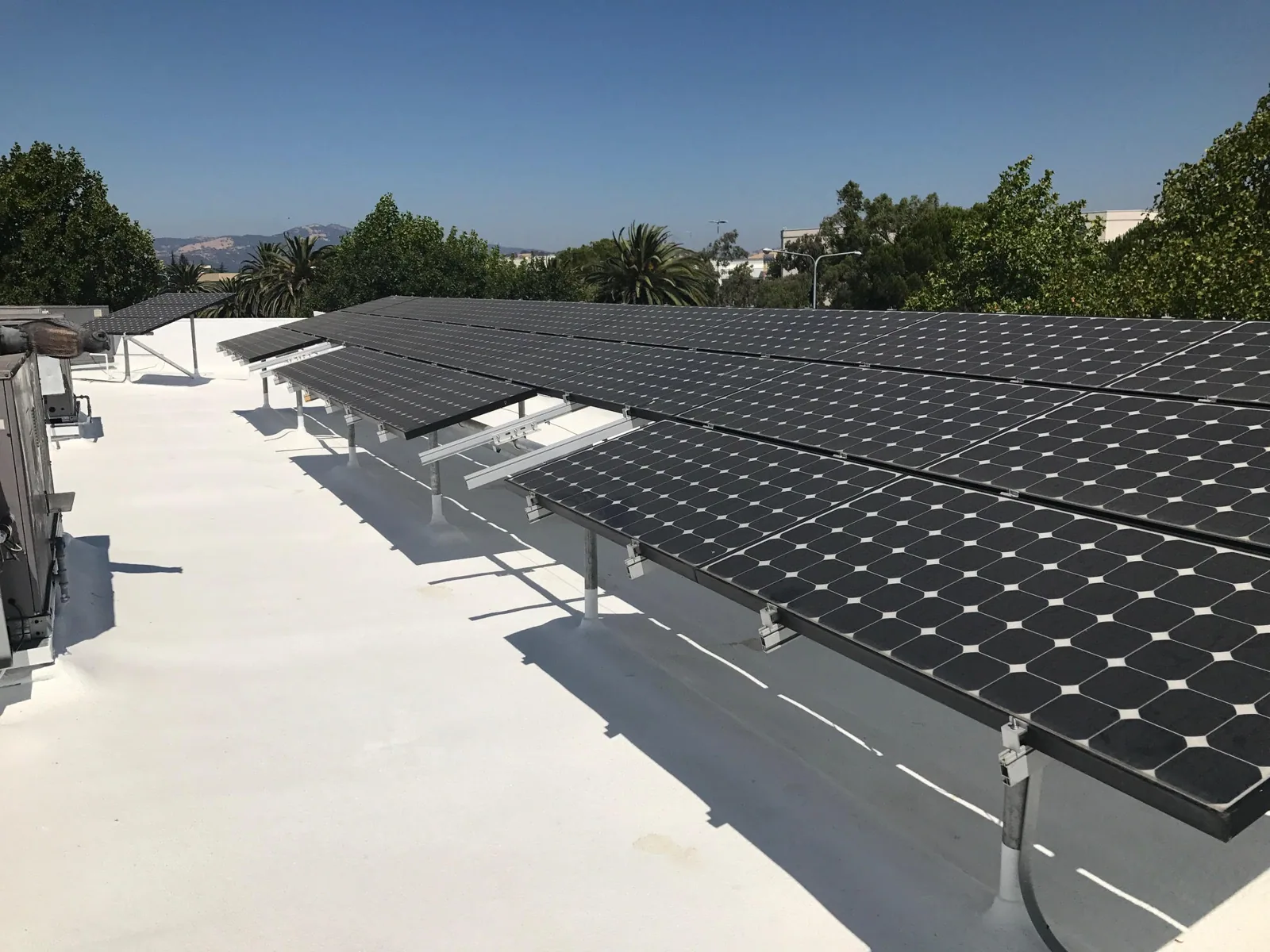
We label photographs by roof section and detail so the next visit can compare the same locations. The report records surface condition, adhesion checks, moisture readings, repair materials, and any area that could not be reached. If the membrane remains intact but the sealant is changing, we list it as a maintenance item rather than a leak repair. If a test opening reveals wet insulation, its extent and replacement boundary belong in a separate line of work.
Send the Visalia property location, roof plan, age or product records if available, recent leak dates, and service access rules. We will check the field and exposed details, then explain what should be repaired now and what can be monitored. The Industrial Park service area and Mooney Boulevard corridor are broad geographic references, not proof of conditions at an individual roof. Each recommendation comes from the tested assembly and a clearly marked boundary.
Owners comparing a coating with replacement should keep the same roof-area labels in each proposal. We can note which sections were included, what preparation they require, and whether equipment or drainage work sits outside the roofing scope. That makes future inspection records easier to compare without turning a seasonal observation into an unsupported claim about remaining service life.
When a roof has several coating layers, we confirm their condition at the test area instead of assuming a new product will bond to the old surface. A small adhesion check can establish whether preparation and a compatible system are feasible. We also note any areas where existing coating is loose, cracked, or bridging a moving joint, because those conditions change the labor and repair boundary.
If a manager tracks multiple buildings, use the same labels for roof sections, equipment, and details in each report. That makes a future dry-season walk comparable and helps the owner direct attention to the areas that changed. Photos and notes should distinguish a maintenance observation from a confirmed opening that needs repair.
Before we close the file, we identify any roof zone that could not be reached and state what access would allow a complete check.
Commercial Roofing Questions
Does brittle sealant mean the entire roof has failed?
No. We inspect the joint, membrane, substrate, and nearby details. The repair may be limited to one transition, or testing may show a broader condition.
Can a coating fix heat-damaged membrane?
Only when the existing roof is suitable for coating and the surface can be prepared correctly. Wet insulation, weak attachment, or active movement must be resolved first.
When is the best time for a roof condition check?
A dry-season visit can make repairs easier to schedule before the cooler rainy period. We still inspect promptly when a leak or open detail appears.
How do you decide between repair and replacement?
We compare the tested area, moisture, attachment, number of failing details, and remaining sound sections. The report shows what supports each option.
Will heat affect the repair material?
Some products have surface and application limits. We check the manufacturer's instructions and conditions on the roof before setting the work window.
What should I bring to a heat-damage inspection?
Share roof plans, product records, prior coating or repair notes, leak dates, and access instructions. We will compare those records with the current surface and detail conditions.