
Roof Capital Planning in Visalia, CA
Roofing Capabilities | Visalia and Tulare County
Roof Capital Planning
A replacement line in next year’s budget can move quickly once water reaches inventory or office space. Before that date is set, we separate active defects from aging materials, record the areas tested, and compare repair, recovery, and replacement on the same roof map. Visalia’s Industrial Park includes large production and distribution settings, while Downtown Visalia has mixed office, retail, government, and healthcare uses. The work window and interior risk differ. A capital plan should show both the condition and the operating constraints behind each recommendation.

Build the Budget from Field Evidence
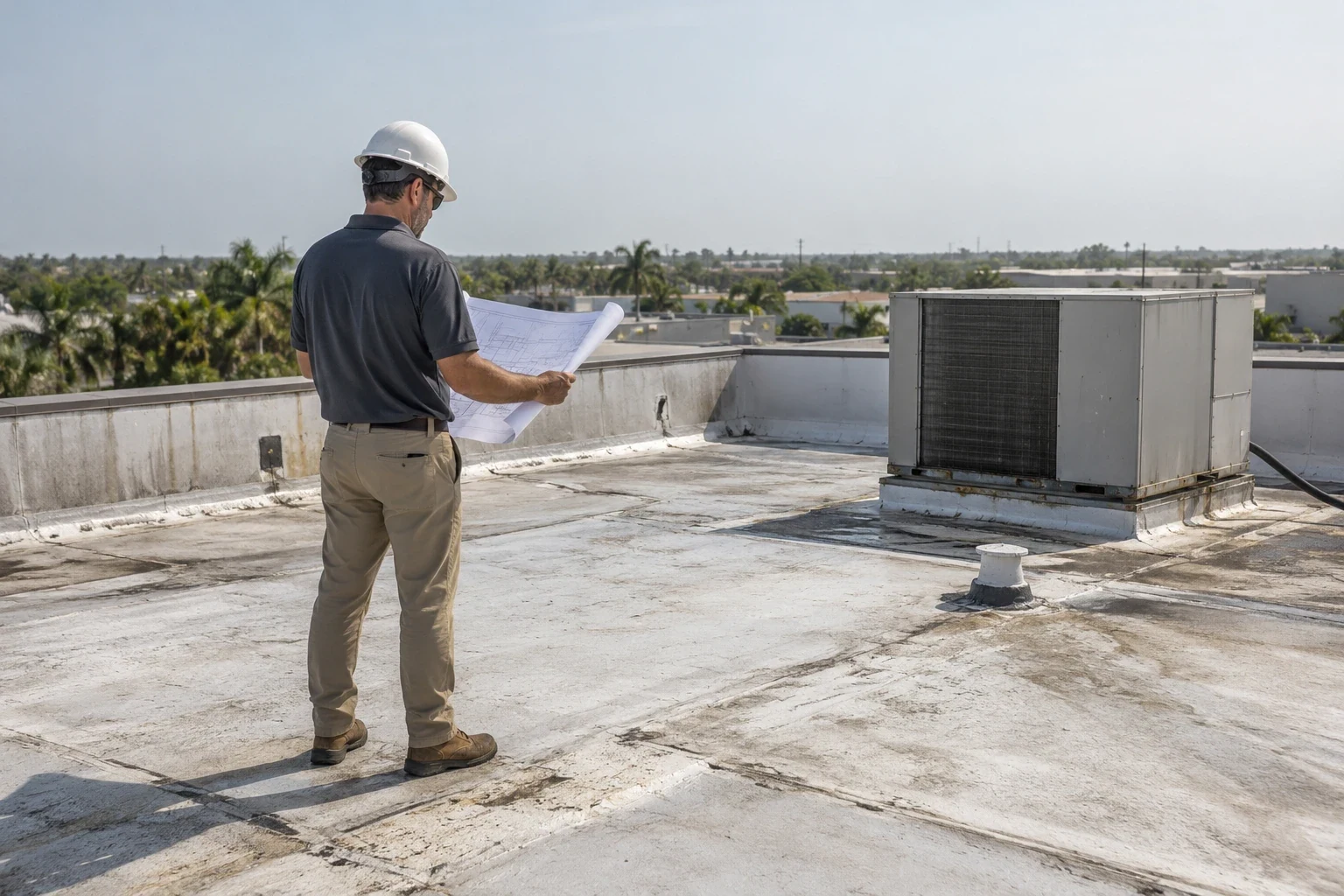
Begin with roof sections, not one portfolio-wide age estimate. We identify the system, inspect seams and flashings, check drainage, and map moisture where testing is approved. A budget item should name the condition it addresses, the area included, and any concealed condition that could change scope. A written condition report links the recommendation to photos and observations. For an uncertain assembly, a moisture survey may help locate areas for confirmation before funds are allocated.
Cost drivers include tear-off layers, wet insulation, deck repairs, edge metal, drain correction, equipment coordination, lift access, and occupied-building protection. We state which items are confirmed and which are allowances or unresolved questions. A repair estimate should not quietly become a replacement budget, and a recovery option should include checks for moisture, attachment, drainage height, and code compliance. The owner can then compare scope alternatives without confusing a low initial number with a complete solution.
Rank Work by Consequence and Readiness
Active water above electrical equipment, stored goods, or a tenant operation can outrank a dry roof with widespread cosmetic wear. We identify what is exposed, whether temporary protection is needed, and how soon a permanent repair can be made. The Visalia Industrial Park’s manufacturing and distribution uses make clear access and delivery planning material to some work windows. A rapid emergency response can limit current exposure, while a separate capital item tracks the durable repair or larger project that follows.
Readiness matters too. One project may have a defined repair boundary, approved access, and a dry installation window. Another may need moisture testing, a deck review, or tenant coordination before a reliable scope exists. We rank those tasks separately so an owner can fund the information needed for a later decision. A roof asset record can carry each condition, approval, and next check forward from one budget cycle to the next.
Compare Repair, Recovery, and Replacement
A localized repair fits a bounded failure with sound surrounding material. Recovery may be considered when the existing assembly is dry, secure, and compatible with added layers, with acceptable drain and edge heights. Replacement can address widespread failure or wet materials, but tear-off brings more debris, noise, and interruption. We compare the paths against the same roof plan and list what could change scope after opening. The recover evaluation and a replacement scope should explain assumptions rather than present unlike work as interchangeable.
Timing changes with procurement, weather, permits, access, equipment shutdowns, and occupied space protection. The owner may stage a larger project by roof section to keep a business operating, though separate mobilizations can affect cost and schedule. Downtown Visalia includes retail and professional uses where entrances and public-facing activity shape staging. We identify those constraints at the property rather than assume them from the district. A budget line is stronger when it includes the sequence and the decisions needed to release each phase.
Connect Timing to the Local Weather Cycle
Visalia’s Visalia has a long hot season, with rainfall concentrated from late fall through early spring. That pattern helps frame when exposed sealants, laps, and drains deserve review, but the roof’s actual condition still governs scope. We can schedule a dry-season survey, use the findings to define repairs, and leave enough time for approvals before the wetter period. A maintenance visit checks drainage and exposed details; it does not replace a project-specific moisture or attachment evaluation.
The Mooney Boulevard Regional Retail Corridor carries retail activity with a draw that reaches nearby counties. On a retail property, customer access and delivery timing can compete with the roofing window. The plan should show whether work can occur in sections, where materials can stage, and what protection is needed below. We separate weather-dependent tasks from work that can proceed in a controlled zone, so the owner sees which timing assumptions are fixed and which require a field check.
Separate Known Work from Planning Reserves
A capital schedule should distinguish a priced repair from a reserve for a condition not yet tested. We list known roof areas, expected work, inspection limits, and the next decision date. If an opening reveals wet insulation beyond the mapped boundary, the owner can decide how that added area is handled. The reserve should also state whether it covers investigation, temporary protection, or completed repair. A decision threshold can identify when another test is worth authorizing, such as readings outside the initial sample or a deck opening near a recurring leak. We keep those triggers tied to the roof map so ownership sees what would move the project into a larger scope and which approval is needed next. A roof survey can inform acquisitions or refinancing when the budget depends on the current assembly and remaining uncertainty.
For Downtown office assets or industrial buildings, the reserve should reflect actual access, occupancy, and roof layers. We do not use a district’s business mix to infer roof age or material. Instead, we record those facts at the building and show how alternate assumptions affect the sequence. A investment review can then compare near-term water control with a planned replacement without treating a forecast as a fixed service-life date.
Leave an Approval Path the Team Can Follow
Decision-makers need a concise recommendation, the evidence behind it, and the approval required next. We can present a repair option, a larger evaluation, and a replacement path with their boundaries, timing drivers, and known exclusions. The property management record can keep tenant notices, work orders, invoices, and roof photos tied to the same asset. That is especially useful when budget approval and on-site access belong to different people.
Send the building list, plans, prior reports, leak history, budget cycle, and any deadline tied to a transaction or operating season. We will identify which roofs need a first walk, which can use current records, and what testing is needed before a firm scope. A multi-site program can group the review while preserving property-level decisions. For a Visalia facility, weather timing and access inform the schedule; the roof inspection sets the work.
Commercial Roofing Questions
Can a repair budget roll into a replacement allowance?
It can inform the larger plan, but the two scopes should stay separate. We state the repair boundary, remaining conditions, and what inspection or opening is needed before replacement costs become firm.
When should a Visalia roof be checked before winter rain?
A dry-season review gives time to inspect exposed details, clean drains, and scope needed repairs before the wetter months. We use the actual findings to set the work window.
Does a recover always cost less than tear-off?
Not necessarily. Existing moisture, attachment, drain height, deck condition, code requirements, and added layers affect whether recovery is suitable and what it includes.
How can we rank several roofs for funding?
We compare active exposure, repair extent, test results, operating risk, access readiness, and consequences of delay. The report should show those factors by building instead of relying on age alone.
What information makes a capital plan more useful?
Provide roof plans, prior inspections, invoices, leak records, operating restrictions, and the budget horizon. We can label confirmed scope separately from items that need testing or an allowance.