
Sika Sarnafil Roofing in Visalia, CA
Roofing Manufacturers | Visalia and Tulare County
Sika Sarnafil Roofing
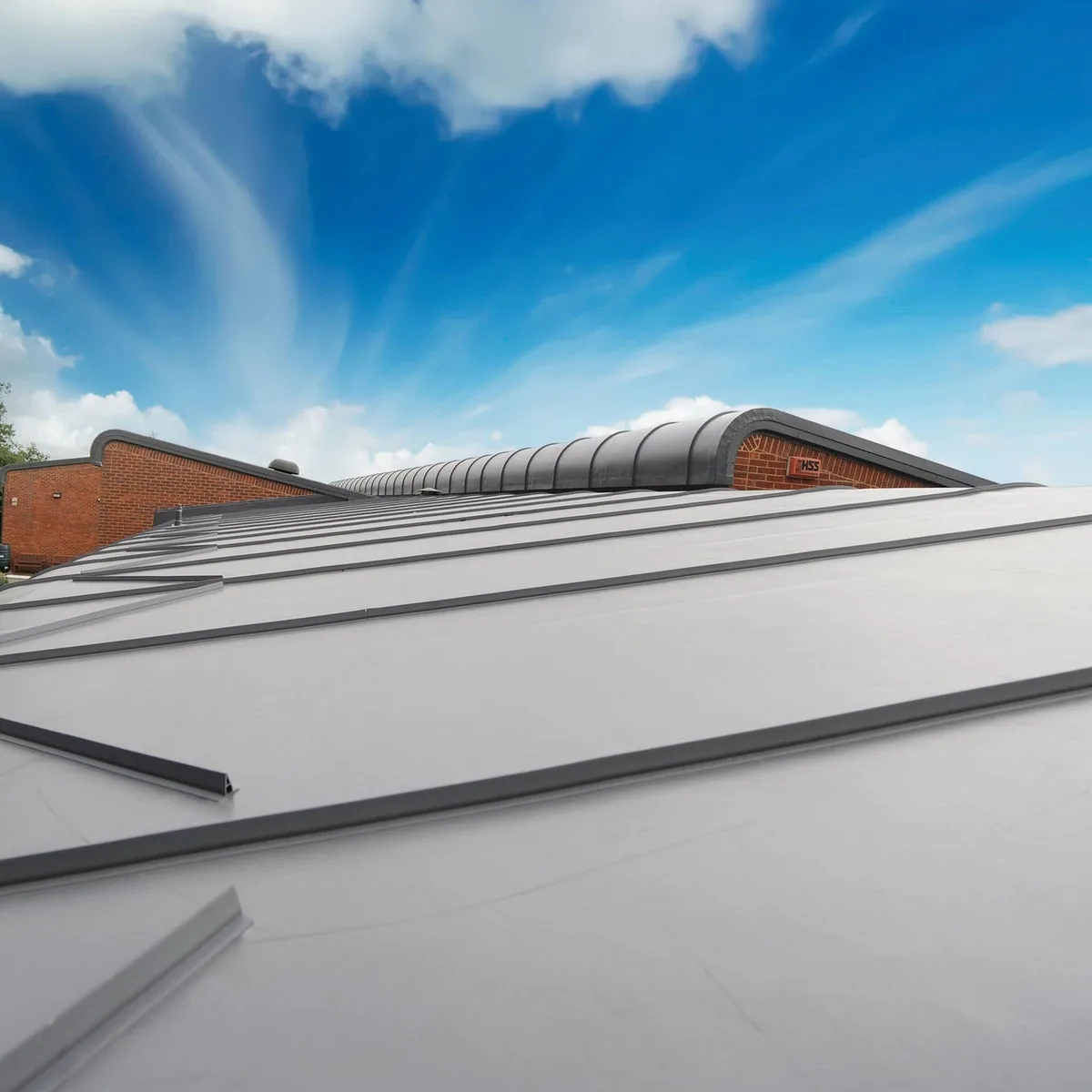
A PVC lap can look intact at eye level while a short section has lifted beside a curb. We inspect the weld, flashing, and nearby water path before setting a repair limit. Sika Sarnafil offers reinforced PVC membrane families that include adhered and mechanically attached options. The product series and reinforcement affect how a detail is repaired, so we confirm the installed sheet from records and field evidence. Visalia’s hot, dry stretch puts exposed welds and sealants through repeated heat, while most normal precipitation falls in the cooler season. Downtown Visalia includes offices, retail, healthcare, government, and nonprofit uses. That mix can change access and tenant coordination, but the roof condition still has to be tested at the property.
Name the Sarnafil Series before Repairing It
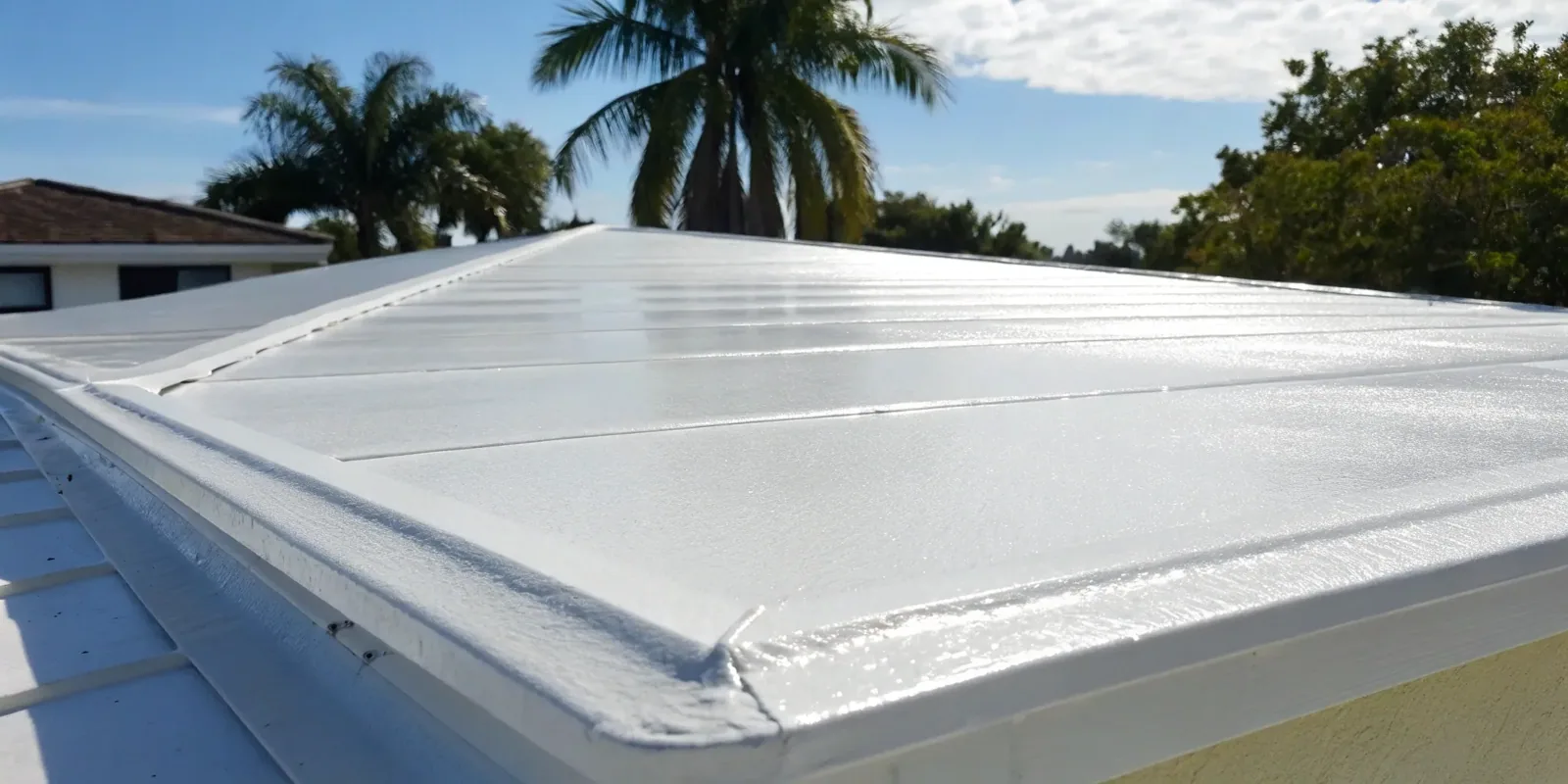
Sika describes Sarnafil G 410 as a fiberglass-reinforced PVC membrane used in adhered applications and S 327 as a polyester-reinforced product used in mechanically attached systems. A roof can also contain another PVC line or older section. We compare product records with exposed edges, seam layout, reinforcement clues, and attachment details. A manufacturer name in a file is useful, but the field inspection should confirm that the document matches this building.
If a section has been covered by a recover, we check accessible terminations and review the layer history before proposing an opening. We do not name a system from color alone. A roof section with SOPREMA SENTINEL PVC uses that product family's own seam and flashing instructions, not the details for a Sarnafil sheet. The SOPREMA PVC system review keeps that distinction clear when several materials meet. A written roof map can mark each zone as confirmed, probable, or unverified, which keeps a repair from crossing into an unknown section. The PVC membrane review distinguishes common assembly questions. Where a property also has UltraPly TPO, keep its separate Holcim Elevate system notes attached to that roof section rather than mixing materials.
Inspect the Hot-Air Weld and Its Preparation
We probe accessible seams, corners, and terminations for an open edge or unbonded strip. The test area is recorded by roof zone and length. Hot-air welding fuses compatible thermoplastic sheets, but surface contamination, moisture, wrong temperature, and poor access can compromise a repair. Before work spreads across the roof, the crew prepares a sample weld and checks it under the site conditions. The equipment setting follows the product instructions, not a general estimate based on air temperature.
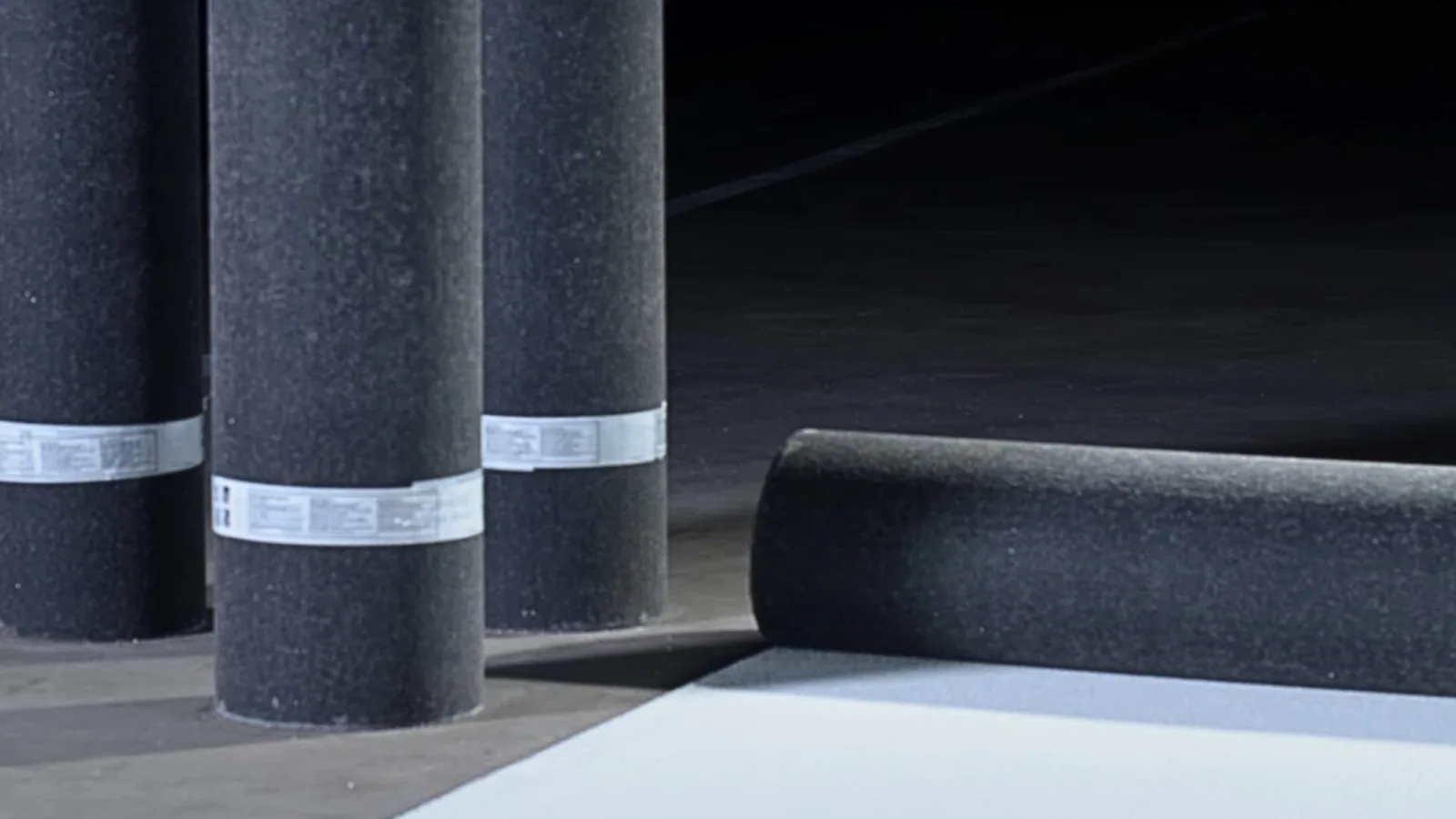
A lap that fails at one point may be repaired locally when the surrounding material is sound. A seam that opens along multiple runs, or a sheet under tension at a parapet, may require a broader look. We trace the path to nearby drains and flashing rather than cut out a rectangle around a stain. A weld-separation review records the tests and repair boundary. When the work calls for new membrane, a commercial repair scope should identify Sika-specific sheet and compatible accessories before procurement.
Follow the PVC through Every Transition
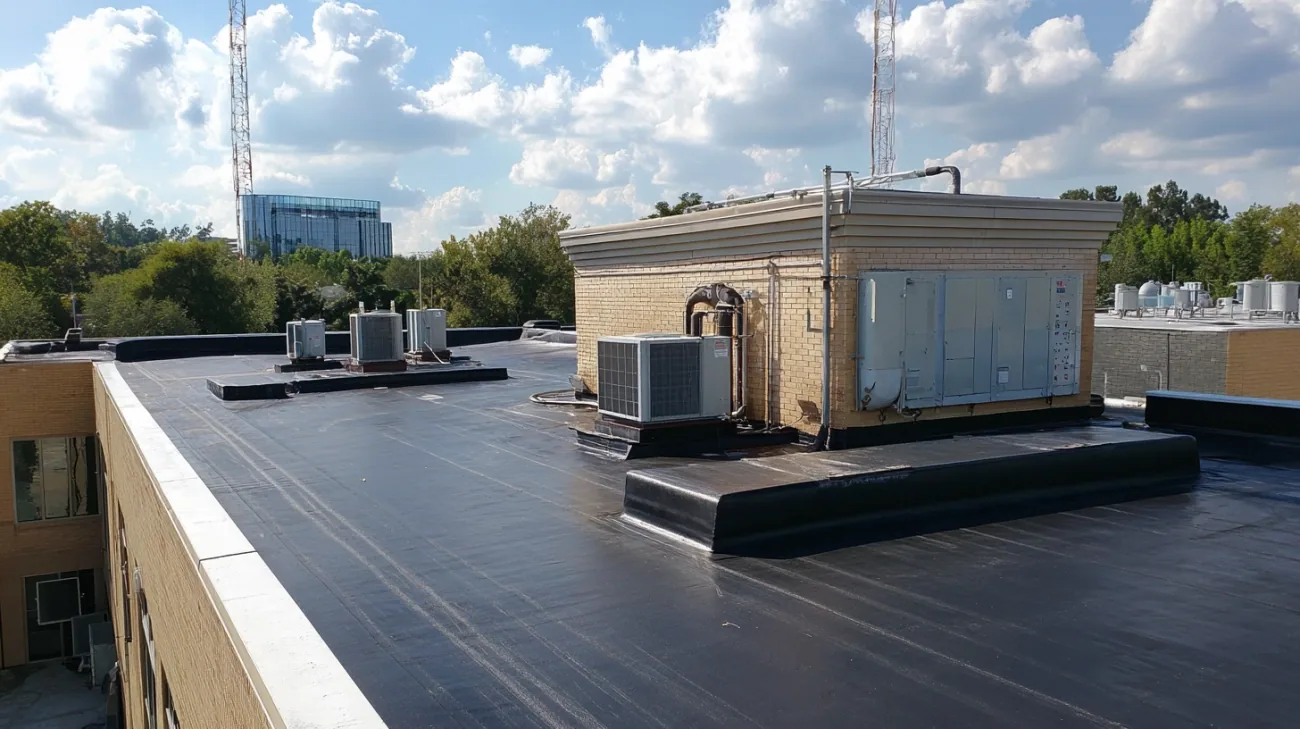
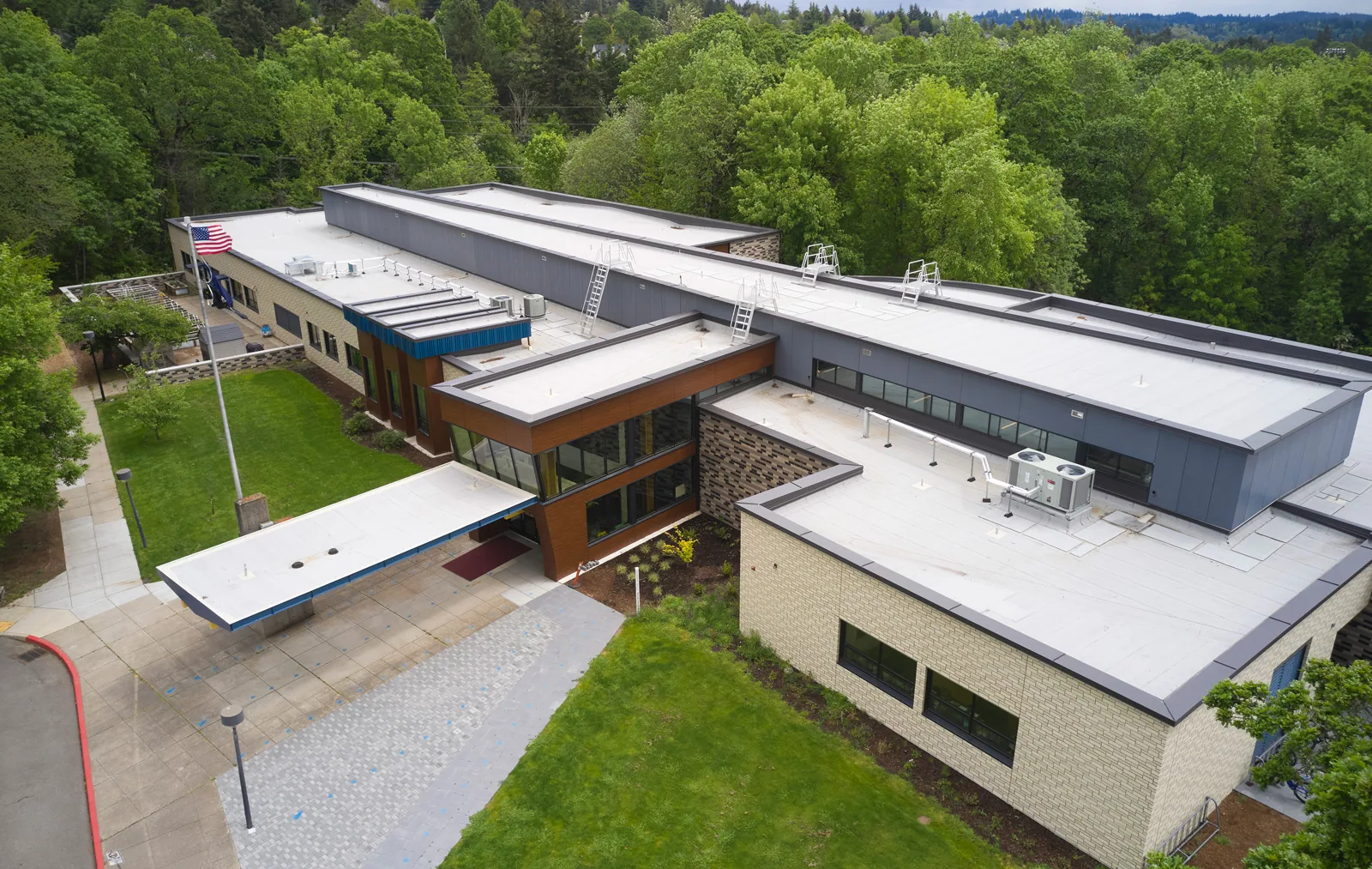
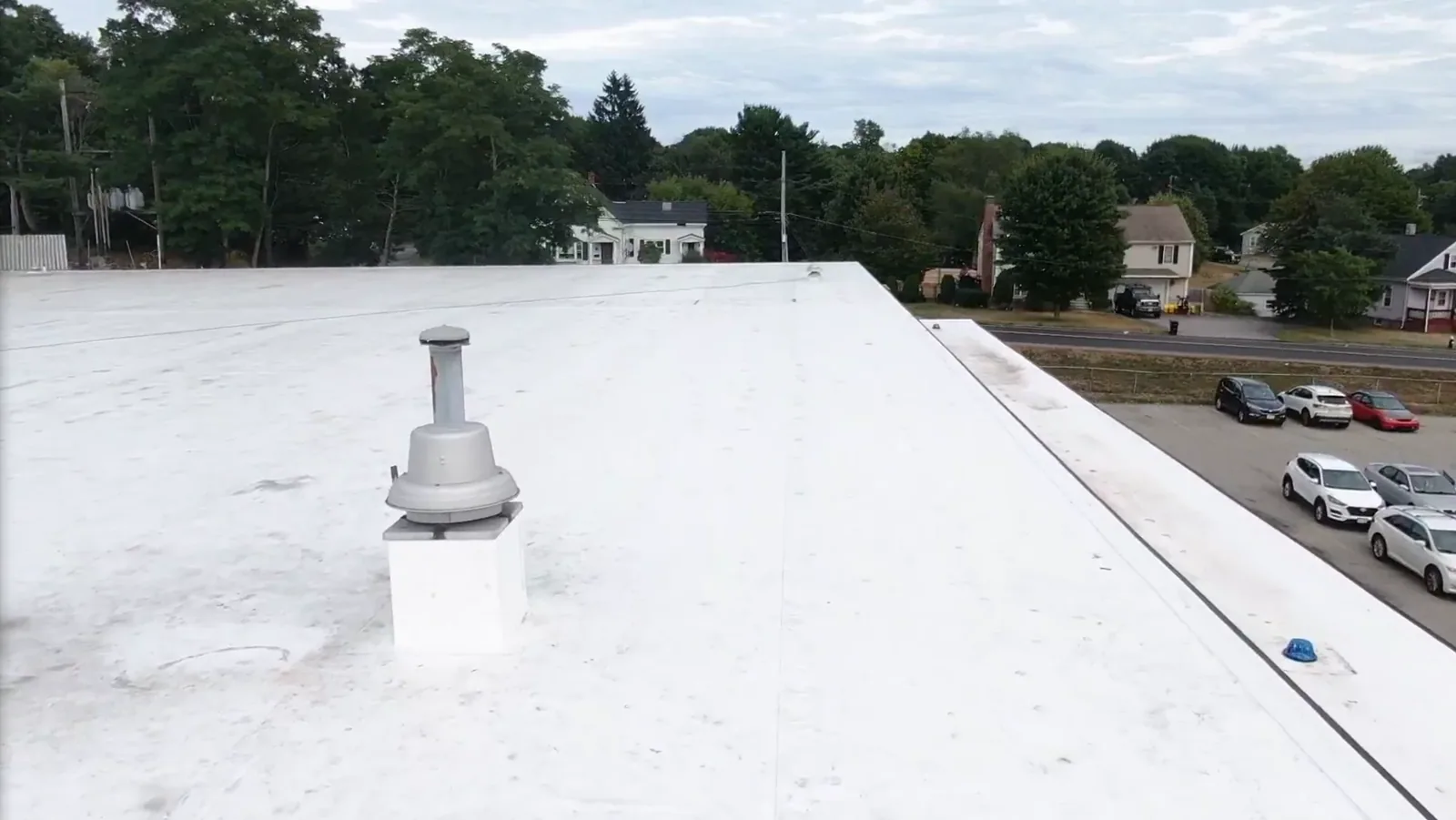
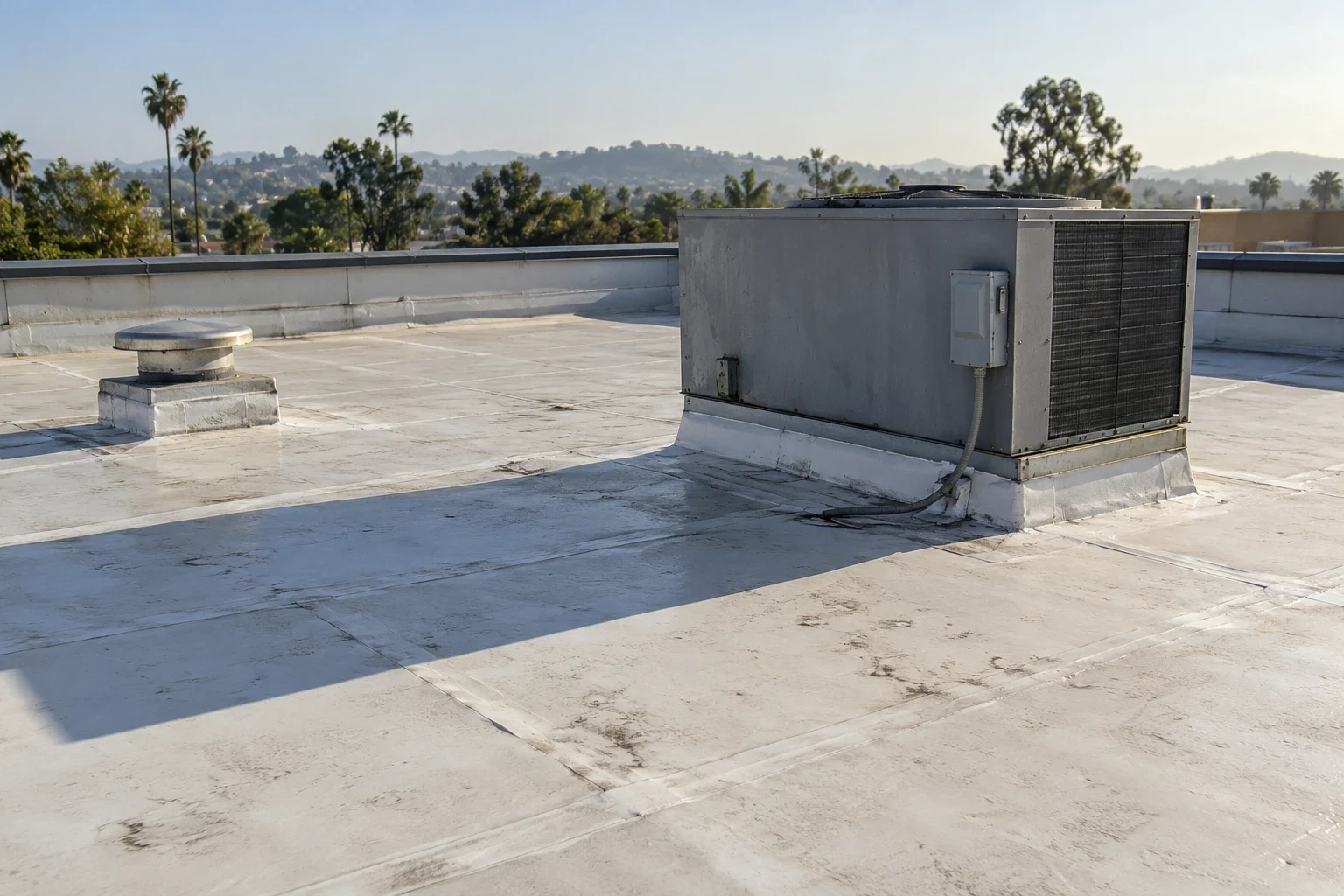
At rooftop equipment, inspect the curb corners, flashing height, termination, and movement between the unit and roof. Pipe penetrations, skylights, walls, drains, and roof edges each need a detail that matches the membrane and assembly. A preformed boot may fit a round pipe while a square curb needs a different approach. Existing sealant may be part of a termination, but it cannot replace loose flashing or a split sheet.
Drain checks include the bowl, sump, strainer, overflow, and water line around the outlet. A clogged strainer is a maintenance item; standing water after the outlet is clear may indicate an unrelated slope issue. We document these conditions separately so the repair estimate does not promise to fix drainage that was not tested. For an occupied downtown property, we can set roof access and work hours with the manager, and keep public entries clear. Pair the drain correction with perimeter termination work when both are within scope. The Downtown Visalia service area covers a district, not a single property.
Read the Roof against Visalia’s Weather Pattern
The Visalia averages 94.7 days each year with highs of 90°F or more and receives 10.32 inches of rain annually. Most monthly rainfall falls between late fall and early spring. The change from prolonged heat to cooler wet months gives a property manager a reason to inspect open seams and drain bowls before rain returns. It does not prove that a PVC surface, seam, or flashing has failed. A summer review should photograph discoloration, check weld edges and flashings where thermal movement concentrates stress, and compare each observation with prior inspection records before specifying repair materials.
Downtown Visalia is a mixed-use employment area with retail, healthcare, office, and public-sector activity. The Visalia Industrial Park supports manufacturing, food processing, warehousing, and distribution. Those places involve different tenant routes and equipment schedules, which can shape roof access and material handling. We verify the exact building plan before setting a lift, a pedestrian detour, or an occupied-space protection plan. If a leak appears during rain, record the time and room, then request a roof inspection that follows the water path. A marked condition report can show where moisture testing is still needed.
Choose the Next Test before Expanding Work
We can recommend a patch when the confirmed membrane remains sound around the defect and moisture does not extend beyond the repair area. Wet insulation, brittle flashing, repeated seam failures, or deck damage may change the option. A limited moisture survey can map a wider area; an authorized core cut can show conditions through the assembly. We explain what each test answers and how the result would affect repair or replacement pricing.
Work timing depends on system identification, roof access, weather, insulation removal, curb coordination, and whether the building remains open. We note the end-of-shift tie-off and any material or equipment that must be protected overnight. Closeout photos should show the repaired detail, the tested weld, and any excluded adjacent area. The property manager can use that record for scheduled maintenance or a later roof evaluation. Send the Visalia location, leak history, plans, access restrictions, and previous roof records so we can set the first walk and identify any needed test openings. We also record the crew’s tie-off point and any area that must stay closed until the membrane is secure. If several buildings share one manager, each roof receives a separate mark-up and condition list. That keeps a tested PVC area from being confused with an untested section on another structure.
Commercial Roofing Questions
How can you distinguish Sika Sarnafil from another PVC sheet?
We compare roof records with exposed edges, product labels, reinforcement clues, and attachment. If the material remains uncertain, the repair plan identifies the needed test before specifying a patch.
Can a Sarnafil seam be repaired in place?
Often a localized weld can be made when the sheet is sound and preparation is possible. We probe the area and define the repair limit before selecting material.
Does the G 410 series use the same repair as S 327?
The products have different reinforcement and attachment applications. We identify the installed series and follow its compatible material and detail requirements.
Will a leak always show directly below the PVC opening?
No. Water can move through insulation or along the deck. We compare the reported interior area with roof details and test the likely entry point.
What could delay a PVC repair in Visalia?
Surface conditions, required testing, equipment access, rain, and tenant schedules affect the work window. We confirm them before opening a larger roof area.