
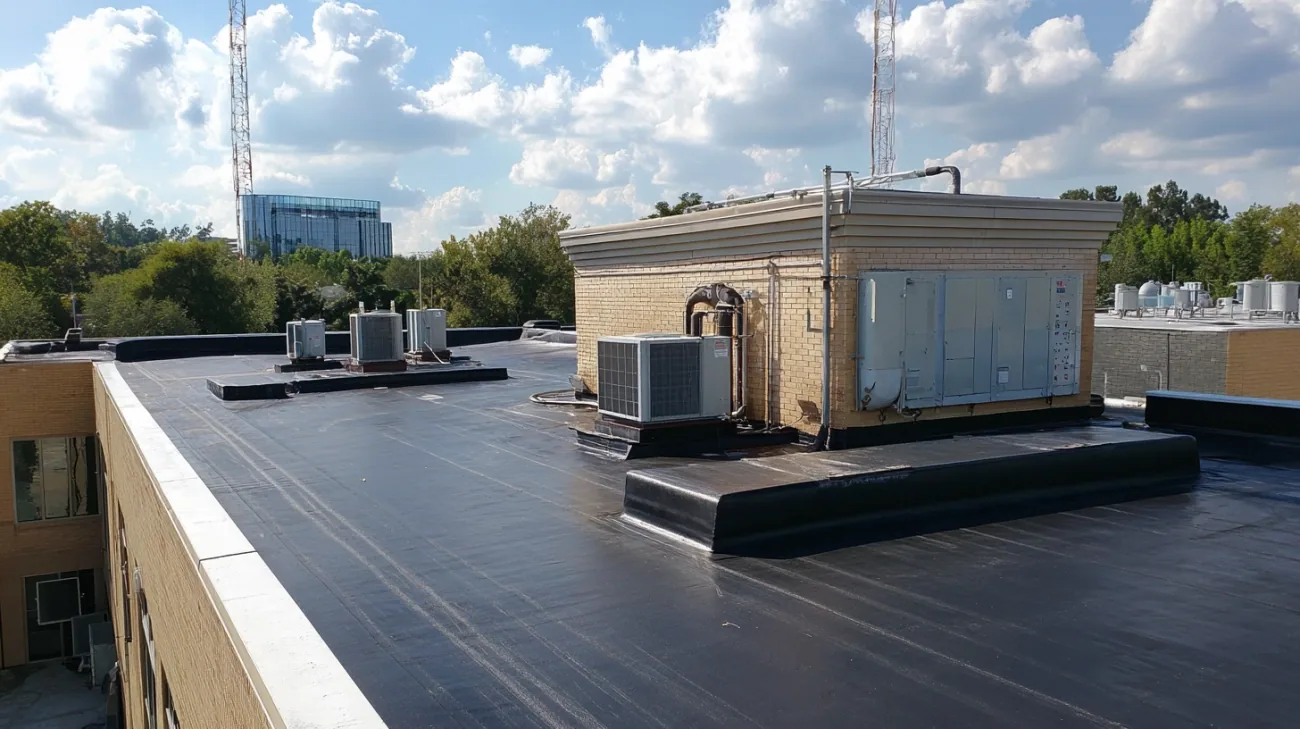
Holcim Elevate Roofing in Visalia, CA
Roofing Manufacturers | Visalia and Tulare County
Holcim Elevate Roofing
A loose corner at a rooftop curb can expose more than the membrane edge. The flashing may have lifted, the seam may be open, or service work may have disturbed the termination. Holcim Elevate’s UltraPly TPO is a reinforced thermoplastic membrane with heat-welded seams and several attachment configurations. We identify the material on the roof before choosing a repair. Long summer exposure in the valley makes a post-heat visual check useful for this roof, while Visalia's climate averages local station documents nearly 95 days annually at 90°F maximum or higher. Visalia Industrial Park supports manufacturing, food processing, warehousing, and distribution. Operations and roof condition both matter, so our first visit follows the reported water path and confirms access before a scope is written.
Confirm Which UltraPly Assembly Is Installed
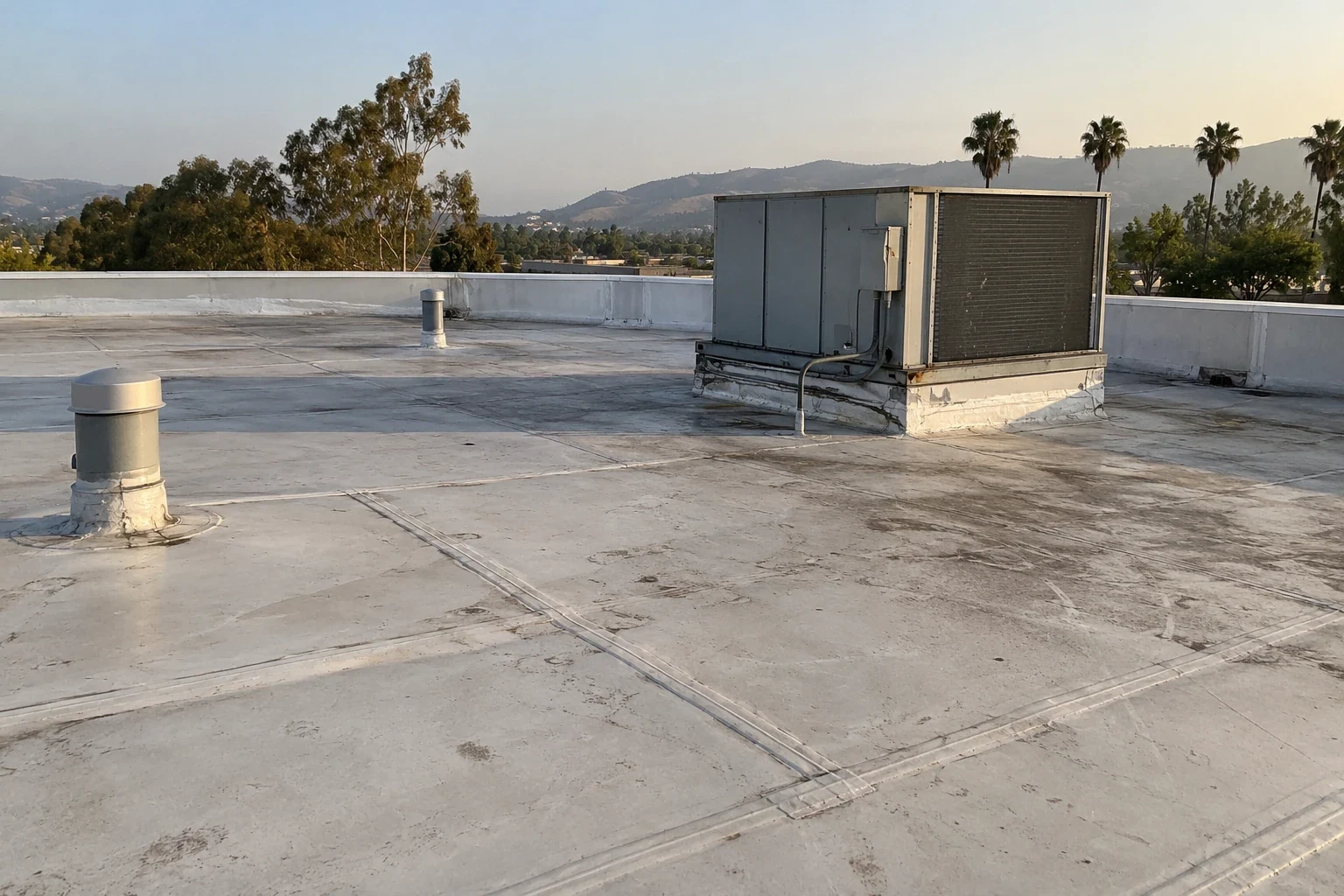
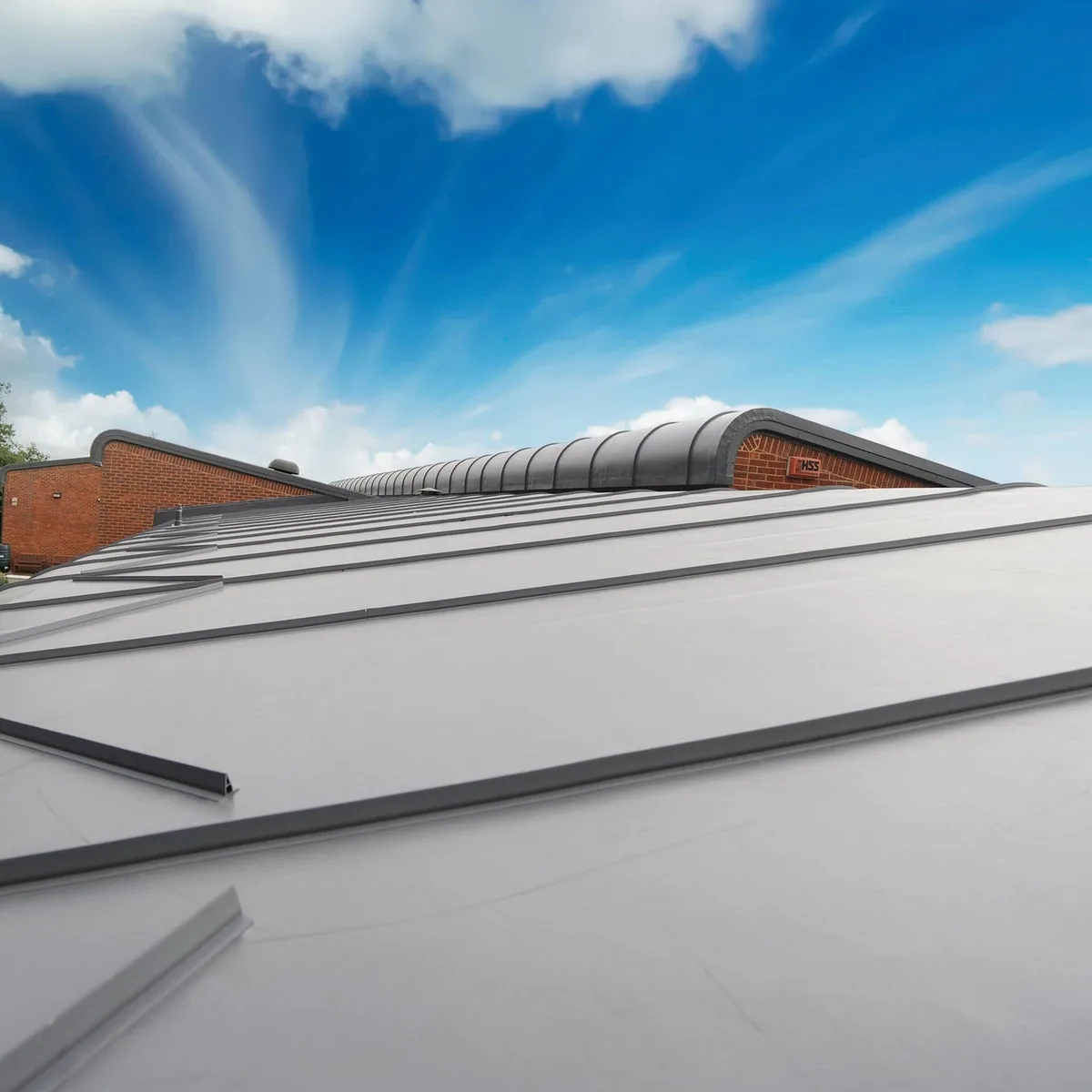
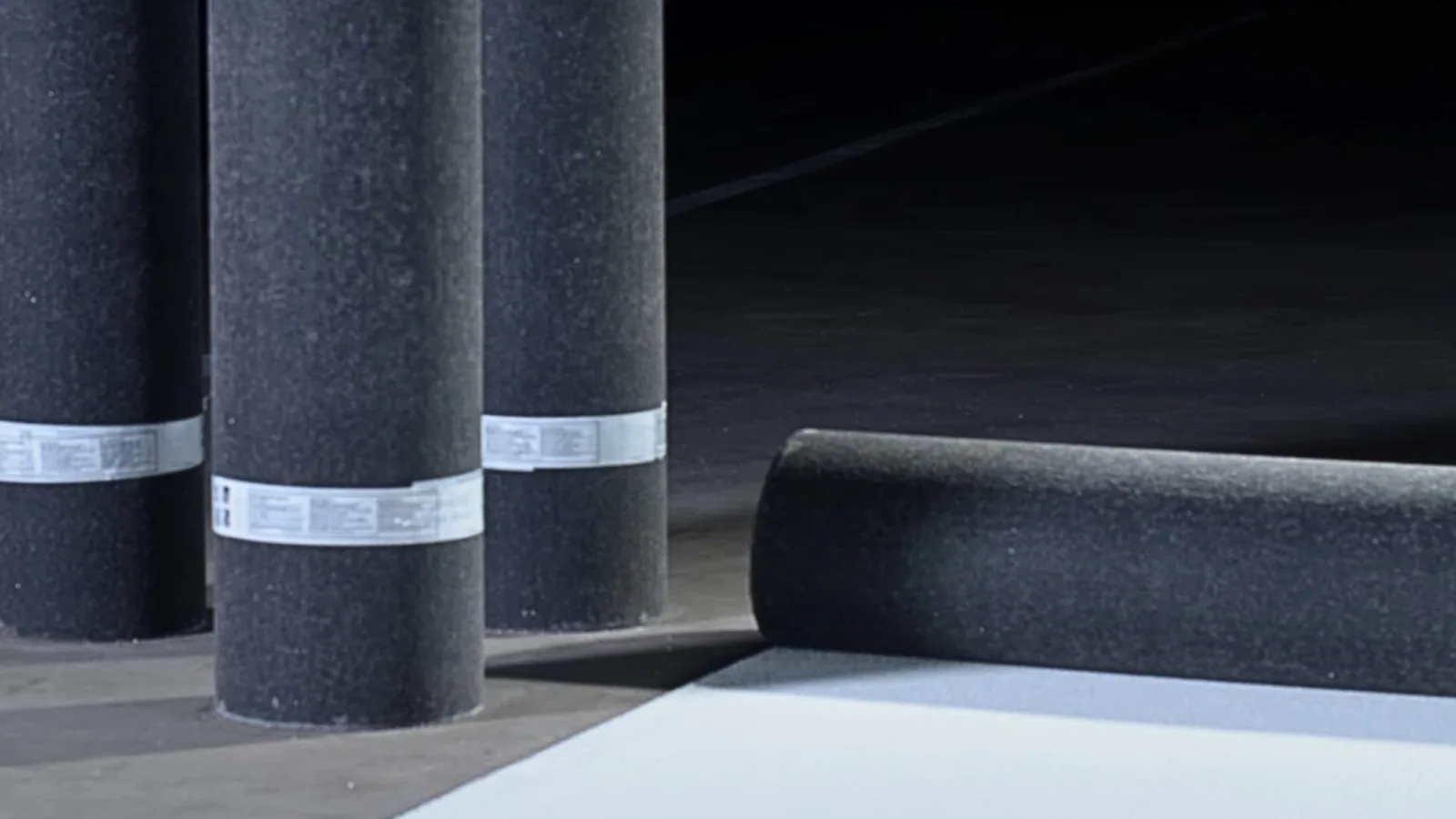
UltraPly TPO includes standard reinforced membrane, fleece-backed options, and a self-adhered product. These are not interchangeable on a repair ticket. We check labels, edge exposures, roof records, and visible attachment details to determine what the building has. A mechanically fastened field, fully adhered section, or recover assembly can place seams and plates in different locations. If the records describe a prior reroof, compare them against the current roof before ordering material.
The manufacturer lists the UltraPly TPO family in several thicknesses and describes different applications for its standard, self-adhered, and fleece-backed membranes. We do not infer the installed product from color or surface feel alone. An approved opening may be needed where layers cover the original sheet. Our TPO system check records the membrane, cover board, insulation, and roof deck evidence available at the site. If the building lies in the Visalia Industrial Park, loading schedules and equipment routes can be included in the access plan without assuming a particular roof assembly.
Test the Weld before Cutting out Membrane
A heat-welded lap should be checked along its accessible length, including the termination near a T-joint or corner. We probe for open areas, mark the exact segment, and compare it with the reported leak. A test describes the seam we touched. It does not establish the condition of concealed laps across the building. Dirt, moisture, old repairs, sheet tension, and surface temperature can affect the weld or the repair preparation.
Before a larger repair, the crew prepares and checks a test weld under site conditions. The setting must follow the product instructions and equipment needs. We record the accepted weld and then work from the sound membrane toward the damaged area. If seams fail repeatedly or the sheet pulls away from a perimeter, the defect may extend beyond one patch. A seam repair assessment states the tested area and the work boundary. When a roof section uses Sika Sarnafil or Versico rather than UltraPly, the separate Sarnafil PVC system or Versico membrane has its own material requirements.
Trace the TPO through Curbs and Drains
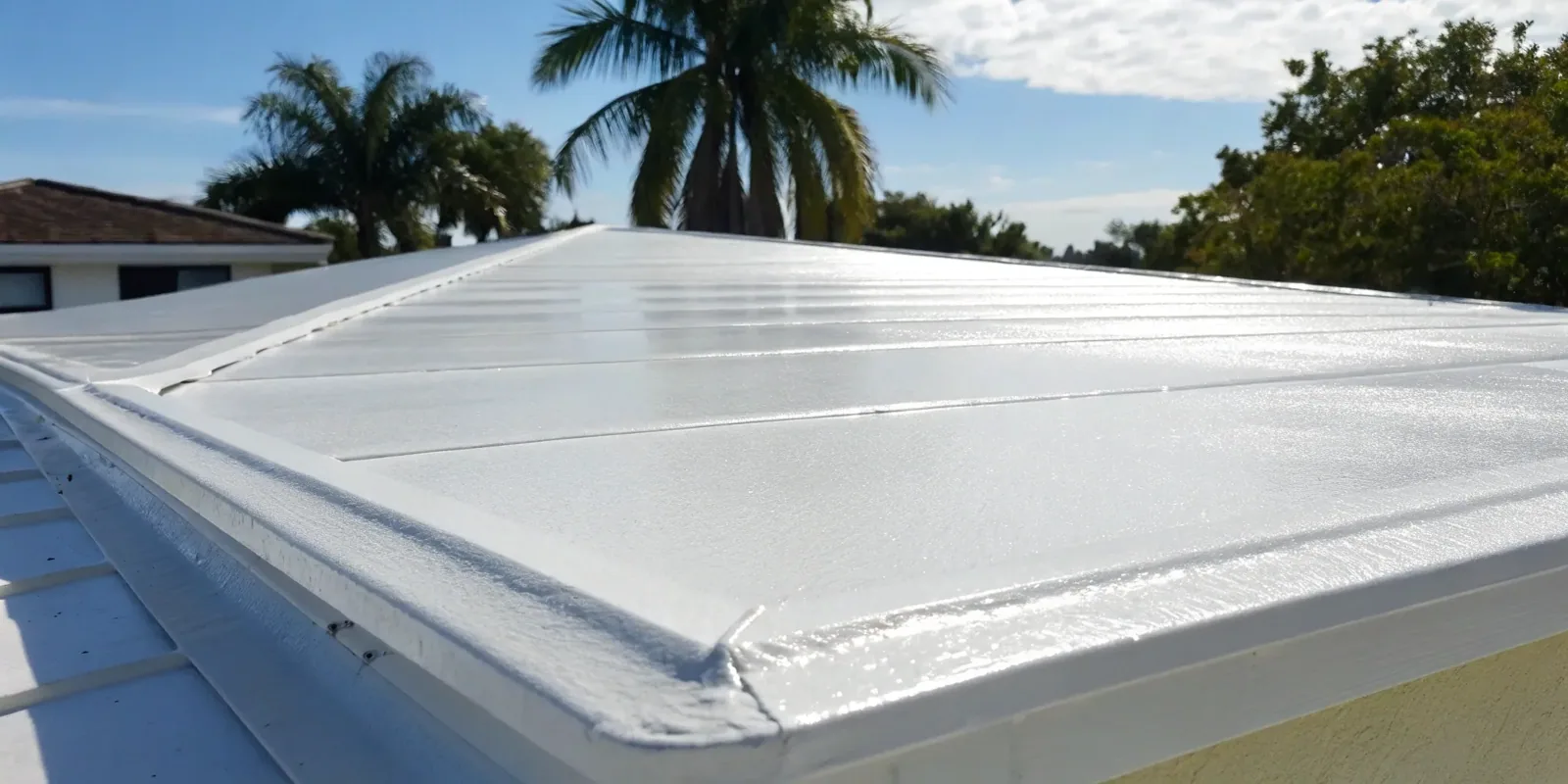
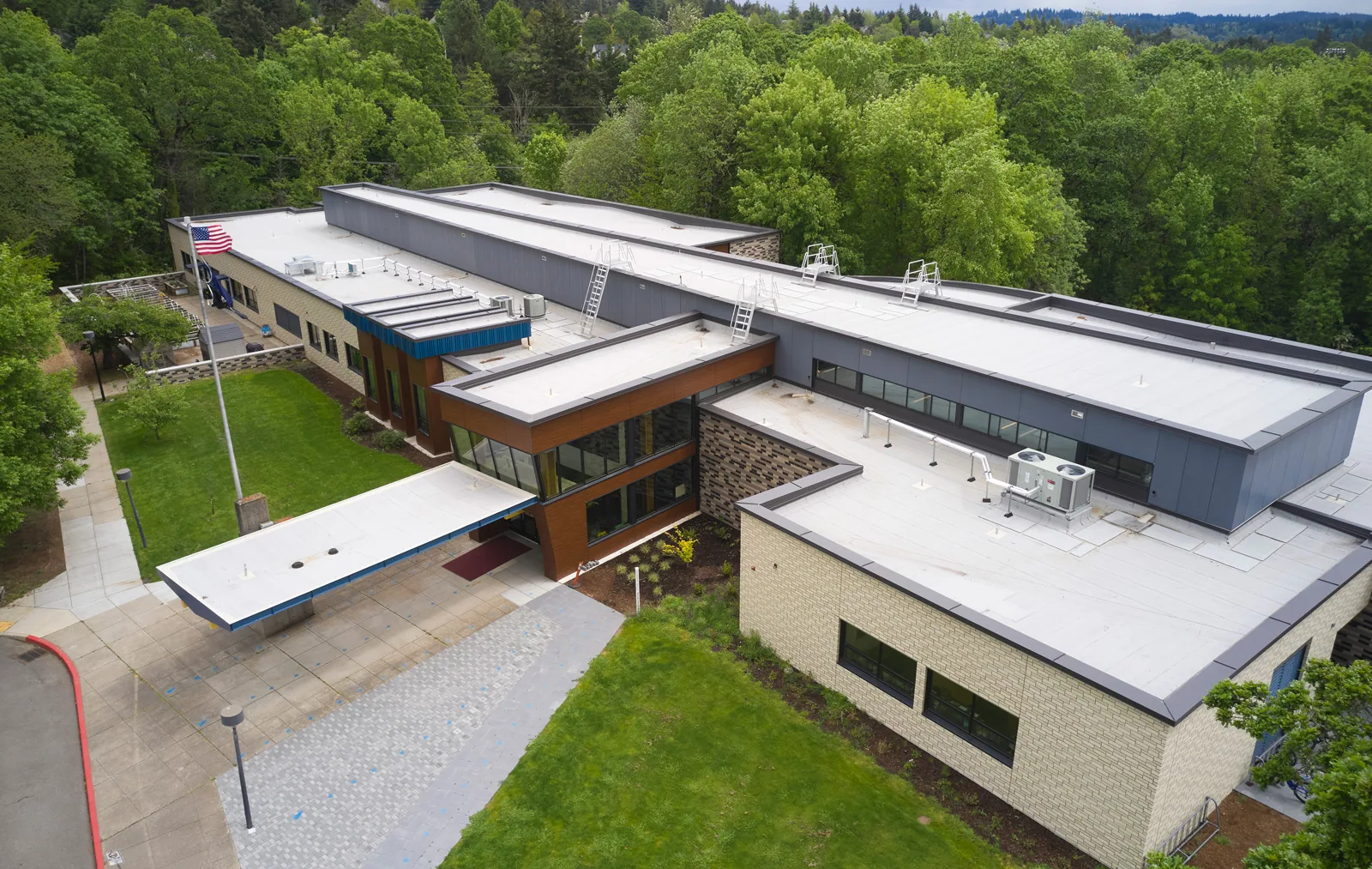
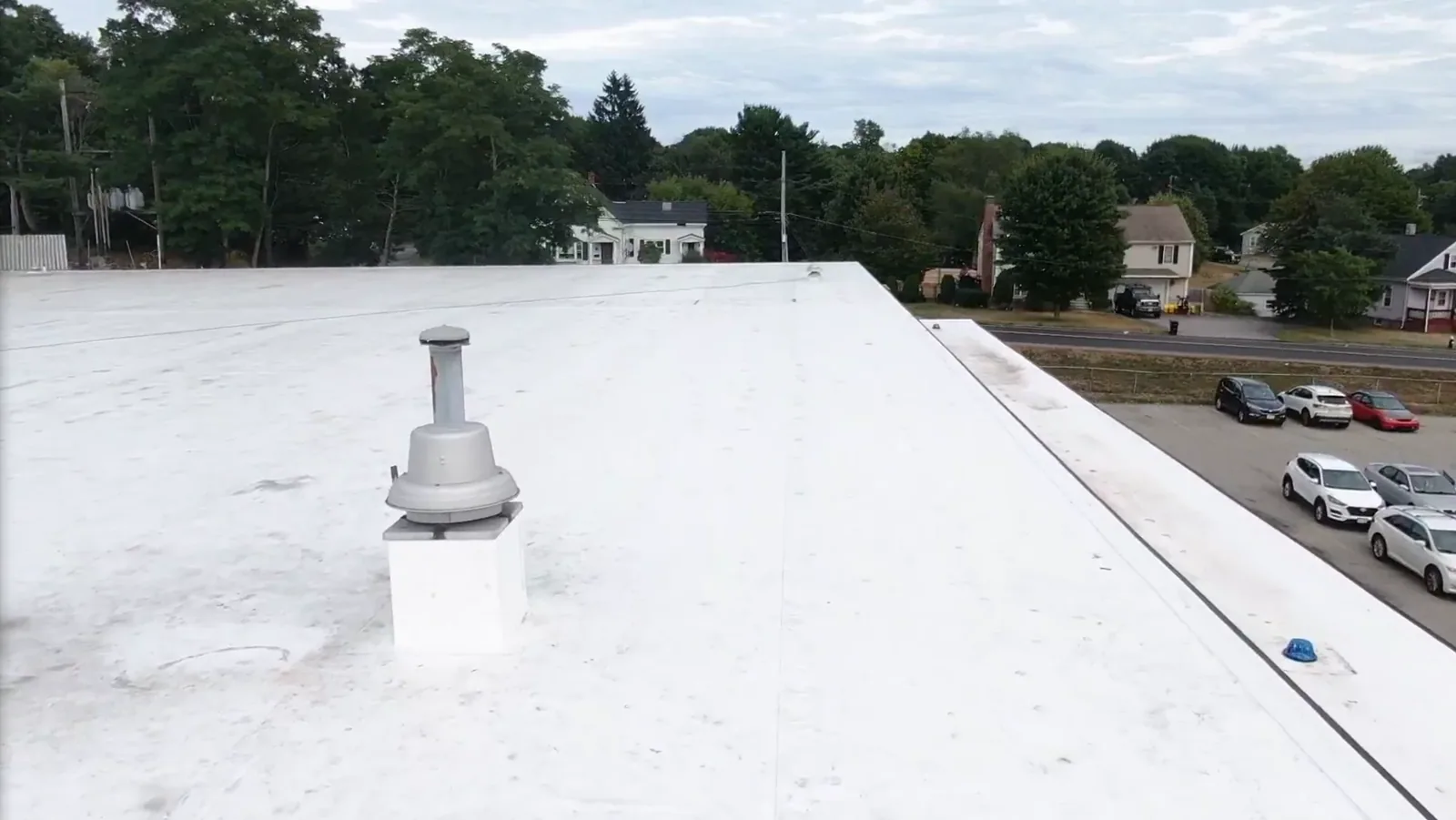
Curbs, pipe penetrations, skylights, parapets, and drains create transitions that can loosen as the building moves or equipment is serviced. We inspect the flashing height, corners, clamping or termination, and nearby field seam. An unsupported flashing membrane may be needed at a complex shape, but the product and detail must suit the identified UltraPly system. Sealant may protect a termination where specified; it does not replace a loose or split membrane detail.
At a drain, check the bowl, strainer, sump, overflow, and visible slope. Remove debris only when the scope allows and access is safe. If water remains after clearing the outlet, we note whether a low area or deck movement needs further review. The roof record can separate the drain condition from a seam repair so each item has a clear work boundary. A drain and scupper scope can coordinate with perimeter metal and penetration flashing where those details are confirmed defects.
Plan the Work between Heat and Rain
For its 1991 to 2020 reference period, Visalia's climate averagess almost 95 Visalia days per year when the maximum reaches 90°F. The same station averages 10.32 inches of annual precipitation, with the wetter months concentrated from late fall through early spring. These figures support a seasonal check of sealants, seams, and drainage. They do not establish that a membrane has failed. We inspect the roof, note current surface conditions, and follow the product’s limits for adhesive, welding, and weather exposure.
The City’s plan describes the Mooney Boulevard Regional Retail Corridor as the heart of a multi-county retail area. Nearby businesses may need customer routes and loading access kept clear while a repair is underway. The Industrial Park has freight and production activity that can require different staging. Both are broad locations, not evidence about a particular roof. We set a work window with the property manager and mark where materials can be handled. For an active leak, our emergency roof response starts with temporary protection and a confirmed entry point. A seasonal check along Mooney Boulevard can document the condition before the next wet stretch.
Decide if the Defect Stays Local
A small repair can be appropriate when the surrounding sheet remains sound and can be prepared for a compatible weld. Wet insulation, deck damage, repeated openings, or movement at the edge may call for additional testing or a larger replacement plan. We note which conditions were visible, which area was opened, and what remains concealed. An owner can then compare the repair boundary with the cost and disruption of broader work.
Schedule and price depend on membrane area, attachment, insulation removal, curb details, freight, safety controls, and tenant access. The proposal should state the materials and any allowance for concealed conditions. We close the repair with photos, test notes, and the installed detail. A later maintenance visit can revisit the same zones, and a condition report can compare findings across separate buildings. Share the leak location, roof plan, access hours, and repair history so we can define the next check. A proposal should identify which UltraPly components are included and where the tie-in stops. We list existing layers, approved removal areas, and details that need another trade. For an occupied warehouse, a nightly closeout plan should say which roof section is sealed, where temporary protection remains, and what conditions would pause work the next day. The closeout record should let a manager compare the specified assembly with the materials installed and show each authorized change before it is covered. Save the original product submittal, Diligence Notes, and photographs together so a later inspection can distinguish a membrane defect from damage caused after the reroof. That history also helps the owner compare repairs without repeating tests on areas already documented.
Commercial Roofing Questions
Can UltraPly TPO be installed over the existing roof?
A recover is considered only after we review layer count, moisture, attachment, deck condition, fire requirements, and assembly compatibility. The existing system decides the viable options.
How do you confirm the roof has UltraPly TPO?
We compare available labels and project records with the membrane and attachment visible in the field. Color by itself is not a reliable identifier.
Can a loose TPO curb flashing be sealed?
We inspect the corners, flashing, curb movement, and adjoining seam first. A sealant bead is not a substitute for a membrane transition that has separated.
Does hot weather prevent a TPO repair?
The product directions and actual site conditions set the work window. We check surface temperature and weather exposure before welding or applying adhesive.
What information helps scope an UltraPly repair?
Send the roof plan, system records, leak timing, access rules, and any recent equipment work. Those details help us locate the test area and plan material handling.