Commercial Roofing in East Downtown Visalia, CA
Service Areas | Visalia and Tulare County
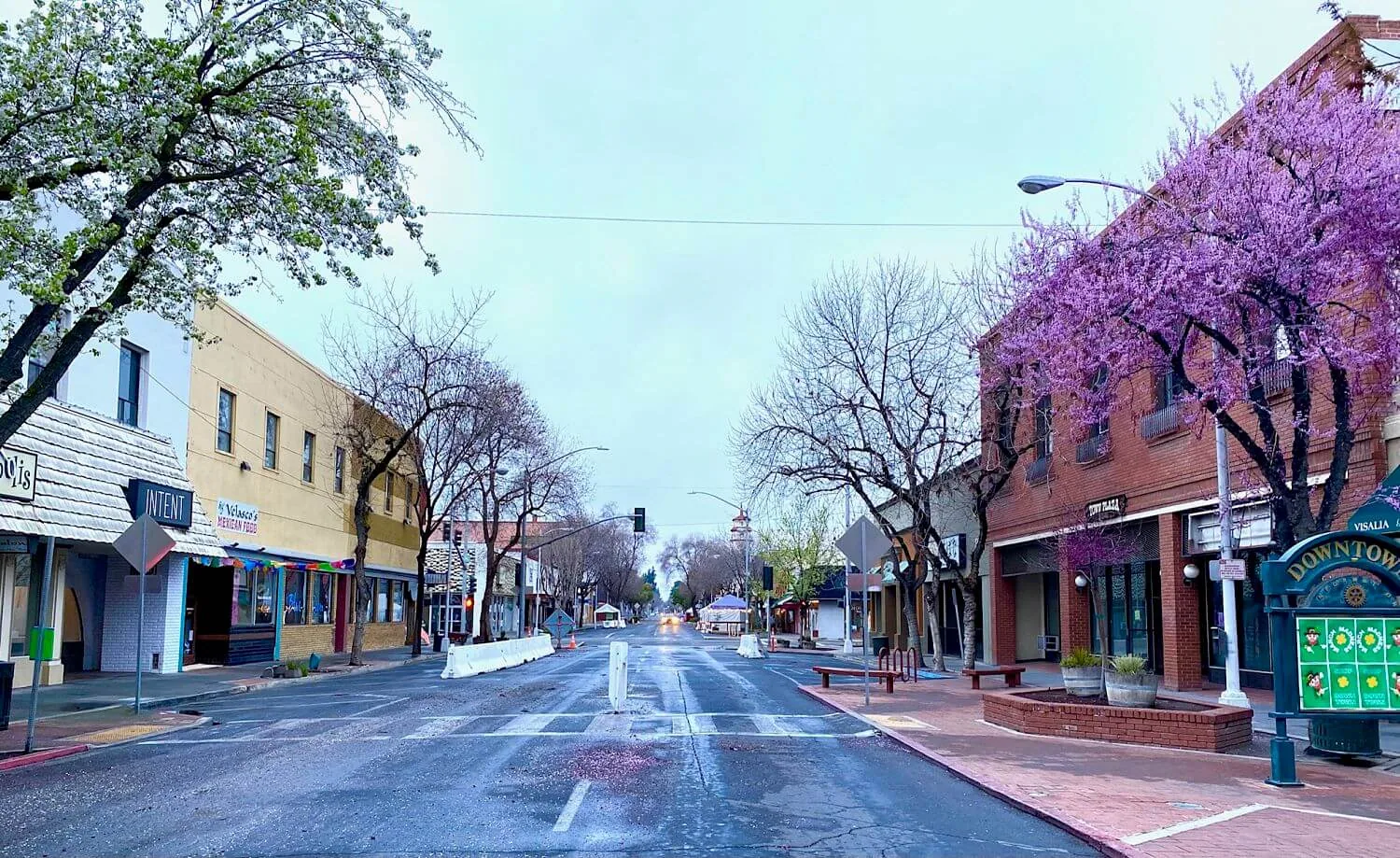
East Downtown Visalia
An interior drip in a civic or office area can threaten records, equipment, and a normal workday. The first step is to identify where water entered the roof and how far it traveled. Visalia’s plan describes East Downtown as a district associated with future civic-center and regional-park development. That planning context does not tell us how a specific roof is built, so we verify the building, access, and operating rules before recommending work.
Locate the source, not only the stain
A ceiling mark may sit several feet from the roof opening. Insulation, deck flutes, and framing can carry water to a low point before it shows indoors. We compare the stain with nearby roof penetrations, seams, drains, and wall details, then test the most plausible path. If the assembly must be opened, we keep the test area small and record what the cut reveals before deciding whether to extend it.
In a district with public-service, office, and other uses, continuity requirements can differ from one building to another. We do not infer access or security rules from a map or a neighboring facility. The property contact confirms escorts, sensitive rooms, hours, and shutdown constraints before the commercial roof inspection. The report identifies observed conditions and assumptions separately so a follow-up decision has a dependable starting point.
Map roof sections and access
Start with the roof plan if one exists, then reconcile it with field conditions. Additions and equipment changes can leave old drawings incomplete. We note roof levels, hatch locations, drains, curbs, parapets, and areas blocked by equipment. Each section gets its own condition description; a sound area should not be described as failed because a nearby section leaks.
Before work, we confirm the ladder or hatch route, fall-protection plan, permitted staging area, and any protected public or staff path below. The district includes multiple civic uses across more than one public building. We use that only as context for asking about coordination, not as evidence of a roofing contract or an individual site's layout.
Check drains and overflow routes
Water that remains after a storm can point to a blocked outlet, a low roof area, compressed insulation, or a slope issue. We examine the drain bowl and strainer, trace the surface toward the outlet, and inspect overflow provisions. A drain that is clear during the visit may still have backed up earlier, so maintenance records and photographs help establish timing. We document ponding depth and location rather than making a broad statement about the entire roof.
We also look at scuppers, downspouts, and discharge points that might direct water toward entries or walkways. Roof drainage and site drainage are related but need separate corrective scopes. If a recurring issue needs scheduled checks, a preventive roof maintenance visit can record whether outlets, strainers, and details changed since the last inspection. It cannot correct a depressed deck or concealed moisture without additional work.
Review transitions around equipment
Curb corners, pipe boots, conduit supports, wall flashings, and edge metal are common paths for water entry. We check adhesion and movement at these details, looking for open seams, cracked sealant, loose metal, and incompatible prior patches. Around public-service equipment, the site contact may need to identify what can be shut down or moved. We do not disturb a connection until the responsible staff member authorizes the work.
The plan's civic context includes administrative, public-safety, operations, storage, and gathering uses; it does not establish which assets occupy any particular roof. The Visalia's climate averages long warm-season normals are useful regional context, not a diagnosis of membrane damage. We inspect actual material condition and system limits. When a repair crosses into a new assembly, the selected TPO roofing system must suit the substrate, attachment, flashing geometry, and manufacturer's requirements.
Separate immediate protection from permanent scope
If water is entering now, a temporary measure may protect interior space until a proper repair can be made. We label temporary work clearly and state the conditions that remain. For permanent work, the scope identifies membrane removal, insulation replacement, substrate preparation, flashing details, and close-in sequence.
For isolated failures, targeted roof repair may preserve sound sections. For widespread wet insulation, repeated seam separation, or a compromised deck, compare a larger repair with commercial roof replacement. We record what testing supports the recommendation and what remains unknown until the assembly is opened. That keeps the decision traceable without promising a result before conditions are verified.
Plan around essential operations
An occupied building can have public counters, dispatch functions, records, meetings, or equipment that cannot be exposed to dust or water. The project contact identifies protected zones and times when roof access is permitted. We stage materials away from exits and coordinate lifting, noise, shutdowns, and debris removal. Work is divided into sections that can be closed securely each day, with a check of temporary protection before the crew leaves.
If the roof sits above an essential room, interior protection should be set before the membrane is opened. The plan states who authorizes entry and who receives a daily update. Weather hold points, temporary tie-ins, and emergency contacts belong in the schedule. A roof replacement option may require more disruption than repair, so the manager needs the sequence and access limits alongside the price, not after the work is awarded.
Evaluate recovery with evidence
A recover or coating option needs a compatible, attached, and sufficiently dry existing assembly. We look for moisture, layer count, deck condition, and details that would remain buried. If those checks do not support recovery, we explain why and outline the additional testing or tear-off needed. A coating should not be used to hide a drainage problem or wet insulation. The scope includes preparation, repairs, and system requirements before comparing lifecycle choices.
A roof condition report can organize findings by section and show how immediate repairs relate to future capital work. A roof asset record stores plans, photos, warranties, and completed scopes for the next facilities review. Those records support planning but do not substitute for a current diagnosis. Managers can compare timing and operational impact without treating a proposed civic district project as a confirmed tenant or building.
At closeout, we list the roof sections opened, the condition found, the materials installed, and the repair limits. Photos should be labeled to a roof plan or a simple sketch, not left as an unindexed camera roll. If water or damaged insulation extends beyond the agreed boundary, the record states how that change was handled and what area remains for review.
The East Downtown district spans public planning context, while each facility has its own owner, roof, and operating requirements. We keep those distinctions clear in the scope and in the final record. A nearby Visalia Industrial Park roof or Business Research Park building may have different access and exposure; neither determines the condition here. Share a roof map, leak location, access instructions, and recent work history so the next inspection can be specific.
Commercial Roofing Questions
What information helps scope a roof visit over occupied offices?
A floor or roof plan, interior leak location, access instructions, sensitive-room restrictions, and recent repair notes help set the first route. We confirm each item with the site contact because drawings and operating rules can change.
How are public or staff areas protected during roof work?
Before opening a roof section, the crew and property contact agree on interior protection, pedestrian limits, debris handling, and a temporary close-in plan. Restricted entries or equipment zones remain under the owner’s authorization.
Can a roof coating stop an active leak by itself?
A coating is not a substitute for locating the opening, drying or replacing wet material, and repairing failed details. We first check attachment, moisture, compatibility, and drainage, then decide whether a restoration system is supportable.
Why might a leak return after a previous repair?
A prior patch may have sealed one visible opening while water continued through another detail or wet insulation remained in place. We review the earlier work and map the current water path before proposing a broader boundary.
How do managers compare repair and replacement scopes?
Ask each scope to identify roof sections, removal limits, insulation assumptions, deck allowances, flashings, protection, and closeout records. Those details make price and operational impact easier to compare than a single total.