National Guard Armory Roofing in Visalia
Property Types We Roof | Visalia and Tulare County
National Guard Armory Roofing
A leak at an armory or readiness building needs a roof plan that respects site authorization and security controls. Start with the reported room, building, and time water appeared. Identify the authorized contact before requesting entry or roof access. A Visalia Army National Guard Armory is listed in local and state materials, and a California Army National Guard publication identifies Company A, 1st Battalion, 184th Infantry as based in Visalia. Those facts describe a local Guard presence; they do not establish permission to enter or a roofing assignment. The inspection and facility representative define what may be checked. Keep the repair boundary tied to the approved area.
Confirm Authorization before Scheduling Access
For a controlled facility, the first step is the person authorized to arrange work. Confirm identity, scope, approved entry point, escort requirements, equipment rules, photography limits, and any restrictions on devices or records before a visit. Do not request access through an unapproved entrance or assume a property contact can authorize roof entry. If instructions change, stop and confirm the updated plan with the designated representative.
Once access is approved, record the reported room, ceiling location, and whether water followed rain, equipment service, or another event. Compare it with the roof plan and details that can be inspected within the approved boundary. Water can travel along a deck before reaching a room, so a stain is not proof that the opening sits directly overhead. A military facility roof scope should separate confirmed findings from areas that could not be accessed. If the source remains uncertain, describe the next approved diagnostic step rather than implying that all sections were inspected.
Keep Work inside the Approved Security Boundary
Before staging a ladder, lift, or materials, confirm the designated route, staging point, work hours, escort, and any equipment or image restrictions. The facility contact identifies active readiness areas, emergency routes, and spaces that must remain available. The crew should not move property, enter a controlled room, photograph equipment, or change a route without authorization. If access to the roof hatch or ladder is denied or delayed, record that limit and wait for direction.
A repair may require a temporary interior boundary below the roof or a short interruption to a door or loading area. Agree on who can approve that change and how the area will be returned to service. A public-building roof plan also coordinates access with facility operations, but military security procedures come from the authorized installation representative. Never infer a work window or access permission from a public map, directory, or past visit. The approved plan governs the crew's movement and the information retained in closeout.
Inspect Only the Roof Details within the Approved Scope
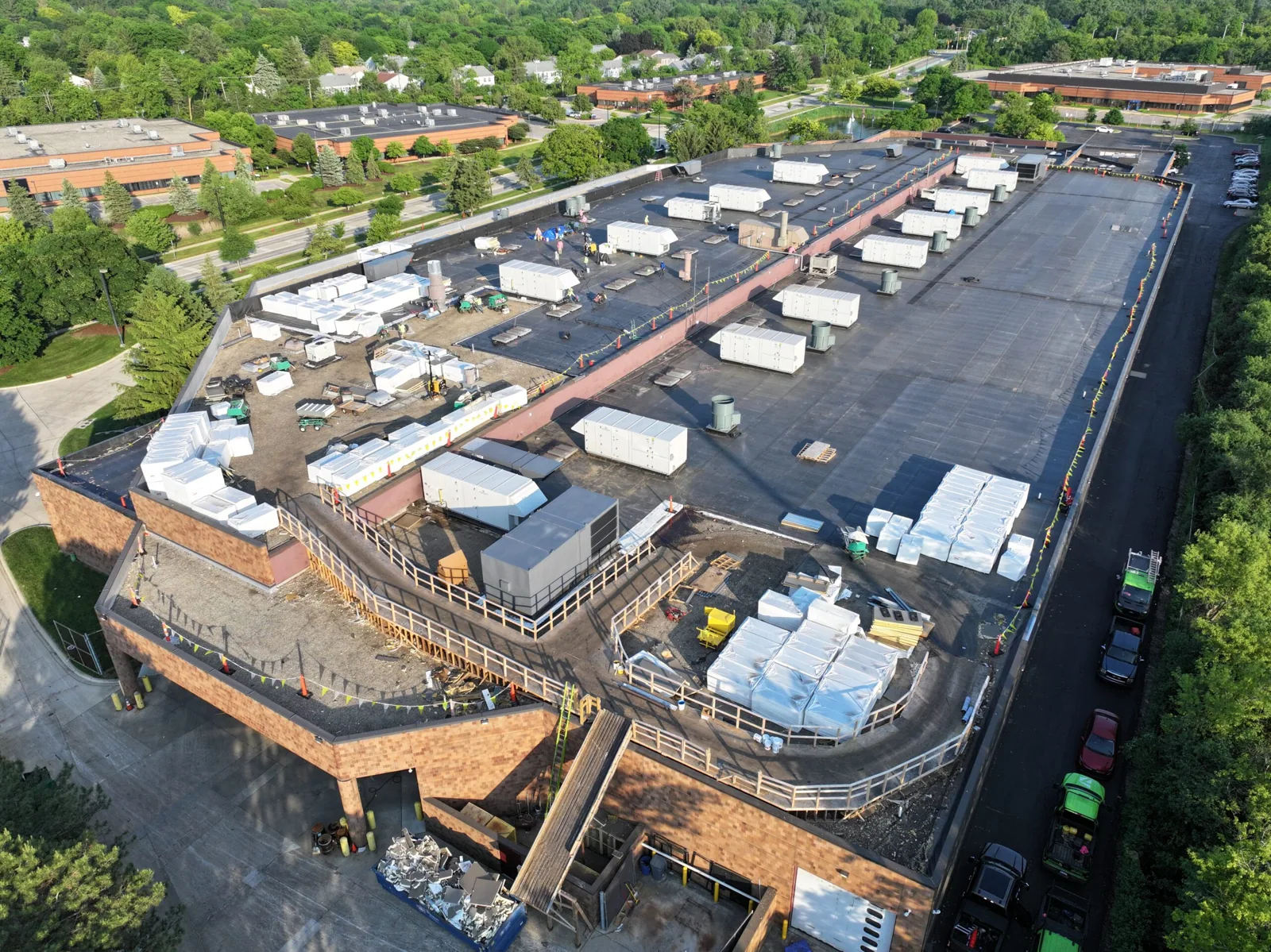
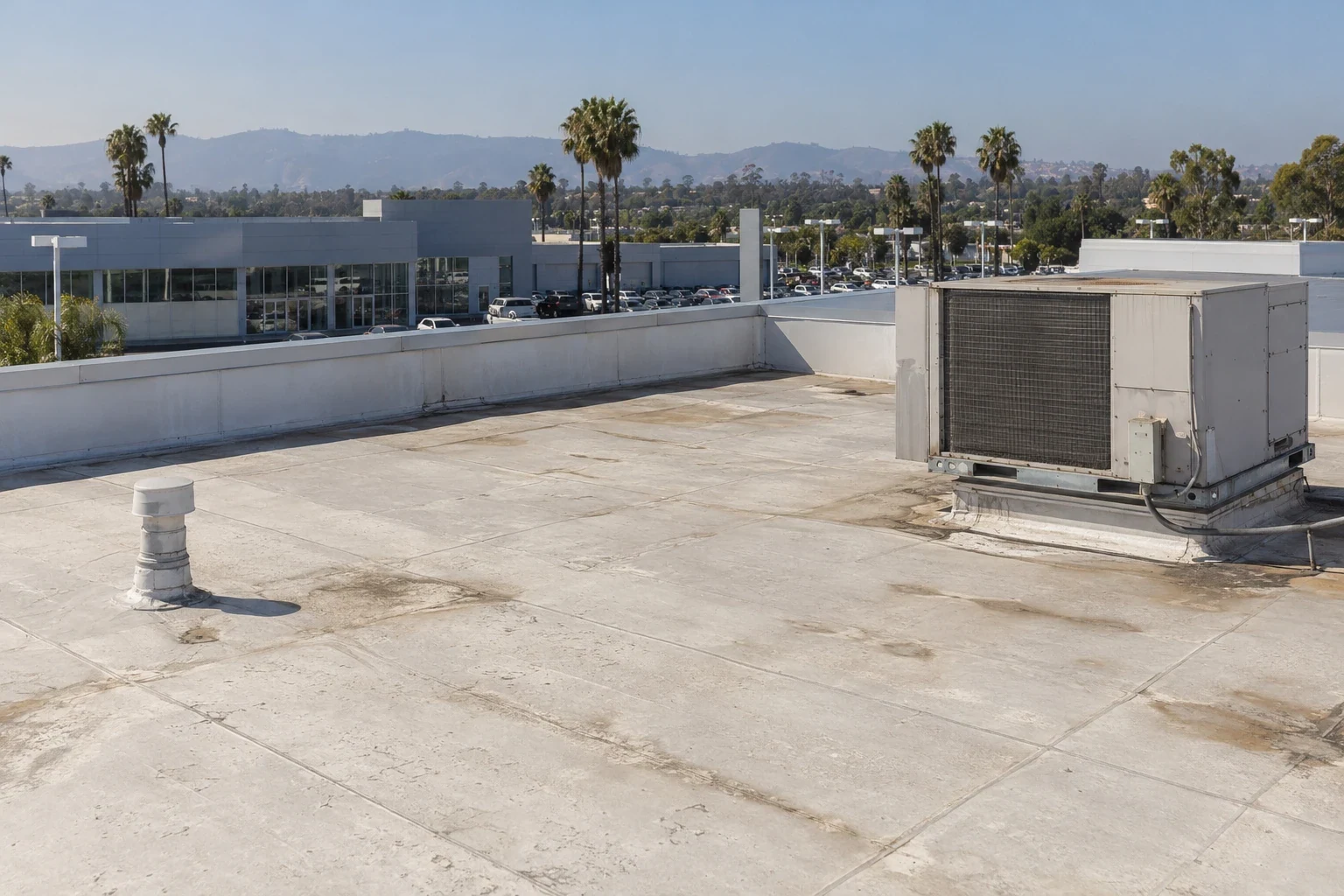
Where access permits, identify the roof assembly and inspect the reported area, nearby seams, curbs, penetrations, drains, scuppers, wall transitions, and edge details. Record visible conditions without entering a restricted zone or opening a roof without authorization. A membrane patch, metal panel repair, or flashing adjustment must match the system and the approved scope. If equipment or a secure area blocks the view, state that the detail was not checked. Do not substitute assumptions for a restricted inspection.
The Visalia Army National Guard Armory is a named local facility, while the Visalia Industrial Park is a broad employment district with industrial activity. They are different kinds of places and do not establish access to either property. The facility representative determines the permitted work area. If a drain or overflow path can be reviewed, note its condition separately from the reported leak. A drain and scupper check can be included only when the site authorizes it and it is within the approved scope.
Where a defect crosses the approved boundary, stop at the limit and request direction. Do not extend a test or repair into an adjacent bay without the facility contact's authorization. The closeout should preserve that decision point for the next approved visit.
Define Materials, Test Limits, and Approval Steps
The repair plan should state the building reference, roof zone, observed condition, material, boundary, and approval required before added work. If a concealed layer or deck may be involved, explain that a test opening would need separate authorization. Do not remove material or conduct a water test unless the approved scope allows it. If another trade must inspect a unit, alarm, electrical component, or door detail, name the handoff and leave that item open until the authorized representative confirms next steps.
Photographs, diagrams, and repair notes may be restricted. Ask which records may be retained and how they should be stored before capturing or transmitting facility information. A commercial roof inspection can document the visible condition where authorized. A broader replacement scope requires its own review and approval process. Keep immediate water control separate from long-term planning, and state clearly when the evidence is incomplete because an area could not be reached.
Keep Visalia Context Separate from Facility Authorization
State Guard materials identify a Visalia unit presence. A 1977 California public-land inventory listed the Visalia Armory under the Military Department and recorded a five-acre site at that time. The old inventory is historical context, not current parcel data, building condition, or authorization. The Visalia Industrial Park, by contrast, is a separate city employment area supporting manufacturing, food processing, warehousing, and distribution. Neither place name is a substitute for the approved facility address and access instructions.
For location planning, use the address and directions supplied by the authorized representative. A Visalia Industrial Park district description covers a broad area and does not claim service at a Guard facility. Confirm the permitted entry point, escort contact, equipment limits, work hours, and whether any route or area must remain untouched. The separate manufacturing roof page discusses industrial operations; an armory project follows its own approval, security, and readiness requirements.
Retain Only the Authorized Repair Record
Closeout should match the record rules set by the facility. Within those limits, identify the approved building reference, area reached, observed condition, repair performed, material, and follow-up required. Distinguish a reported leak from a source confirmed during inspection. Note any roof section not accessed and the authorization needed for a return. Do not include restricted room names, security details, personnel information, or photographs that the representative has not cleared.
If another test or trade remains pending, identify who will approve it and what decision is needed. Keep repair records on the approved channel and confirm receipt with the designated contact. A roof condition report can structure observations when the facility authorizes that format. The record should not imply that a full installation was inspected if the work boundary covered only one roof zone. A clear, limited closeout helps the facility decide what can happen next without blurring authorization or scope.
Commercial Roofing Questions
Can a contractor visit an armory based on its public address?
No. Public location information does not authorize entry. Work must be scheduled through the representative approved to arrange access.
What if the leak is in an area that cannot be accessed?
Record the limit and the area reached. The authorized representative can decide whether to arrange another inspection window or use a different diagnostic step.
Can photographs be taken during an inspection?
Follow the facility's rules. Confirm what may be captured, retained, and shared before taking or transmitting any image.
Does the Visalia unit listing prove roofing work at the armory?
No. A unit listing confirms local Guard presence, not a contractor relationship, building condition, or completed project.
What should an armory roof closeout contain?
Within the approved record limits, list the area reached, observed condition, work performed, repair material, open item, and authorization needed for follow-up.