
Apartment Roofing in Visalia, CA
Property Types We Roof | Visalia and Tulare County
Apartment Roofing
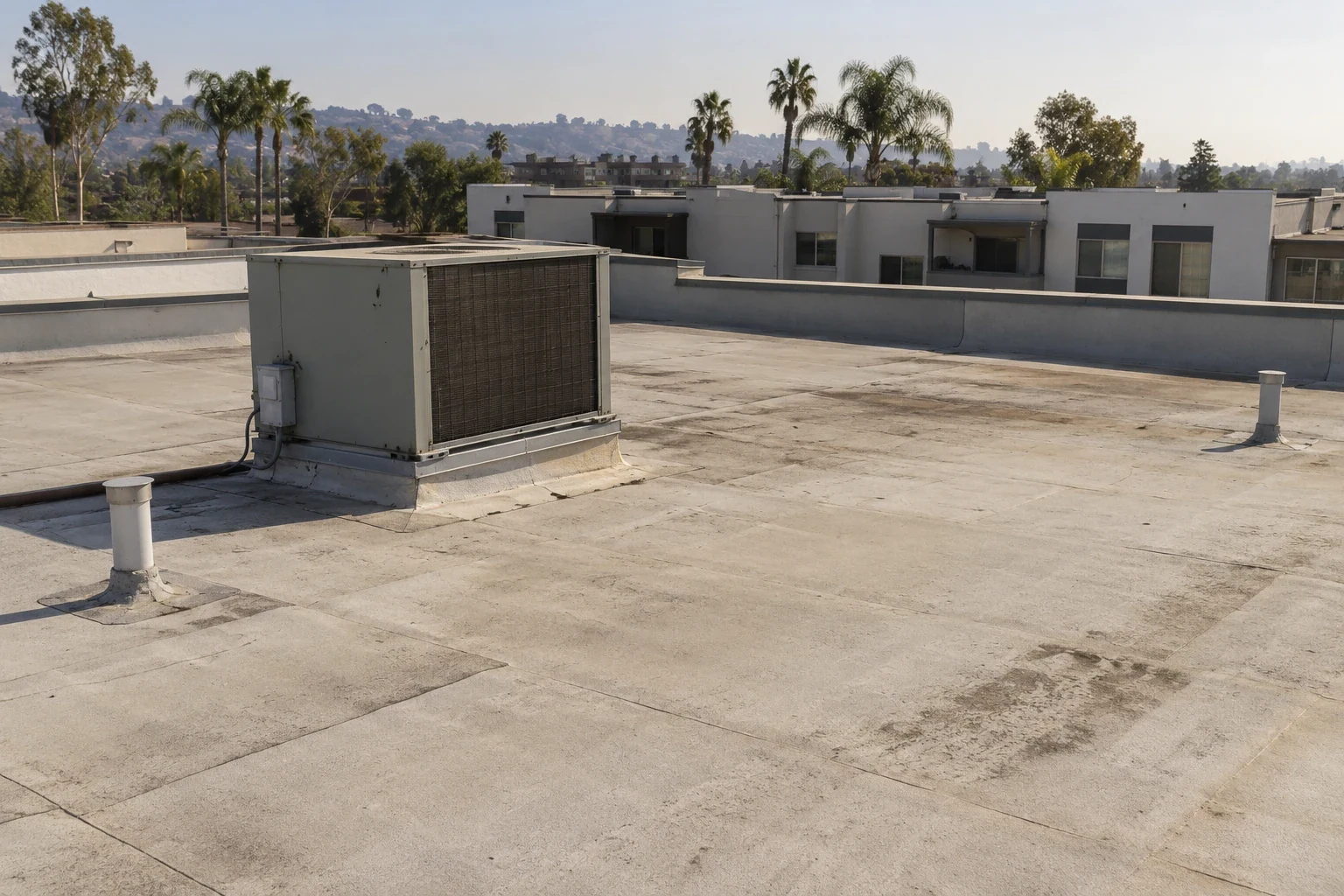
A report from one apartment unit can involve a roof section shared by several homes. Water may travel before it appears on a ceiling, so we map the unit, floor, weather, and time of the report before tracing the roof. The inspection records drains, seams, curbs, walls, and earlier repairs in the area tested. The property manager coordinates resident notice, access, and any temporary room restrictions. We do not assume a whole building has failed because one tenant reported a stain. A citywide planning reference does not locate or describe a particular apartment roof. The site address, roof plan, and manager's access rules set the scope.
Map Unit Reports to the Roof above
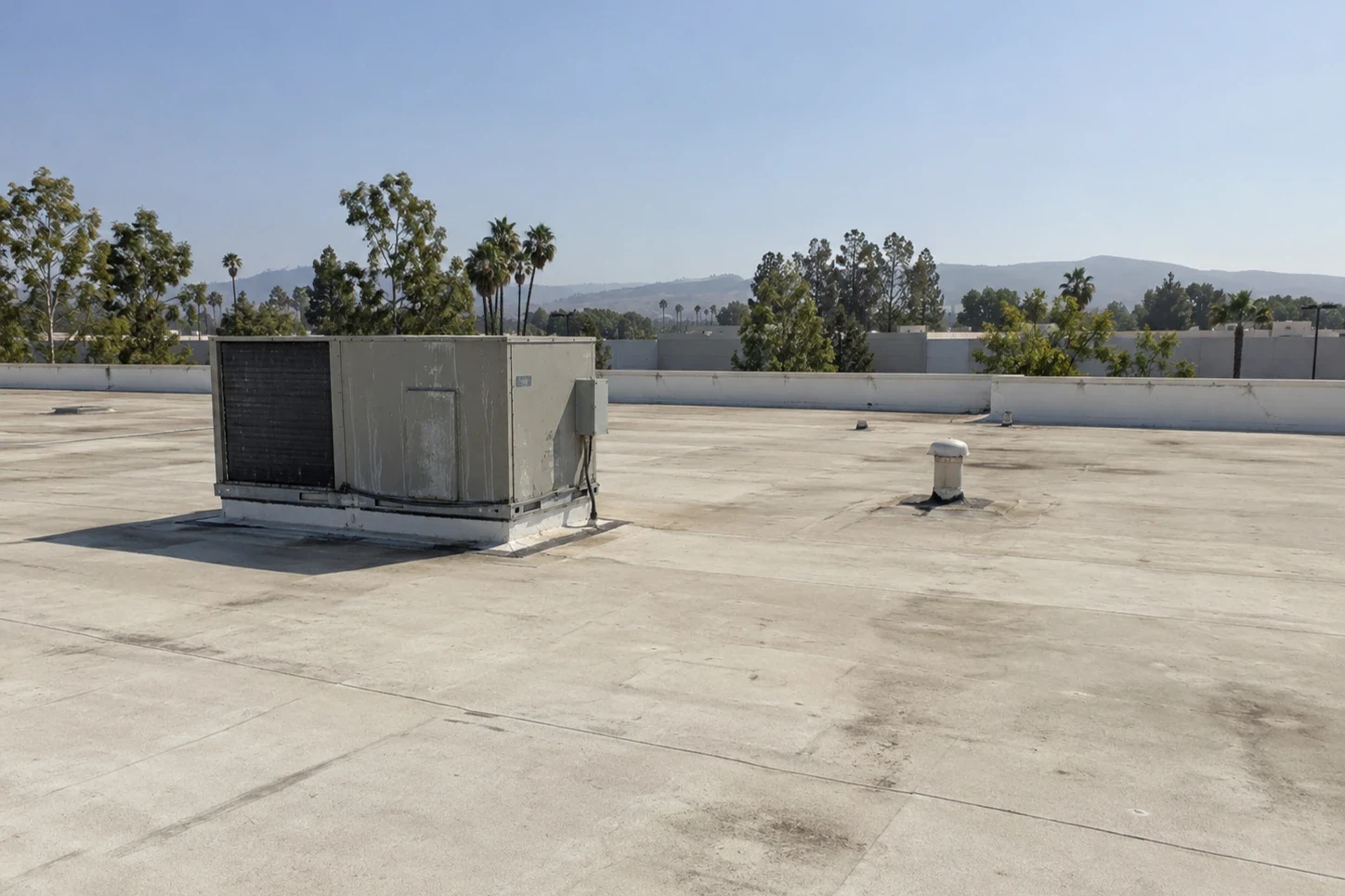
We ask which unit or common area reported water, whether the problem recurred, and what maintenance work occurred nearby. A ceiling mark may be below a drain, seam, balcony transition, or plumbing penetration several feet away. We compare floor plans and roof slopes, then mark each report separately. If multiple units show similar conditions, the pattern is documented but the cause still needs field confirmation.
Resident names and private details are not needed in a roof report. The manager can provide unit numbers, maintenance tickets, photos, and access windows. A hotel roof assessment similarly maps rooms, while apartment scheduling must account for resident notice and lease access. We state which roof area was inspected, what could not be accessed, and whether additional testing or a ceiling opening is proposed. This gives ownership a defined decision instead of a broad conclusion based on a single stain.
Inspect Shared Roofs and Building Transitions
Apartment properties may include several buildings, stair towers, breezeways, laundry areas, garages, and later additions. The roof system and its condition can differ across those sections. We label each building and roof zone, then check perimeter edges, parapets, expansion joints, and transitions where an addition meets the original structure. A patch on one wing does not establish that another wing uses the same membrane or has the same maintenance history.
Common-area ceilings, corridor lights, and utility spaces can show water before a resident notices it. The manager identifies affected areas and any restricted access. A grocery roof review addresses a single retail operation; multifamily work usually needs a building-by-building map. We keep the Diligence Notes tied to the property plan so a later phase can be priced against the correct roof area.
Review Drainage above Units and Walkways
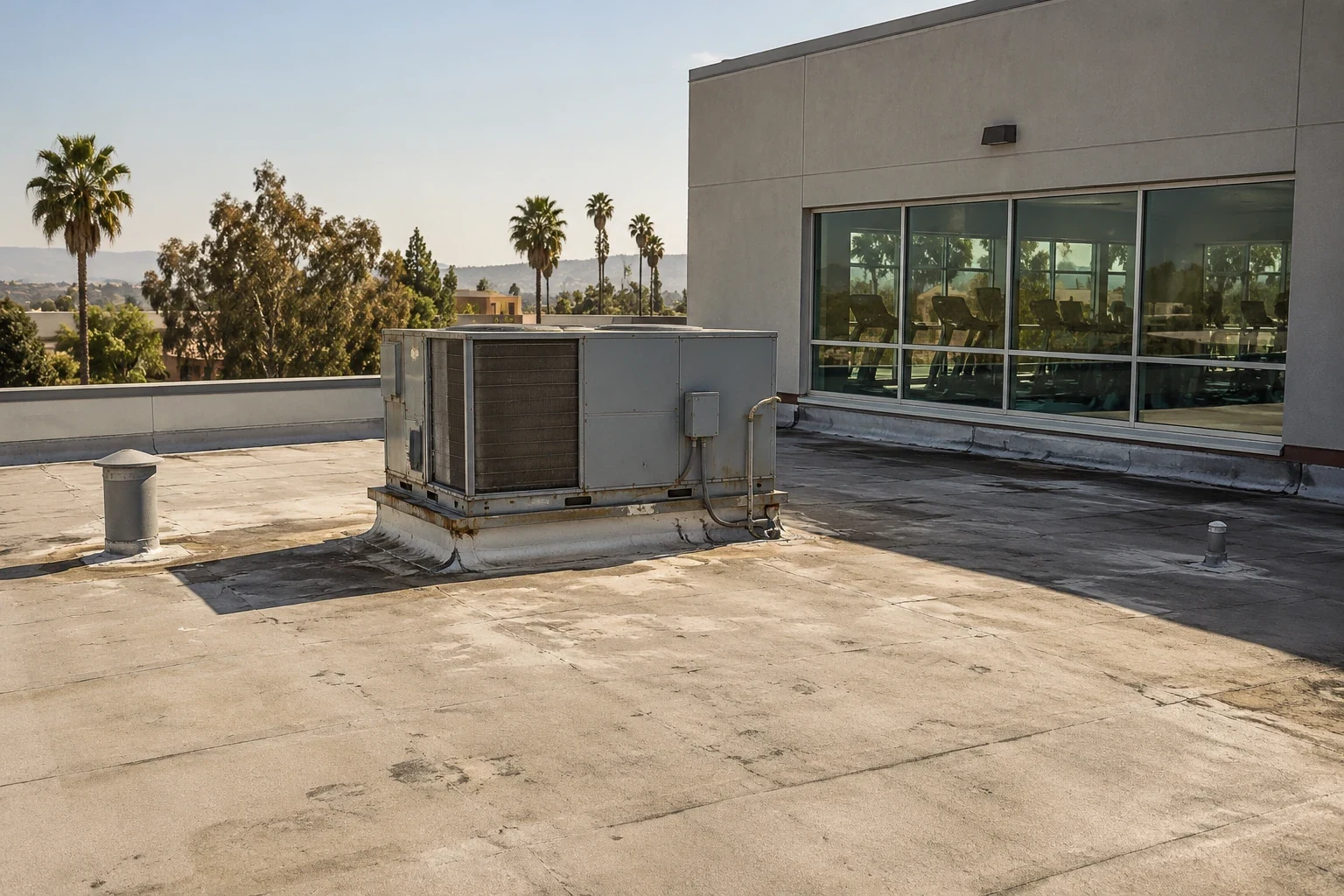
We inspect drains, scuppers, gutters, overflow outlets, and roof slopes that direct water toward entrances or pedestrian paths. A clogged strainer, failed drain connection, and low section that holds water are different findings. We note standing water after weather clears and whether it appears near a seam or curb. The report identifies which outlet serves each zone rather than infer the drainage path from the nearest downspout.
During repair, temporary protection should not redirect water toward a walkway, stair landing, or neighboring roof. We coordinate the work boundary with the property manager and keep access routes clear where possible. Our drain and scupper service can list outlet-level cleaning or repair. Plumbing work below the roof or within a drain line is a separate trade unless included in the approved scope.
Coordinate Resident Notice and Entry
Roof access may be exterior-only, or an inspection may require a unit entry, ceiling opening, or balcony access. The manager confirms authorization, resident notice, keys, pets, parking, and any quiet-hour requirement. We identify the expected duration and what the crew needs before arrival. If a room must be protected, the owner or resident contact handles personal property and interior access under the property's procedures.
Lift setup, material staging, and debris removal can affect parking or drive lanes. We confirm fire access, refuse pickup, deliveries, and accessible routes with site management. A focused repair visit can be limited to a confirmed area, while any additional building needs a separate review. If access is unavailable, the report records the missed area and the next step rather than implying that it was inspected.
Choose Repairs for the Actual Roof Material
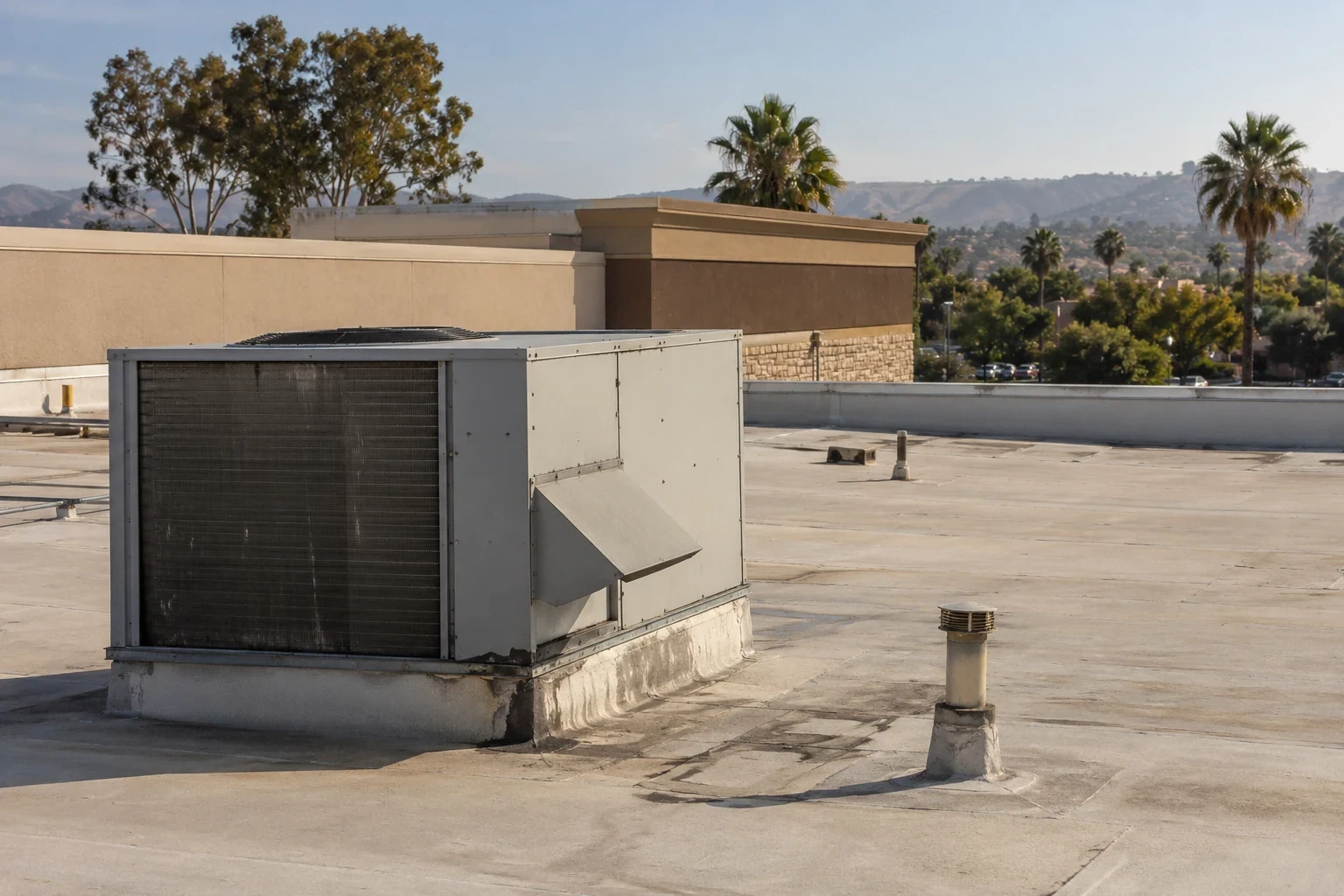
Phased construction may leave TPO, PVC, EPDM, built-up roofing, metal, or coatings in different locations. We identify the system by roof zone and compare the visible assembly with plans, maintenance records, and prior repair photos. Color or age alone does not establish compatibility. When a transition is concealed or a plan is missing, the estimate identifies what needs confirmation before work crosses that boundary.
A TPO seam repair differs from EPDM or metal work. We separate membrane repairs from wet insulation, deck replacement, balcony flashing, and interior restoration. When findings show repeated or broad deterioration, a replacement evaluation can compare removal, recover, and phased work by building. The owner receives the observed condition, test locations, quantities, exclusions, and open questions.
Warranty papers and prior scopes help determine which work was approved and what materials were used. The manager can provide those records before pricing. We do not promise warranty coverage without reviewing its terms. Closeout photos and repair notes let ownership track which building was serviced and whether a later equipment contractor changed the roof detail.
Confirm the Visalia Property Location
The City's plan describes growth and development as distributed across four quadrants, including Southeast Visalia. Its land-use strategy treats Southwest Visalia as another quadrant in a compact growth framework. These planning concepts describe the city, not the location or condition of a specific apartment property. We verify the site address, building numbers, roof access, parking, and resident communication plan with ownership or management.
The Southeast Visalia service area and Southwest Visalia service area pages provide broad local context. Property plans, unit reports, work orders, and prior scopes determine the service visit. If a property has several buildings, we label each inspected roof separately and list areas not reached.
Give Ownership a Building-Level Record
A closeout should state the building and roof zone, the unit or common-area report, the test path, repair performed, material used, and follow-up items. Photos can document the drain, curb, seam, wall transition, or edge before and after work. We note any area that needs another trade or additional access. That record helps the manager answer resident questions and compare future maintenance calls without treating one repair as a property-wide roof certification.
Share the Visalia address, building map, roof drawings, unit leak tickets, warranty documents, prior repair scopes, and access rules to arrange an inspection. We will coordinate with management, identify the areas reviewed, and provide options with limits and assumptions stated. If several buildings need work, the plan can sequence them around resident access and ownership approvals.
Commercial Roofing Questions
Can one unit's leak come from another roof area?
Yes. Water can move through the roof or deck before appearing inside. We compare the unit report with the roof path and mark areas tested.
Will residents need to leave during a roof repair?
The manager determines whether entry or a temporary restriction is needed. We identify the work area, timing, and protection so notice can be planned.
Do you inspect every building at one property?
Only the listed and accessible areas are included. We label buildings separately and state what was not reached or still needs testing.
What if buildings have different roof systems?
We identify the assembly by roof zone and match repair methods to the material. Concealed transitions are noted for confirmation.
What should a property manager provide?
A building map, roof plans, leak tickets, prior repair records, warranty terms, and resident access requirements help prepare the visit.