Grocery Store Roofing in Visalia, CA
Property Types We Roof | Visalia and Tulare County
Grocery Store Roofing
A small roof leak can create a large operational question for a grocery store. Water near refrigerated cases, dry goods, a bakery, or the receiving area needs to be traced before repairs are selected. We map the reported interior condition to roof zones, drains, curbs, and prior work. The roof survey records what was seen and which areas were tested. Store leadership sets the access window, product-protection steps, and any aisle or dock restrictions. Refrigeration and food-safety procedures remain with the store team and its service providers. In Visalia, Mooney Boulevard is described as the core of a regional retail hub, and Dinuba Boulevard has a defined commercial stretch. Those city-level descriptions do not identify a particular grocery property; the address and site plan control the work.
Locate Water before Moving Product
We ask where water appeared, when it started, and whether a refrigeration, plumbing, or rooftop service visit occurred nearby. A stain over a sales aisle may be below a drain or curb some distance away. We compare interior marks with roof slopes, seams, pipe routes, and earlier repairs. Each report is logged separately so a confirmed leak above receiving does not become an unsupported claim about the sales floor. If water is active, store staff follow their product and customer-protection procedures while the roof condition is assessed.
Photographs of the ceiling, nearby cases, and reported time help us focus the inspection. The big-box roof review addresses large open sales areas; grocery plans also need to map refrigeration lines and service clearances. We identify any ceiling opening or temporary containment as a separate action. If the path cannot be confirmed visually, we state what testing or selective opening may be needed before pricing a permanent correction.
Review Refrigeration Curbs and Line Sets
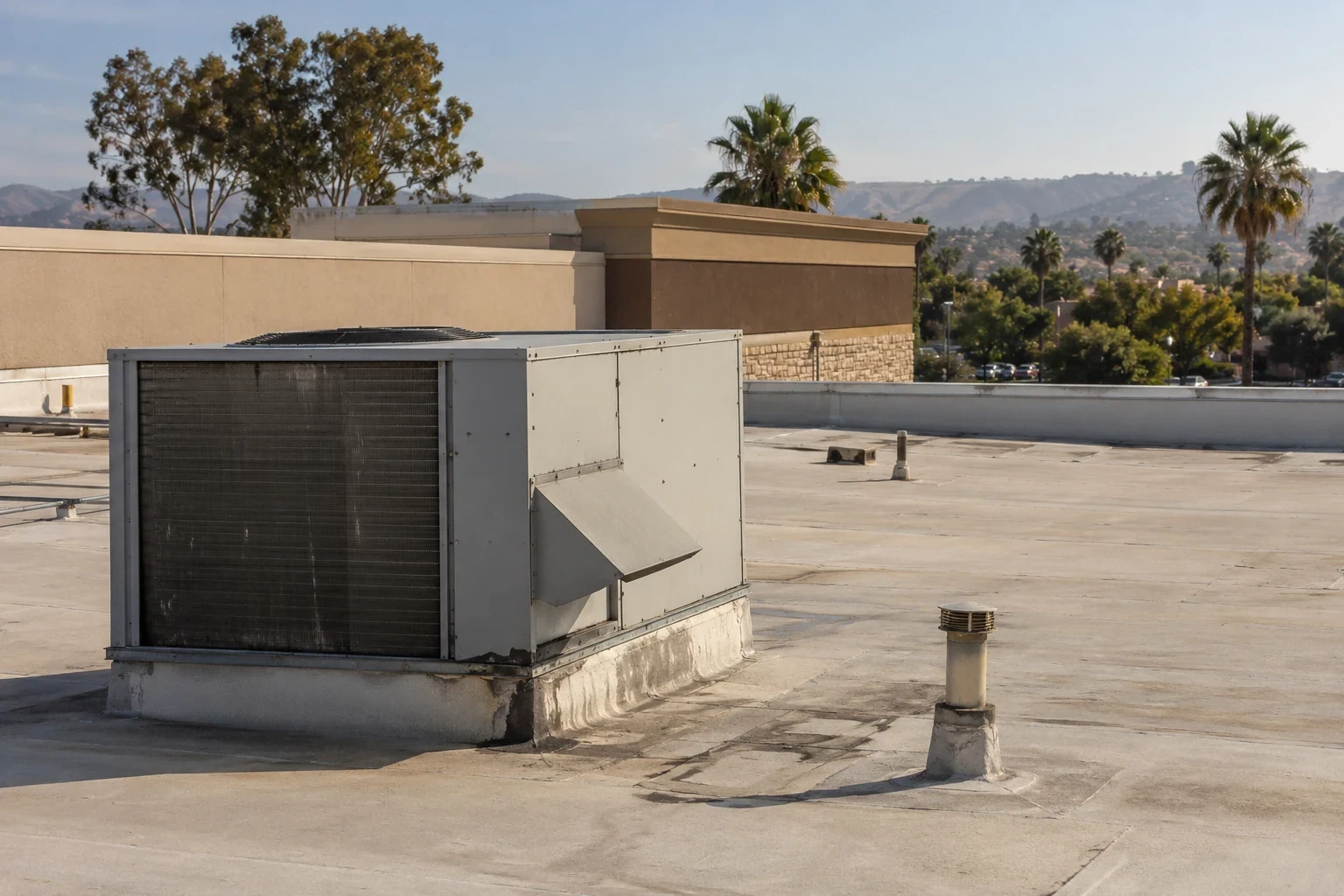
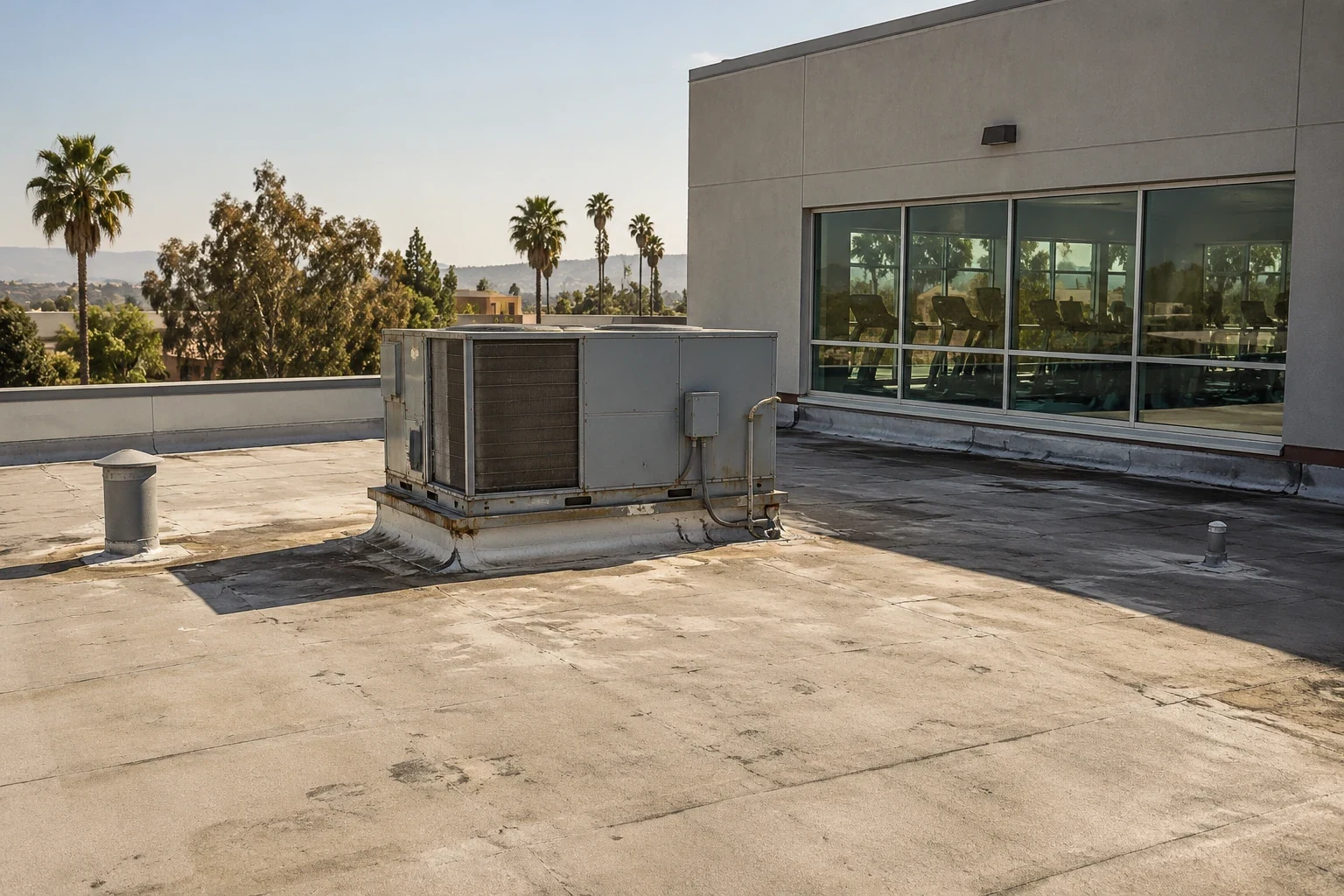
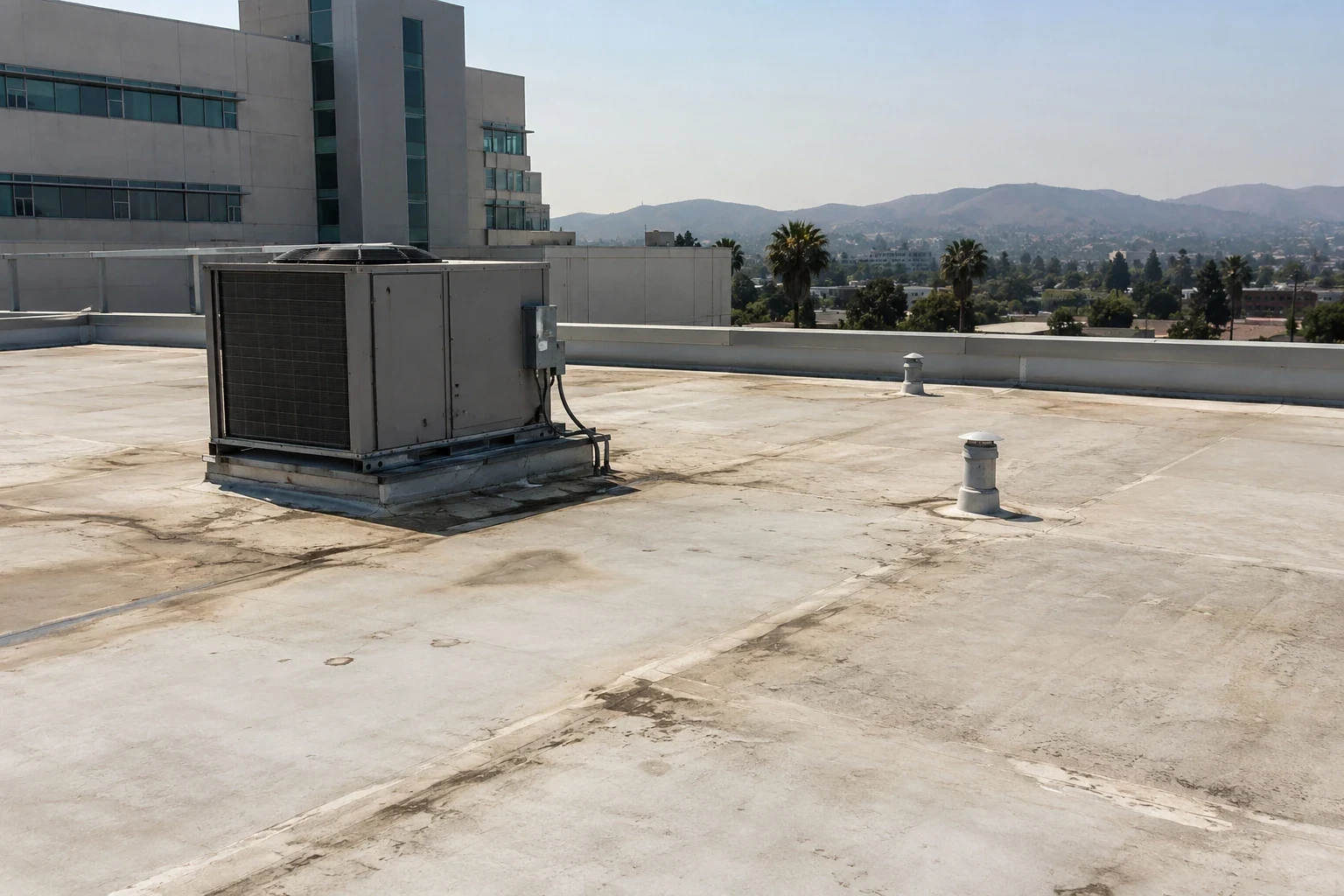
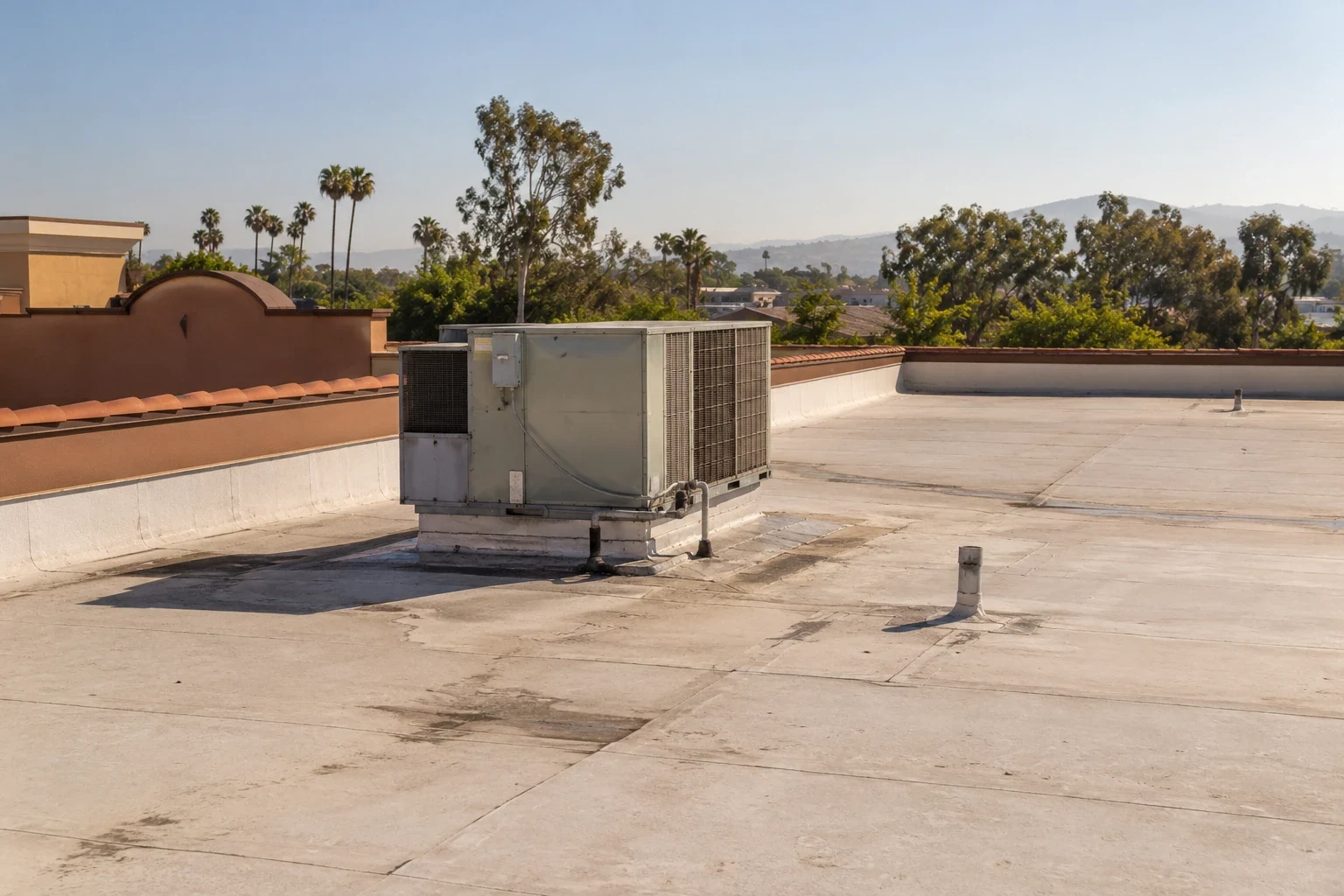
Rooftop condensers, piping, electrical feeds, exhaust fans, and control lines can cross several roof zones. We inspect the visible curb flashing, pitch pockets, pipe supports, counterflashing, and membrane around each penetration. A service contractor may have moved equipment or replaced a line after the roof was installed. We ask the facilities contact for those records and separate roofing work from refrigeration service. A nearby unit is not assigned as the cause unless the water path and flashing condition support that finding.
Walk pads and pipe supports may need adjustment if they hold water or create abrasion. We record the issue and identify which trade can move equipment safely. The penetration-flashing scope can document curbs and pipe groups by location. Photos show the condition before repair and the completed detail. If the curb needs replacement or the equipment must be lifted, that sequence is priced and scheduled with the responsible contractor rather than assumed to be included.
Keep Roof Drainage and Receiving Areas Clear
Grocery roofs may have interior drains, scuppers, gutters, overflow outlets, and several low areas. We inspect strainers, bowls, sumps, and surrounding membrane, then note debris, damaged connections, or standing water after weather clears. The location of a clogged outlet does not automatically explain a ceiling leak elsewhere. We connect each observation to the roof plan and list what remains uncertain. Cleaning, drain-body repair, and correction of a low slope are different scopes.
Delivery doors and waste areas need protection from runoff while work is underway. We map the discharge route, protect the inlets, and keep temporary materials from redirecting water toward receiving. A drain and scupper repair can price each outlet and associated flashing. Store personnel decide how to route deliveries or restrict a dock. The closeout identifies which drains were cleared, repaired, or left for another trade so maintenance staff can track the next inspection.
Plan Work around Store Operations
Roof work can be staged over a section while the store remains open, but the manager controls aisle closures, product moves, customer notices, and restricted-area access. We identify the lift and material staging points and how the crew reaches the roof. Receiving schedules, fire lanes, clearances, and security can change the sequence. Any ceiling opening or noisy work is coordinated with the site contact before arrival.
For a leak over food preparation or refrigerated goods, store staff determine handling and protection under their procedures. Our scope describes roof-side containment and timing, not a substitute for the store's safety plan. We can divide work by roof bay or building addition, then list the condition that would require expanding the boundary. The restaurant roof coordination page addresses kitchen exhaust and operating hours. A repair visit focuses on a defined failure; a broader evaluation may be scheduled separately if multiple areas show wear.

Identify the Membrane at Each Work Area
A grocery addition may use a sheet membrane over one sales area and an older layered assembly by receiving. We inspect exposed edges, seam layout, attachment, coverboard, and transitions before selecting a patch. Surface color does not identify the product. Drawings and service records help, but the field condition controls. If the documents and roof differ, the estimate marks the mismatch and leaves unverified zones outside the confirmed scope.
A TPO seam repair needs a compatible weld detail; other assemblies call for their own preparation. We separate membrane work from wet insulation, deck replacement, refrigeration, and interior restoration. If testing finds concealed damage, the owner reviews the added area and cost before work continues. Warranty terms may restrict methods, so the facilities manager can provide current documents. Closeout photos and material notes support later maintenance.
When inspections show deterioration across multiple areas, a replacement evaluation can outline a store-compatible sequence and compare recover with tear-off. We list inspected zones, test locations, quantities, and open questions. The recommendation follows documented conditions rather than the grocery label alone. Ownership can align phases with capital approval and store operations while keeping each assembly and boundary clear.
Confirm the Visalia Site and Access
Downtown Visalia combines retail, entertainment, government, professional, nonprofit, and healthcare employment in a mixed-use jobs center. Oval Park is identified as a commercial mixed-use activity node. These are broad city references, not a claim about a grocery address. We verify the property, roof access, delivery schedule, and equipment staging with the owner or facilities contact before dispatch.
See the Downtown Visalia service area and Oval Park commercial corridor pages for general context. The store plan, refrigeration map, contractor notes, and leak tickets shape the inspection. If records are missing, we document visible conditions and avoid claims about areas not accessed.
Leave a Clear Repair Record
The closeout should identify each roof zone, the leak location reported, the path inspected, the repair detail, materials used, and any area that remains untested. We include photos of the curb, drain, seam, or edge before and after work where relevant. Follow-up items for refrigeration, plumbing, electrical, or structural trades are listed separately. That record lets the store facilities team connect a later service call to the specific roof area instead of restarting the diagnosis.
Send the Visalia address, roof plan, refrigeration equipment list, leak history, warranty documents, service records, and operating restrictions to arrange an inspection. We will map the affected area, coordinate a workable access window, and present repair choices with limits and assumptions stated. If conditions point to a wider roof program, we can separate that recommendation from the immediate leak repair.
Commercial Roofing Questions
Can water travel before it reaches a grocery ceiling?
Yes. Water can move along a roof assembly or deck. We compare the interior mark with drains, seams, curbs, and the observed path before selecting a repair.
Do you work around refrigeration equipment?
We inspect the roof flashing and membrane around equipment. The store or its refrigeration contractor handles shutdowns, line work, and product procedures.
Can a grocery store remain open during roofing?
The manager sets customer and product controls. We coordinate the roof work zone, access route, staging, and any needed interior protection with that contact.
What if the roof uses more than one membrane?
We label each assembly by zone and use a repair method suited to the material at that location. Unknown transitions are marked for confirmation.
What information helps before a roof walk?
A roof plan, leak tickets, refrigeration service notes, warranty records, drain locations, delivery windows, and access rules help us prepare.