
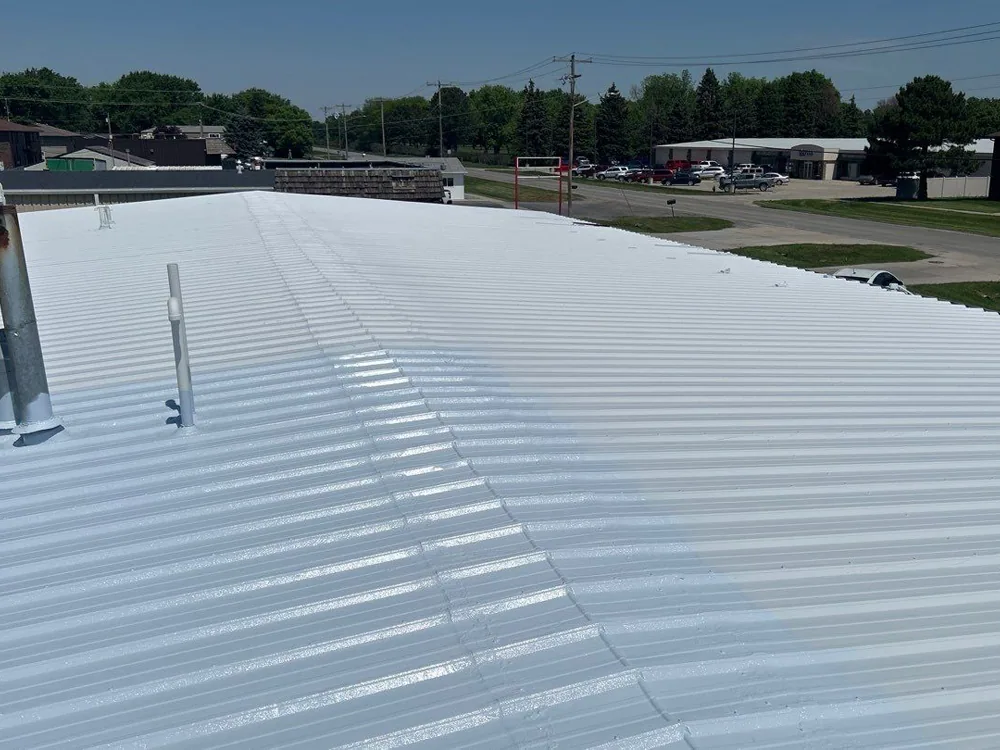
Acrylic Roof Coatings in Visalia, CA
Roof Systems | Visalia and Tulare County
Acrylic Roof Coatings
An acrylic coating may have good film thickness across the roof field but still be thin at a drain, curb, or walkway. We inspect the substrate, seams, adhesion, water exposure, and prior coating history before recommending renewal. Acrylic systems depend on proper preparation and cure; sustained ponding can be a concern for products not approved for that condition. Visalia's dry summer and cooler rainy months influence scheduling, but the roof's current drainage and existing material determine whether an acrylic system fits. A retail building near Downtown Visalia and a warehouse at Visalia Industrial Park should each be evaluated by roof area rather than by broad property type.
Confirm the Existing Roof and Coating
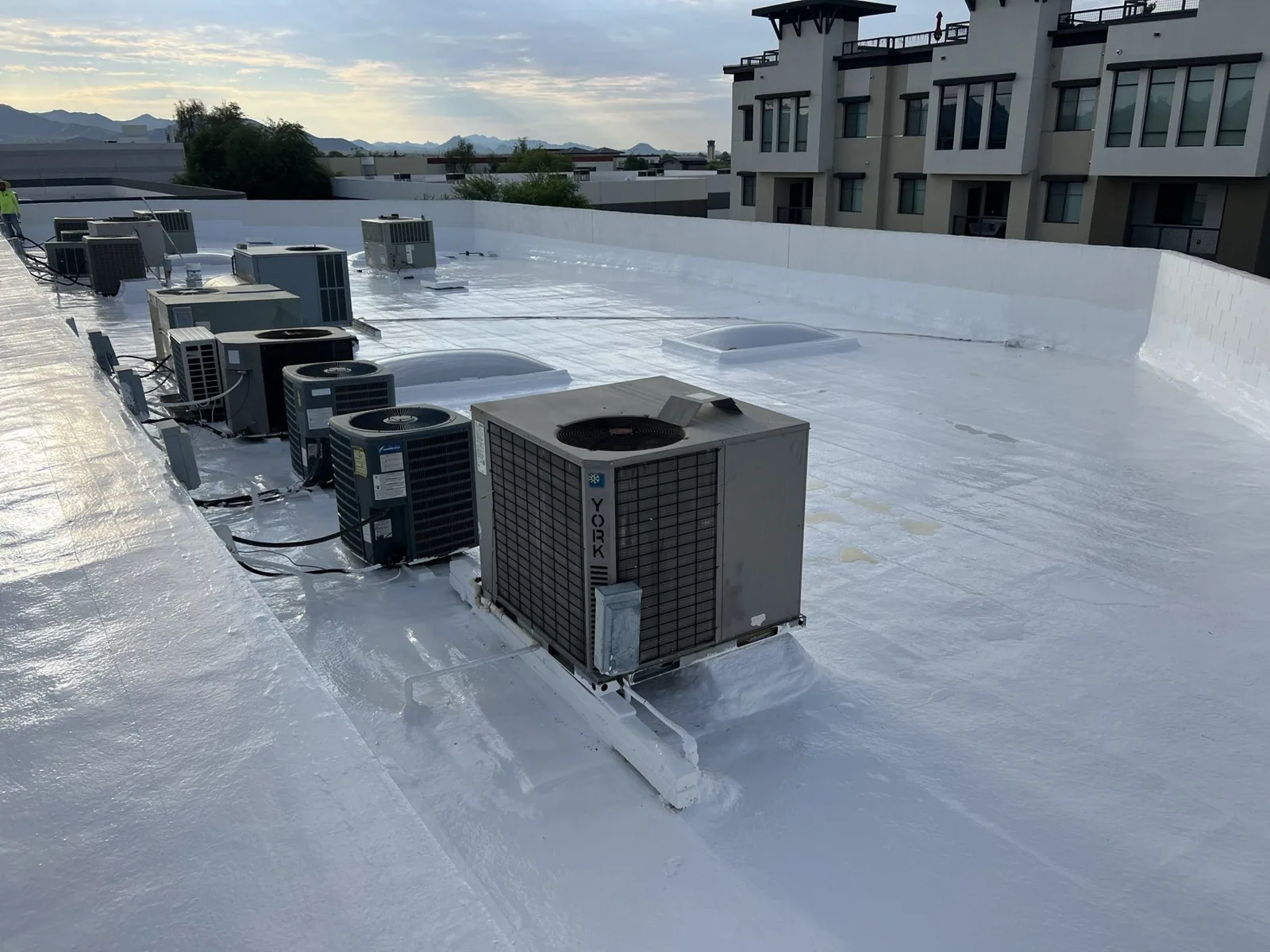
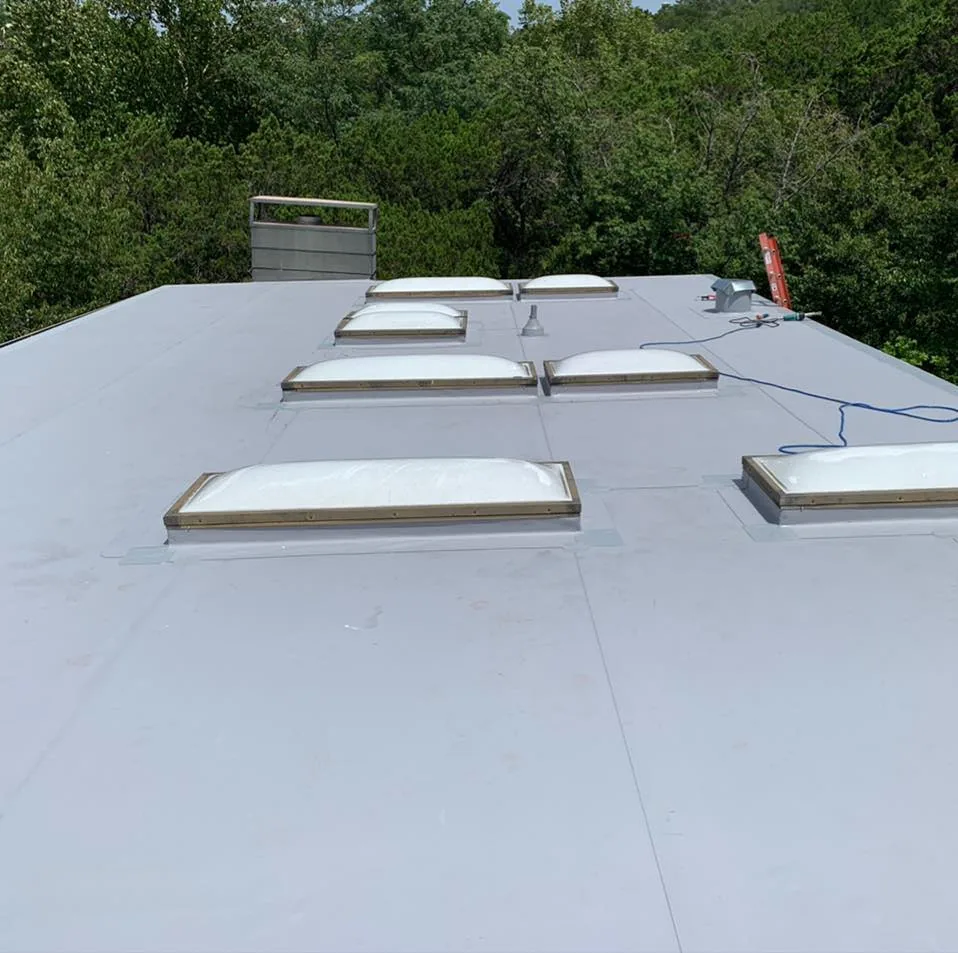
We identify whether acrylic sits over metal, modified bitumen, a membrane, or another coating. Invoices and product records can confirm formulation; field appearance alone cannot. We inspect for peeling, chalking, cracking, blisters, exposed substrate, dirt, and repairs that may use a different chemistry. An adhesion test at an approved location helps determine whether the existing film can accept a renewal coat. Results are mapped to the test spot and do not prove the whole building has uniform bond strength.
The substrate must be clean, dry, and sufficiently stable for the planned system. If rust, wet insulation, or a loose membrane remains underneath, coating can hide rather than correct the condition. A roof inspection can map those findings, while the silicone coating option can be compared for areas where water exposure differs. The specification should name the approved primer and surface preparation and should not assume every product in the same chemistry is interchangeable.
Plan Preparation, Primer, and Cure
Before application, the roof may need pressure washing, removal of loose film, seam repair, rust treatment, or a compatible primer. Each step protects the bond between layers. We identify which cleaning method is safe for the substrate and how water is controlled near drains and adjacent equipment. The selected product's instructions define temperature, humidity, dew point, film thickness, and cure requirements. The project schedule must leave enough time for preparation, detail work, coating passes, and inspection.
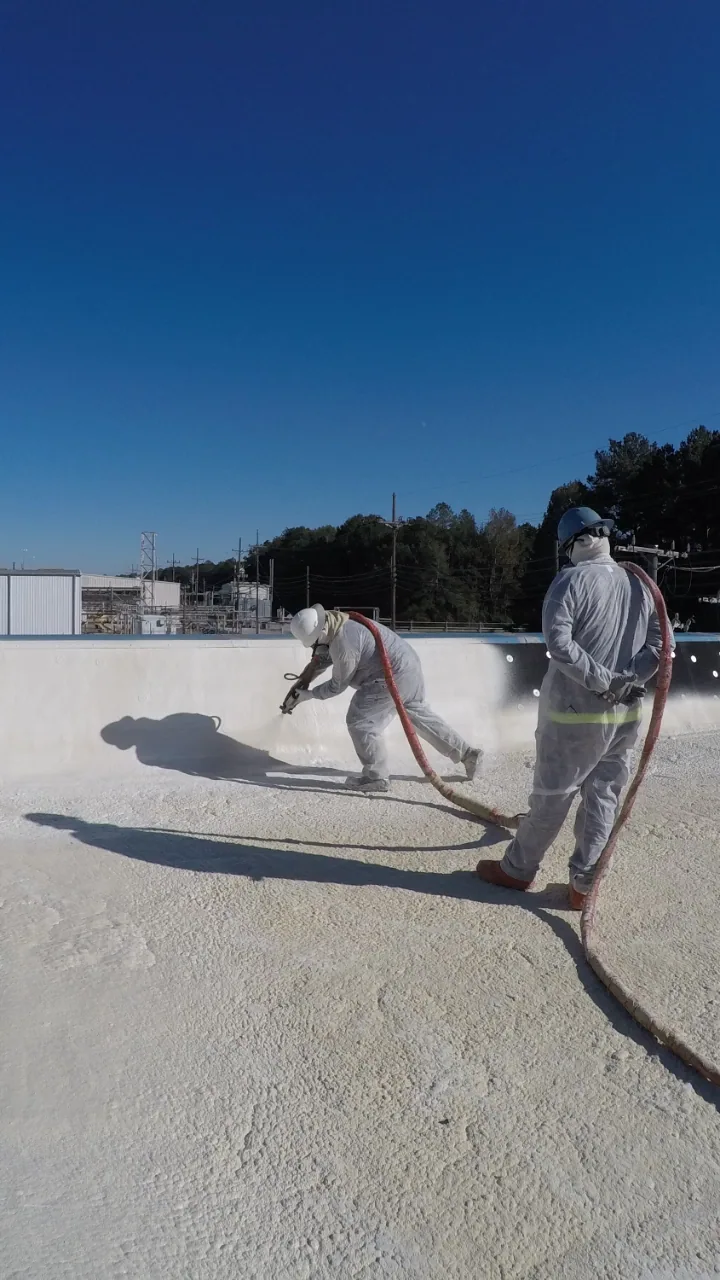
Acrylic coating generally needs suitable drying conditions between coats. If rain arrives before cure, the crew may need to protect the area or return for additional work. We do not set an application date from average climate normals alone; we check the actual forecast and surface conditions. For SPF roof systems, the foam and protective coating must be inspected as an assembly. Where seams or penetrations need reinforcement, the work plan shows the fabric, sealant, and coating details before field production starts.
Check Drainage before Selecting Acrylic
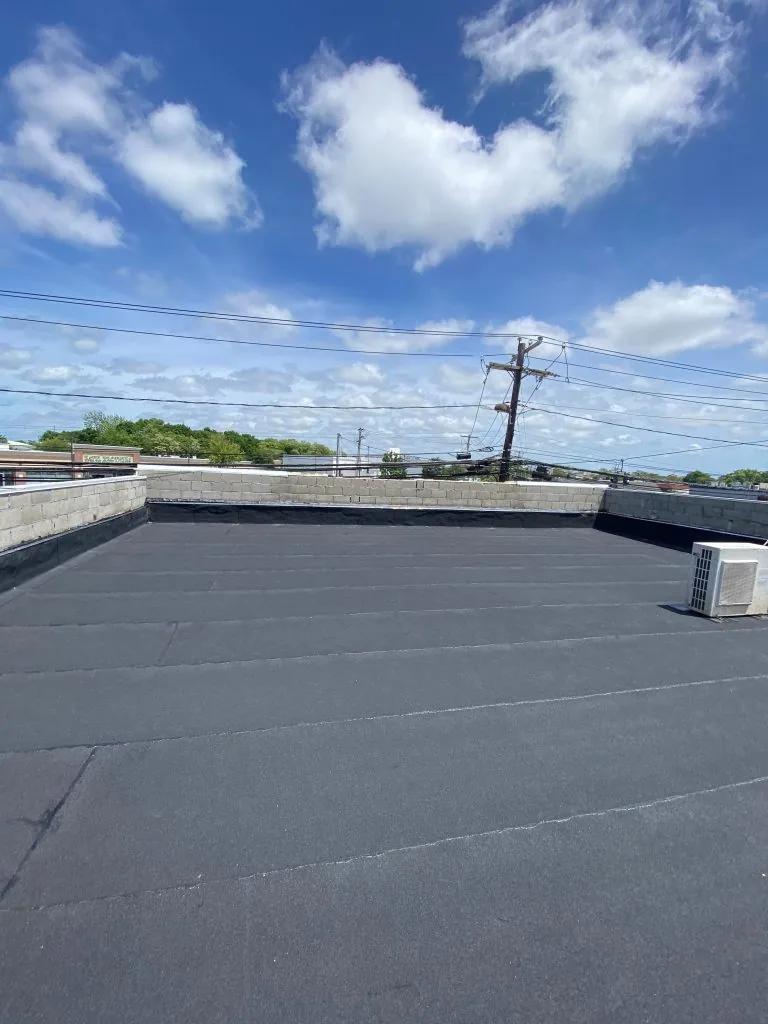
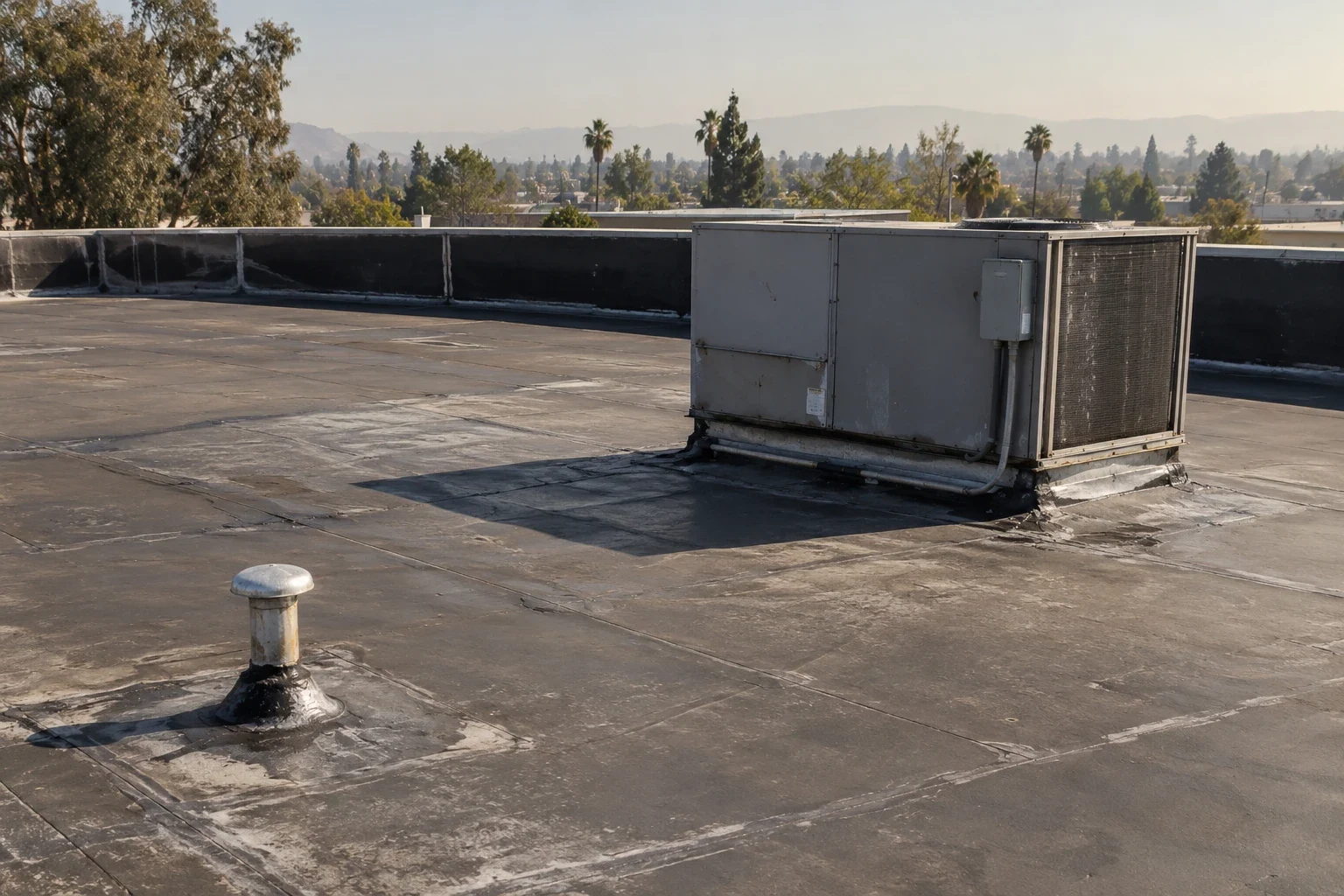
Drainage affects whether acrylic is a practical option. We inspect sumps, gutters, scuppers, overflow points, and low areas for water that remains after rain. A coating will not lift a depressed deck or lower a drain bowl. Where ponding exists, we mark the boundary, measure depth where feasible, and determine whether a slope correction, outlet repair, or alternative product is needed. The design should account for both normal flow and overflow when a primary drain becomes restricted.
At parapets, equipment curbs, penetrations, and changes in material, water control depends on compatible flashing. A coating that stops at the edge of a metal flange can leave a capillary path. We review terminations and repair details, then note where a test opening would clarify the condition. A drain and scupper service can correct outlet issues, while edge-metal work addresses selected perimeter defects. The proposal keeps water-management repairs separate from the coating area and application rate.
Preserve the Coating after Application
After the coating cures, routine care helps identify punctures, debris buildup, and new equipment damage. Facility teams should keep drains clear, prevent unapproved foot traffic, and use protective paths where technicians repeatedly cross the roof. Mechanical work can cut the film or leave an open curb transition. The roof record should identify the product, application date, warranty requirements, and areas that need periodic observation. Maintenance intervals come from product guidance and actual site exposure, not a fixed promise that suits every roof.
We photograph completed detail areas and record the measured work zones. If a future HVAC change is planned, the roofer and mechanical contractor should coordinate curb height, support, and flashing before cutting the roof. A small repair may restore a localized breach if the surrounding coating remains bonded. More widespread separation or wet substrate may need removal. The repair scope should list cleaning, priming, reinforcement, and finish coat as distinct work so the manager can verify what was completed during a later inspection.
Coordinate Coating Work in Visalia
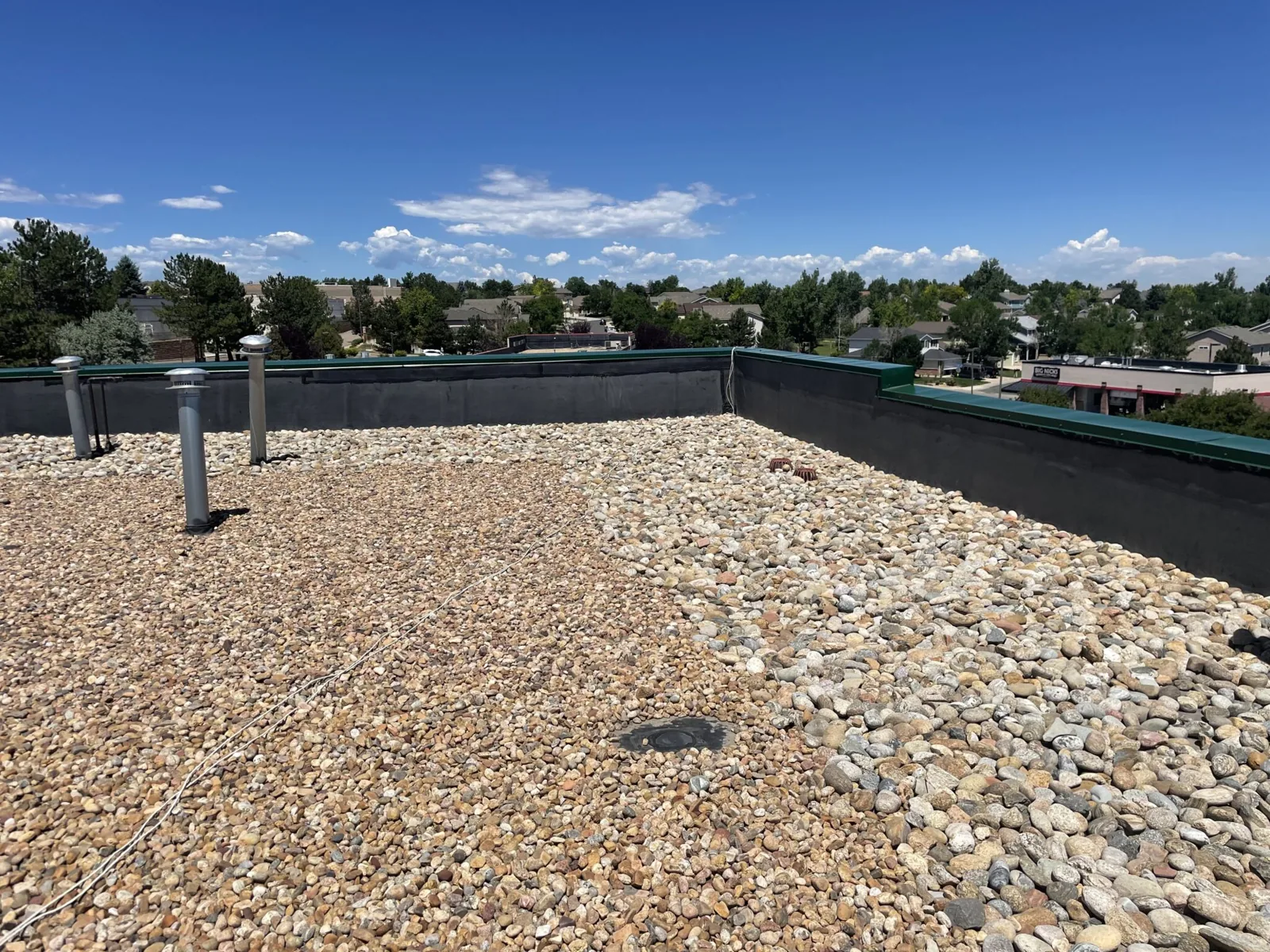
Downtown Visalia's city profile groups offices, shops, government and health-related work with nonprofit activity. Materials for the industrial park list companies in food production, manufacturing, storage, and freight distribution. Those locations may affect staging and operating hours but do not establish the roof assembly. We ask each site manager about delivery windows, occupied spaces, rooftop equipment, fire access, and areas that cannot be closed. A coating project can require odors, wet-surface precautions, and restricted access during cure, so notices and alternate service paths should be planned.
Downtown sites can have pedestrian routes and limited material staging. Industrial sites may need loading docks or production lanes kept available. We document the actual restrictions and identify which temporary protections are included. If rainfall or dew interrupts the schedule, the work area is protected and the remaining sequence is updated. A Downtown Visalia roof assessment or a survey at Visalia Industrial Park follows this same process: confirm the building's needs, then match preparation and product conditions to the weather window.
Compare Acrylic, Silicone, and Replacement
Acrylic can suit a properly prepared roof where the product's water exposure limits are acceptable. Silicone may be evaluated when prolonged ponding is a concern, subject to the existing layer and project requirements. Replacement may be more appropriate when the substrate is wet, adhesion is failing across broad areas, or drainage defects remain unresolved. We present these paths against the same inspection findings, showing tests, repairs, coating quantities, and work not included. The comparison should make clear whether each option changes roof slope, insulation, or only the protective surface.
The closeout file lists the selected product, application records, repaired details, and future maintenance instructions. If the owner has several roof sections, each receives its own condition map because different ages or previous projects may change compatibility. For replacement, a commercial roof replacement review can establish removal and new assembly requirements. A modified-bitumen roof may have its own coating compatibility constraints. Share product records, leak logs, roof plans, and equipment schedules so the recommendation reflects what is installed today.
Commercial Roofing Questions
Can acrylic coating be used where water ponds?
Only if the selected product and assembly allow the exposure. We measure ponding, inspect drainage, and compare product requirements before specifying a coating.
Does every roof need primer before acrylic coating?
Primer depends on the existing substrate, coating, and manufacturer's requirements. We test and specify preparation by area rather than apply a blanket assumption.
How long does acrylic roof coating take to cure?
Actual cure time follows the product requirements and the temperature, humidity, dew point, and rainfall. The work schedule follows the product instructions and recorded site conditions.
Can acrylic coating go over silicone?
Compatibility is product-specific and should not be assumed. We review the existing coating records and use approved testing or manufacturer guidance before proposing another layer.
What is included in a coating inspection?
We review substrate, coating bond and thickness where measurable, seams, flashing, drains, ponding, and prior repairs. The report maps tested areas and unresolved conditions.