
Commercial Roofing in Goshen, CA
Service Areas | Visalia and Tulare County
Goshen
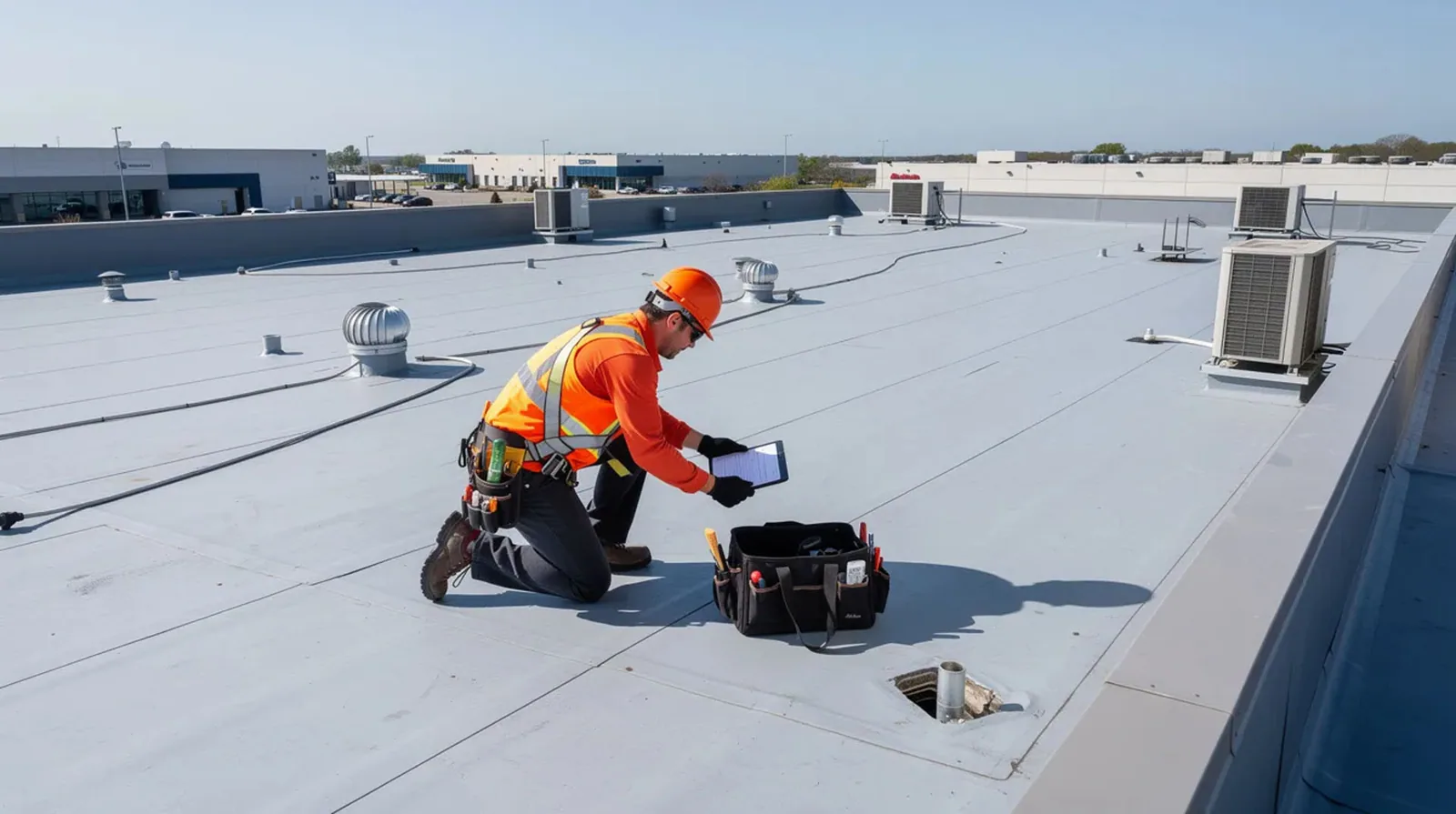
A wet ceiling below a roof near Highway 99 needs a field check before a patch is priced. Tulare County describes Goshen as an unincorporated community with commercial and industrial growth near the highway. That context does not establish the use or roof type of a particular property. We start with the building contact, the reported leak area, and a walk of the roof section that can be reached safely. The County also reports homes west of the corridor and development near it, so access and occupied-space protection should be confirmed property by property. Visalia station climate normals add a regional seasonal pattern: most of the recorded precipitation falls from late fall through early spring, making drainage and open seams important to inspect before that period.
Confirm the property
Goshen is unincorporated, so the owner’s site contact and the actual access point matter before a crew is scheduled. We ask for the property address, roof plan, gate instructions, affected interior area, and recent repair notes. Those records help us locate the section without assuming that every nearby building has the same layout. A commercial roof inspection checks seams, penetrations, edge metal, drainage, and prior patches, then names the areas reached and any test that could change the scope.
Road 64 improvements between State Route 198 and Avenue 304 were completed in September 2025 to support access and drainage. For a roof visit, the manager confirms the actual entrance, loading rules, staging area, and work window.
Trace the water path
A stain at a room edge can come from an opening several roof sections away. Water can follow a deck flute, insulation joint, curb, or wall line before it reaches the ceiling. We compare the interior report with the roof field, look for disrupted seams and flashing, and note where water may have traveled. The repair boundary should follow the failed detail and any wet material found, not the outline of the ceiling mark. Where a drain or overflow is involved, a roof-drain inspection records the bowl, connection, and surface around it.
County materials describe homes west of Highway 99 and additional development near the corridor. Those facts do not establish a roof condition. We inspect the assembly at the property presented for service, including interior protection needs before testing. A small opening can answer whether water reached the deck, but we include it only when the result could change the repair choice.
Check the low points
Water remaining beside a curb can come from blocked drainage, compressed insulation, poor slope, or a detail that holds debris. We check the outlet and surrounding membrane separately. Clearing a strainer can restore flow but does not correct a low area or a failed connection. Visalia averages 10.32 inches of rain annually, with most monthly totals in the cooler part of the year. That number belongs to Visalia, not a Goshen gauge. It supports a regional reason to inspect drains before the wet season; the Goshen roof still determines what work is needed.
A coating cannot raise a depressed roof plane or repair a loose drain flange. We note where water gathers, whether the path reaches an outlet, and how nearby seams behave after cleaning. A TPO roof review considers membrane condition, welded seams, penetrations, and attachment when that system is confirmed. If the roof material is uncertain, we record the visible characteristics and recommend a test only when it would change the repair method. That keeps a maintenance task separate from a larger drainage correction.
Protect the work area
Commercial and industrial growth near Highway 99 can mean different operating needs from one Goshen property to another. We ask which rooms remain occupied, whether deliveries must continue, and who can approve a short shutdown or temporary closure. The County’s Road 64 work connects State Route 198 and Avenue 304; on a roof project, the owner’s site plan still controls crew access, material staging, and ground protection. An occupied-building work plan divides the roof into manageable sections and states how each opening will be closed at the end of a shift.
Some repairs can be completed in one visit, while wet insulation or deteriorated deck may require removal and a longer close-in sequence. We identify the daily work boundary, protection below, and the point at which a change requires owner approval. If the schedule changes, temporary control and permanent work remain separate in the record. Emergency service is available around the clock, including holidays, but the permanent correction still depends on the tested assembly and authorized scope. That distinction helps a manager respond to active water without treating a temporary measure as a completed repair.
Set the repair limit
An isolated flashing failure with dry surrounding material may support a local repair. Repeated seam openings, wet insulation, or a weak deck can change the choice to selective removal or replacement. A recover is considered only when the existing assembly, attachment, drain height, edges, and code path permit another layer. We state which conditions were checked, which remain concealed, and what test would change the recommendation. A roof recover evaluation gives the owner that comparison without assuming the existing roof can stay in place.
For a Goshen property that needs a broader capital decision, we tie photographs and observations to roof areas the manager can identify. A second building in the Betty Drive area gets its own walk, access notes, and findings. A building near Tulare likewise receives a separate repair boundary. The same reporting format can compare those sites, but no roof inherits another property’s moisture readings or condition. Price and timing reflect access, layers to remove, wet material, edge work, staging, and the area that can be opened safely in a shift.
Keep the record local
The closeout should identify the roof section, photos, materials repaired, test locations, and any area that could not be reached. We note whether the deck or insulation was confirmed and what follow-up remains. That record lets a future manager compare a new stain with the earlier water path. If a repair involved temporary protection, we label it separately from the permanent work. A short but specific roof record is more useful than a general note that says only that the leak was addressed.
Before a first walk, send the building location, affected room, available roof plan, recent service notes, and access window. We can confirm who opens the property and whether a lift, test, or interior protection should be included. A service visit near Goshen follows its own findings, distinct from an inspection at Betty Drive or the broader Goshen and Murray corridor. We keep each roof record tied to its property. At closeout, the manager sees the work completed, remaining uncertainty, and the next decision in plain language.
Commercial Roofing Questions
Does the County’s road work tell you how a roof drains?
No. The Road 64 improvement is a transportation and drainage project. We inspect the roof’s own slopes, outlets, seams, and low areas before recommending work.
Can a roof inspection cover a property near Highway 99?
Yes, once the owner confirms the address, access point, and safe roof route. We record the sections reached and any limits that affect the diagnosis.
What if water appears after a dry-season inspection?
A later rain can reveal a seam or flashing issue that was not active during the earlier walk. We compare the new leak location with the roof record and recheck the likely path.
When should wet insulation be removed?
Removal depends on the assembly, moisture boundary, deck condition, and whether a test confirms the material is unsound. We mark the area and explain how the finding changes the repair choice.
Can emergency control and permanent repair be scheduled separately?
They can be documented as separate steps. We describe temporary protection first, then set the permanent repair after the roof detail and affected layers are understood.